


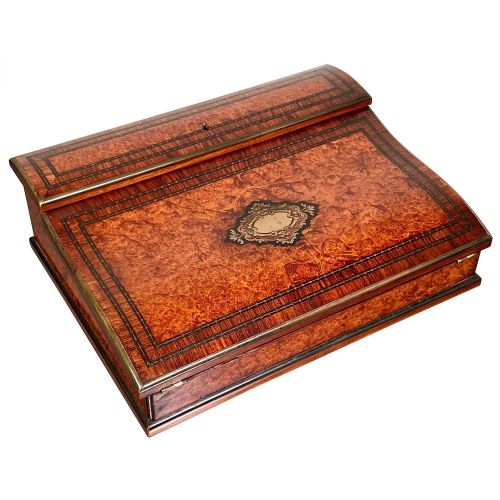


Wooden Writing Accessory
A wooden writing accessory brings order to a desk, offering practical storage through slopes, inkstands, and stationery boxes crafted in walnut, oak, and coromandel.
Wooden Writing Accessory
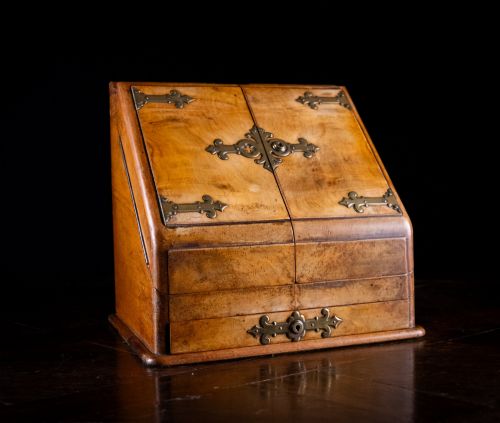
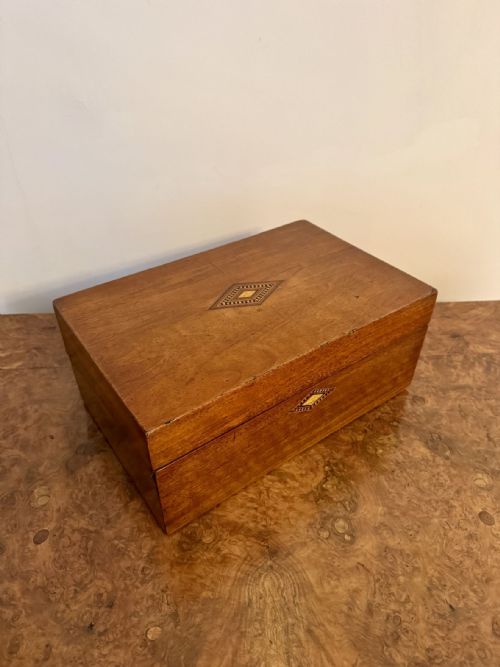
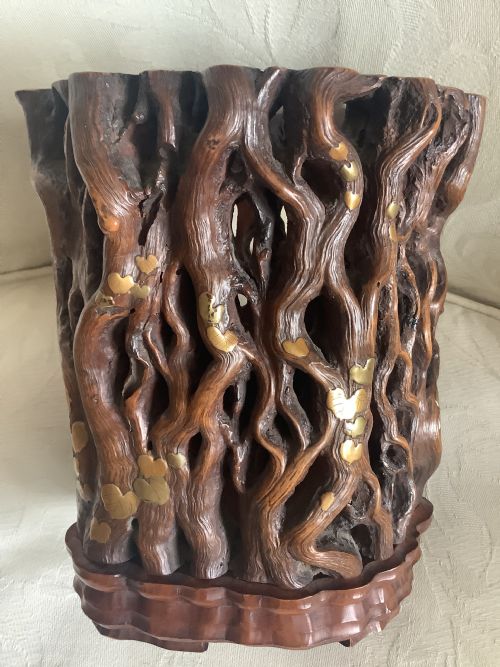
A wooden writing accessory serves the traditional desk through various forms, including writing slopes, stationery boxes, inkstands, and brush pots. These objects originate largely from the nineteenth century, spanning the Victorian and Edwardian periods.
The pieces on this page appear in solid or veneered woods such as walnut, oak, coromandel, and burr walnut, often accented with brass. Buyers encounter utilitarian items alongside decorative carved novelties like Black Forest animal inkwells.
Writing slopes and desk tidies reflect the administrative habits of past centuries, designed to hold ink, nibs, and paper securely. They range from campaign boxes meant for travel to stationary cabinets built for permanent placement in a study.
Materials and construction
Carpenters utilised dense hardwoods like walnut, oak, and coromandel to build these desk pieces, frequently applying burr walnut veneers for decorative grain patterns. Tunbridge ware pieces display intricate mosaic woodwork, while others incorporate brass inlay and mounts.
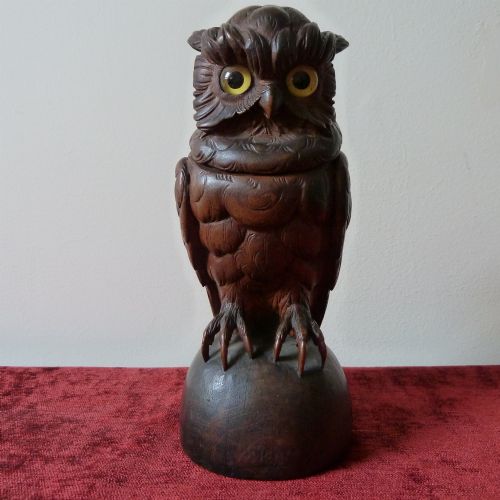
Carving defines the Black Forest items, which show detailed depictions of owls, bears, dogs, and eagles formed from linden wood or fruitwood. Locks by makers such as Bramah secure the compartments of writing slopes and cabinets.
Glass inserts appear within inkstands and desk sets to hold ink safely alongside wooden bodies. Pokerwork and hand-carving add surface texture to oak and ebony stationery boxes and inkwells.
Wooden Writing Accessory Retail Price Guide 2026
Typical asking prices for wooden writing accessory among the pieces listed under this phrase on Sellingantiques today, from the lower quarter to the upper quarter. They describe what is for sale here now, not the wider market.
Several inkwells take the form of carved wooden animals, including bears holding logs and dogs keeping watch over desks.
Distinctions in quality
Quality rests in the selection of timber and the precision of the joinery, particularly where brass banding or Tunbridge mosaic panels meet the wood body. Superior pieces employ figured burr walnut or substantial oak rather than plain secondary woods.
The complexity of the carving determines the standing of Black Forest novelties, where lifelike animal forms and expressive details elevate a simple inkwell. Hardware such as working Bramah locks and heavy brass mounts signal better original manufacture.
The Wooden Writing Accessory Glossary
- Writing slope
- A portable box with a slanted lid that folds down to provide a writing surface and internal storage for paper and pens. These boxes often feature secret compartments beneath the stationery slots.
- Stationery box
- A tabletop cabinet designed to hold envelopes and writing paper upright in tiered compartments. They frequently include hinged lids and double doors.
- Inkstand
- A tray or stand holding one or more inkwells, often accompanied by pen rests and sometimes a pounce pot or stamp box. These items anchored the desktop.
- Tunbridge ware
- Woodwork decorated with mosaic patterns made from tiny wood blocks of various natural colours to form geometric or pictorial designs. This technique originated in Tunbridge Wells.
- Pounce pot
- A small shaker container used to sprinkle sand or resin powder over freshly written ink to absorb excess moisture and prevent smudging. They predate modern blotting paper.
- Black Forest
- A style of wood carving originating from the mountain region of Germany, known for realistic representations of animals and foliage. Bears, dogs, and owls frequently appear in these inkwells.
Wooden Writing Accessory: Frequently Asked Questions
What is a wooden writing slope?
A wooden writing slope is a portable hinged box that opens to reveal an angled surface for writing and compartments for ink and nibs.
Victorian examples often use walnut or mahogany with brass banding and velvet writing surfaces inside.
How do I use an antique inkstand?
An antique inkstand holds glass inkwells alongside pen rests on a wooden tray for everyday desk use.
Users fill the glass inserts with ink and place dip pens in the designated grooves during writing.
What are Black Forest inkwells?
Black Forest inkwells are carved wooden desk accessories shaped as animals like bears, dogs, or owls.
Originating in the nineteenth century, these pieces combine realistic carving with functional glass ink inserts concealed within the figures.
How do I date an oak stationery box?
Dating an oak stationery box involves examining the hardware, construction methods, and wood preparation typical of the nineteenth century.
Victorian and Edwardian pieces show specific brass hinge styles and lock mechanisms that help establish their age.