


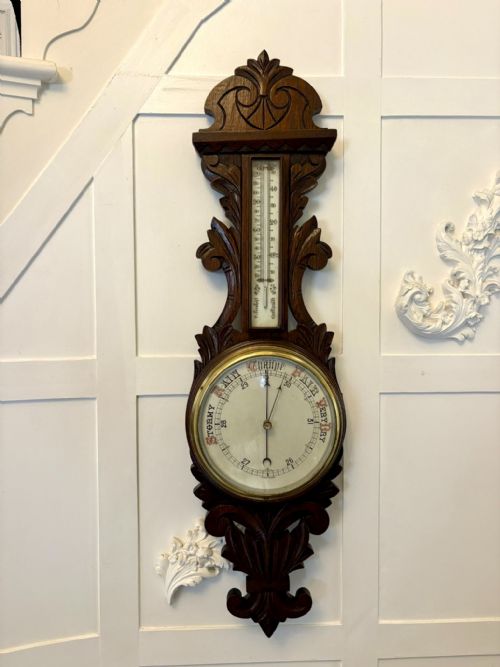


Wooden Weather Glass
A wooden weather glass brings mechanical forecasting into the home, housing sensitive weather-reading instruments inside carved and polished timber frames.
Wooden Weather Glass
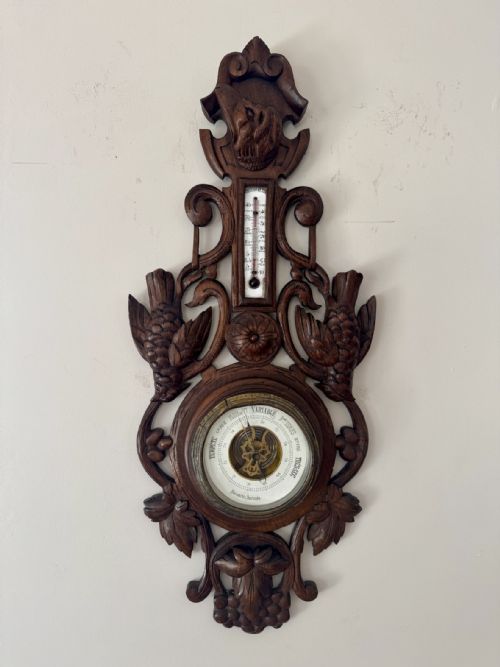
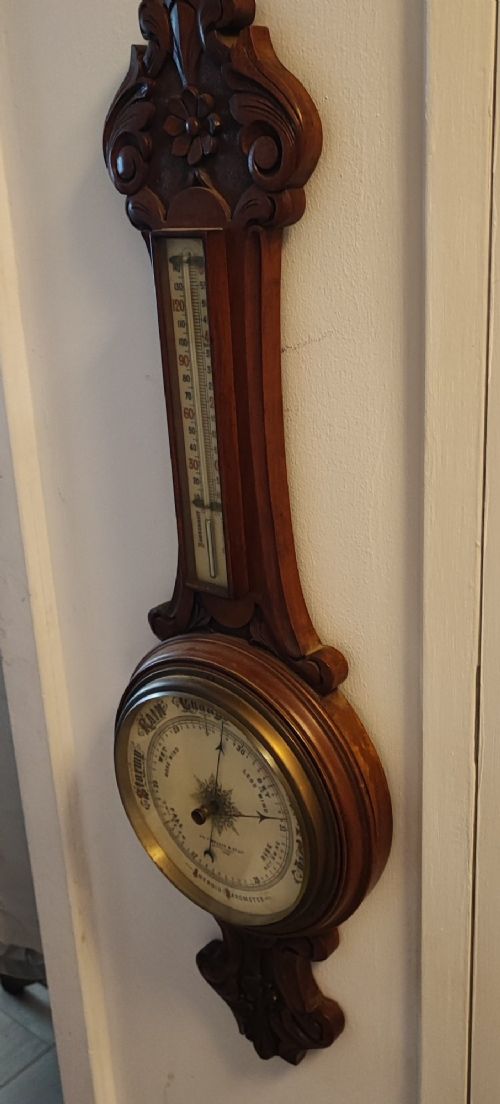
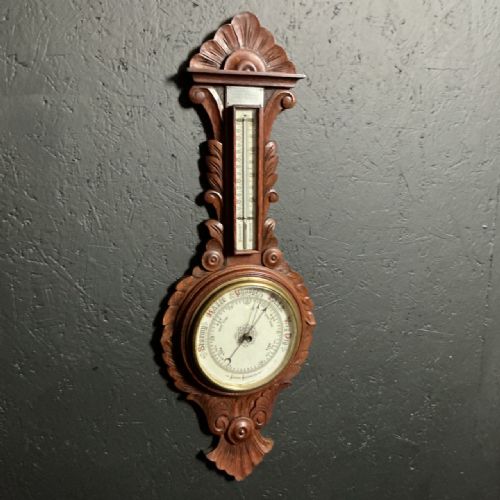
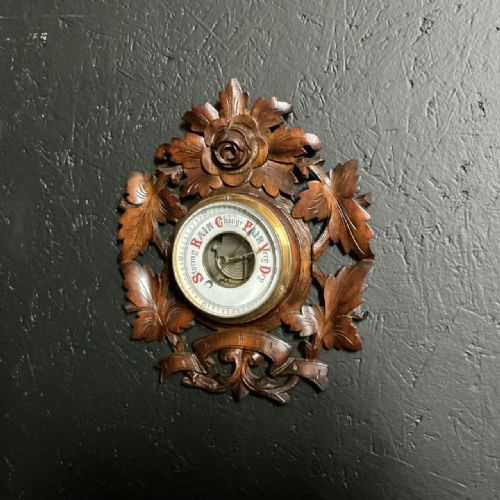
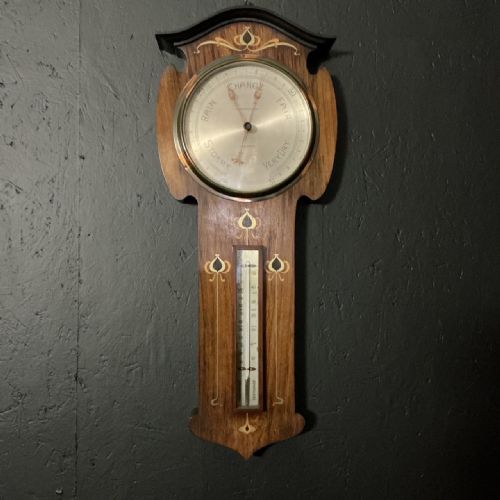
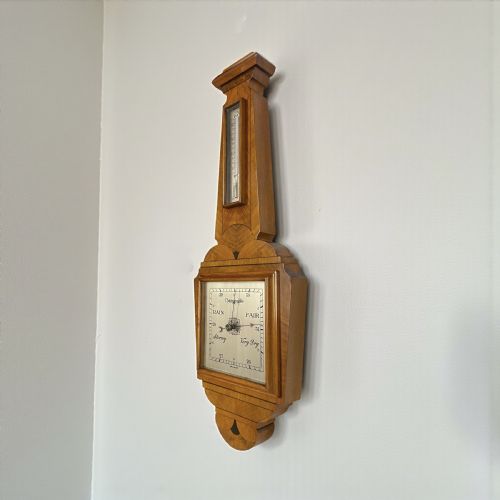
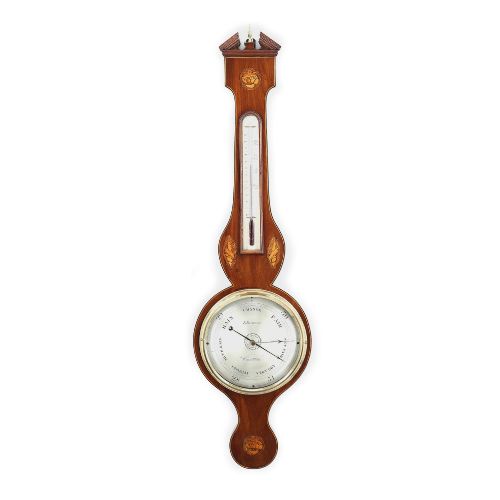
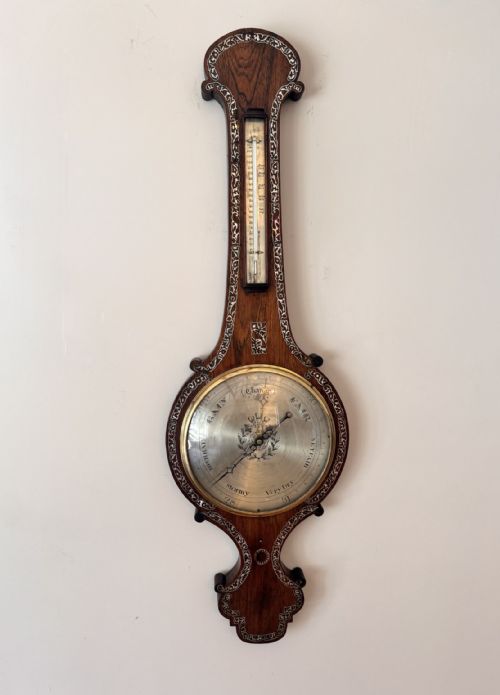
A wooden weather glass is a functional domestic instrument housed within timber cabinetry, most commonly encountered as aneroid or mercury barometers from the nineteenth and early twentieth centuries. These pieces combine scientific dials or glass tubes with decorative housings shaped from mahogany, oak, walnut, and rosewood. The selection spans robust carved oak designs from the Victorian era alongside inlaid Regency wheel barometers and Black Forest carvings.
The dominant forms on this page include banjo barometers, stick barometers, and wall-mounted instruments featuring built-in thermometers and hygrometers. Makers during the Georgian, Victorian, and Edwardian periods housed these mechanisms in cases ranging from geometric carved oak to richly figured mahogany and rosewood. Buyers also find desk barometers and occasional wall clocks integrated with weather-reading faces.
Originating primarily from British workshops alongside continental Black Forest carvers, these instruments reflect both domestic utility and decorative ambition. Regional makers signed porcelain or brass dial faces set into the timber frames, while simpler country models relied on plain wooden mountings. Each surviving piece demonstrates how past households monitored atmospheric pressure with visible craftsmanship.
How they were made
Cabinet makers constructed these barometer cases using dense hardwoods like mahogany, oak, walnut, and rosewood, frequently shaping them through steam-bending or intricate hand-carving. Solid timbers were selected to house delicate glass tubes, brass bezels, and mechanical aneroid movements securely against temperature shifts. Marquetry inlays and mother-of-pearl details were often set directly into the wooden surfaces.
Workshops utilised cast brass components for bezels, indicators, and thermometer scales, mounting them carefully into carved bezels and wooden backplates. Dial faces were typically engraved brass, painted iron, or white porcelain with finely inked numeric scales. Protective glass covers were fitted over the dial faces to shield the delicate indicator needles from dust.
What varies in quality
Quality in a wooden weather glass rests upon the depth and precision of the timber carving and the choice of cabinet wood. Finely figured mahogany, dense burr walnut, and deeply undercut Black Forest carvings separate superior examples from plain commercial production. The crispness of the brass dial engraving and the retention of original mercury tubes or functional aneroid movements further elevate a piece.
The integrity of the wooden case, including original veneers, matching bezels, and untaltered surface patination, dictates the overall standing of the instrument. Makers who signed their brass dials or carved intricate figural motifs like birds and foliage produced work that stands apart in design ambition. Preserved surface finishes and matching thermometer scales complete the distinction between standard utilitarian barometers and exceptional cabinetwork.
B. Besozzi of Weymouth·Molton of Norwich·W Watson & Sons·Jenkins Of Old Swindon·Negretti & Zambra·W.E. Pain of Cambridge·James Pitkin London·Vecchio & Co of Shaftsbury
The Wooden Weather Glass Glossary
- Aneroid barometer
- An instrument that measures atmospheric pressure without liquids by using a flexible metal vacuum capsule. Expansion and contraction of this internal chamber move the indicator needle across the dial.
- Banjo barometer
- A domestic weather glass housed in a distinctive curved wooden case resembling a banjo. These tall instruments frequently incorporate humidity dials, thermometers, and spirit levels.
- Stick barometer
- A long, slender wooden wall instrument that displays atmospheric pressure through a visible vertical column of mercury. These represent the more traditional and scientifically direct method of forecasting.
- Wheel barometer
- A circular dial instrument connected to a siphon tube and float mechanism via a pulley cord. Needle movement is driven by the rise and fall of mercury within the concealed tube.
- Black Forest style
- A decorative tradition originating from Central Europe characterised by deeply carved naturalistic foliage, animals, and rustic woodwork. These frames often surround aneroid barometer faces with high-relief ornamentation.
Wooden Weather Glass: Frequently Asked Questions
How do I read a wooden weather glass?
Read the inner dial by observing the position of the indicator needle relative to engraved weather descriptions like stormy, rain, change, or fair. Tapping the glass gently before reading helps settle any friction in the mechanical linkages.
Many pieces include a secondary hand operated by a small brass knob on the glass bezel. Setting this marker over the current needle position allows you to track whether atmospheric pressure rises or falls over the course of the day.
Where should I hang a barometer?
Hang your wooden weather glass on an interior wall away from direct sunlight, radiators, and active draughts. Rapid temperature swings can warp antique timber cases and alter the internal mechanical response.
Ensure the wall mounting is secure because larger carved oak and rosewood banjo barometers carry considerable weight. Solid masonry or direct stud attachment prevents the instrument from tilting or falling.
How do I date a wooden weather glass?
Examine the timber species, case silhouette, and dial construction methods to establish the period of manufacture. Regency and early nineteenth-century pieces often feature clean wheel dial layouts in flame mahogany, while late Victorian examples favour heavily carved oak and Black Forest motifs.
Signatures or town names inscribed on the brass or porcelain dial face provide further historical clues. Comparing the cabinet hardware, such as brass bezels and hanging rings, helps confirm the era of assembly.
Are these barometers still accurate?
Many surviving aneroid and mercury instruments retain functional accuracy once adjusted to local barometric pressure levels. Aneroid movements can be calibrated via a small screw on the back of the case using a reliable local reference.
Older mercury stick barometers require careful handling and professional setup if relocated. Even when mechanical calibration drifts over decades, the instruments remain decorative mechanical artefacts.