
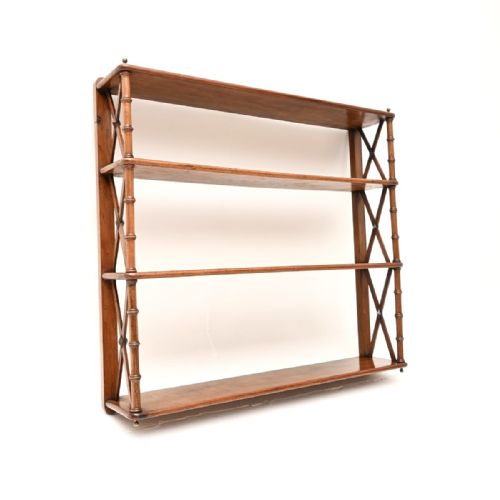


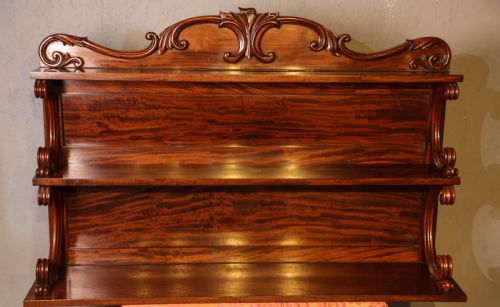


Wooden Wall Etagere
A wooden wall etagere brings tiered display space to a room, offering practical vertical storage that turns blank walls into points of interest.
Wooden Wall Etagere
A wooden wall etagere comprises tiered shelving units designed to hang directly from walls, bringing vertical display space into rooms without occupying floor area. These pieces appear in forms ranging from simple hanging shelves to corner shelves and wall-mounted cabinets with mirrored backs.
The pieces seen here span the Georgian, Regency, George IV, and Victorian periods, alongside French Chateau and Colonial styles. Walnut, mahogany, satin birch, oak, padouk, and yew wood form the primary structures of these wall-mounted items.
Buyers are most likely to encounter Victorian examples, alongside nineteenth-century mahogany and satin birch display shelves. These items serve to hold books, ornaments, and small collections while adding architectural interest to domestic interiors.
How they were made
Cabinetmakers utilised timber such as flame mahogany veneer, walnut, and satin birch to construct these hanging structures. Selected timbers were shaped into turned elements like bobbin turnings, or assembled into flat panels and corner configurations.
Construction techniques included joining solid woods and veneers to create stable frameworks capable of supporting display items on the wall. Details such as mirrored backs were incorporated into George IV yew wood shelves to enhance light and depth.
What varies in quality
The selection of timber dictates much of the character, with figured grains like flame mahogany veneer and satin birch marking out more ambitious pieces. Simpler utility shelves utilise straightforward domestic woods like oak.
Joinery execution and decorative turning, such as bobbin details, separate standard production from finer cabinetmaking. The inclusion of integrated cabinets and mirrored panels elevates the complexity of construction.
The Wooden Wall Etagere Glossary
- Etagere
- A piece of furniture consisting of a set of open shelves for displaying small objects. These tiered structures can stand on the floor or hang upon a wall.
- Flame mahogany veneer
- A thin slice of mahogany timber featuring a characteristic flame-like grain pattern applied to a secondary wood core. This decorative surface was favoured for its visual movement.
- Bobbin turning
- A form of woodturning characterised by a series of rounded, spool-like shapes repeated along the length of a support or spindle. It appears frequently on nineteenth-century shelving uprights.
- Padouk
- A dense tropical hardwood known for its deep colouration, utilised in overseas trade and seen in nineteenth-century West African corner shelves.
- Satin birch
- A light-coloured hardwood with a lustrous, silky sheen utilised during the nineteenth century for display furniture and decorative shelving.
Wooden Wall Etagere: Frequently Asked Questions
What is a wooden wall etagere used for?
These pieces provide open tiered shelving mounted directly to a wall, serving as a place to exhibit books, ceramics, and ornaments. They utilise vertical wall space efficiently in rooms where floor space is limited.
Historically and today, they keep small decorative items organised and visible at eye level. Their design turns blank wall surfaces into functional display areas.
How do I hang a wall etagere safely?
Hanging shelves require secure fixings appropriate for the wall construction, whether lath and plaster, brick, or stud work. The weight of the timber and the objects placed upon the tiers must be supported by adequate wall anchors.
Checking the existing hanging points on the back of the frame ensures the piece distributes its load evenly. Professional installation is often advisable for heavier walnut or mahogany cabinets.
How do I tell Victorian shelves from earlier periods?
Victorian pieces often display heavier proportions and embrace revival styles like Gothic Revival, alongside extensive use of walnut and satin birch. Earlier Georgian and Regency examples tend towards cleaner architectural lines and simpler mahogany or yew construction.
Turnings and edge profiles also shift over the decades, moving from restrained Regency forms to more ornamented Victorian designs. Examining the timber preparation and secondary woods helps confirm the period.
Can corner shelves hold heavy items?
Corner etageres utilise the geometry of two intersecting walls for inherent stability, but their load capacity depends entirely on the timber and joint construction. Lighter items like small books and porcelain fit well on most antique bracketed shelves.
Heavier loads require careful inspection of the wall fixings and the structural integrity of the corner brackets. Antique pieces should be loaded with regard to their age and original intended use.