
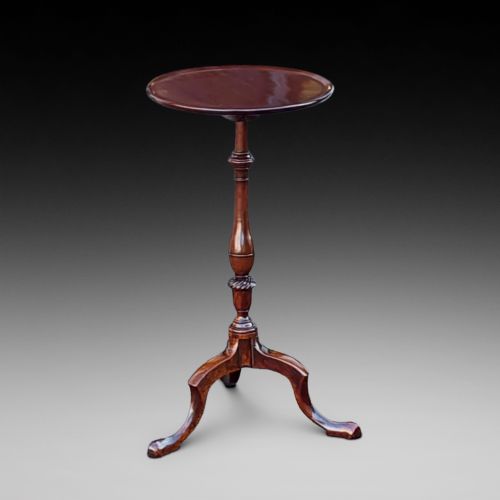
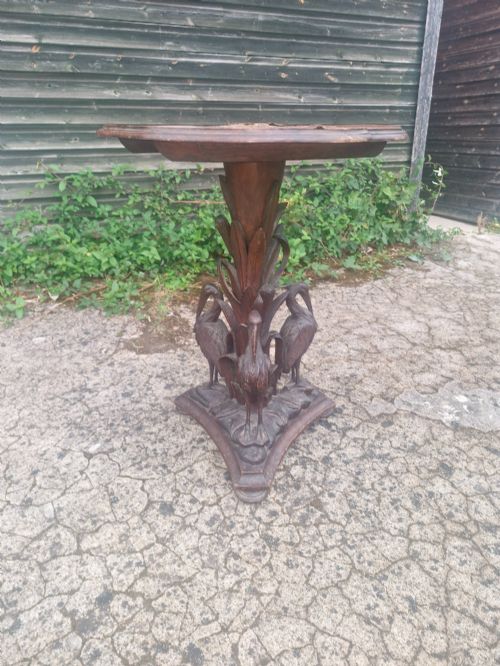
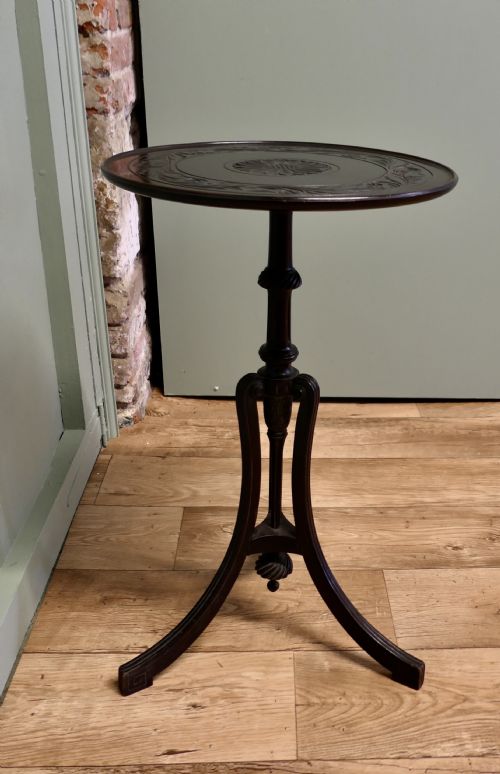
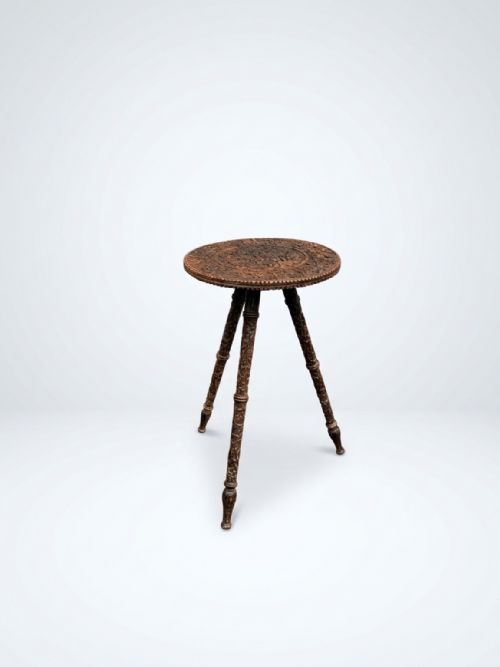
Wooden Tripod Side Table
These wooden tripod side table pieces offer stable three-legged support and compact surfaces, making them practical additions to any room.
Wooden Tripod Side Table
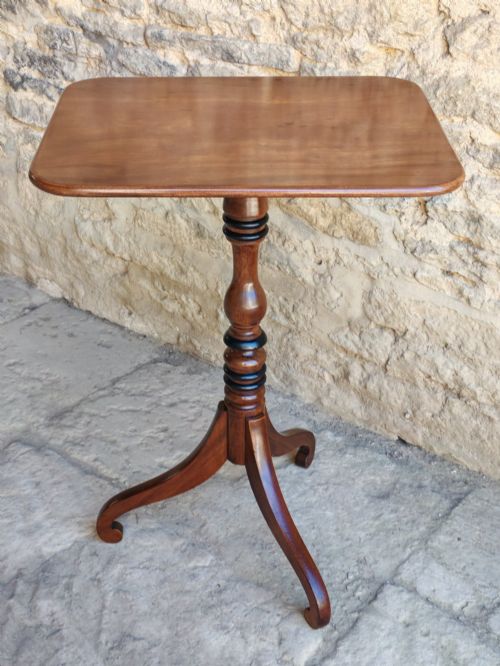
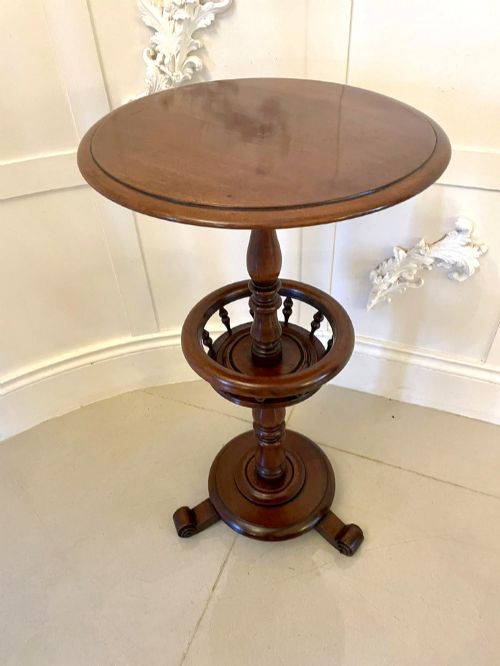
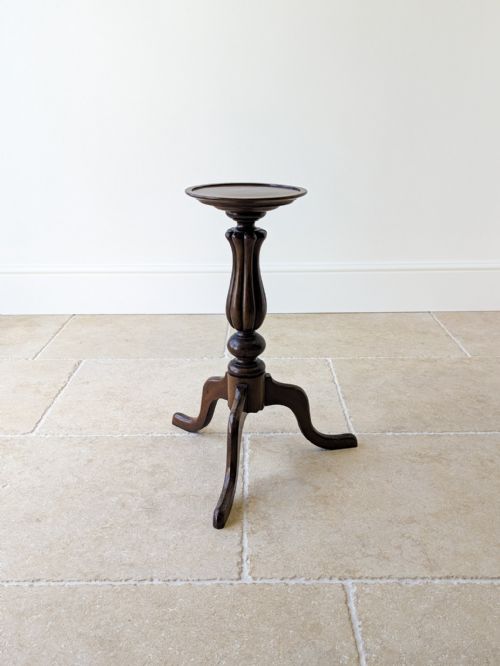
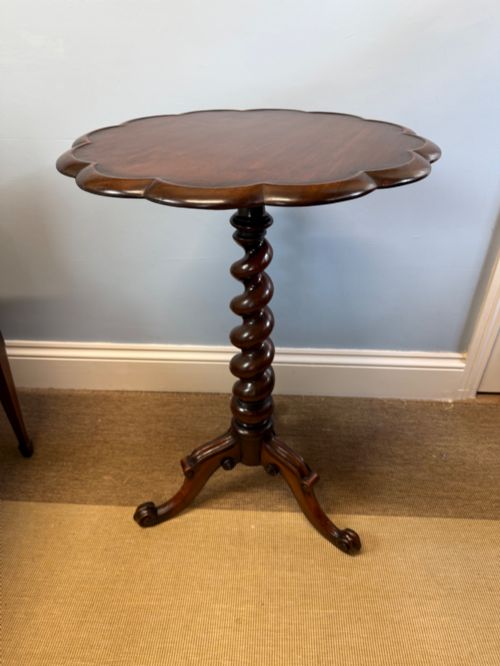
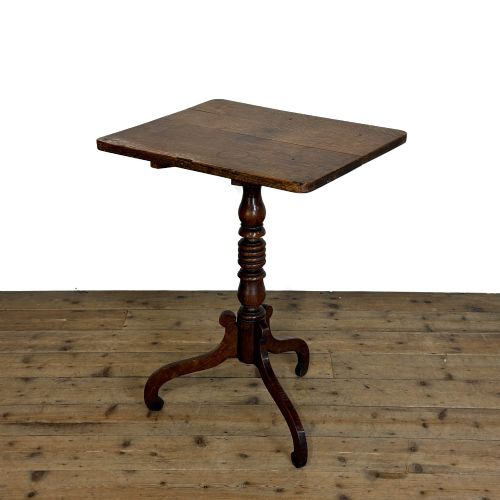
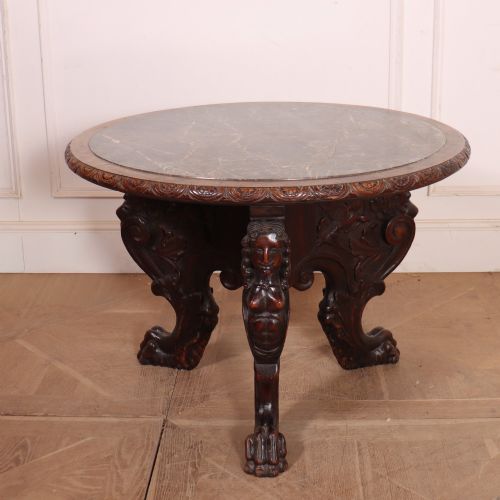
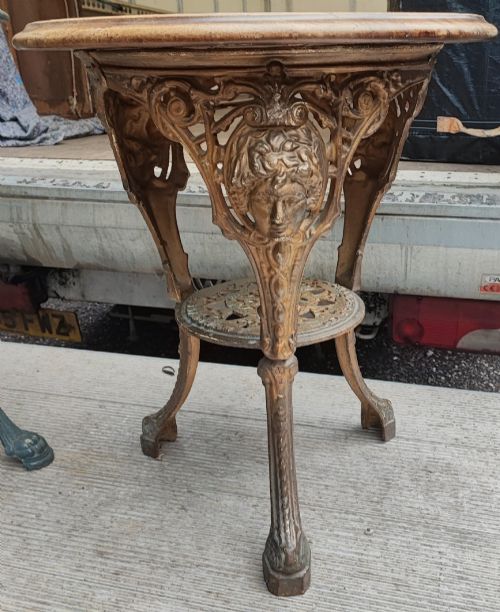
A wooden tripod side table is a compact surface supported by a central pedestal and three legs, designed for occasional use beside seating. When you search for wooden tripod side table, you encounter diverse forms ranging from wine tables and candle stands to cricket tables and lamp tables. These items appear across 18th Century, Georgian, Victorian, Edwardian, and 19th Century periods, reflecting centuries of domestic utility.
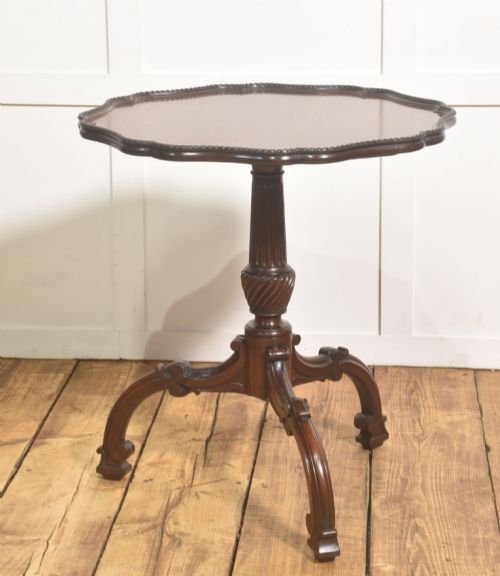
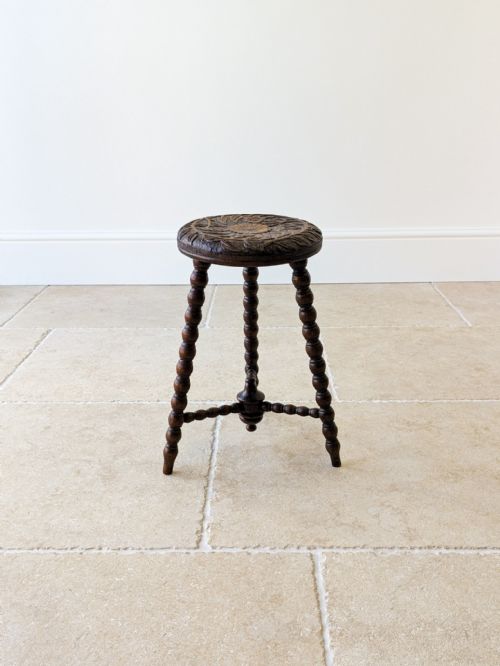
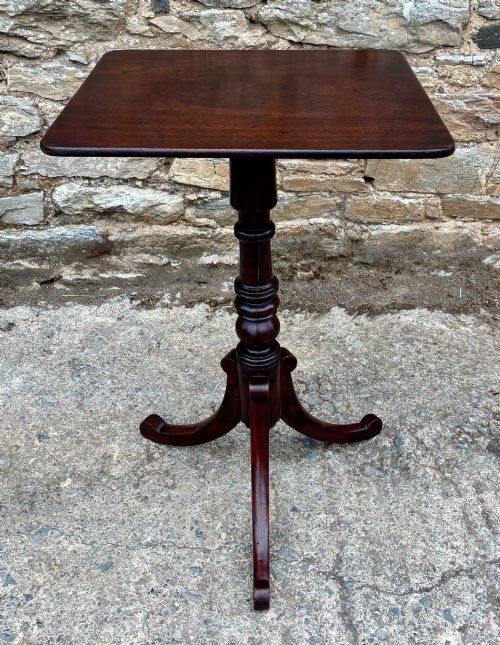
The version you are most likely to meet on this page is a mahogany or oak example dating from the Georgian or 19th Century eras. Many feature circular tops, sometimes with tilt-top or birdcage mechanisms allowing the surface to fold away when not in use. Simpler vernacular forms like cricket tables utilise native timbers such as oak, elm, or fruitwood, while more elaborate pieces incorporate inlay, carving, or painting.
Materials and construction
Cabinet makers utilised dense hardwoods like mahogany, oak, and walnut for strength and fine grain, alongside softer fruitwoods, pine, and beech for regional vernacular pieces. Timber selection dictated the structural integrity of the central column and the three splayed legs, which needed to bear weight without excessive bulk. Surface treatments ranged from plain waxed finishes to elaborate inlay, paint, ebonising, and lacquer.
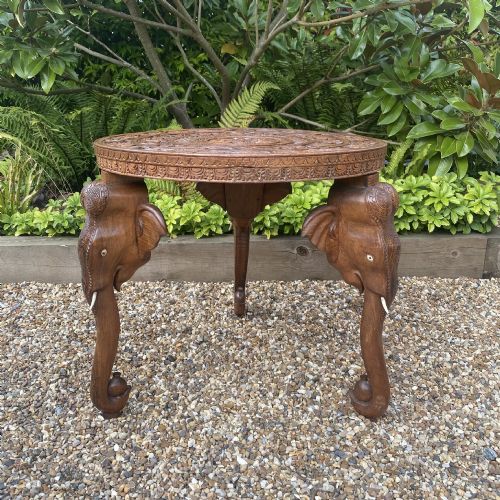
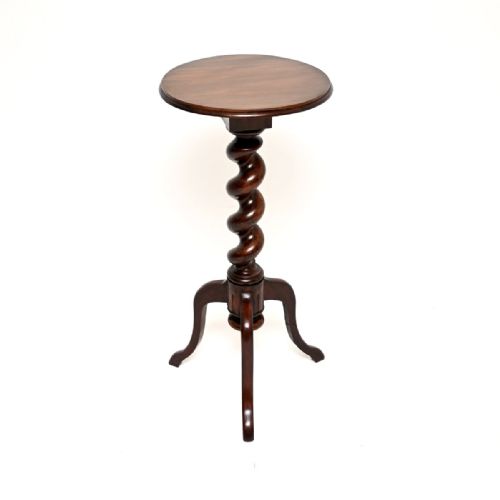
Joinery methods combined traditional turning for the central pedestals with pegged or tenoned joints where the legs meet the shaft. Many examples incorporate specialised mechanisms such as tilt-top pivots and birdcage framing, allowing the tabletop to pivot or rotate independently of the base. Carved details, chip-carving, and brass fittings appear on selected items to enhance the decorative finish.
Listings feature oak, mahogany, walnut, fruitwood, and pine across Georgian, Victorian, and Edwardian periods.
Variations in quality
Quality rests upon the selection of timber and the precision of the turning and joinery in the central column and leg junctions. Dense, well-figured mahogany or burr oak with balanced grain patterns distinguishes finer pieces from plain utilitarian examples. The integration of functional mechanisms, such as a smoothly operating tilt-top or birdcage action, demonstrates superior craftsmanship.
Decorative ambition further separates standard items from exceptional ones, seen in crisp carving, intricate inlay, or specialised finishes like Chinoiserie lacquering and marquetry. Proportion and stability remain paramount, as a well-balanced tripod base ensures the table stands firmly without rock. The harmony between the top, the pedestal turning, and the splayed foot design governs the overall success of the piece.
Gillows
The Wooden Tripod Side Table Glossary
- Tilt top
- A tabletop mounted on a pivot mechanism that allows the surface to be locked horizontally for use or folded vertically for storage against the pedestal base. This device saved space in domestic interiors when the table was not required.
- Birdcage
- A timber framework fitted beneath the tabletop that allows the surface to both tilt and rotate around the central pillar. This sophisticated mechanism is typically found on finer 18th Century and Georgian examples.
- Wine table
- A small occasional table designed to hold a bottle and glasses, frequently featuring a raised moulded edge or a dished circular top. They date primarily from the Georgian and 19th Century periods.
- Pedestal table
- Any table supported by a single central column rising from a foot or a set of legs. In this context, the column terminates in a tripod base.
Wooden Tripod Side Table: Frequently Asked Questions
What is a wooden tripod side table used for?
These pieces served multiple domestic purposes, acting as stands for candles, wine, lamps, or small decorative objects beside chairs and sofas. Their compact footprint made them easily movable around the room as daily needs shifted.
Today, they function effectively as lamp tables or bedside surfaces in contemporary spaces, requiring minimal floor area while providing a stable tabletop.
How do I identify a Georgian tripod table?
Georgian examples often display well-turned mahogany or oak pedestals with pad feet, snake feet, or carved cabriole legs. The timber selection typically shows rich patina and fine grain figure developed over centuries of use.
Construction details such as hand-cut dovetails, pegged joints, and traditional tilt-top mechanisms without modern metal fixings help confirm the period.
What is a tilt top mechanism?
A tilt top mechanism allows the horizontal surface to pivot upright against the central column, securing with a brass catch or wooden peg. This clever design enabled tables to be stored flat against walls when not in use.
When examining a tilting table, check that the pivot hinge operates smoothly and locks securely in both the vertical and horizontal positions.
Are these tables sturdy?
A well-constructed three-legged table naturally adjusts to uneven floors without rocking, provided the legs remain firmly fixed to the central column. The splayed stance of the tripod base offers reliable balance despite the compact footprint.
Avoid placing excessive weight on the outer edges of tilt-top versions, as the pivot mechanism is designed for balanced items rather than heavy loads.