


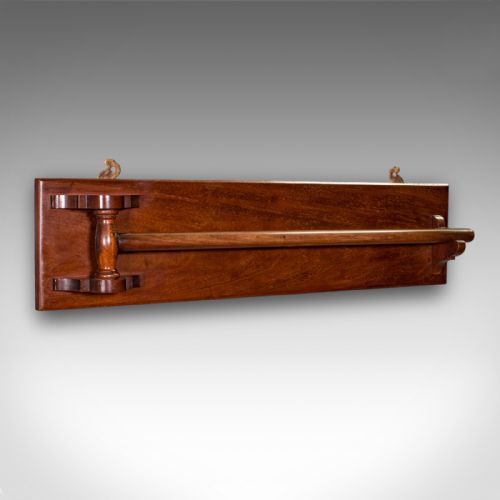


Wooden Towel Drying Rack
These wooden towel drying racks offer a practical solution for domestic spaces, combining period craftsmanship with everyday utility.
Wooden Towel Drying Rack
A wooden towel drying rack serves as a functional freestanding frame designed for airing textiles and garments within the home. Buyers searching for a wooden towel drying rack encounter various configurations, from folding multi-fold designs to substantial floor-standing rails.
The selections span distinct historical periods including the Victorian, Edwardian, and Regency eras, alongside Arts and Crafts examples. Mahogany emerges as the most frequent timber found across these pieces, supplemented by oak, pine, elm, and lacquered wood.
Forms range from conventional bathroom towel rails to large ship's maritime drying racks and expansive Chinese lacquered robe stands. Most examples on offer reflect domestic British use from the nineteenth and early twentieth centuries.
How they were made
Cabinetmakers utilised durable hardwoods such as mahogany and oak to construct stable frames capable of supporting damp textiles. Joints were typically joined using traditional woodworking techniques to ensure longevity under daily household use.
Certain pieces incorporate decorative elements like satinwood inlay or brass fittings, whilst others rely on straightforward turned wooden members. Painted and lacquered surfaces appear on specific regional and Asian examples to finish the wood.
Folding mechanisms on three-fold and cheval designs relied on pivoting hinges or clever joinery to allow the frame to collapse when not in use.
Wooden Towel Drying Rack Retail Price Guide 2026
Typical asking prices for wooden towel drying rack among the pieces listed under this phrase on Sellingantiques today, from the lower quarter to the upper quarter. They describe what is for sale here now, not the wider market.
Mahogany is the most commonly recorded wood across the current listings, appearing alongside oak, pine, and elm.
What varies in quality
The standard of timber selection largely dictates the quality of a wooden towel drying rack, with dense grain and rich natural colour marking superior examples. Finer pieces demonstrate careful attention to proportion and structural stability rather than purely utilitarian construction.
Subtle decorative flourishes, such as delicate satinwood inlay or well-turned uprights, elevate country house pieces above standard utility items. The integrity of the folding mechanism and the tightness of the original joints also distinguish better-made examples.
The Wooden Towel Drying Rack Glossary
- Cheval rail
- A freestanding swinging frame that tilts or rotates on vertical pivots. This design allows easy access to multiple rails from various angles.
- Satinwood inlay
- A decorative technique inserting contrasting pale exotic wood into recesses on the primary timber surface. It creates geometric or floral patterns popular in cabinetmaking.
- Arts and Crafts
- A design movement prioritising traditional craftsmanship and simple forms over mass-produced ornamentation. Pieces from this style often feature honest construction in solid oak.
- Lacquered wood
- Timber coated with multiple layers of resin-based finish to produce a durable, glossy surface. This treatment protects the wood whilst providing a decorative sheen.
Wooden Towel Drying Rack: Frequently Asked Questions
How were wooden towel drying racks used originally?
These racks stood near fireplaces or in bedrooms to air damp linens, laundry, and towels after washing.
They provided a portable method of drying textiles before the widespread adoption of domestic mechanical laundry appliances.
Where should I place a wooden towel drying rack today?
They fit naturally in bathrooms, utility rooms, or bedrooms as functional storage for towels and blankets.
Positioning them away from direct, intense heat sources protects the antique wood and finish from drying out excessively.
How do I identify an Edwardian wooden towel drying rack?
Edwardian pieces often feature lighter mahogany frames with simpler, cleaner lines compared to heavier Victorian predecessors.
They frequently date from around the turn of the twentieth century and reflect prevailing Edwardian domestic interior tastes.
Are these racks suitable for everyday modern use?
Most surviving wooden racks remain structurally sound enough for daily towel airing when treated with reasonable care.
Distributing wet textiles evenly across the rails prevents undue stress on the antique joints and hinges.