

Wooden Tiered Display Table
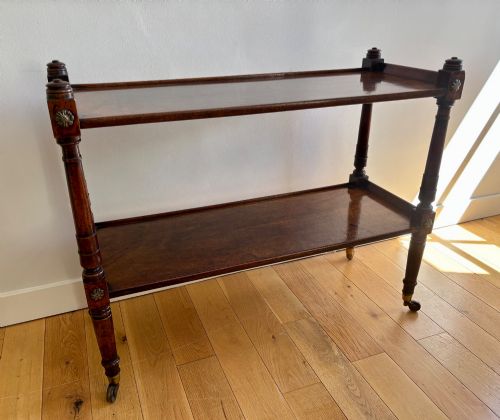
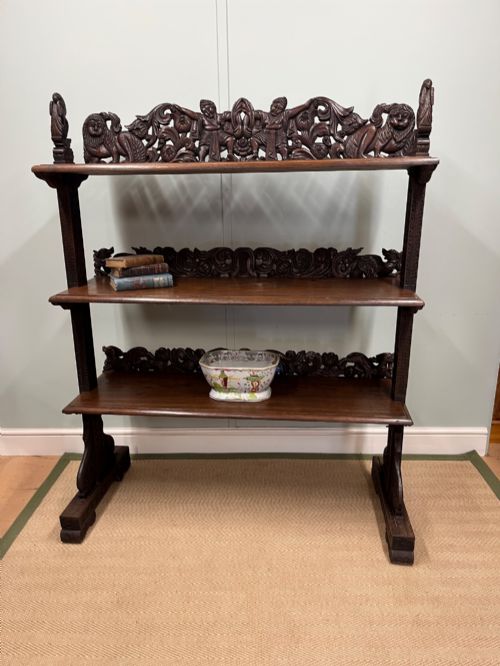
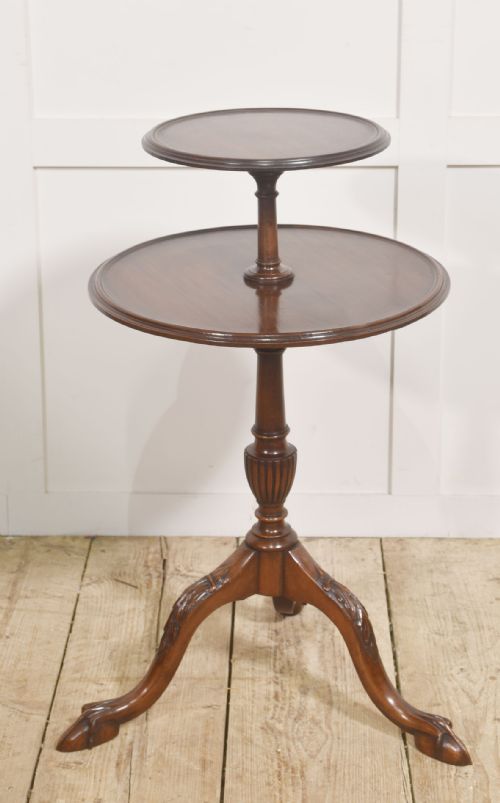
A wooden tiered display table is a multi-level surface designed to hold ornaments, plants, or books, combining practical staging with tiered vertical space.
Wooden Tiered Display Table
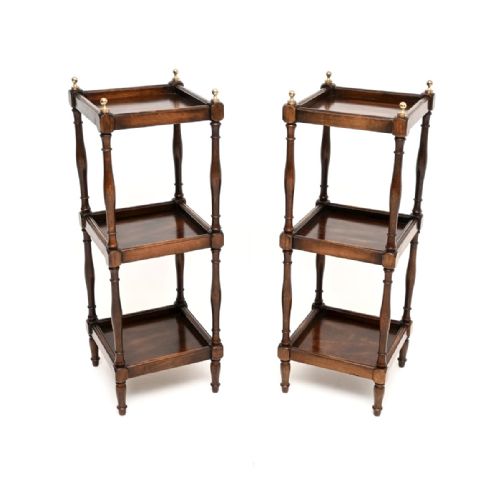
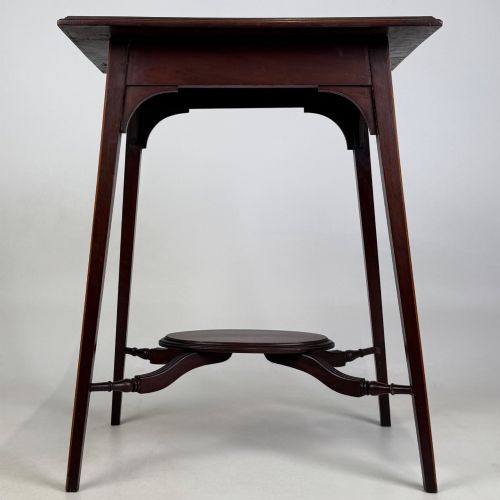
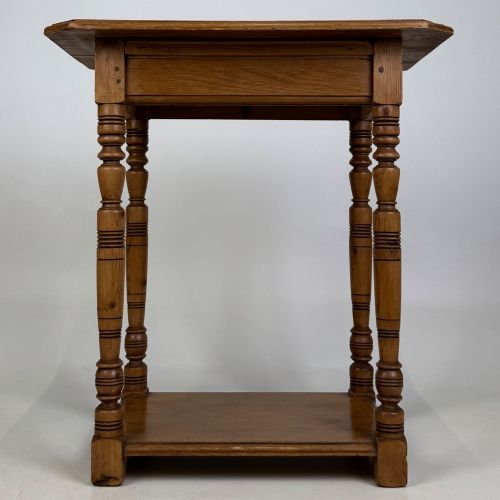
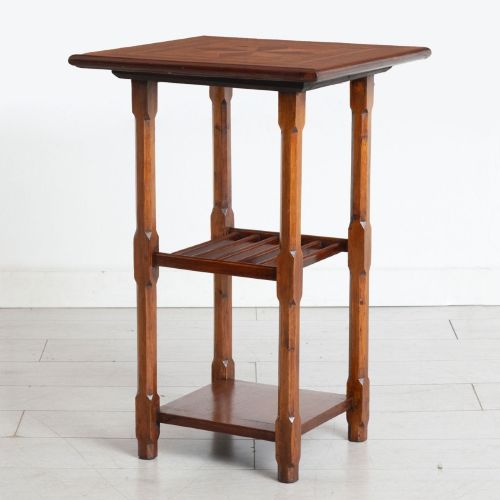
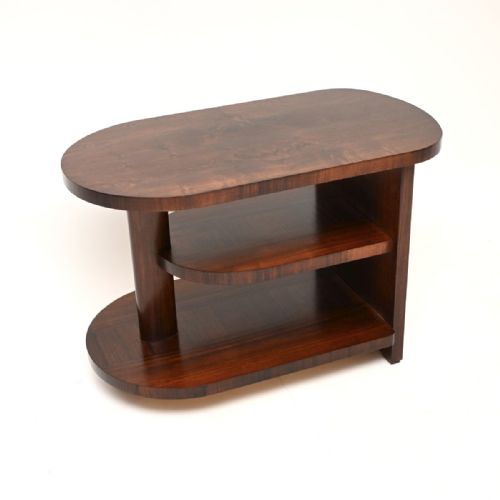
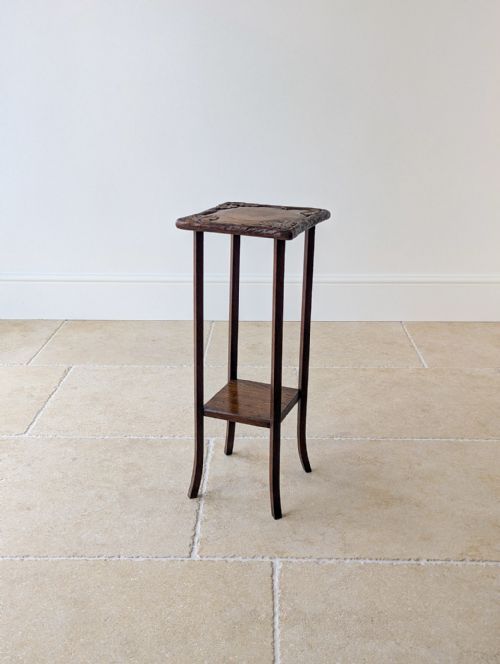
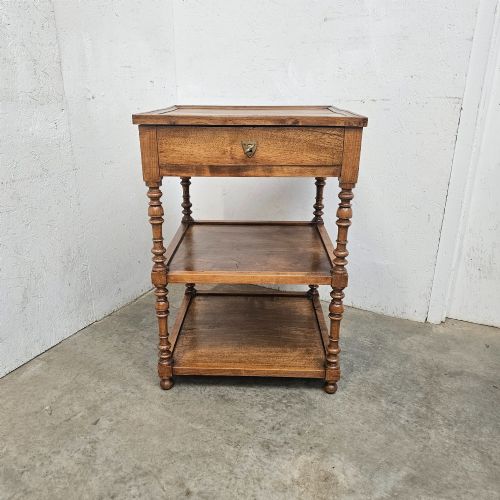
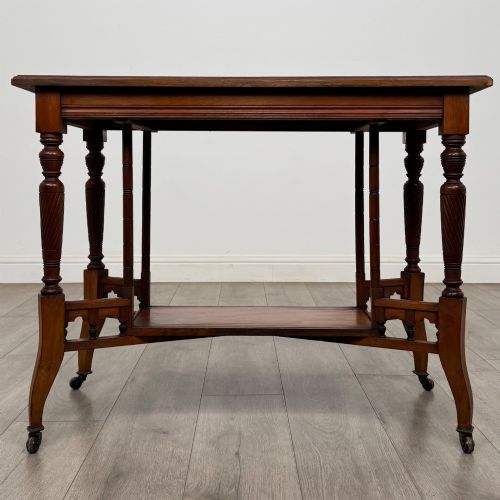
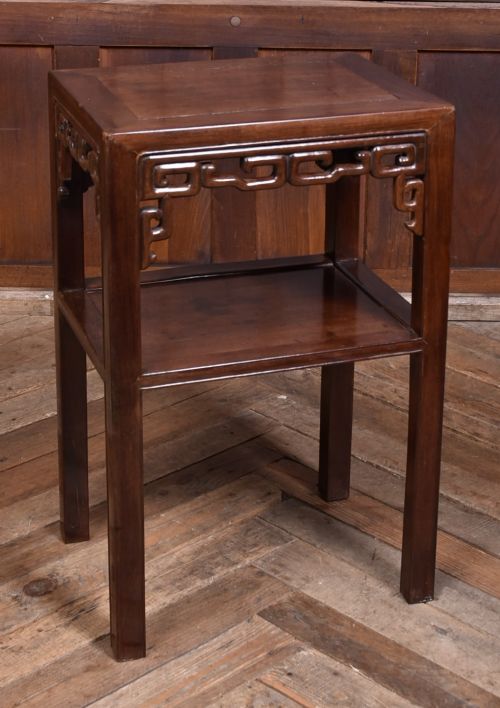
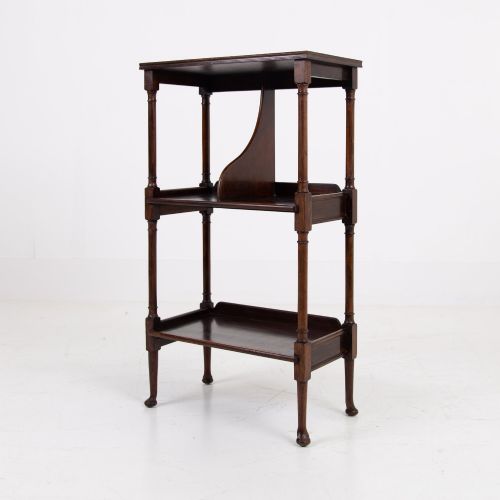
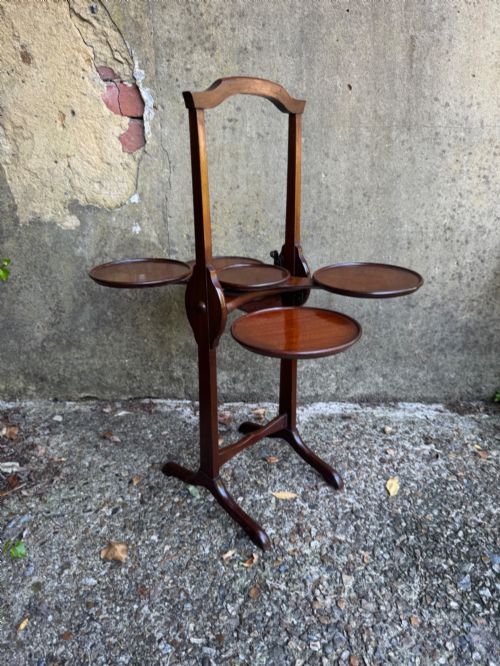
When you search for a wooden tiered display table, you encounter pieces that span the Victorian, Edwardian, and nineteenth-century periods, alongside Regency and Arts and Crafts examples. These take the structural form of whatnots, etageres, plant stands, and occasional tables with multiple levels.
The most frequent versions on this page are Edwardian and Victorian mahogany or walnut pieces featuring two or three tiers, designed for domestic display and practical utility in a room.
Origins range widely from English workshops to French, Chinese, and Japanese makers, bringing diverse regional turning, carving, and inlay techniques to the tiered format.
Materials and construction
Cabinetmakers constructed these tiered surfaces primarily in mahogany, walnut, oak, and rosewood, often utilising exotic timbers such as satinwood, boxwood, and birdseye maple for contrasting details.
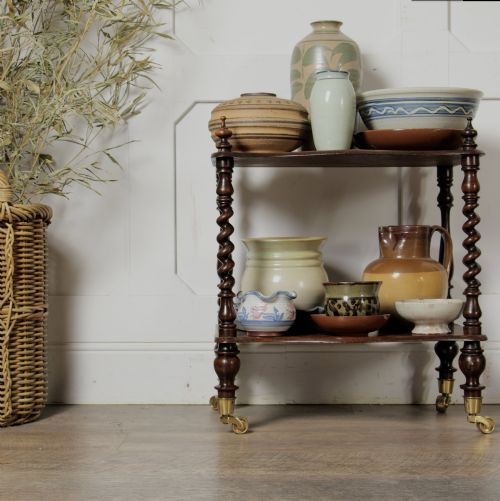
Construction techniques include delicate marquetry inlay, crossbanding, hand carving, turned wooden legs, and barley twist supports to give structural stability across multiple tiers.
Listings feature woods spanning mahogany, walnut, rosewood, satinwood, and oak across Edwardian, Victorian, and Regency periods.
Assessing quality
Quality rests in the selection of timber veneers and the crispness of marquetry inlay, where figured woods like burr walnut or satinwood elevate standard utility furniture into decorative focal points.
Joinery execution distinguishes everyday items from exhibition pieces, evident in how firmly the upright supports join the graduated tiers and how cleanly the decorative carving is resolved.
Liberty of London·Gabriel Viardot
The Wooden Tiered Display Table Glossary
- Etagere
- A piece of furniture consisting of a set of open shelves or tiers for displaying small objects. These often stand in a corner or against a wall.
- Whatnot
- An open set of shelves used for displaying ornaments or holding books, popular throughout the nineteenth century. They frequently feature three or more tiered surfaces.
- Marquetry
- Decorative veneer applied to furniture in geometrical patterns or pictorial scenes using various coloured woods. This technique requires considerable skill to fit the pieces precisely.
- Barley twist
- A form of turning resembling the spiral twist of a barley sugar stick, used on the upright supports of tables and stands. It became particularly popular during the Victorian period.
- Crossbanding
- A border strip of veneer laid around the edge of a table top or shelf with the grain running at right angles to the main surface. It provides a neat framing effect.
Wooden Tiered Display Table: Frequently Asked Questions
What is a wooden tiered display table used for?
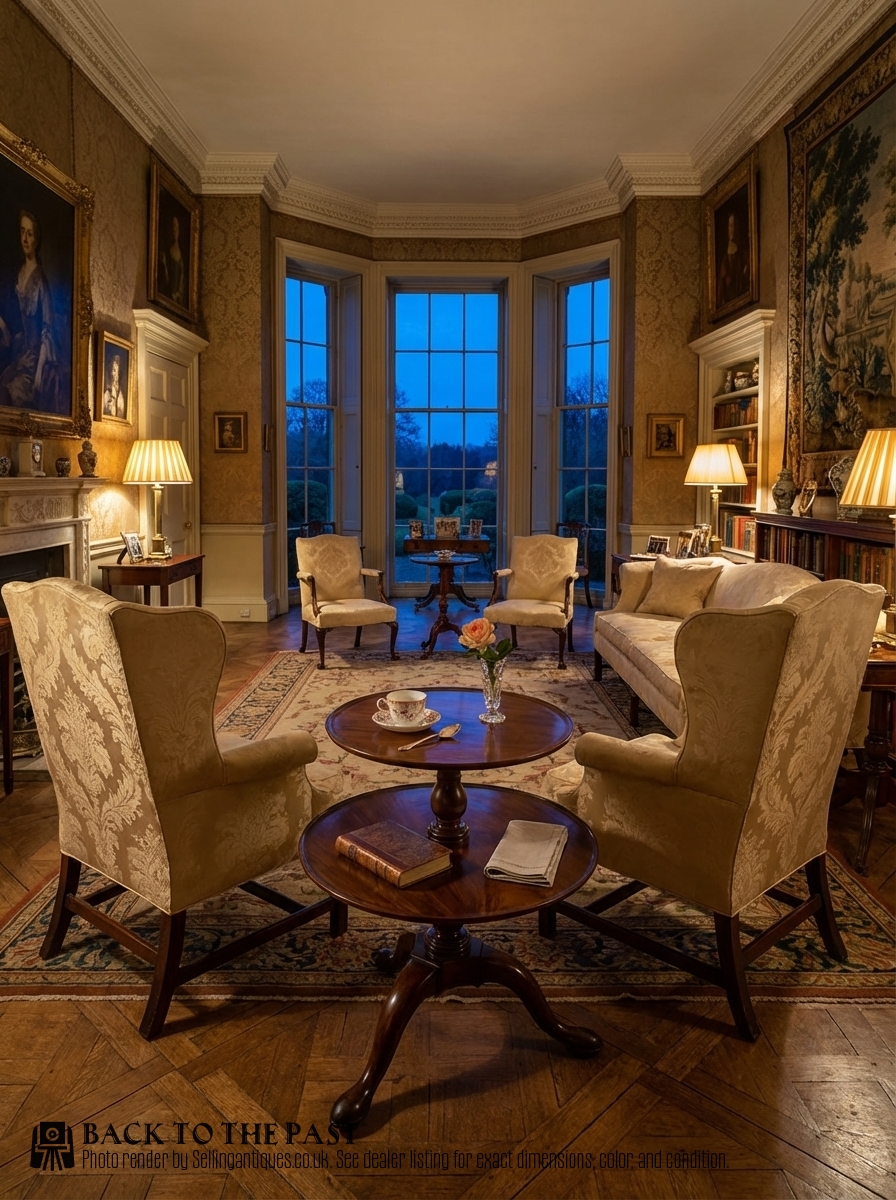
These tables were historically placed in drawing rooms and parlours to hold ornaments, ceramics, small clocks, and books without taking up excessive floor space.
Today, they function well as plant stands, bedside surfaces, or corner display units for collections of small items.
How do I tell a Victorian tier stand from an Edwardian one?
Victorian examples tend to use heavier timbers like dark mahogany and burr walnut, often featuring rich carvings, barley twists, or elaborate marquetry.
Edwardian pieces generally appear lighter in build, frequently utilising satinwood inlay, lighter mahogany tones, and simpler geometric lines.
Are etageres and whatnots the same thing?
Both terms describe tiered shelving units, though etagere often implies a French influence with decorative marquetry, while whatnot is traditionally an English term for multi-tiered display furniture.
In practice, makers used both designations interchangeably for pieces sharing the same open multi-level structure.
How should I care for antique walnut and mahogany tiers?
Keep these surfaces away from direct sunlight and strong heat sources to prevent the wood veneers from drying out or warping over time.
Dust them gently with a dry cloth and apply a quality beeswax polish occasionally to nourish the timber and maintain its natural lustre.