

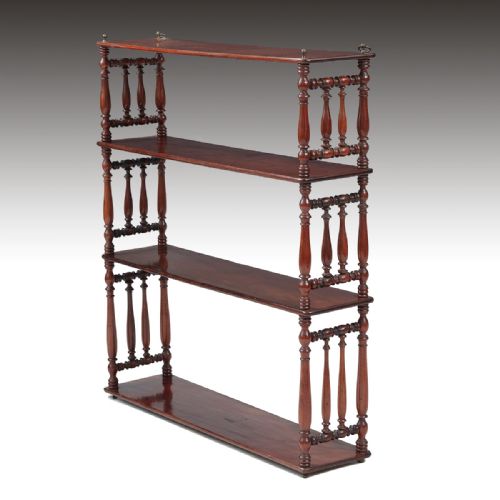
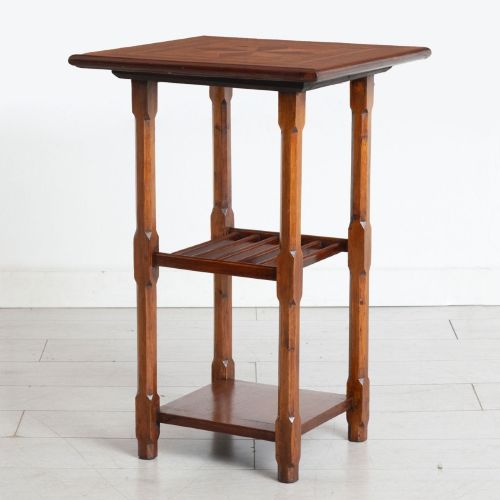
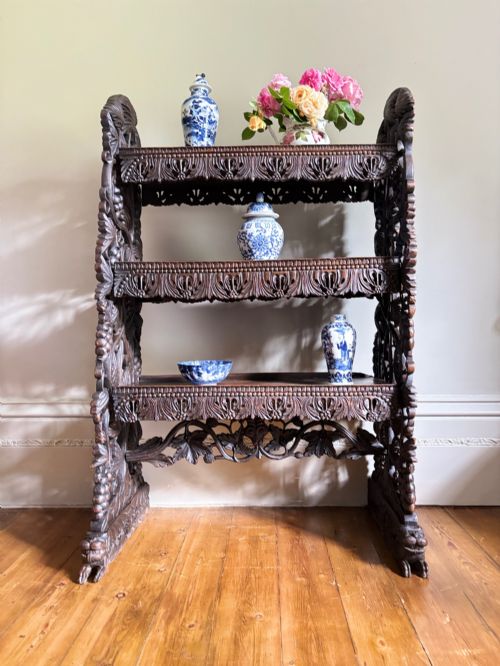
Wooden Tier Shelf
These wooden tier shelf pieces provide layered display and storage, bringing upright timber architecture into sitting rooms and studies.
Wooden Tier Shelf
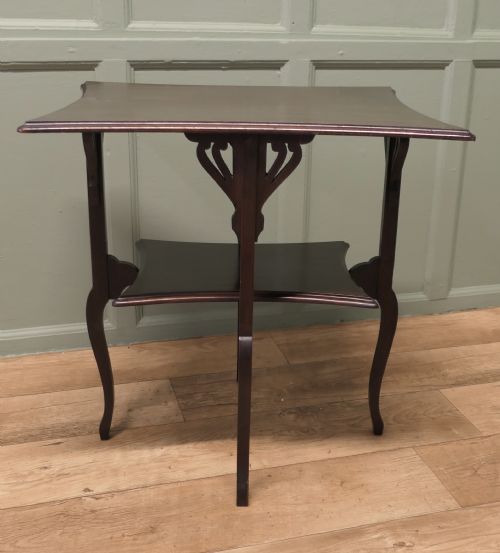
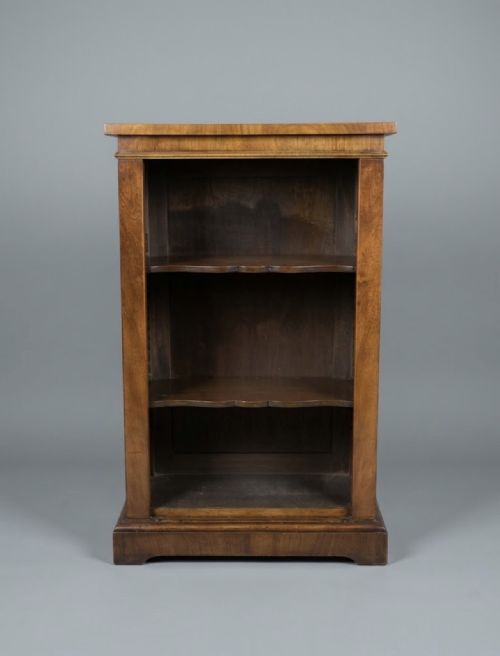
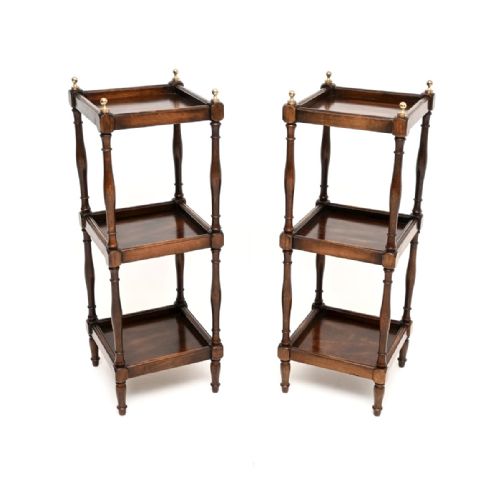
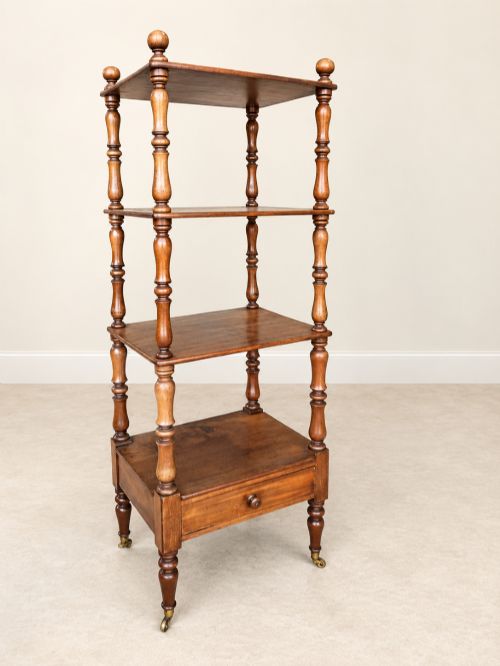
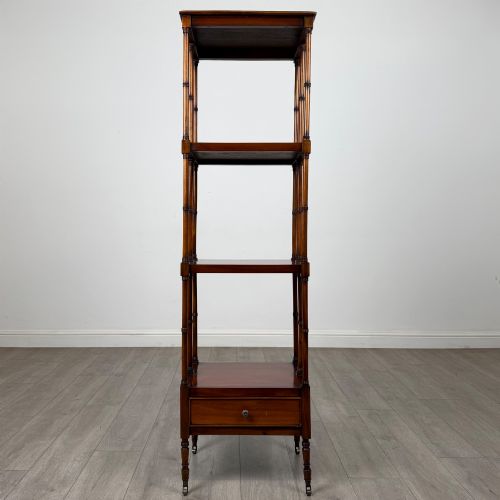
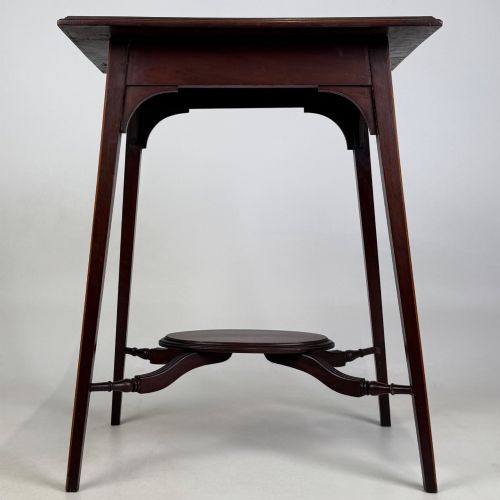
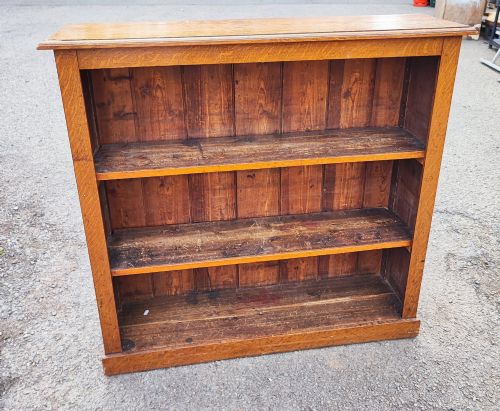
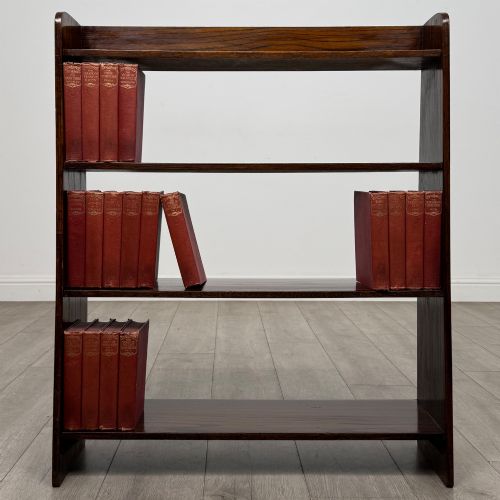
A wooden tier shelf organises domestic space through stacked horizontal surfaces, appearing in forms such as whatnots, bookcases, and etageres. Buyers seek these pieces for practical display and vertical storage across rooms of modest proportions.
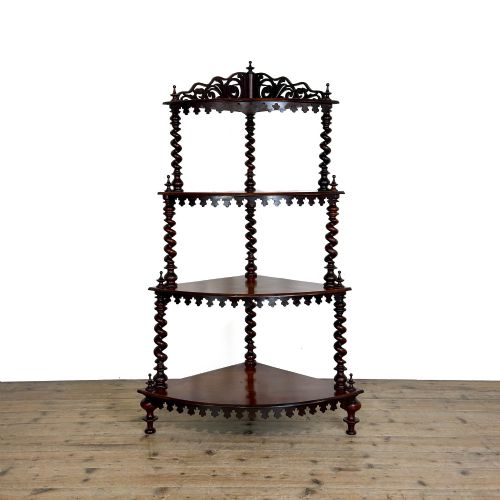
The pieces on this page emerge predominantly from the nineteenth and early twentieth centuries, spanning Victorian, Edwardian, and Regency eras. Standard configurations include corner units, wall-mounted ledges, and multi-tiered floor-standing side tables.
Makers utilised diverse formats to solve storage needs, ranging from revolving bookcases to graduated open shelving units. Mahogany and oak dominate the surviving examples, supported by walnut and satin birch constructions.
Materials and construction methods
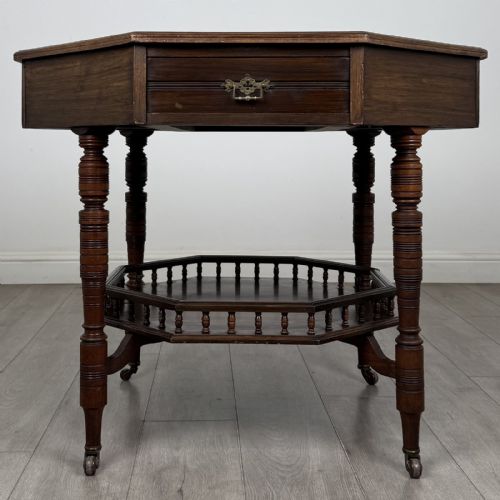
Cabinetmakers built these tiers primarily using dense hardwoods such as mahogany and oak, often integrating burr walnut or teak for decorative emphasis. Brass castors, wire details, and turned or barley twist uprights provide structural support and mobility.
Joinery methods rely on traditional framing to bear weight across multiple levels without sagging. Raised galleries, wood inlay, and marquetry adorn select surfaces, reflecting the workmanship of Victorian and Edwardian workshops.
Periods represented span from the Georgian era through the Regency, Victorian, and Edwardian epochs into the 1930s.
Distinguishing quality in tiers and shelving
Quality rests upon the selection of timber grain and the integrity of the vertical supports holding each tier. Pieces employing solid mahogany or figured walnut demonstrate greater material ambition than simpler utility grades.
Refinement shows in the crispness of turned legs, the precision of inlay work, and the stability of joints across multiple levels. Well-executed corner joinery and balanced proportions separate standard storage items from finer decorative pieces.
The Wooden Tier Shelf Glossary
- Whatnot
- A moveable piece of furniture with shelves for displaying small objects or books. These typically feature three or four tiers supported by slender uprights.
- Etagere
- A set of open shelves for displaying ornaments, sharing similarities with the whatnot. French examples often incorporate turned legs and walnut timbers.
- Barristers Stacking Bookcase
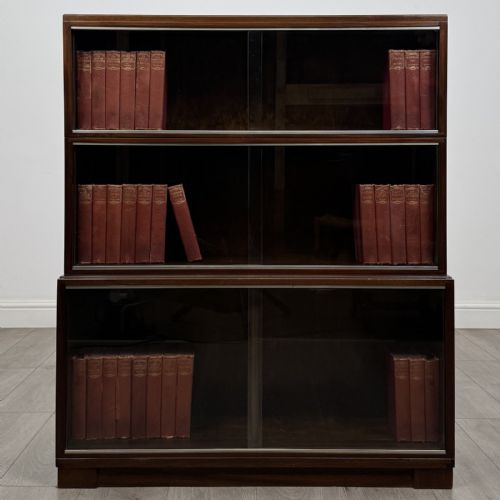
- A modular bookcase featuring glazed vertically lifting doors on multiple tiers. This design allows sections to stack vertically.
- Gallery
- A raised wooden or brass rail along the edge of a shelf or table top. This feature prevents items from sliding off upper tiers.
- Barley Twist
- A spiral turning carved into furniture legs or vertical supports. This decorative woodworking technique appears frequently on Victorian stands and shelves.
Wooden Tier Shelf: Frequently Asked Questions
What is a wooden tier shelf used for?
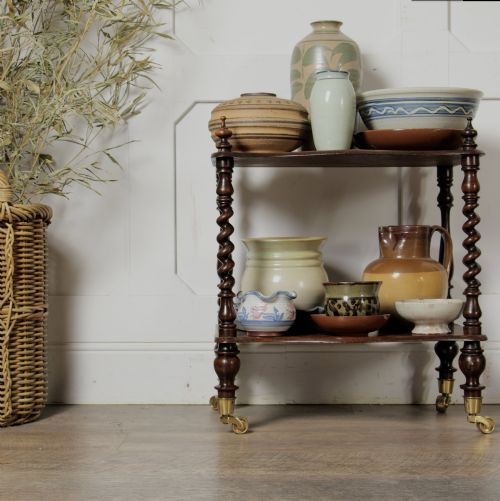
These tiers provide vertical storage for books, ceramics, and ornaments while occupying minimal floor space. They function effectively in living rooms, hallways, and studies for organised display.
Historically, whatnots and etageres served to hold decorative objects and reading materials within easy reach. Today, owners utilise them to exhibit collections without cluttering primary tables.
How do I date a wooden tier shelf?
Dating relies on observing timber choices, joinery details, and stylistic markers recorded across Victorian, Edwardian, and Regency periods. Mahogany and heavy brass castors often point to nineteenth-century production.
Later Edwardian pieces frequently display lighter oak frames, raised galleries, or simpler geometric turning. Comparing the hardware and shelf assembly helps align the piece with its era of manufacture.
Where should I place a multi-tier shelf?
Corner units fit neatly into unused angles of a room, making efficient use of awkward spaces. Wall-mounted shelves suit smaller rooms where floor area is restricted.
Freestanding whatnots and bookcases sit well against plain walls or beside seating furniture. Ensure the placement avoids direct heat sources to protect older timber surfaces.
Are these shelves sturdy enough for heavy books?
Most solid mahogany and oak structures handle standard book collections securely across their tiers. Sturdiness depends on the rigidity of the vertical supports and the thickness of the timber shelves.
Heavier volumes sit best on lower tiers where weight distribution remains stable. Lighter decorative items and small objects are better suited to upper levels.