

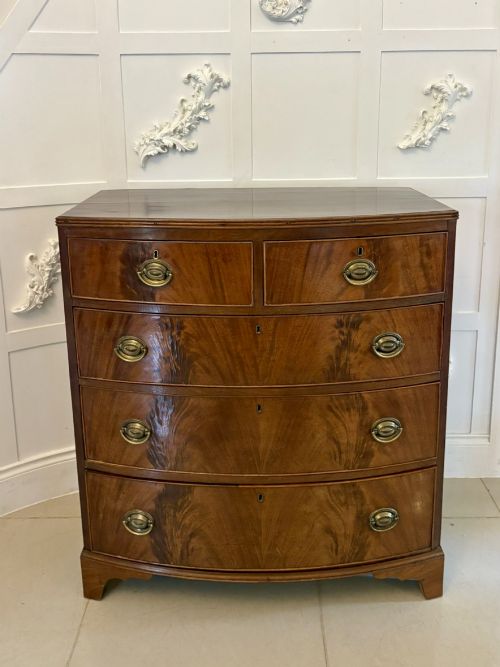
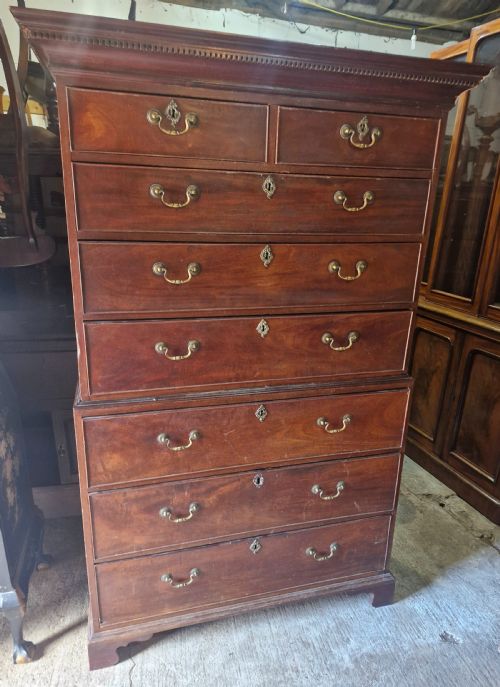
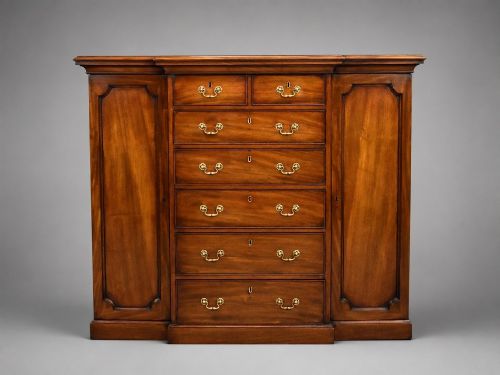

Wooden Tall Storage Chest
A wooden tall storage chest provides vertical capacity for garments and papers while anchoring a room with dense timber grain.
Wooden Tall Storage Chest
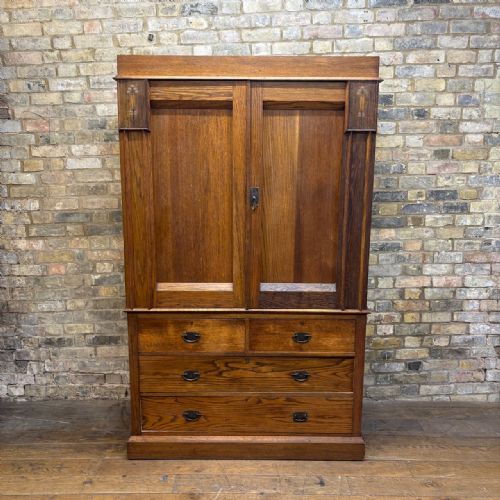
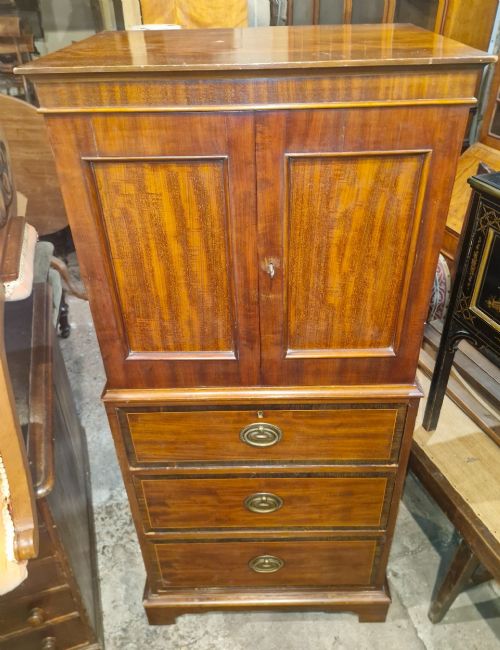
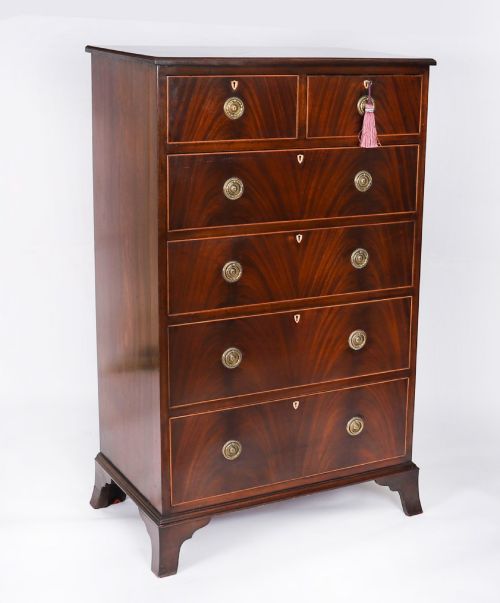
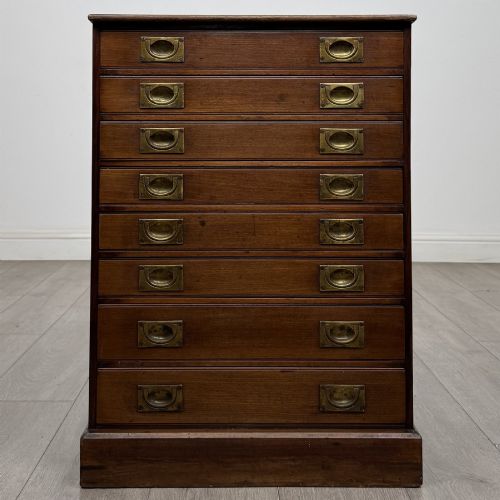
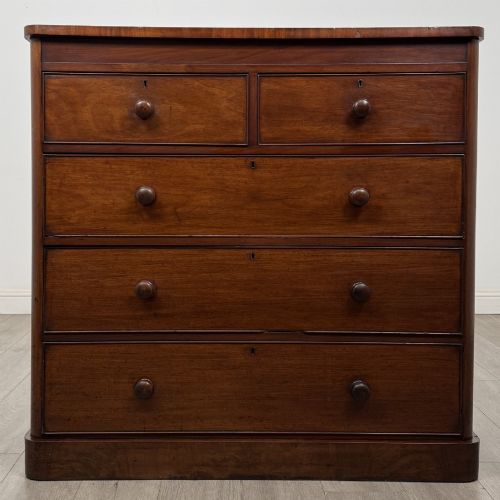
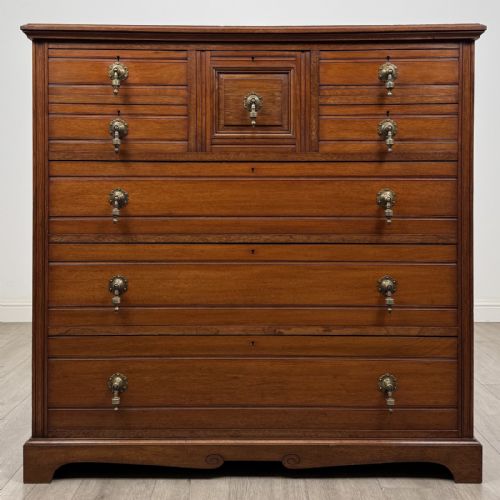
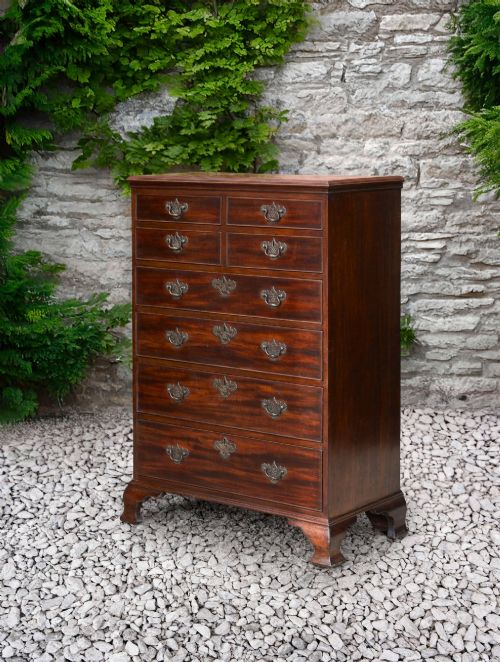
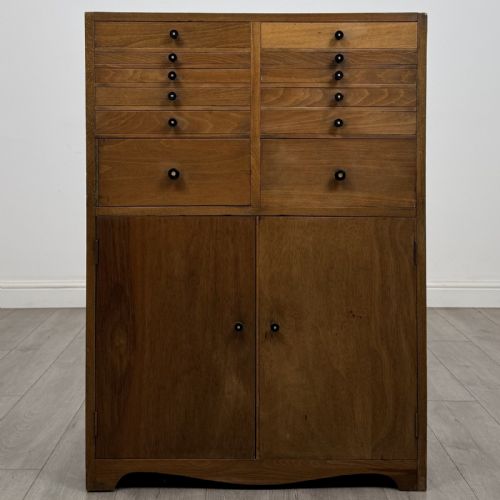
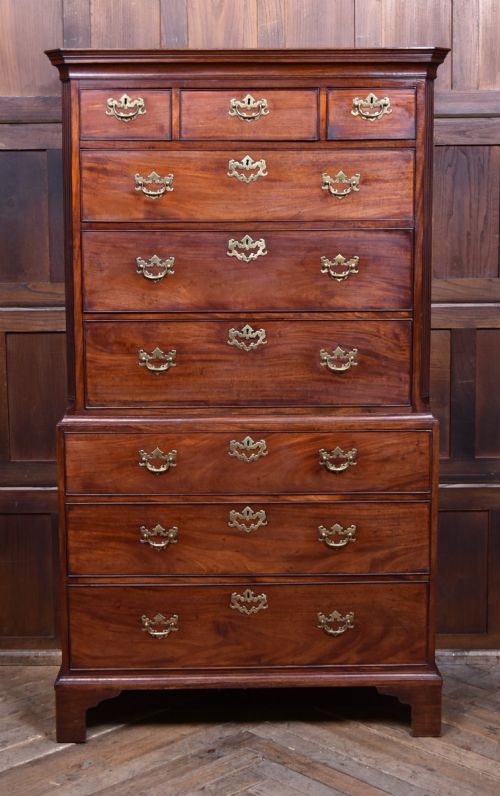
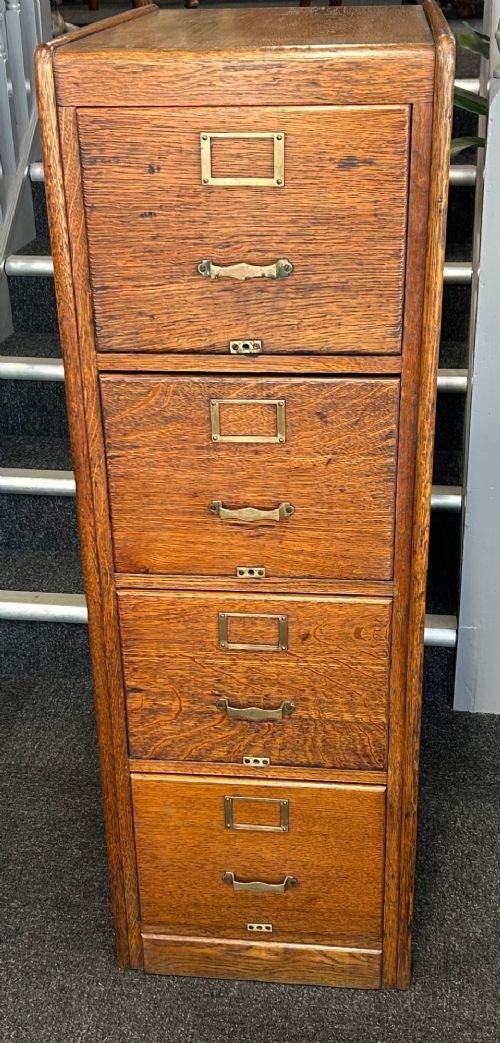
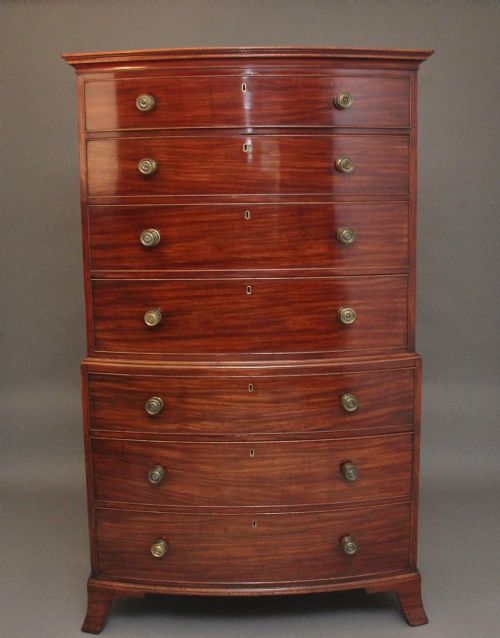
A wooden tall storage chest brings vertical proportion to domestic organisation, offering deep capacity without consuming extensive floor space. The pieces gathered under this phrase range from Georgian tallboys and Victorian Wellington chests to early twentieth-century oak filing cabinets.
The version most commonly met on this page is the multi-drawer mahogany or oak chest rising through five or more tiers. Alongside these stand specialist variants such as music cabinets, linen presses, and narrow bedside chests from the Victorian and Edwardian eras.
Materials and Construction
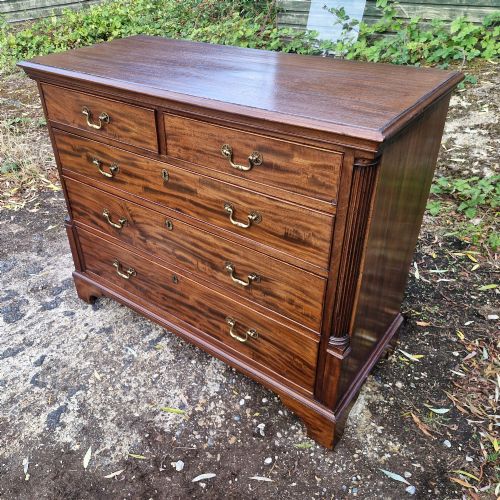
Cabinet makers built these vertical carcasses primarily in mahogany, oak, walnut, and pine, frequently selecting figured veneers or burr walnut for drawer fronts. Drawer construction relied on tight hand-cut dovetails, ensuring the joints withstood the continuous weight of heavy contents over centuries.
Metal hardware such as brass drop handles, key escutcheons, and locking mechanisms added functional security to the taller units. Secondary timbers like pine appear within internal framing and drawer linings, demonstrating traditional workshop economy.
Wooden Tall Storage Chest Retail Price Guide 2026
Typical asking prices for wooden tall storage chest among the pieces listed under this phrase on Sellingantiques today, from the lower quarter to the upper quarter. They describe what is for sale here now, not the wider market.
The listings span the Georgian, Victorian, and Edwardian periods, constructed primarily in mahogany, oak, walnut, and pine.
Markers of Excellence
The distinction between standard utility furniture and superior pieces rests upon timber selection and the crispness of cabinet work. Master makers chose deeply figured mahogany or burr walnut with matched grain running continuously across the drawer tiers.
Internal execution reveals the true standard of manufacture, observable in the thinness of hand-cut dovetails and the smooth sliding action of the drawers within their vertical housing. Original brasses and functioning locking bars on Wellington chests elevate the integrity of the piece.
Maple and Co
The Wooden Tall Storage Chest Glossary
- Tallboy
- A tall chest of drawers, often constructed as a chest on chest where a smaller upper section sits upon a larger base.
- Wellington chest
- A tall, narrow Victorian chest featuring a hinged vertical locking timber on one side that secures all the drawers simultaneously.
- Dovetail
- A joint formed by interlocking wedge-shaped fingers, used traditionally to connect drawer sides to drawer fronts.
- Escutcheon
- A protective metal plate surrounding a keyhole, commonly cast in brass on period cabinetry.
- Linen press
- A tall cupboard enclosing sliding trays or shelves, traditionally utilised for storing folded textiles and household linen.
Wooden Tall Storage Chest: Frequently Asked Questions
What is a Wellington chest?
A Wellington chest is a tall, narrow set of drawers distinguished by a locking flap down one side that fastens the entire column.
This clever mechanism kept personal papers and valuables secure in nineteenth-century studies and dressing rooms.
How do I use a tall chest in a modern room?
These tall units suit rooms with limited floor space because they build upward rather than outward, making them ideal for bedrooms and hallways.
Their substantial vertical presence also helps balance high ceilings in older properties.
What is the difference between a tallboy and a chest on chest?
A tallboy generally refers to any single tall chest of drawers, whereas a traditional chest on chest is built in two distinct stacked sections.
Both forms share the primary purpose of maximising storage capacity within a compact footprint.
How do I identify a Victorian piece?
Victorian pieces often employ dense mahogany, burr walnut, or pine, frequently featuring heavy brass hardware and robust carcass construction.
Examining the drawer linings and backboards helps confirm the period manufacturing methods.