


Wooden Table Set
A wooden table set gathers people together, ranging from formal dining suites to nests of low tables crafted in mahogany, oak, and walnut.
Wooden Table Set
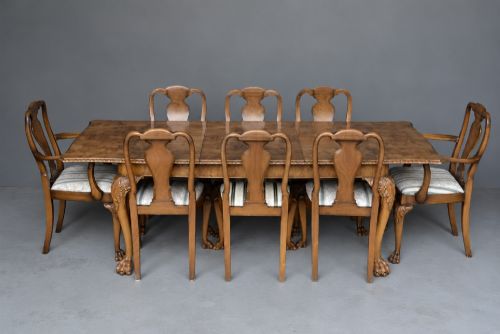
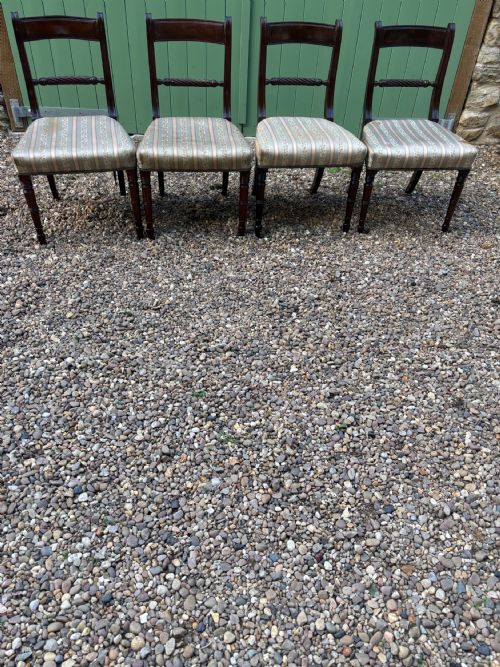
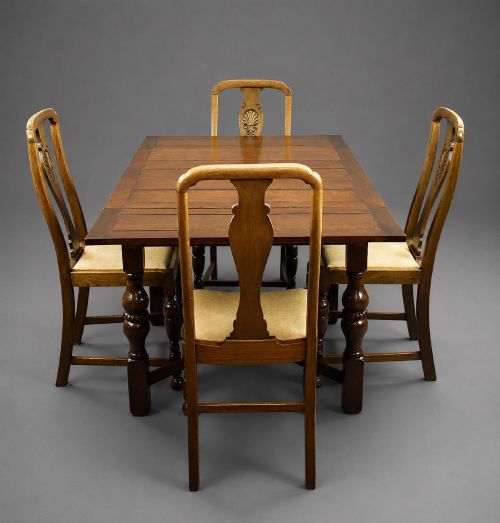
A wooden table set encompasses a variety of domestic configurations, most commonly appearing here as dining tables matched with chairs, or nests of several tables designed to stow together. These pieces span from the Georgian and Regency periods through the Edwardian era and the 1920s and 1930s.
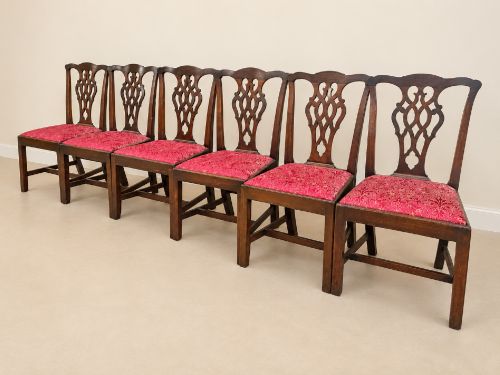
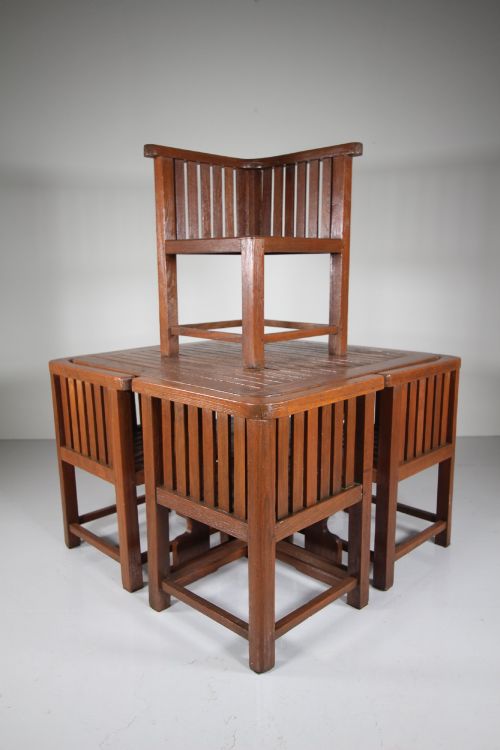
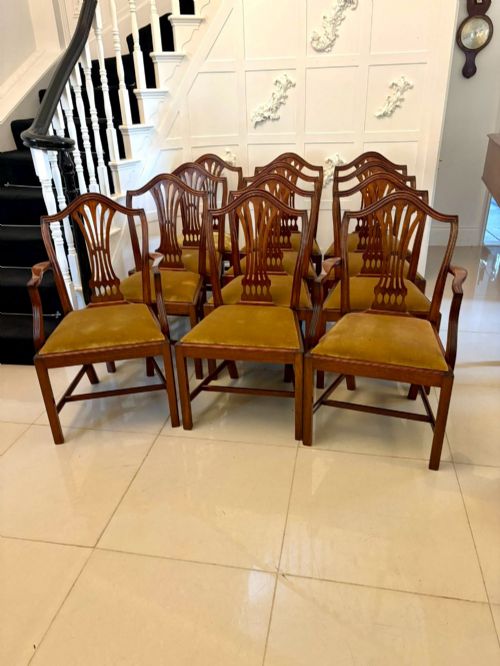
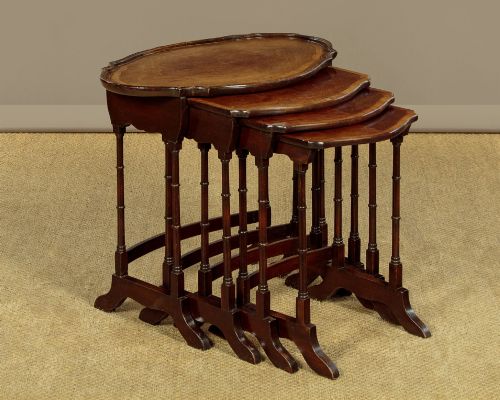
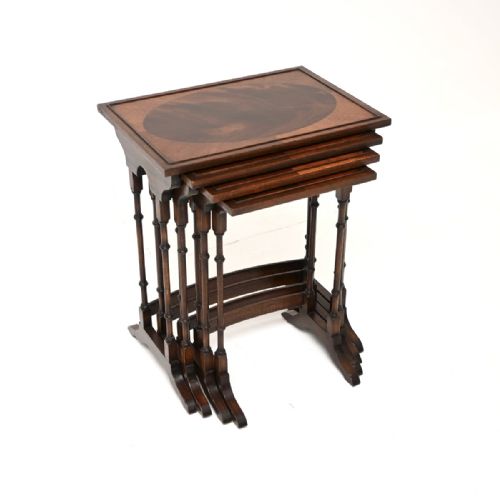
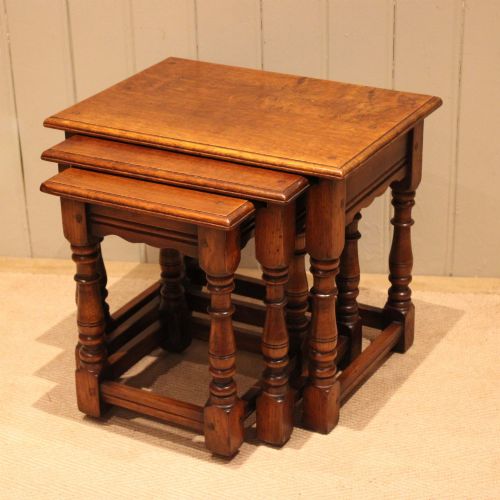
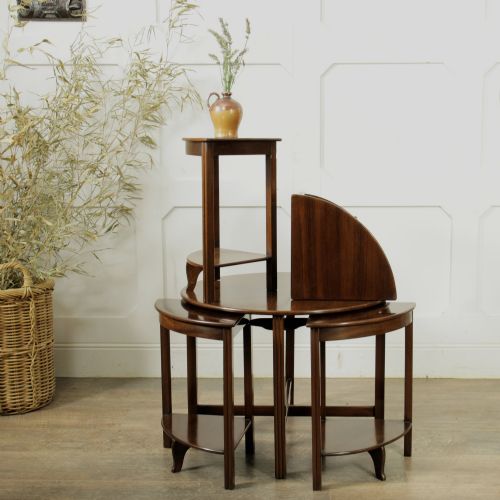
Dining arrangements pair large timber tables with sets of chairs, sometimes including carvers, constructed in dense hardwoods like mahogany and oak. Nesting tables present a different form of wooden table set, offering multiple smaller surfaces that slide neatly beneath one another when floor space is required.
The materials and construction methods shift according to the period of origin, moving from formal handcrafted Georgian proportions to lighter Edwardian inlays and the clean lines of Art Deco pieces. Walnut, satinwood, and teak also appear across these varied domestic groupings.
Markers of Quality
Quality in a wooden table set rests upon the integrity of the timber selection and the precision of the joinery connecting frames and legs. Solid hardwoods show careful matching of grain across tabletops and chair backs, whereas lesser pieces rely on uniform veneers over secondary woods.
The finesse of secondary details distinguishes finer examples, visible in the sharpness of inlaid stringing, the secure fit of nesting tables, and the stability of chair joints under daily use. Original maker labels or distinct workshop design traits further elevate the standing of a set.
Wooden Table Set Retail Price Guide 2026
Typical asking prices for wooden table set among the pieces listed under this phrase on Sellingantiques today, from the lower quarter to the upper quarter. They describe what is for sale here now, not the wider market.
Heal's·Jack Grimble·Jaques & Hamleys·F.H.Ayres Ltd
The Wooden Table Set Glossary
- Quartetto
- A matched set of four small tables designed to nest inside one another in descending size. This form gained popularity during the Georgian period and returned in Edwardian times.
- Refectory table
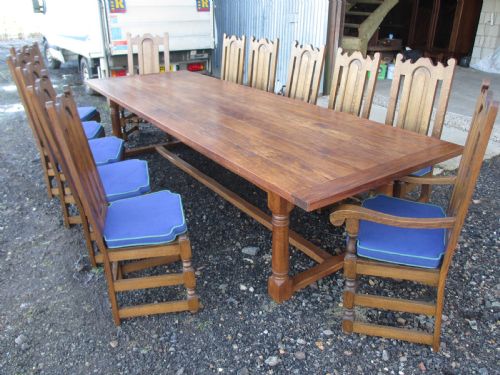
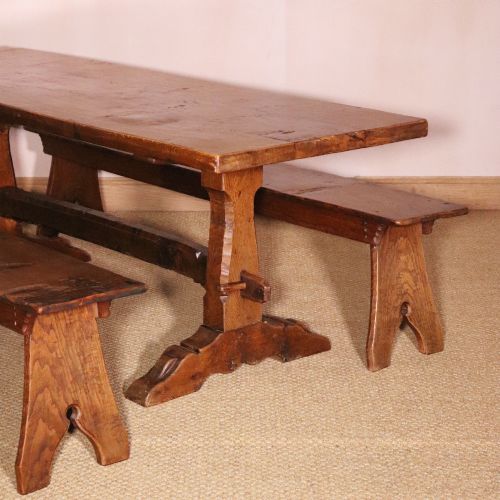
- A long, narrow dining table traditionally supported by substantial legs connected by a low stretcher. These pieces originate from communal dining halls but appear in later oak iterations.
- Draw leaf table
- A dining table equipped with sliding leaves hidden beneath the main top that pull out to extend the surface area. This mechanism allows the table to accommodate larger gatherings.
- Inlay
- A decorative technique where contrasting materials such as satinwood or lighter timber are embedded into recesses in the primary wood surface. Edwardian makers utilised this frequently on mahogany tables.
Wooden Table Set: Frequently Asked Questions
How do I date an oak dining table set?
Dating an oak dining set involves examining the construction methods, such as hand-cut joinery on older refectory styles versus later draw-leaf mechanisms from the early twentieth century. Grain patterns and hardware also offer clues to the specific manufacturing era.
Early pieces display deep patination and pegged joints, whereas Edwardian and 1930s examples often feature cleaner machinery cuts and lighter finishes.
Were dining chair sets always sold with tables?
Dining chairs and tables were frequently produced as cohesive suites, sharing timber selections like mahogany or walnut and matching stylistic motifs such as Hepplewhite or Regency designs. However, many antique chairs and tables were also paired together later based on proportion and wood tone.
Checking the timber grain and wear patterns helps determine whether the chairs and table originated together as a single commissioned set.
How should I care for antique wooden tables?
Antique wooden surfaces require gentle treatment, avoiding direct sunlight and excessive heat fluctuations that can dry out timber and cause veneers to lift. Regular dusting with a soft cloth preserves the natural polish without building up heavy wax residues.
Using coasters and placemats protects historical finishes from moisture rings and scratches during everyday use.