



Wooden Swivel Table
A wooden swivel table provides a clever pivoting surface, spanning dressing mirrors and card tables from the Georgian and Victorian eras.
Wooden Swivel Table
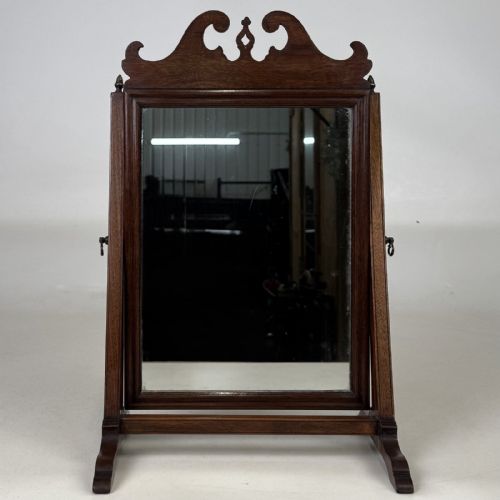
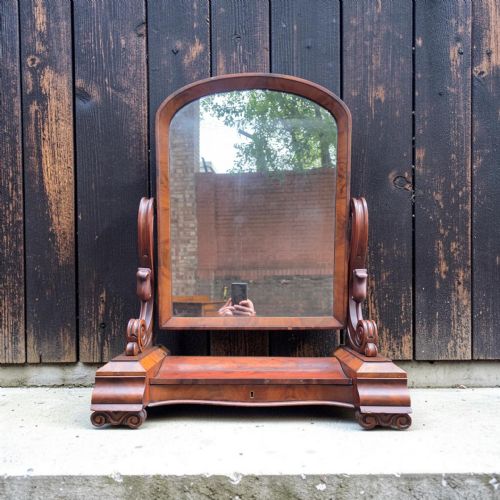
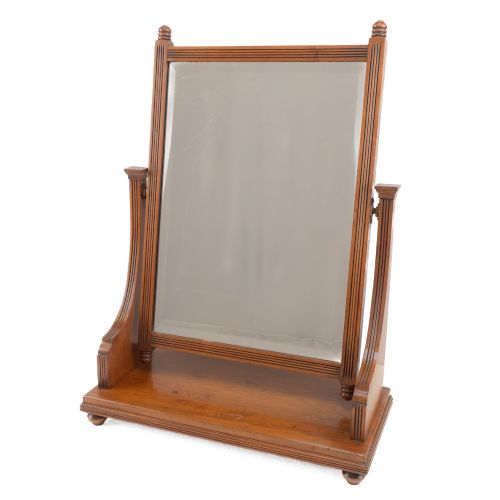
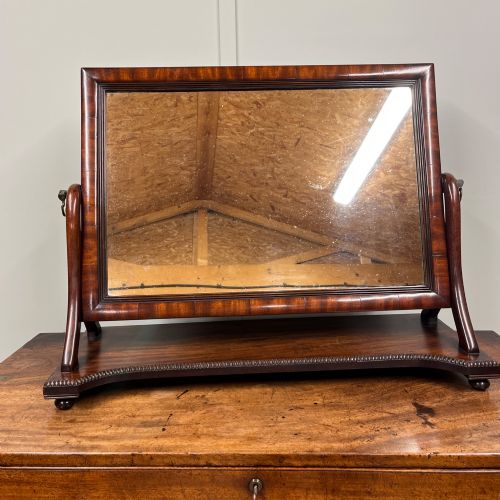
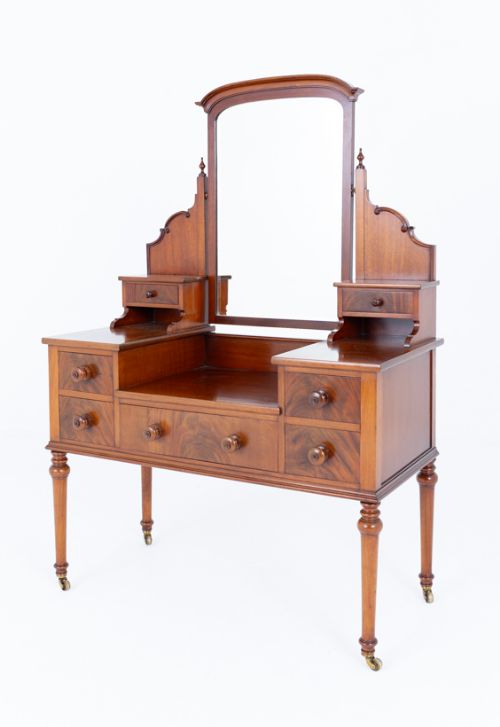
When you search for a wooden swivel table, you encounter a varied group of furnishings where the top pivots, tilts, or swings on a central axis or pivot point. These pieces bridge the gap between small tabletop toilet mirrors and larger pedestal game or tea tables.
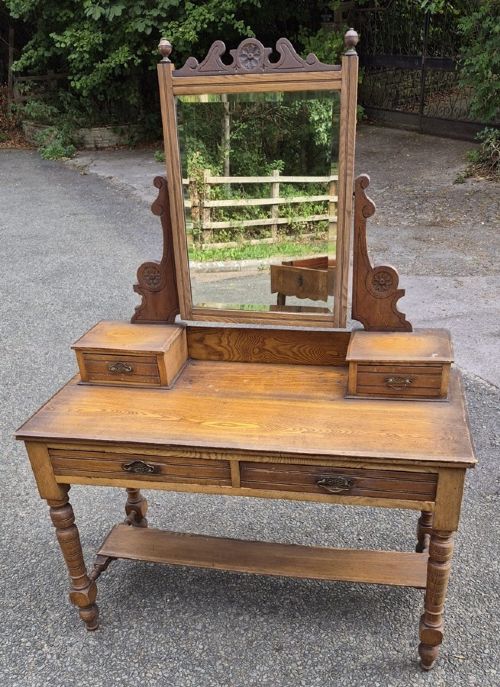
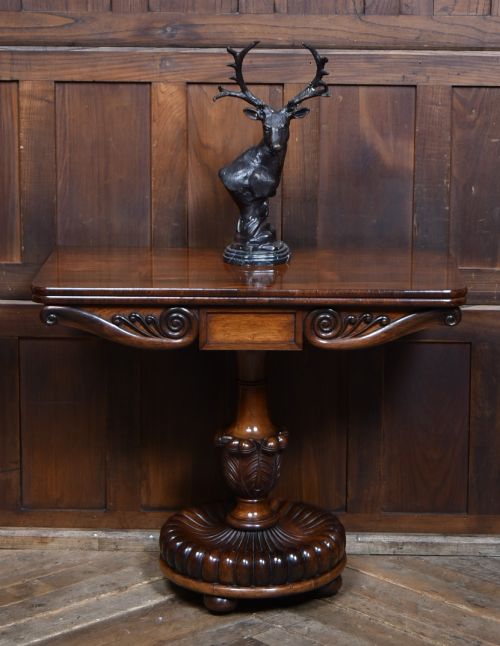
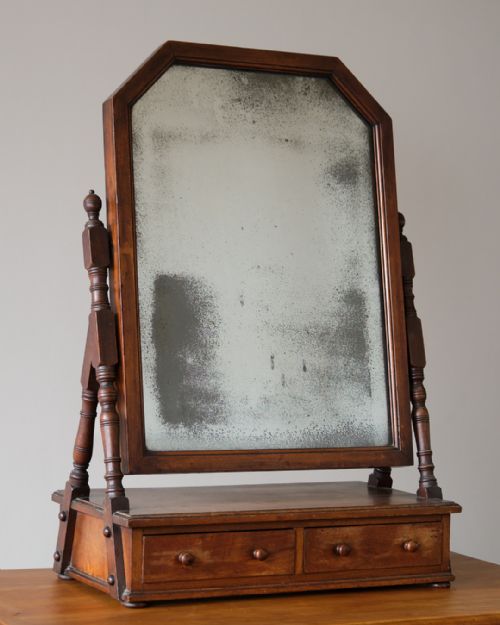
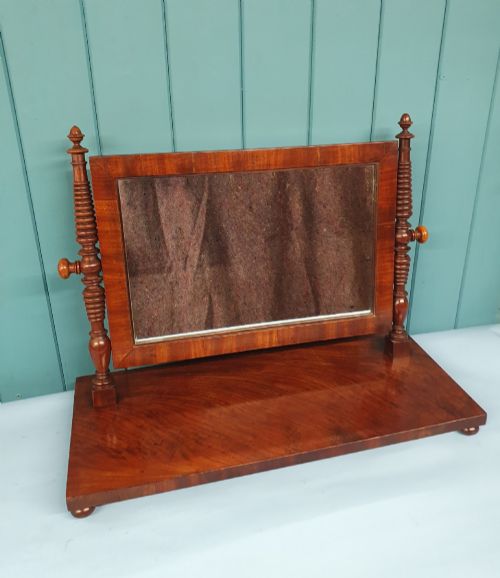
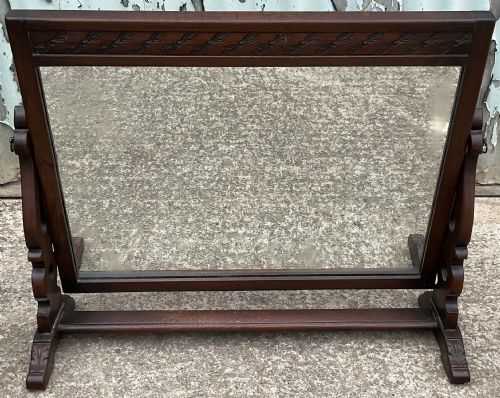
The domestic forms recorded on this page include dressing table mirrors, toilet mirrors, and swing mirrors alongside folding chess and backgammon games tables, card tables, and tea tables. These items served functional daily routines in bedrooms and formal entertaining in reception rooms.
The pieces you are most likely to meet span the 18th century through the Edwardian period, with a strong concentration of Victorian examples. Mahogany and walnut dominate the structural timbers, frequently fitted with adjustable frames or folding tops.
How they were made
Cabinet makers constructed these pivoting surfaces using dense hardwoods selected for stability and grain figure. Mahogany and walnut provide the primary carcass and frame material, occasionally enhanced with satinwood, rosewood, burr walnut veneers, or ebony inlay.
Functional metal hardware underpins the swivel mechanism, incorporating brass hinges, pivots, and screws to allow smooth movement without losing structural rigidity. Mirror plates utilise glass and mirror glass, while decorative surfaces rely on careful timber selection and carving rather than extraneous ornament.
Wooden Swivel Table Retail Price Guide 2026
Typical asking prices for wooden swivel table among the pieces listed under this phrase on Sellingantiques today, from the lower quarter to the upper quarter. They describe what is for sale here now, not the wider market.
One remarkably specific survival in the records is an antique boot maker's mirror from the early Victorian era.
What varies in quality
The standard of timber selection and veneer matching defines the upper tier of these pieces. Higher quality items employ richly figured burr walnut, dense mahogany, or contrasting satinwood and ebony stringing, whereas simpler examples rely on plain utility timbers.
Mechanical execution and joinery distinguish superior workshops. The smoothness of the swiveling action, the snugness of drawer dovetails in the base boxes, and the crispness of carved wooden supports indicate the level of care invested in the construction.
Heal And Sons·Gillows
The Wooden Swivel Table Glossary
- Swivel top
- A table top designed to rotate on a central pivot, often concealing a well or compartment underneath when turned.
- Toilet mirror
- A small adjustable glass mounted on a wooden frame with a box base containing drawers, historically placed on a dressing chest.
- Cheval mirror
- A full-length standing dressing glass hung in a frame that allows the entire plate to swing freely.
- Card table
- A folding table with a hinged top that opens out to reveal a baize-lined playing surface for card games.
- Pedestal base
- A central column support rising from a platform or feet, commonly utilised on nineteenth-century tables to maximise legroom.
Wooden Swivel Table: Frequently Asked Questions
What is a wooden swivel table used for?
These pieces serve multiple domestic purposes depending on their specific form. Tabletop versions hold angled mirrors for personal grooming, while larger pedestal versions open into stable surfaces for card games or tea.
Their pivoting mechanism allows the user to adjust the angle of a mirror or reveal hidden compartments beneath a folding game surface with minimal effort.
How do I identify a Georgian swivel piece?
Georgian pieces, dating from the eighteenth century into the early nineteenth century, typically feature clean proportions and warm mahogany tones. Look for hand-cut dovetails in the small drawer boxes and subtle decorative touches like ebony stringing.
The overall aesthetic prioritises architectural balance and restrained craftsmanship over heavy ornamentation.
Are these tables sturdy enough for daily use?
Most surviving examples remain robustly constructed from dense hardwoods like mahogany and walnut. The pivot joints and supporting uprights are engineered to withstand regular adjustment of the mirror angle or opening of the top.
Placing the piece on a level surface protects the historical joints and ensures the swiveling mechanism operates smoothly without straining the frame.
How do Victorian versions differ from earlier ones?
Victorian examples often incorporate more robust proportions, elaborate carved mahogany or walnut frames, and occasionally burr walnut veneers. The period introduced varied forms such as rise and fall mechanisms and dedicated games tables with split swiveling tops.
These mid-to-late nineteenth-century pieces reflect changing domestic fashions and an increased interest in specialised furniture for leisure activities.