

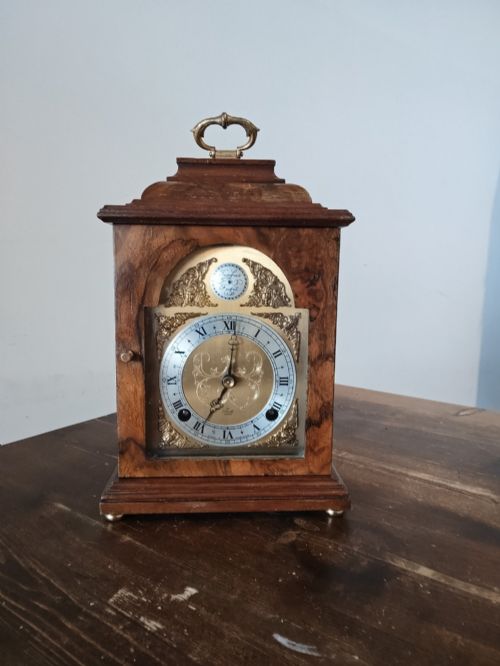


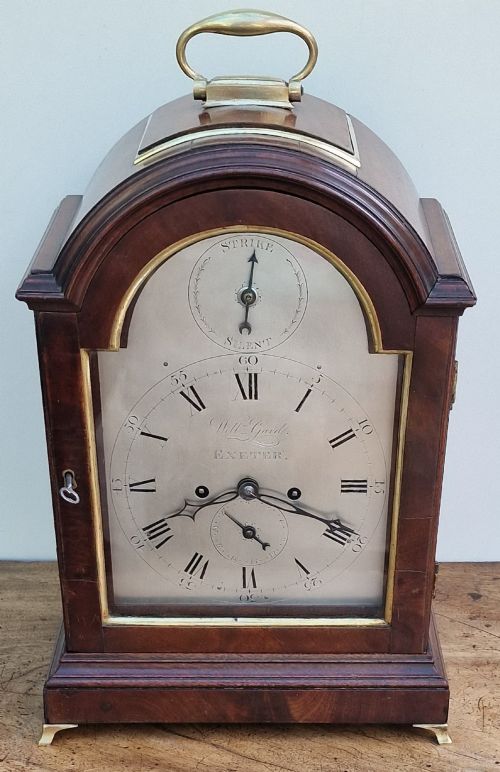
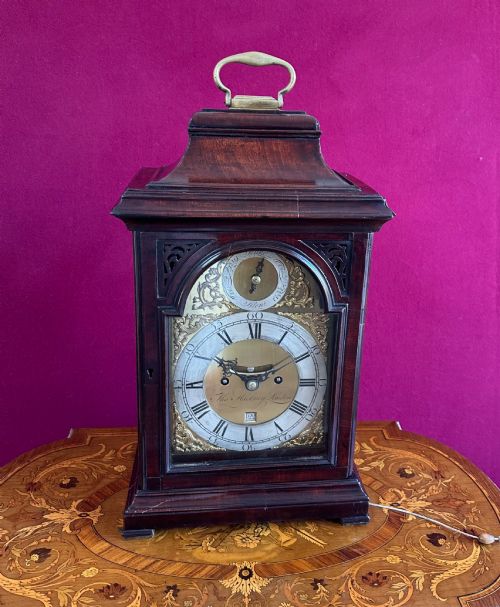
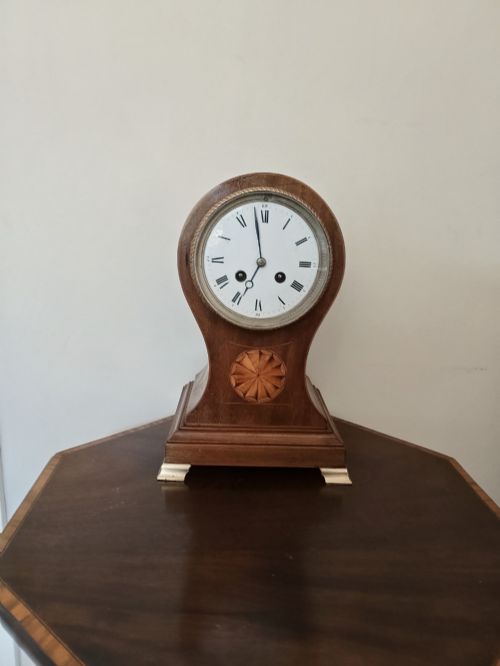





Wooden Striking Clock
When you search for a wooden striking clock, you are looking at functional timepieces housed in timber cases that sound the hours.
Wooden Striking Clock
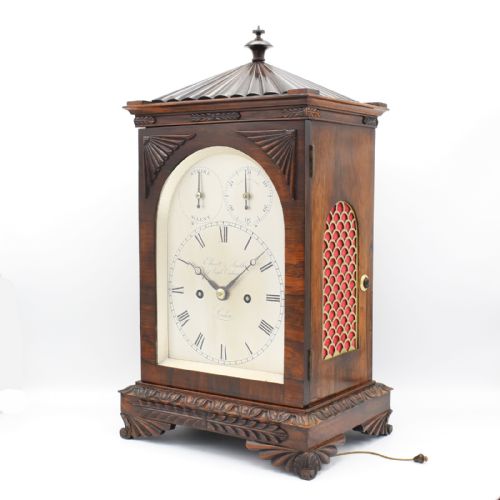
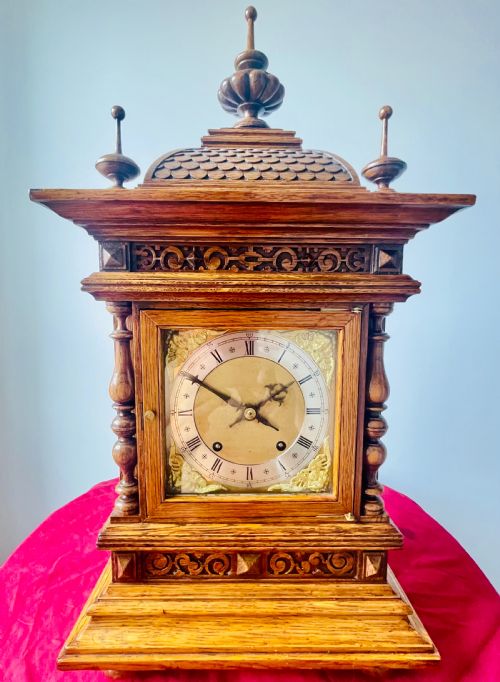
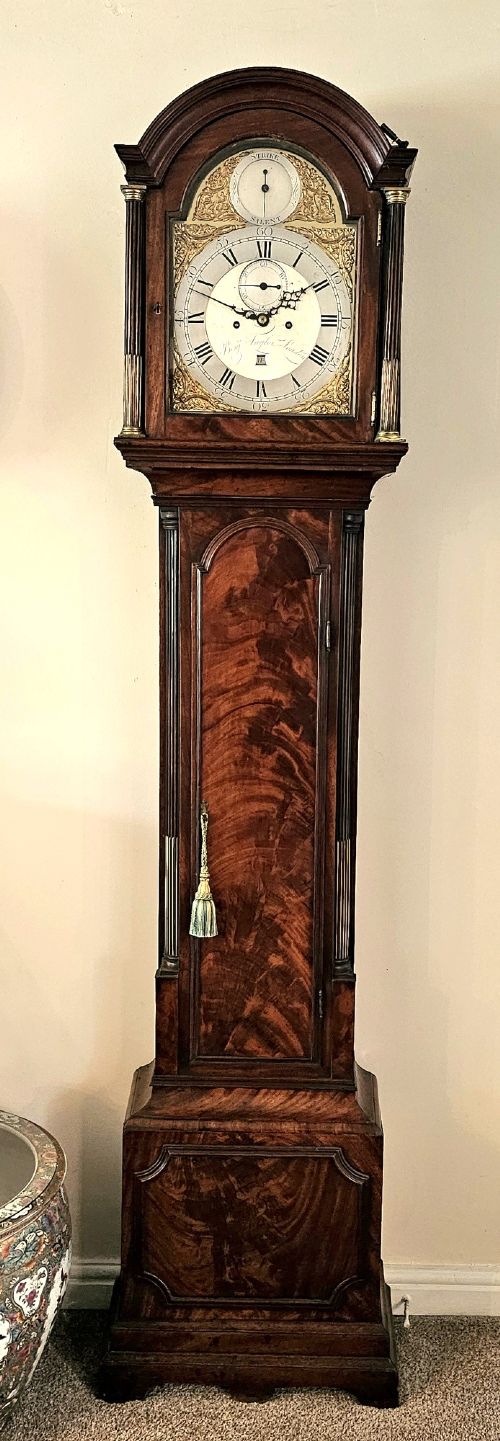
A wooden striking clock combines traditional cabinet making with mechanical timekeeping, producing audible strikes to mark the hours or quarters. When exploring a wooden striking clock, buyers encounter formats ranging from tall floor-standing longcase models to compact bracket and mantel designs meant for tabletops or shelves.
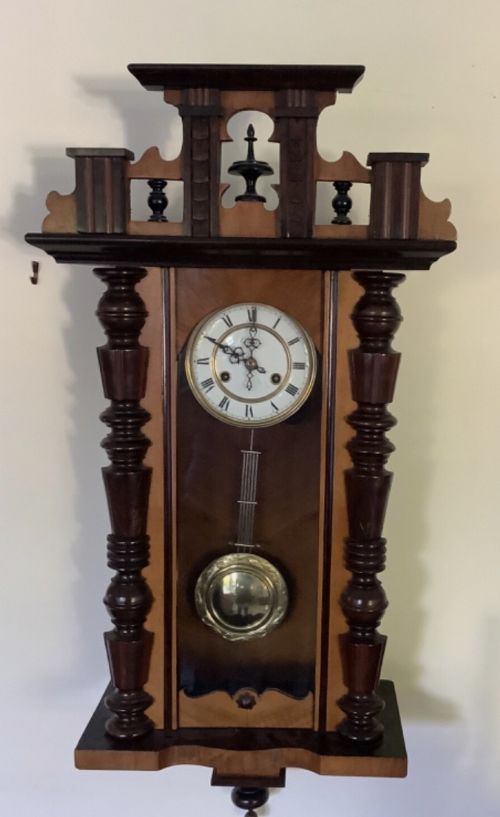
The selection includes wall-mounted variants alongside traditional bracket pieces, spanning centuries from the Georgian and Regency eras through the Victorian period and into the twentieth century. Mahogany, walnut, oak, and ebonised wood form the primary housing materials, paired with brass details and enamel or metal dials.
How They Were Made
Cabinet makers constructed the outer cases using hardwoods such as mahogany, walnut, and oak, frequently incorporating intricate inlays, brass mounts, and glass panels to protect the dial. Movements relied on intricate brass gear trains driven by weights or spring-loaded fusee mechanisms, often utilising pendulum control for accurate timekeeping.
Dial faces incorporated painted enamel, brass numerals, or engraved chapter rings, while striking mechanisms used bells or gongs to produce the audible tone.
Wooden Striking Clock Retail Price Guide 2026
Typical asking prices for wooden striking clock among the pieces listed under this phrase on Sellingantiques today, from the lower quarter to the upper quarter. They describe what is for sale here now, not the wider market.
What Varies in Quality
The distinction between tiers rests upon the precision of the mechanical movement and the sophistication of the timber case construction. Superior examples exhibit refined woodwork with matched veneers, clean movement finishing, and crisp dial execution, whereas simpler iterations rely on standard production methods.
Signatures from established makers on the dial or movement elevate an object's standing, reflecting higher standards of horological craftsmanship.
Mappin & Webb·Benjamin Taylor·Ellicott & Smith·Winterhalder·Johann Baptist Beha·J.W.Benson·John Leroux
The Wooden Striking Clock Glossary
- Fusee
- A conical pulley used in clock movements to maintain an even pull on the gear train as the mainspring unwinds. This device helps the timepiece maintain accuracy throughout its running cycle.
- Bracket Clock
- A portable clock originally designed to sit on a bracket on the wall, though later variations sat directly on mantelpieces or tables. These pieces typically feature fine wooden cases with carrying handles.
- Longcase Clock
- A tall floor-standing timepiece enclosed in a wooden case, commonly known as a grandfather clock. They house a pendulum and weights within the trunk.
- Verge Movement
- An early type of escapement mechanism used in older clocks and watches. It regulates the release of the gear train to control the movement of the hands.
- Bell Top
- A distinctive style of clock case roof shaped like a dome or bell. This profile frequently appears on Georgian and Regency bracket clocks.
Wooden Striking Clock: Frequently Asked Questions
Where should I place a bracket clock?
Bracket clocks need a stable, level surface away from direct sunlight, drafts, and major temperature fluctuations. Placing them on a sturdy mantelpiece or dedicated wall bracket ensures reliable operation.
A stable foundation prevents vibrations that can interfere with the pendulum or balance wheel.
How do I identify a Georgian clock?
Georgian clocks generally feature classic architectural proportions, timber cases in mahogany or walnut, and brass dial faces with engraved details. Bell-top cases and verge movements are common characteristics of this period.
Maker signatures inscribed on the brass dial provide further confirmation of the era of manufacture.
Why does the clock strike incorrectly?
Striking discrepancies often occur when the minute hand is moved backward or if the striking train gets out of sequence with the time train. Letting the clock strike out its sequence usually corrects the error.
Avoid forcing the hands backward past the hour when setting the time.