

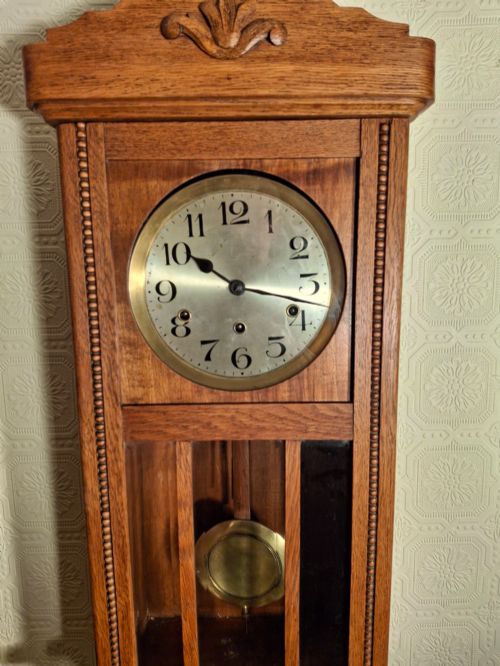
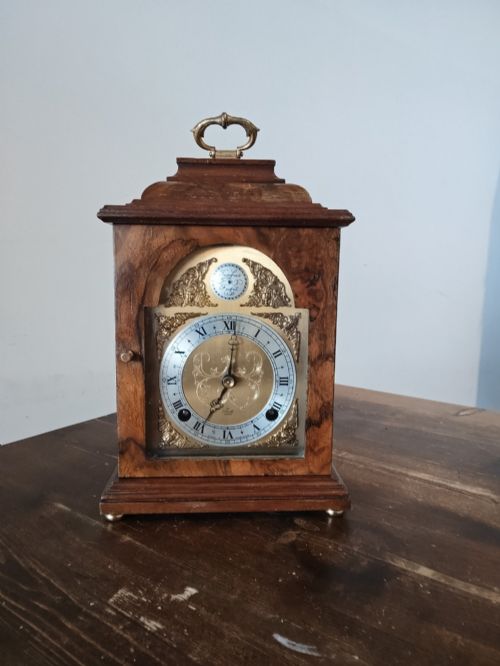


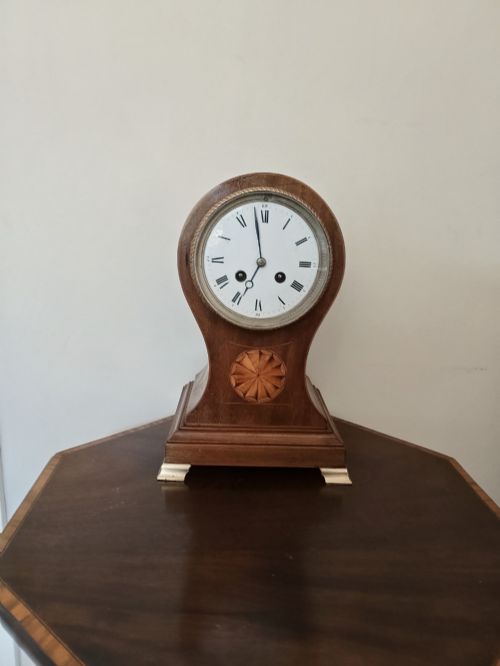
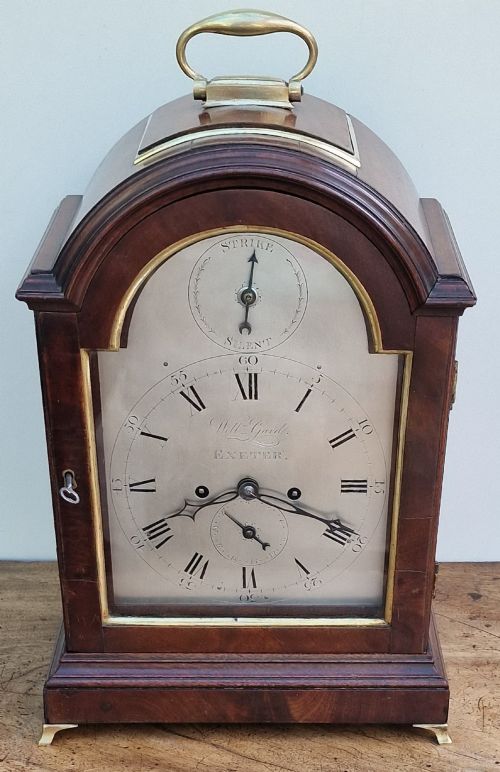


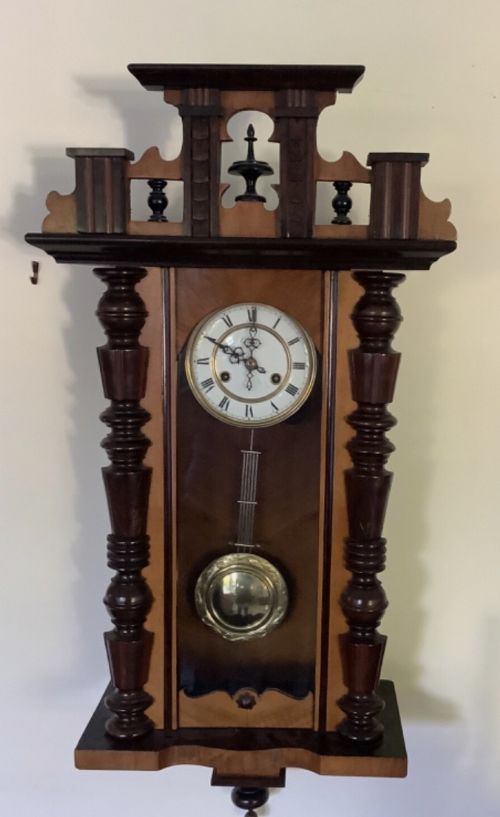


Wooden Strike Clock
A wooden strike clock tells the time while marking the hours audibly with a bell or gong inside its timber case.
Wooden Strike Clock
When you search for a wooden strike clock, you encounter timepieces housed in timber cases that range from small mantel and bracket formats to tall longcase designs and wall clocks. These objects function as domestic timekeepers that announce the passage of hours through mechanical strikes.
The selections span multiple centuries, showing styles from Georgian and Regency eras through Victorian, Edwardian, and Art Deco periods. Mahogany, walnut, and oak form the primary timber bodies enclosing brass movements.
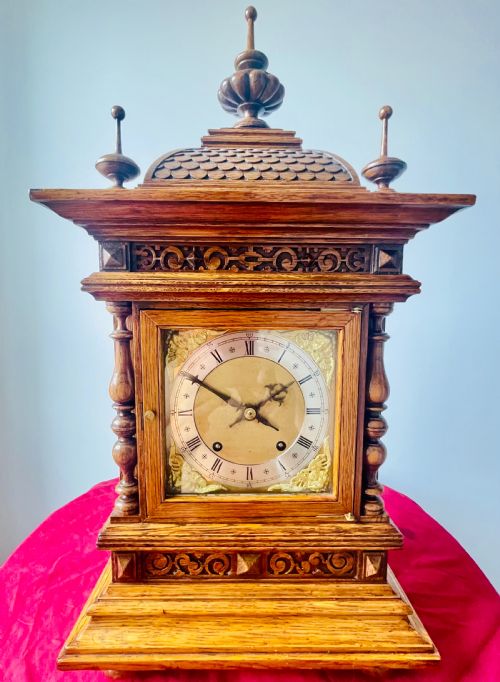
Mantel and bracket clocks dominate the available forms, alongside wall clocks and occasional longcase pieces. Cabinet makers utilised local and exotic woods to construct architectural or decorative housings for these mechanical works.
How they were made
Cabinet makers constructed the timber cases using mahogany, walnut, oak, and ebonised wood, frequently applying veneers or brass mounts. Dial faces incorporate brass, enamel, and visible metal numerals.
Clockmakers fitted mechanical movements driven by weights or spring-driven fusee chains. The striking mechanism relies on gears and levers that release a hammer against a bell or gong at designated intervals.
Wooden Strike Clock Retail Price Guide 2026
Typical asking prices for wooden strike clock among the pieces listed under this phrase on Sellingantiques today, from the lower quarter to the upper quarter. They describe what is for sale here now, not the wider market.
What varies in quality
The precision of the internal movement and the complexity of the striking train determine the grade of the piece. Twin fusee movements and quarter-chiming mechanisms indicate higher workshop standards than simpler spring-driven alternatives.
Cabinet work quality appears in the selection of figured veneers like burr walnut, the sharpness of carved details, and the preservation of original brass fittings. Cases with integrated details and sound structural joinery stand apart from utilitarian builds.
William Gard·Mappin & Webb·Benjamin Taylor·Ellicott & Smith·Winterhalder·Des Granges·Johann Baptist Beha·J.W. Benson·John Leroux·Joseph Lum
The Wooden Strike Clock Glossary
- Fusee
- A conical pulley used in spring-driven clocks to equalise the torque of the mainspring as it unwinds. This mechanism maintains consistent power delivery to the gear train.
- Bracket clock
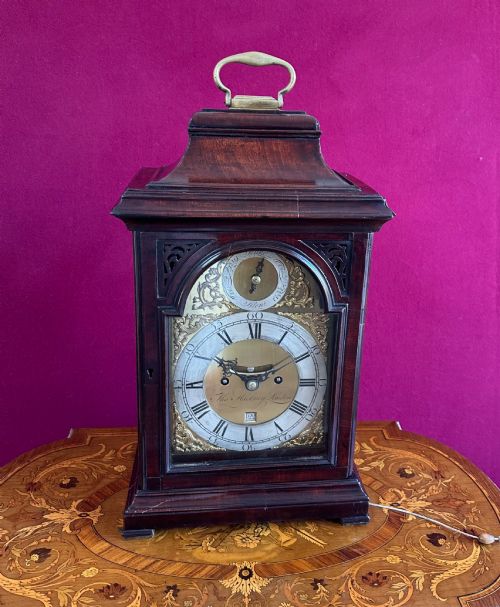
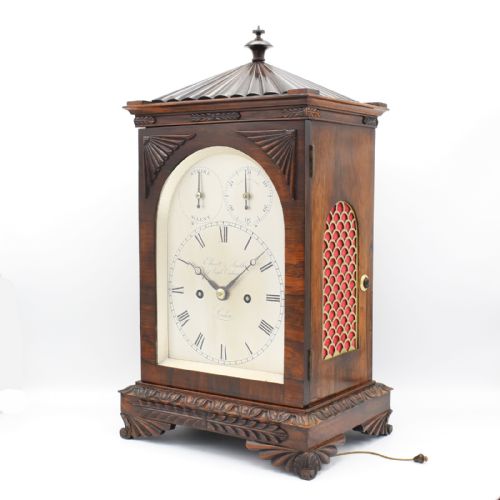
- A portable timekeeper originally designed to sit on a bracket or table. These spring-driven pieces frequently feature brass carrying handles.
- Verge movement
- An early escapement type that controls the speed of the clock using a crown wheel and a swinging pallet rod. It represents traditional mechanical timekeeping.
- Longcase clock
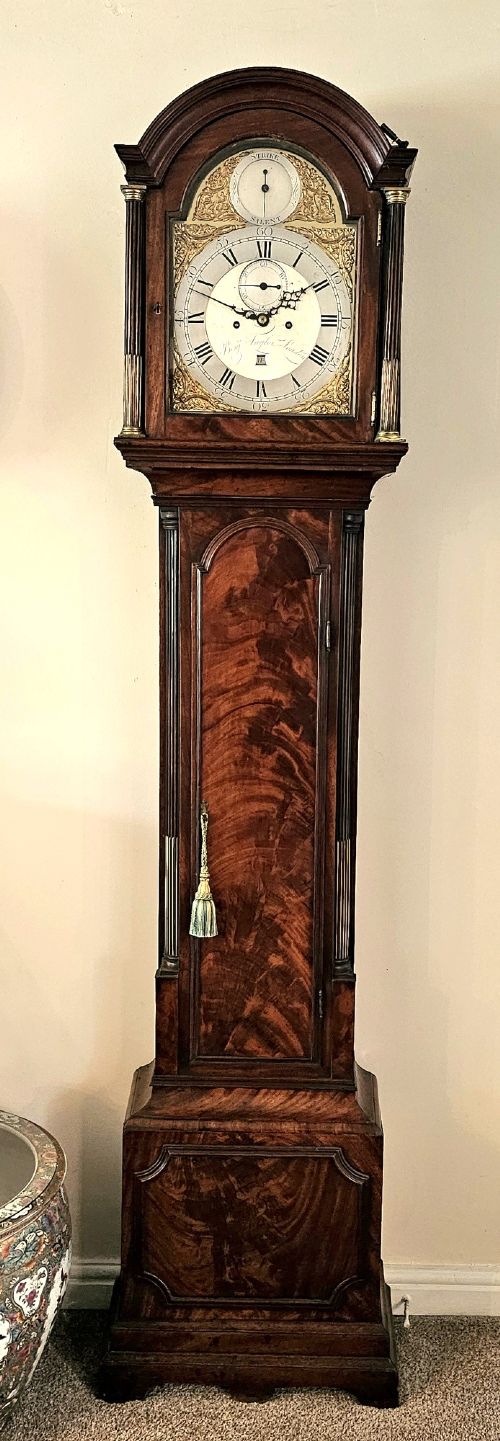
- A tall pendulum clock enclosed in a wooden case resting on the floor. These tall structures house weights and lengthy pendulum rods.
- Bell top
- A style of bracket clock case featuring a domed upper section shaped like a bell. This silhouette originates in the eighteenth century.
Wooden Strike Clock: Frequently Asked Questions
What is a wooden strike clock?
A wooden strike clock is a mechanical timepiece housed in a timber case that chimes to mark the hours.
These pieces use springs or weights to power internal gears that coordinate both timekeeping and audible strikes.
How do fusee movements work?
A fusee movement uses a conical pulley connected to a chain to regulate the pull of the mainspring.
As the spring loses tension, the chain moves to a wider part of the cone to keep the power steady.
Where were mantel clocks placed?
Mantel clocks sat upon fireplace mantelpieces, sideboards, or dedicated wall brackets in domestic rooms.
Their portable size allowed owners to move them easily between rooms within a home.
How do I identify a Georgian clock?
Georgian clocks feature timber cases in mahogany or walnut with traditional proportions and classical dial designs.
They often use bracket or longcase formats with brass chapter rings and hand-engraved backplates.