
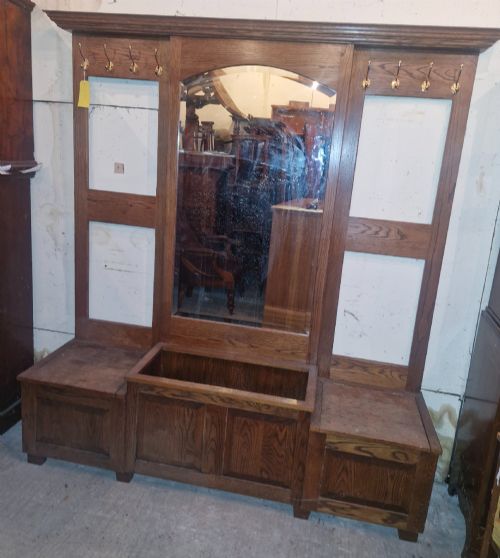
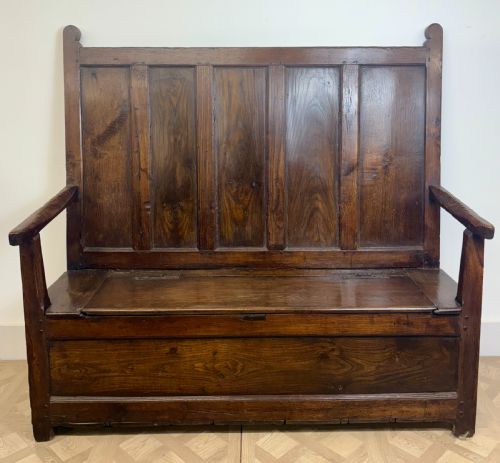
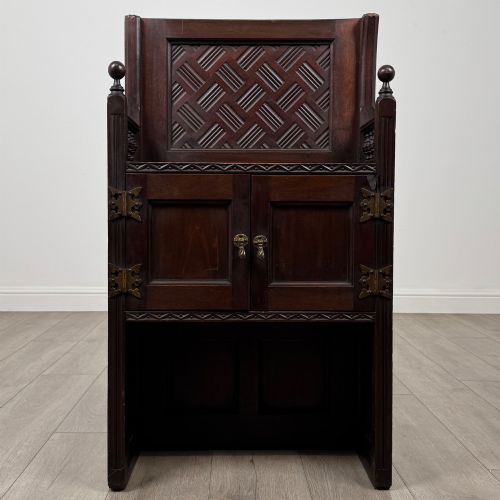
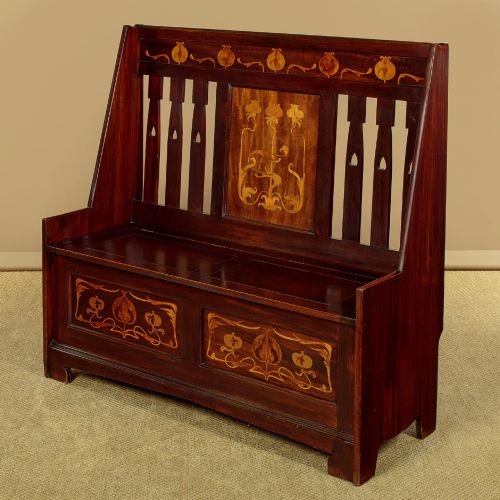
Wooden Storage Hall Bench
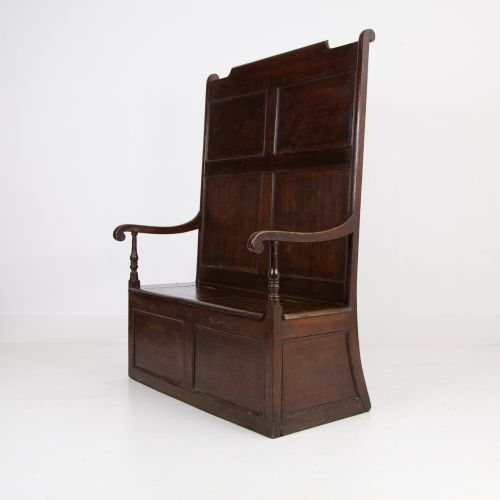
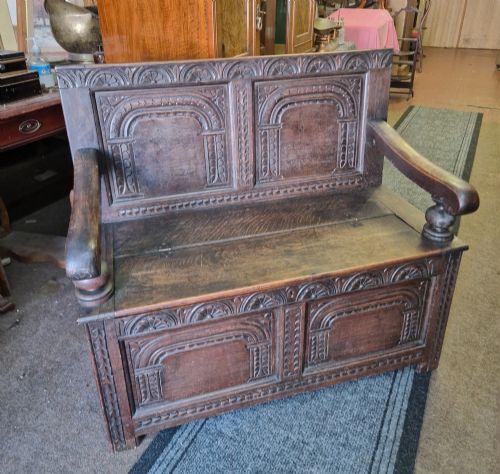
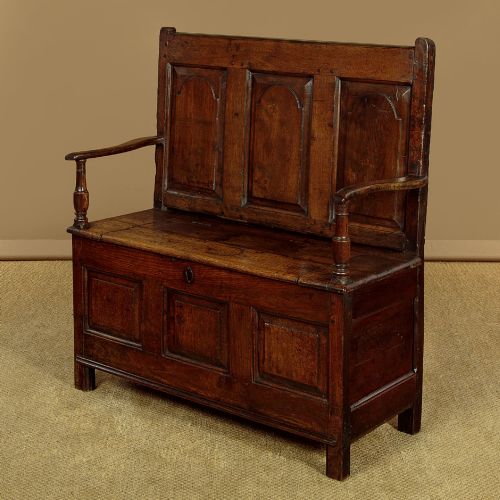
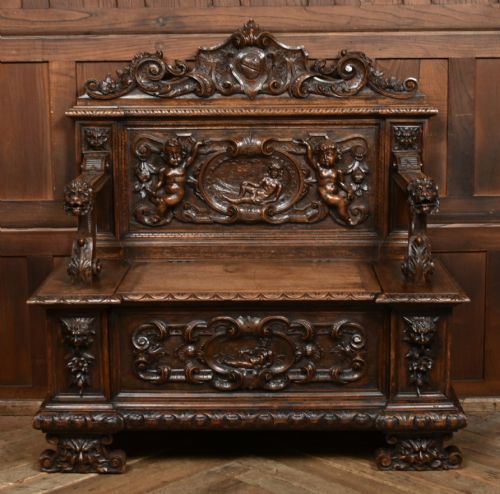
A wooden storage hall bench brings centuries of craftsmanship into the entrance, offering hidden depth beneath a sturdy seat.
Wooden Storage Hall Bench
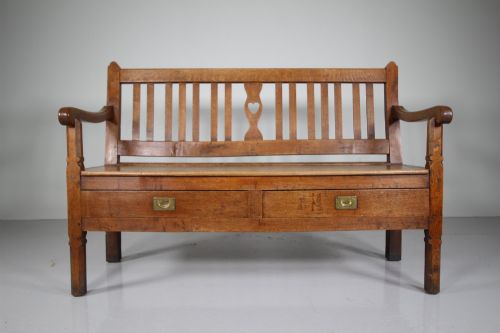
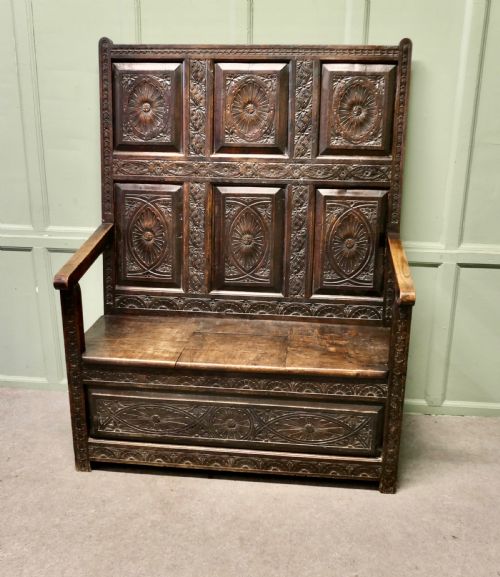
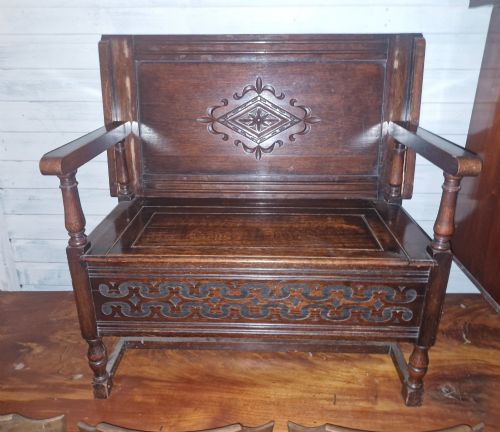
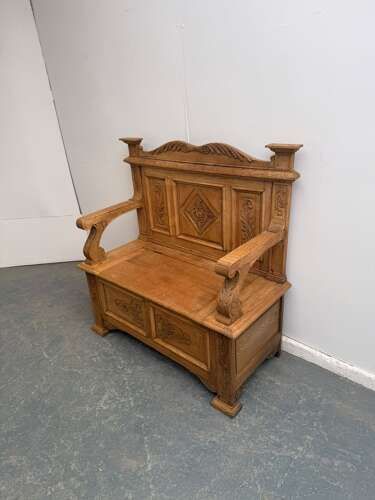
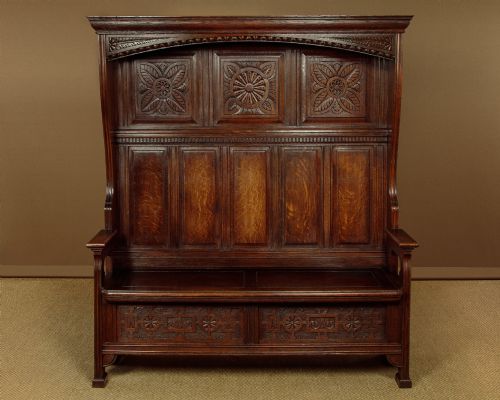
A wooden storage hall bench functions primarily as seating with a concealed compartment beneath the lid, historically placed in hallways or living spaces to contain boots and garments. When searching this phrase, a buyer encounters box settles, monks benches, and panelled hall seats spanning the seventeenth century through to the Edwardian era.
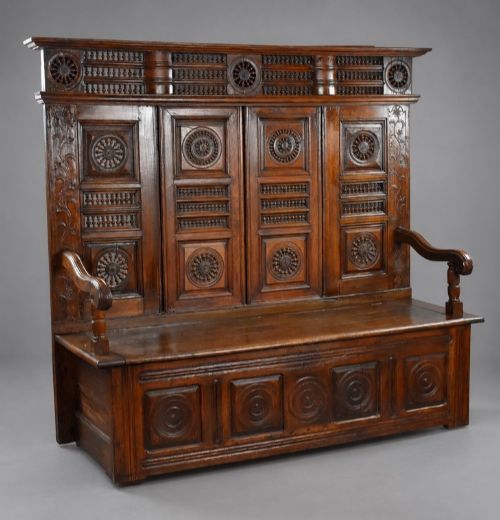
The material palette shifts from heavy regional oak and ash in earlier centuries to lighter pine, mahogany, and walnut as tastes evolved. Many examples display country vernacular styling, while others incorporate revival motifs such as Jacobean carving or Arts and Crafts linear details.
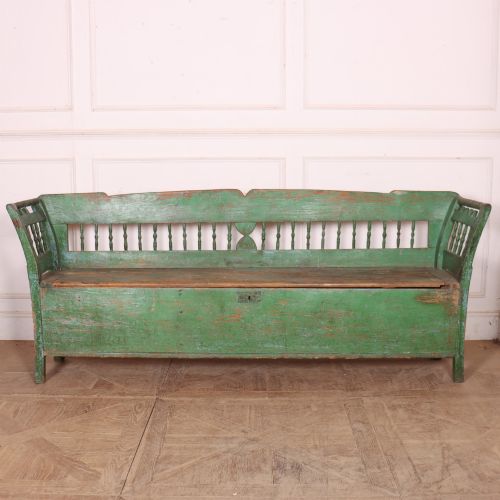
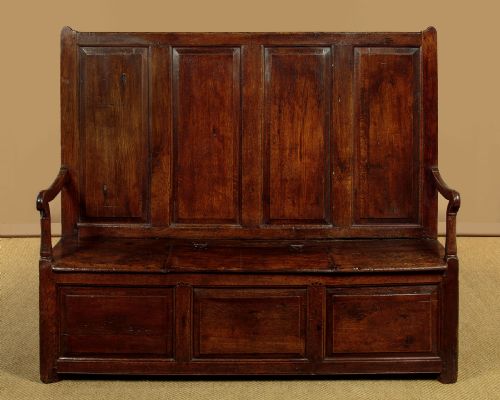
The typical form encountered on this page combines a high panelled back with armrests and a hinged seat base, though simpler variations such as small hall seats with fold-over tops also appear. European regional pieces, notably from Hungary or Austria, introduce painted pine and walnut constructions alongside British oak traditions.
Materials and construction methods
Makers relied predominantly on solid timber such as oak and pine, joined using traditional pegged mortise and tenon construction for structural rigidity. Secondary woods like ash appear in combination with oak on eighteenth-century examples to form robust box frames.
Surface treatments range from natural waxed finishes that preserve the grain of golden oak to historic painted surfaces in black, grey, or original polychrome. Iron and brass hardware, including strap hinges and latches, secure the lift-up lids and support the heavy timber lids.
Regional styles include Jacobean Revival, rustic farmhouse, and English country vernacular forms.
Distinguishing quality across examples
The integrity of the timber and the depth of hand-carving separate standard utility furniture from superior artisan pieces. Original hinges, unaltered box bases, and untouched patina elevate a piece above those with replaced panels or stripped surfaces.
Proportion and regional provenance dictate the character of the work, with tightly pegged joints and well-balanced canopy tops or high backs demonstrating superior joinery.
James Shoolbred & Co.·Shapland & Petter·Liberty
The Wooden Storage Hall Bench Glossary
- Box settle
- A wooden bench featuring a high back and a concealed storage compartment beneath a hinged seat. This form protected sitters from draughts in older hallways.
- Monks bench
- A convertible piece of furniture featuring a hinged top that folds down to form a table. It combines two functions within a compact footprint.
- Settle
- An early wooden bench with solid arms and a high panelled back designed to retain heat in domestic rooms. They pre-date modern upholstered sofas.
- Vernacular
- Furniture made by local craftsmen using regional styles and available materials rather than following metropolitan court fashions. These pieces often display practical country adaptations.
- Cassapanca
- An Italian wooden bench with storage, typically constructed from walnut with carved panelling. It combines seating with a large chest base.
Wooden Storage Hall Bench: Frequently Asked Questions
What is a wooden storage hall bench?
A wooden storage hall bench is a traditional seat featuring a hollow compartment beneath the hinged lid for keeping garments and boots. These pieces range from seventeenth-century oak box settles to painted pine variants.
They serve as practical hallway furniture while providing a focal point through historic woodwork and carved panelling.
How were these benches used historically?
Historically, families placed these seats near hearths or in entrance halls to block cold draughts and store heavy outerwear. The high backs and solid arms offered shelter in large, unheated rooms.
The enclosed box beneath the seat kept hearth blankets, boots, and daily provisions secure and out of sight.
How do I date an antique settle?
Dating relies on examining the construction marks, timber species, and tool signatures left by the joiner. Earlier seventeenth and eighteenth-century examples utilise heavy oak with hand-pegged joints and deep panel moulding.
Later Victorian and Edwardian pieces introduce softer pine, mahogany, or machine-cut elements alongside revival styles like Arts and Crafts.
Where should I place one at home?
An entrance hall or boot room provides an ideal setting, utilising the internal storage for daily footwear and accessories. Alternatively, they anchor large dining spaces or living rooms as feature seating.
Ensure adequate wall clearance for high panelled backs or fold-over table tops before positioning.