




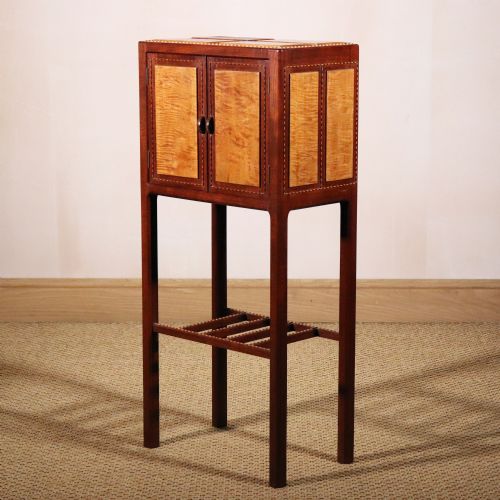


Wooden Stationery Stand
A wooden stationery stand keeps your desk organised with character, offering dedicated slots for letters and writing materials.
Wooden Stationery Stand
A wooden stationery stand serves as a functional desktop organiser for letters, envelopes, and writing implements. The examples found here span the nineteenth and twentieth centuries, encompassing Victorian, Edwardian, and later periods.
Forms vary from simple letter racks and desk tidies to elaborate inkstands and cabinets on stands. You are likely to encounter pieces combining stationery compartments with built-in inkwells or pen trays.
Origins include domestic writing desks and commercial offices, reflecting the changing clerical needs of the Victorian era onwards. These items bring period craftsmanship directly into a modern study or workspace.
Materials and construction
Cabinet makers utilised dense hardwoods such as mahogany, walnut, oak, and rosewood to build robust stationery holders. These timbers were often selected for their rich grain and durability during daily office use.
Decorative elements frequently include brass mounts, glass inkwells, and intricate inlays of mother-of-pearl. Silk linings and tortoiseshell details appear on finer items, demonstrating the varied skill of period artisans.
Wooden Stationery Stand Retail Price Guide 2026
Typical asking prices for wooden stationery stand among the pieces listed under this phrase on Sellingantiques today, from the lower quarter to the upper quarter. They describe what is for sale here now, not the wider market.
Insurance agents once relied on specialised desk tidies to keep their bustling Victorian paperwork from blowing away.
Judging quality and finish
The distinction between standard office accessories and superior pieces rests on the choice of timber and the precision of the joinery. Finer items exhibit careful selection of figured wood veneers and well-fitted internal dividers.
Decorative embellishments also dictate the grade of a piece, separating utilitarian desk tidies from elaborate parlour items. The integration of quality brass hardware and intact glass components elevates the overall standard.
The Wooden Stationery Stand Glossary
- Inkstand
- A desk accessory designed to hold one or more inkwells along with pens and sometimes stationery. These portable stands sat atop writing tables before the widespread use of fountain pens.
- Letter rack
- A desktop holder featuring vertical slots to keep incoming correspondence sorted and upright. They appear in various woods and styles, from plain oak to carved mahogany.
- Cabinet on stand
- A larger piece of furniture where a small cabinet sits upon a dedicated supporting frame. This form provides substantial storage for writing materials and documents.
- Writing box
- A portable box hinged to open into a sloped writing surface with internal compartments. Many include space for stationery alongside the writing slope.
Wooden Stationery Stand: Frequently Asked Questions
What is a wooden stationery stand?
A wooden stationery stand is a desktop accessory designed to hold letters, envelopes, and writing paper in an organised manner. They range from simple open racks to enclosed boxes with multiple compartments.
Historically used in homes and offices, these stands keep daily correspondence neat and accessible. Today, they serve as both practical desk organisers and decorative antiques.
How were stationery stands used?
Users placed incoming and outgoing letters within the vertical slots of the stand to keep desks clear of clutter. Many designs also incorporated pen trays and inkwells for active writing.
In period offices and studies, these accessories formed an essential part of the daily routine. They allowed individuals to manage their paper correspondence efficiently before the digital age.
How do I date a stationery stand?
Dating relies on identifying the prevailing stylistic influences, such as Arts and Crafts or Victorian Gothic, combined with the choice of timber. Common Victorian woods differ from twentieth-century selections.
Hardware details like brass hinges and the presence of original glass inkwells also offer clues to the period of manufacture. Examining construction techniques helps confirm the era.
How do I care for wooden desk accessories?
Keep wooden stationery stands away from direct sunlight and extreme temperature fluctuations to prevent wood from drying out or warping. Dust them regularly with a soft, dry cloth.
Occasional application of appropriate wax polish helps maintain the finish of the timber. Avoid using harsh chemical cleaners that can damage vintage surfaces.