

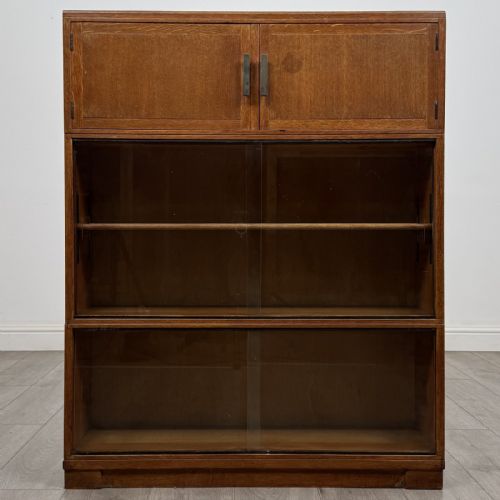
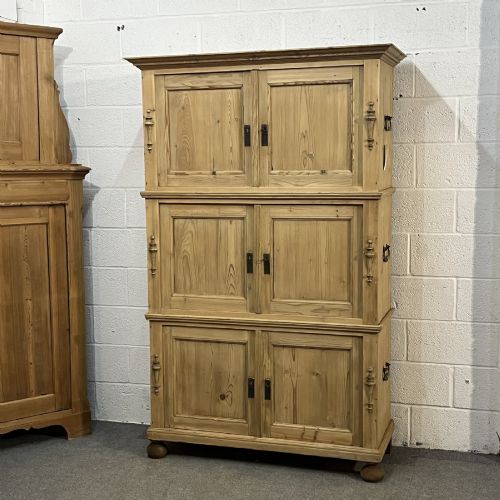
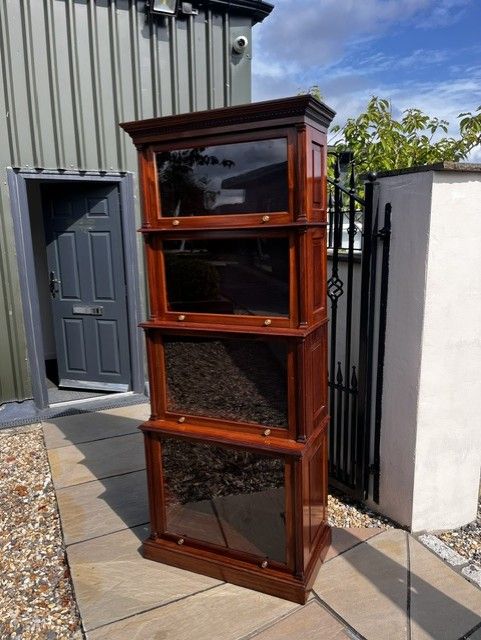
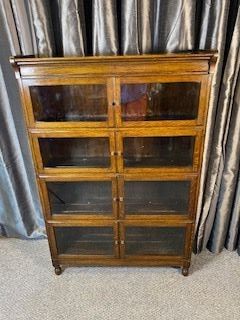


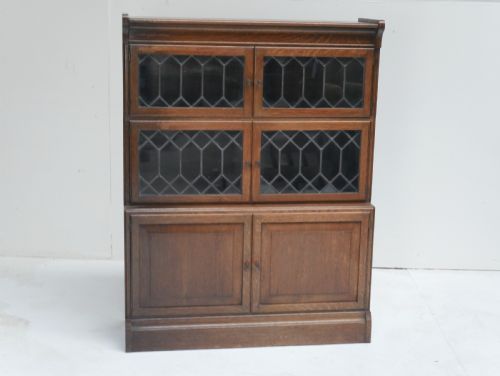


Wooden Stacking Cabinet
A wooden stacking cabinet brings modular utility and rich timber grain to any room, offering versatile storage shaped by clever sectional design.
Wooden Stacking Cabinet
A wooden stacking cabinet comprises modular units designed to sit one upon another, creating a flexible storage tower that adapts easily to changing collections. When searching for a wooden stacking cabinet, buyers encounter sectional bookcases, campaign chests, and modular tansu pieces that divide into separate boxes for transport or rearrangement.
The versions most commonly met on this page span the nineteenth century through the mid-twentieth century, featuring oak, mahogany, and pine timbers. These range from functional office bookcases with glass lift-up doors to Japanese tansu chests and European campaign furniture built for utility.
Makers such as Minty and Globe Wernicke defined the sectional bookcase form, while other pieces reflect regional styles like Arts and Crafts, Edwardian design, and Art Deco lines. Each section retains its own independent base and top cornice, allowing the cabinet to be dismantled or built higher as needed.
How they were made
Makers constructed these cabinets using solid hardwoods like oak and mahogany, alongside pine for internal framing and secondary elements. Brass hardware, including flush drawer pulls, drop handles, and locking mechanisms, appears frequently on campaign chests and sectional units.
Glass panels set into wooden frames provide dust-free visibility for books and display items, particularly on sectional barrister bookcases. Iron bracing and lead details occasionally reinforce corners and joints on travel chests and industrial forms.
Wooden Stacking Cabinet Retail Price Guide 2026
Typical asking prices for wooden stacking cabinet among the pieces listed under this phrase on Sellingantiques today, from the lower quarter to the upper quarter. They describe what is for sale here now, not the wider market.
Materials documented across the inventory include oak, mahogany, pine, glass, brass, iron, and lead.
What varies in quality
The distinction between standard utility items and finer examples lies in the selection of timber grain and the precision of the sectional joinery. Superior pieces display matched mahogany or quarter-sawn oak veneers, alongside smooth mechanical action in the sliding or lifting glass doors.
Original hardware, maker stamps, and intact internal fittings elevate a piece above standard utilitarian storage. The integrity of the stacking mechanism, where each tier rests flush without wobbling, dictates the overall structural merit of the cabinet.
Minty·Globe Wernicke
The Wooden Stacking Cabinet Glossary
- Barrister bookcase
- A sectional bookcase featuring glazed, upward-lifting doors that slide into the cabinet above each shelf tier. This design protects books from dust while allowing multiple modular sections to stack vertically.
- Tansu
- A traditional Japanese mobile storage chest constructed from timber with prominent metal hardware and iron mounts. These modular units were designed for organising household goods and clothing.
- Campaign chest
- A portable cabinet or set of drawers built in two or more stackable sections for military travel. These pieces typically feature recessed brass handles and reinforced corners.
- Quarter-sawn
- A method of milling logs that produces planks with distinctive radial grain patterns. This technique yields stable timber less prone to warping in large cabinet panels.
- Cornice
- The decorative architectural moulding fitted to the topmost section of a cabinet. It provides a finished visual crown above the stacking tiers.
Wooden Stacking Cabinet: Frequently Asked Questions
How do stacking barrister bookcases work?
Stacking barrister bookcases use individual tiers with glass doors that lift upward and slide back into the interior above the books. Each shelf is a standalone box that sits securely on the tier below it.
This ingenious mechanism keeps volumes protected from dust while making the entire bookcase fully modular and simple to dismantle.
How do I date a wooden stacking cabinet?
Dating these cabinets involves examining the timber species, construction methods, hardware styles, and maker marks. Pieces from the nineteenth and early twentieth centuries often display hand-cut dovetails and period-specific brass fixtures.
Stylistic cues such as Edwardian proportions, Arts and Crafts simplicity, or Art Deco geometric lines further narrow down the manufacturing era.
Where were stacking cabinets used?
These versatile cabinets served primarily in studies, offices, and libraries to house growing book collections. Sectional designs were particularly favoured by professionals who needed to transport or expand their shelving.
Campaign and tansu versions also saw service in travel and domestic settings where flexible, modular storage was essential for daily life.