
Wooden Specimen Cabinet
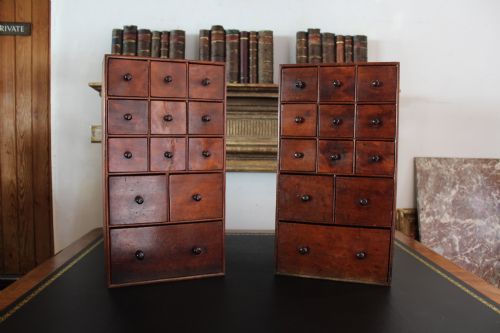
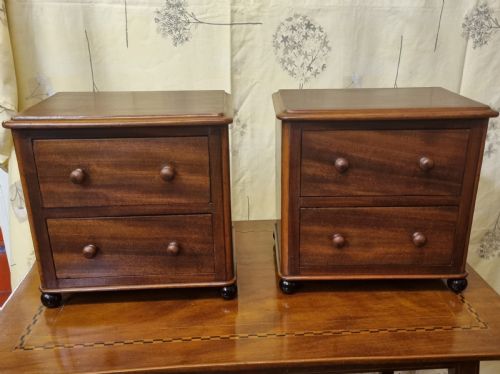
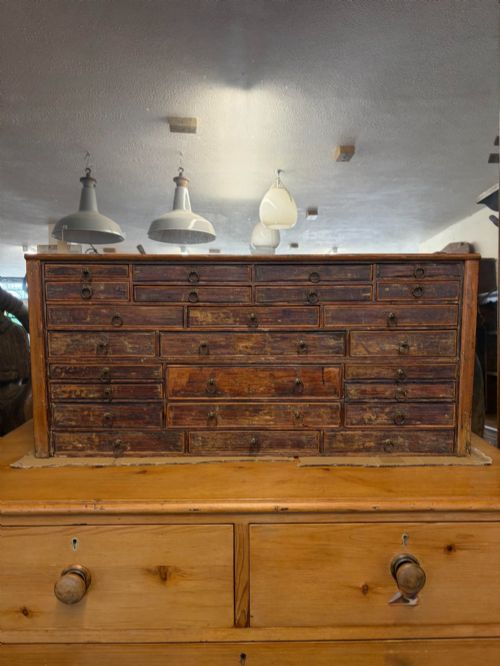
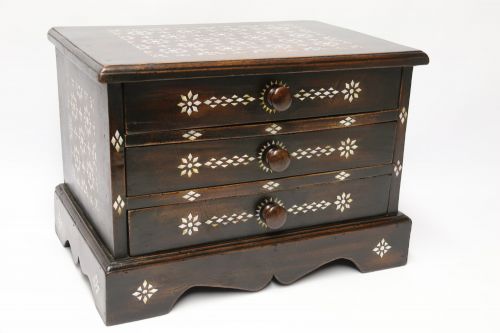
A wooden specimen cabinet organises small treasures in multiple shallow drawers, offering the classic form collectors use to house natural history and curiosities.

Wooden Specimen Cabinet
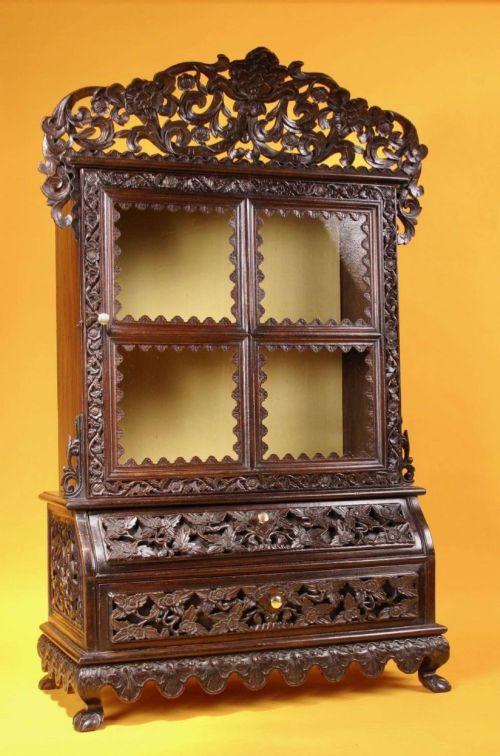
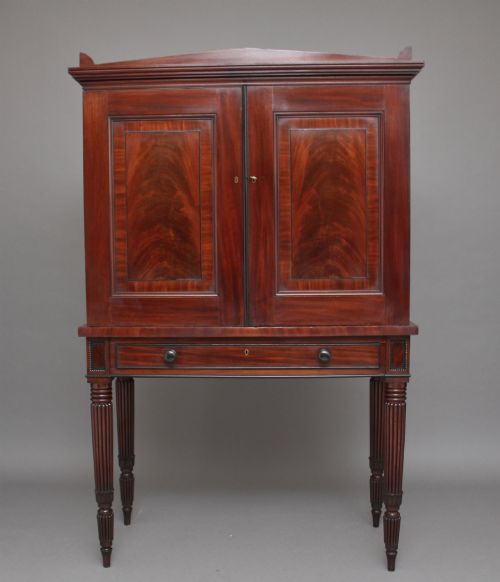
A wooden specimen cabinet serves to store orderly rows of natural history items, coins, or small artefacts in shallow fitted drawers. The pieces seen here span from the Georgian and Regency eras through the Victorian period and into the early twentieth century.
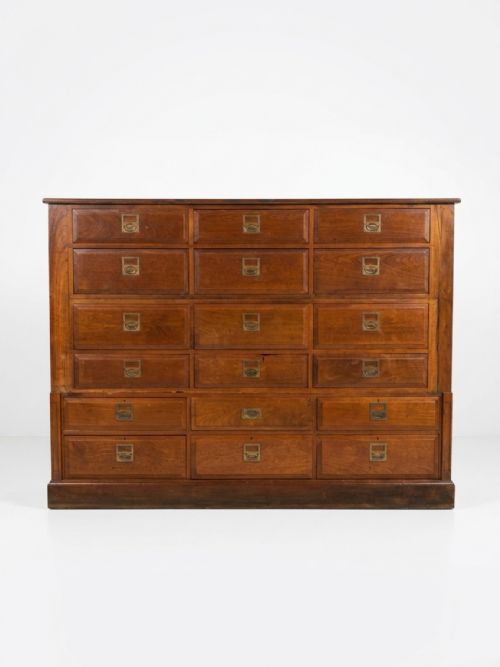
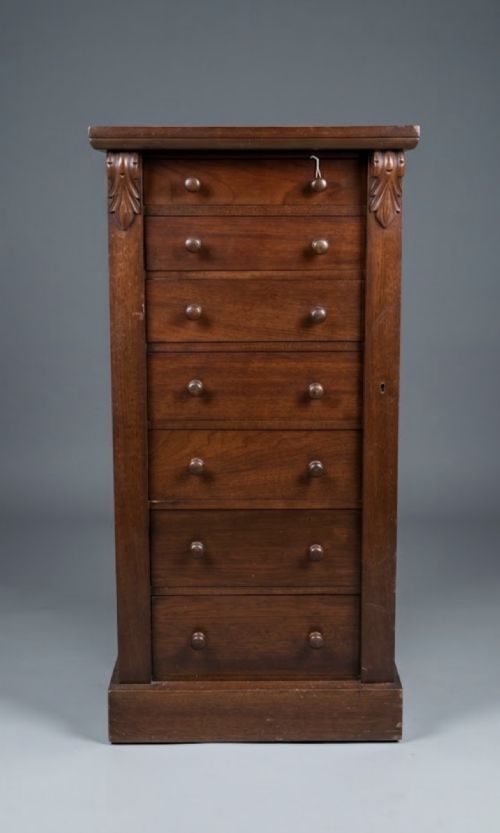
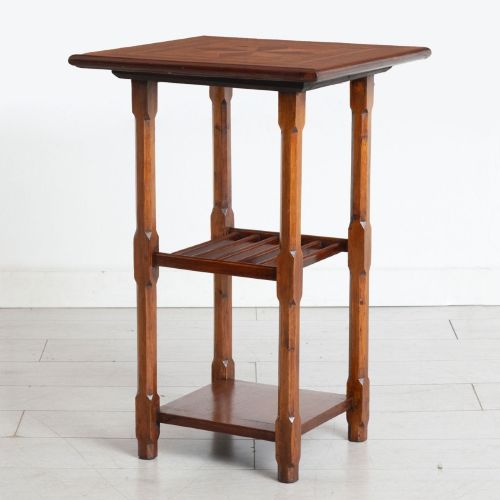
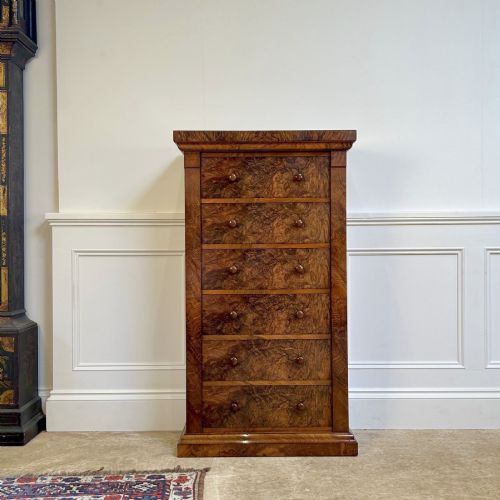
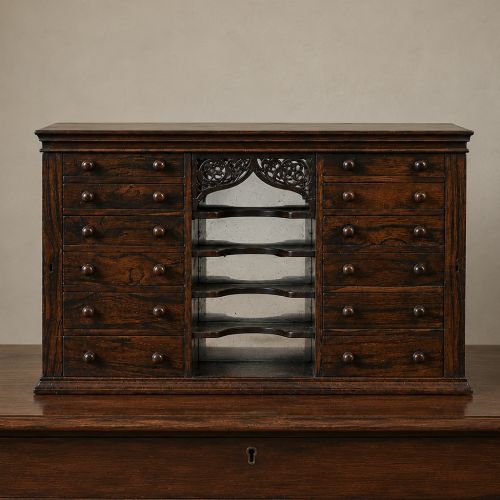
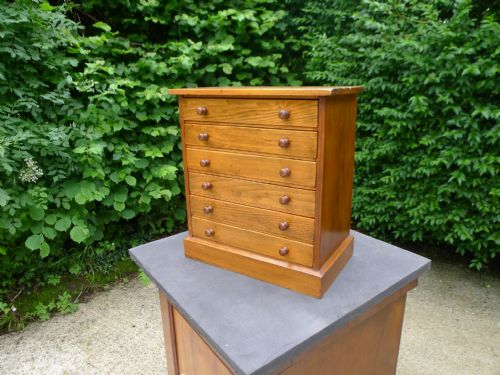
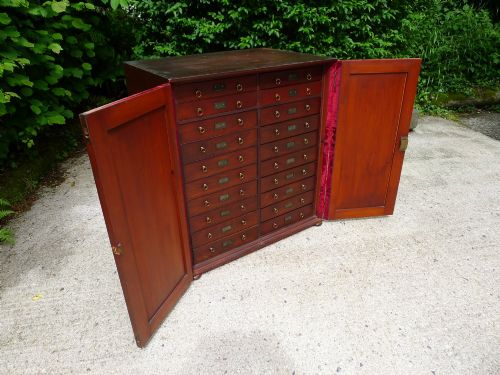
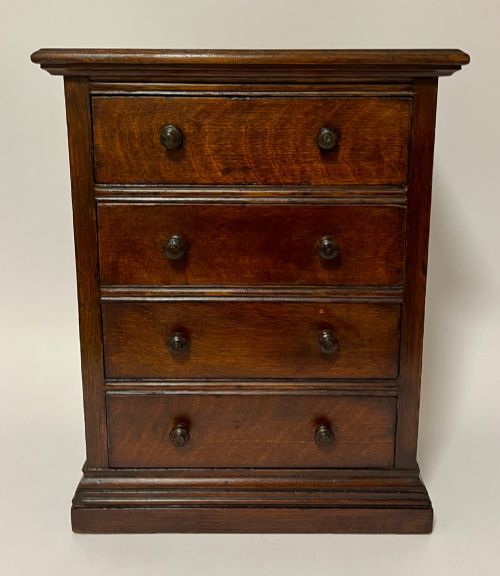
Most examples take the form of tabletop chests of drawers, miniature chests, or taller Wellington chests fitted with locking stiles. Cabinets emerge in various configurations, including multi-drawer apothecary banks, campaign styles, and side tables.
The materials reflect the cabinet-maker's choice of dense hardwoods and softer secondary timbers. Mahogany, walnut, burr walnut, rosewood, oak, satinwood, pine, deal, and teak all appear across the selection.
Materials and Technique
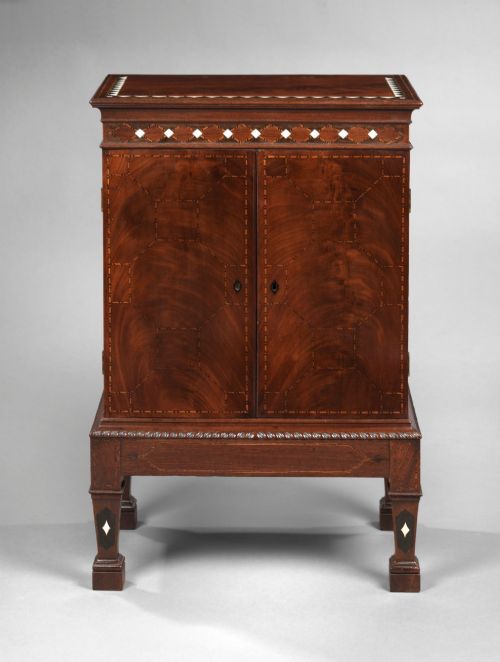
Cabinet-makers constructed the carcases using solid hardwoods or pine, often applying finely figured veneers of mahogany, walnut, or satinwood to the exterior surfaces. Brass hardware, including campaign handles, flush carrying grips, and functional locks with keys, provides both structural reinforcement and decorative contrast.
Drawers are built with tight dovetail joints to withstand frequent opening, while interiors remain plain or lined to protect delicate contents. Surface finishes rely on traditional polish and stain applied to deal, pine, teak, and oak.
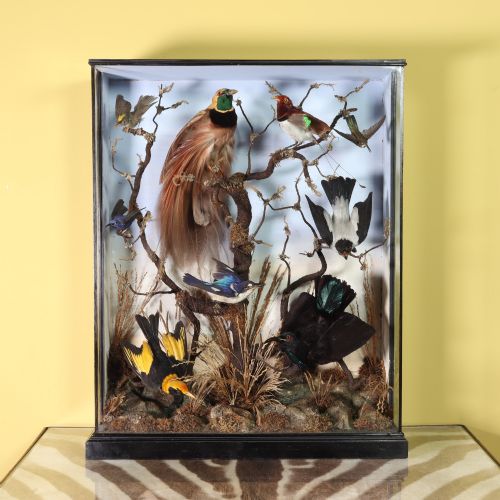
Cabinets frequently double as unexpected time capsules, occasionally retaining remnants of Victorian feathers, botanical pressed leaves, or old apothecary labels inside.
Gradations of Quality
The standard of a wooden specimen cabinet rests on the selection of timber and the precision of the drawer construction. Fine examples utilise highly figured burr walnut, mahogany, or satinwood with marquetry inlay, whilst simpler pieces employ stained pine or deal.
Internal engineering distinguishes finer pieces, such as well-fitted dust boards between drawers and original locking mechanisms with working keys. The presence of specialised internal fittings for microscope slides or medical equipment elevates the technical interest of the piece.
Gillows·Luxmore's of Ilfracombe·D Napier & Sons·A Pollard
The Wooden Specimen Cabinet Glossary
- Wellington chest
- A tall, slender chest of drawers featuring a hinged locking stile on one vertical edge that secures all drawers when locked. This form originates in the nineteenth century and often houses specimens or small valuables.
- Campaign style
- Furniture designed for portability, characterised by brass inset handles, reinforced corners, and robust construction. These pieces were built to travel.
- Apprentice piece
- A smaller version of a standard furniture form created by a craftsman to demonstrate skill. They mirror full-size chests of drawers in detail and joinery.
- Marquetry
- The art of forming decorative patterns on woodwork using thin pieces of veneer. It appears on finer Victorian and Edwardian cabinets.
- Apothecary chest
- A multi-drawer cabinet originally utilised by chemists and doctors to store medicines and remedies. They share the multi-drawer format common in specimen storage.
Wooden Specimen Cabinet: Frequently Asked Questions
What fits inside a wooden specimen cabinet?
The shallow drawers suit small, flat, or low-profile items such as botanical specimens, coins, medals, and microscope slides. Many nineteenth-century examples were specifically partitioned for natural history collections or medical instruments.
The layout preserves delicate objects by limiting movement and stacking. Collectors today utilise the drawers for jewellery, stamps, or modern curiosities.
How do I secure a locking cabinet?
Many period cabinets feature locking mechanisms that engage either via a keyhole in the top drawer or through a hinged locking stile on Wellington chests. Original keys are present on select surviving examples.
If a key is missing, a specialist locksmith can often cut a replacement to fit the existing lever lock without altering the historic mechanism.
Are these cabinets meant for tabletops?
Many examples are designed as tabletop chests or display cases, meant to sit upon a desk, sideboard, or dedicated stand. Larger pieces, such as multi-drawer apothecary banks, stand directly on the floor.
Checking the dimensions in the listing ensures the piece suits your intended display space.
How do I date a Victorian specimen chest?
Dating relies on construction methods, timber choices, and secondary materials visible inside the drawers. Pine secondary wood, hand-cut dovetails, and specific brass hardware styles help narrow the period.
Makers' marks or stamps, when present, offer a direct link to the workshop and decade of production.