

Wooden Sideboard Server
A wooden sideboard server anchors a dining room with practical storage and enduring presence.
Wooden Sideboard Server
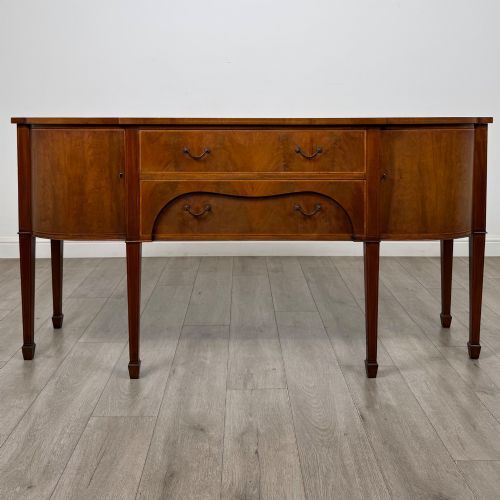
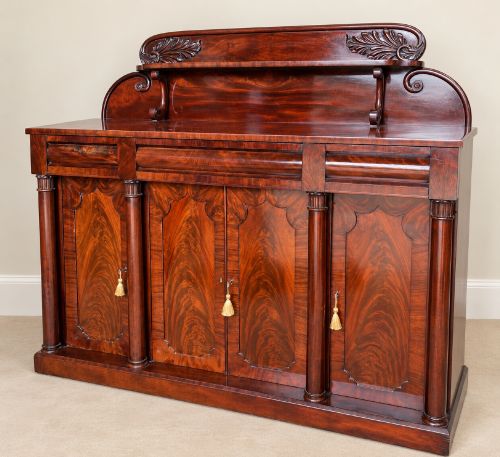
A wooden sideboard server is a substantial piece of furniture designed for dining spaces to hold tableware, serving dishes, and linens. When searching for a wooden sideboard server, buyers encounter forms spanning the Georgian, Victorian, and Edwardian periods.
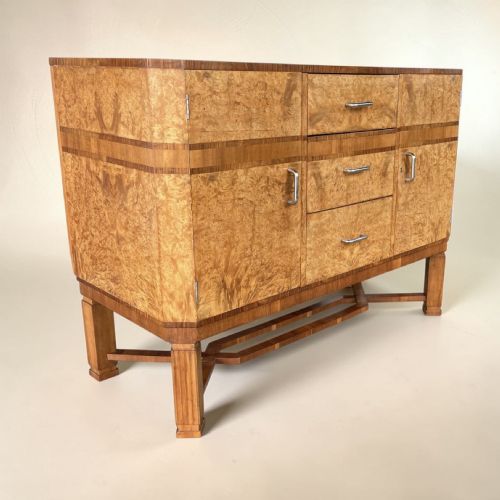
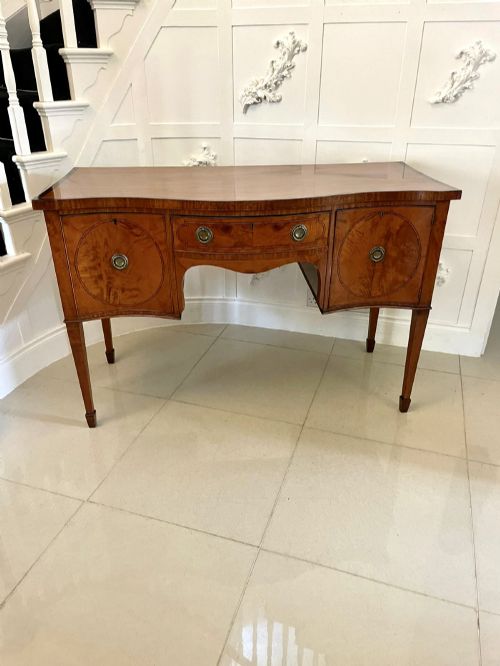
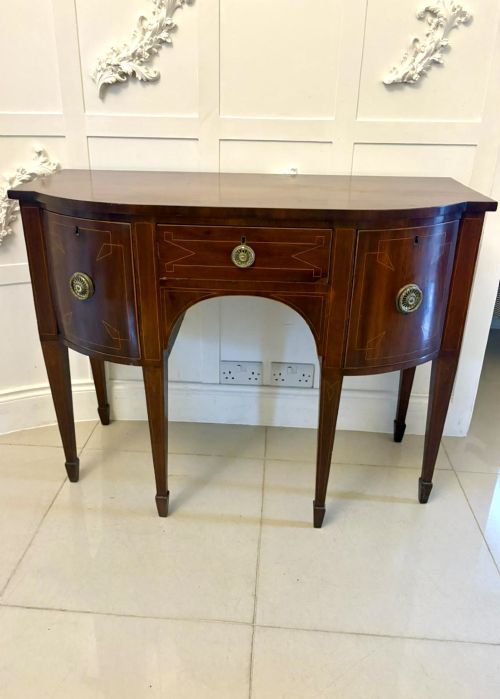
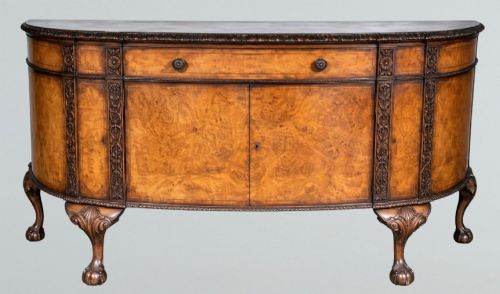
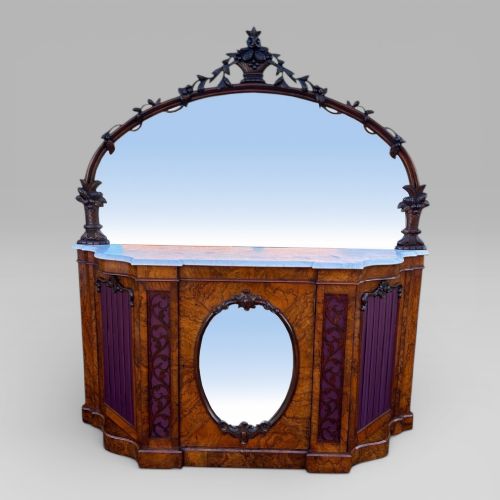
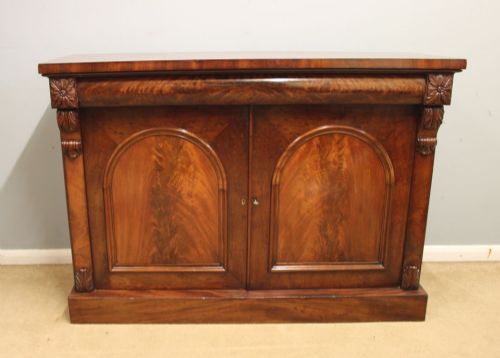
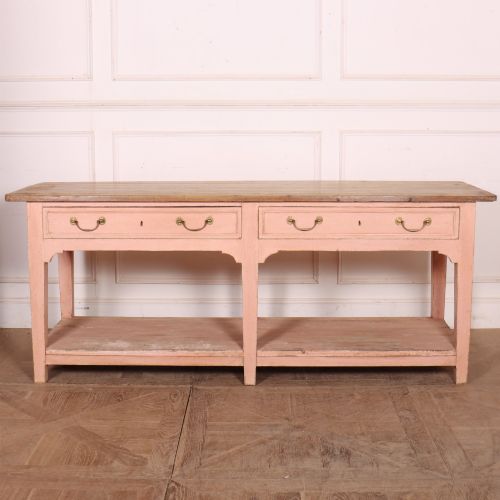
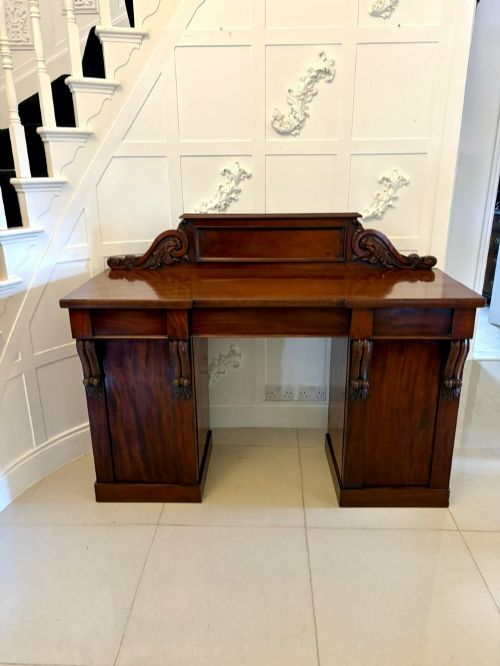
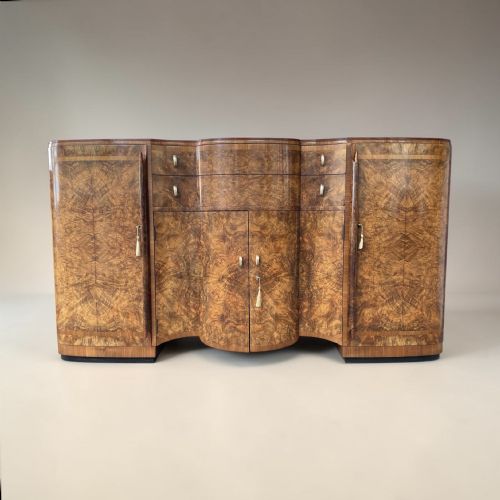
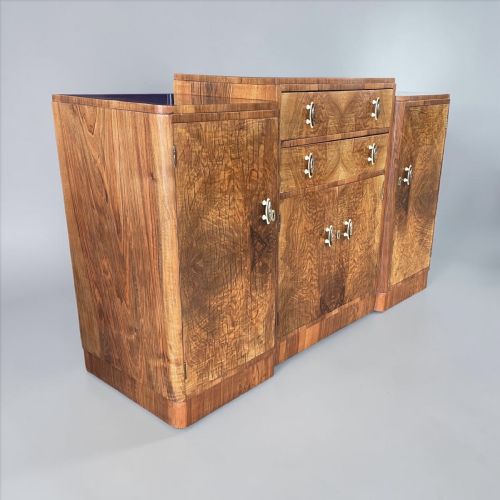
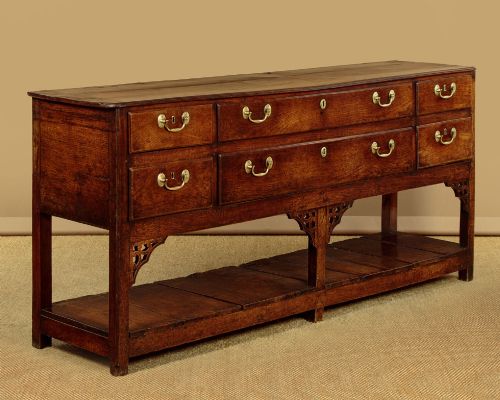
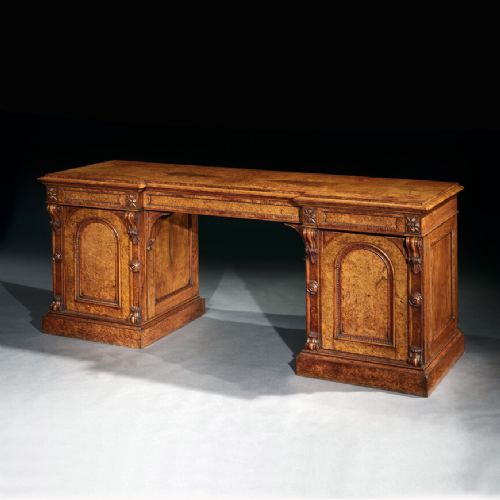
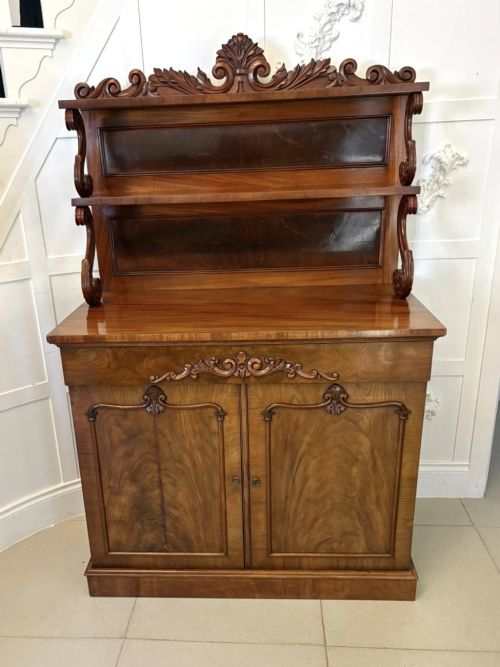
The pieces on this page appear as mahogany bow-fronts, oak potboard dresser bases, and walnut credenzas. Each variant serves the traditional purpose of organising dining room essentials while displaying decorative objects on the surface.
Originating predominantly from British cabinet-making traditions, these servers range from formal George III serpentine designs to rustic 19th-century pine kitchen bases. The selection reflects centuries of dining room evolution and domestic utility.
Assessing Craftsmanship and Distinction
Quality rests upon the selection of timber figures, such as highly figured mahogany or burr walnut, matched symmetrically across drawer banks and cupboard doors. Superior pieces display crisp, hand-carved detailing rather than cast resin or machine-stamped decoration.
Structural integrity reveals itself in the dovetail joinery of the drawers and the smooth movement of heavy timber doors. The weight and finish of original brass hardware further separate standard utility pieces from exceptional cabinet work.
Listings feature woods including mahogany, oak, burr walnut, and satinwood, spanning the 18th, 19th, and early 20th centuries.
Maurice Adams·Edward Barnsley
The Wooden Sideboard Server Glossary
- Bow-front
- A cabinet front that curves outward in a convex shape. This profile became particularly popular in mahogany dining furniture during the Georgian and Regency periods.
- Potboard
- An open lower shelf on a dresser base or sideboard used originally for storing heavy pots and pans. It defines the utility of earlier oak country furniture.
- Credenza
- A sideboard or buffet, often featuring cupboards and sometimes a mirrored back. The term frequently applies to elaborate Victorian serving furniture.
- Serpentine
- A furniture front or edge shaped with a central convex curve flanked by two concave curves. This contour requires advanced woodworking skill.
- Chiffonier
- A compact sideboard or low cupboard equipped with shelves or drawers. Victorian examples often incorporate a raised mirror back.
Wooden Sideboard Server: Frequently Asked Questions
What is a wooden sideboard server used for?
These pieces serve as storage units in dining rooms and living spaces for cutlery, linen, and serving platters. The flat top surface also provides space for serving food or displaying decorative ceramics.
Historically, they evolved to meet the demands of formal dining by keeping dining accessories close to the table. Today, they function equally well as media consoles or general storage cabinets in modern homes.
How do I date a wooden sideboard server?
Dating relies on identifying timber choices, hardware styles, and construction methods characteristic of specific eras. Georgian pieces often feature clean mahogany lines, while Victorian examples lean towards heavier carved details and burr walnut.
Examining drawer joinery provides further clues, as hand-cut dovetails precede mass-produced alternatives. Secondary woods inside the carcass also help confirm the period of manufacture.
Are these servers suitable for modern dining rooms?
Their robust timber construction and generous internal proportions make them highly practical for contemporary interiors. They offer substantial concealed storage that helps keep dining areas uncluttered.
Placing one against a dining room or hallway wall introduces warmth and historic character. The variety of sizes ensures compatibility with both spacious and compact rooms.
How do I care for antique wood surfaces?
Maintenance involves dusting regularly with a soft, dry cloth and avoiding direct exposure to strong sunlight or heat sources. Waxing periodically helps nourish traditional polished timber surfaces.
Liquid spills should be wiped away immediately to prevent water marks on the polished finish. Using coasters and felt pads protects the top surface from scratches.