


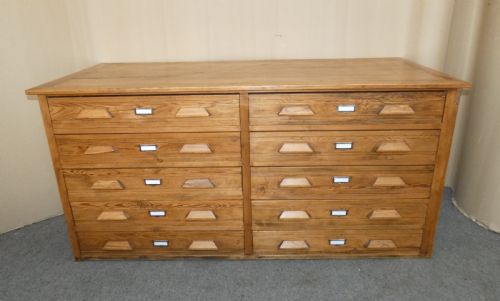


Wooden Shop Cabinet
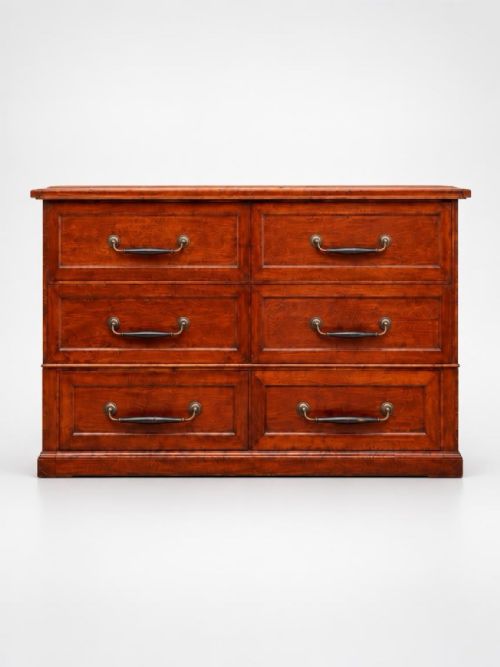
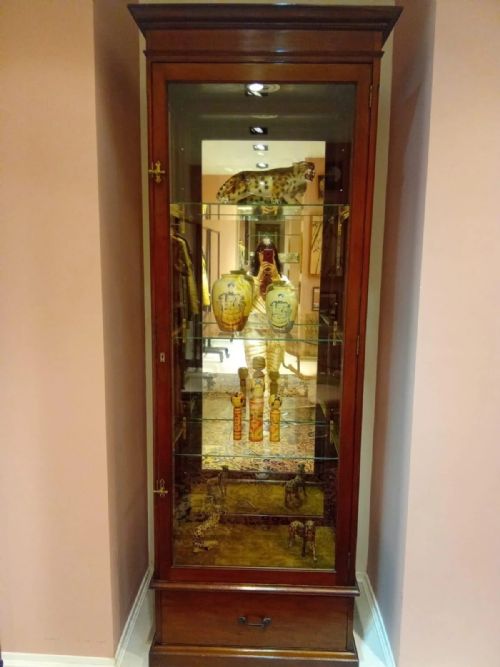
A wooden shop cabinet brings commercial utility and rich patination into domestic spaces, offering glazed display or deep drawers.
Wooden Shop Cabinet
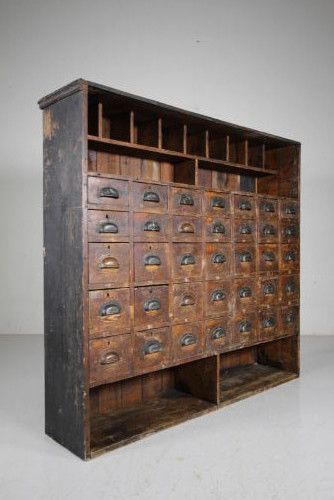
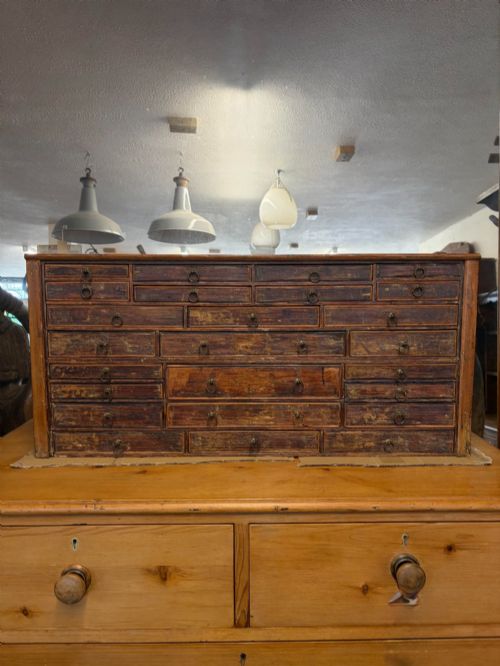
A wooden shop cabinet encompasses glazed countertop display cases, haberdashery chests with numerous small drawers, and tall counters sourced from nineteenth and early twentieth century commerce. When exploring a wooden shop cabinet, buyers encounter pieces designed for merchandising specific goods like sewing cottons, tobacco, and chocolate alongside generic storage units.
The selections span Victorian, Edwardian, and Art Deco eras, reflecting the changing aesthetic of the shop floor from heavy mahogany frameworks to streamlined brass-framed counters. Most examples originate from British and French retail environments, showing the practical needs of drapers, grocers, and apothecaries.
Functional forms dominate, with banks of drawers and tabletop display cases forming the bulk of the available material. These units served behind or upon the counter to protect wares while keeping them visible to customers.
Materials and construction
Makers utilised dense hardwoods such as mahogany, oak, walnut, cedar, and fruitwood to build frames capable of withstanding daily retail friction. Pine and other softwoods appear primarily in secondary elements like drawer linings and internal dividers.
Wooden Shop Cabinet Retail Price Guide 2026
Typical asking prices for wooden shop cabinet among the pieces listed under this phrase on Sellingantiques today, from the lower quarter to the upper quarter. They describe what is for sale here now, not the wider market.
Among the storage solutions, a memento mori skeleton makes an unexpected appearance alongside Victorian drapers' counters.
Judging quality and character
Superior examples retain their original brass handles, maker plaques, and glass panels without replacement, preserving the historical integrity of the piece. The depth of timber patination and the smoothness of drawer action distinguish standard utilitarian storage from finer retail furniture.
Original advertising elements, such as surviving sign-writing or manufacturer transfers for brands like Fry's or Cadbury, significantly elevate the historical interest of a cabinet. The complexity of the internal configuration, from multi-drawer haberdashery banks to mechanical dispensing units, dictates the desirability of the construction.
Saml. Elliott & Sons·Luxmore's of Ilfracombe
The Wooden Shop Cabinet Glossary
- Haberdashery cabinet
- A multi-drawer storage unit originally used in drapers shops to sort ribbons, threads, and small sewing accessories. These typically feature glass fronts or shallow tiers for stock visibility.
- Countertop display case
- A small glazed vitrine designed to sit upon a shop counter for customers to inspect delicate goods. They often incorporate rear access doors for the shopkeeper.
- Apothecary box
- A specialised storage container featuring internal compartments or small drawers for medicinal ingredients and dry goods. They often utilise robust hardwoods and secure brass locking mechanisms.
- Bank of drawers
- A large assembly of numerous small drawers housed within a single wooden carcass. They provide extensive compartmentalised storage for commercial or domestic sorting.
Wooden Shop Cabinet: Frequently Asked Questions
How were wooden shop cabinets used?
Merchants utilised these pieces to store, sort, and merchandise daily retail stock ranging from fabrics to confectionery. The glazed sections protected delicate items from dust and handling while maintaining full visibility for customers.
Behind the counter, banks of drawers kept small goods organised by size and type for rapid retrieval. Countertop cases acted as silent salesmen, placed strategically near the till to encourage impulse purchases.
How do I clean wooden shop cabinets?
Maintain the polished timber surfaces using traditional beeswax applied sparingly with a soft cloth to nourish the grain. Avoid modern chemical sprays that can strip historic patination and degrade the aged finish.
Clean glass panels with a mild vinegar solution and a lint-free cloth, taking care not to wet any exposed wood or paper advertising labels. Brass hardware benefits from gentle dusting rather than aggressive metal polishing to retain its age.
Where can I place a shop cabinet at home?
Kitchens and dining rooms suit large banks of drawers, providing deep storage for tableware, cutlery, and linens while serving as a focal island or sideboard. Countertop display cases fit neatly onto sideboards or desks to exhibit collections of small curiosities.
Tall display cabinets work effectively in hallways or living areas to house books and ceramics safely behind glass doors. Their narrow retail proportions often make them ideal for rooms with limited floor space.
How do I identify the period of a cabinet?
Examine the construction methods, such as dovetail joints on drawers and the type of fixings used to secure the backboards and glass. Hand-cut dovetails and heavy timber framing generally point towards nineteenth-century Victorian production.
Lighter oak frames, brass-framed glass counters, and streamlined Art Deco lines typically indicate early twentieth-century or 1930s manufacture. Surviving maker marks, brass plaques, and original advertising transfers also provide firm chronological anchors.