



Wooden Rotating Stand
These wooden rotating stand pieces range from Edwardian bookcases to Georgian lazy Susans, built for smooth motion and daily utility.
Wooden Rotating Stand
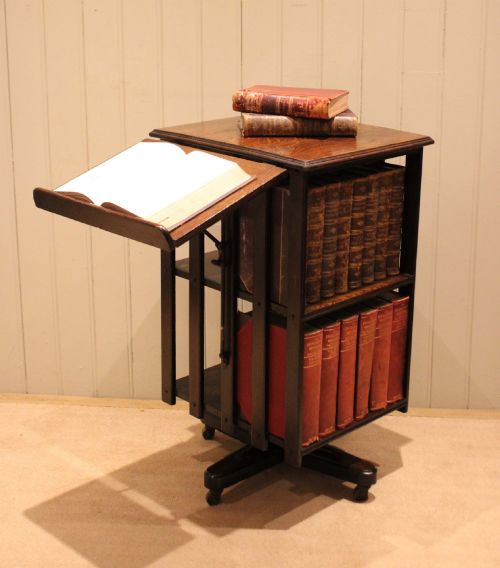
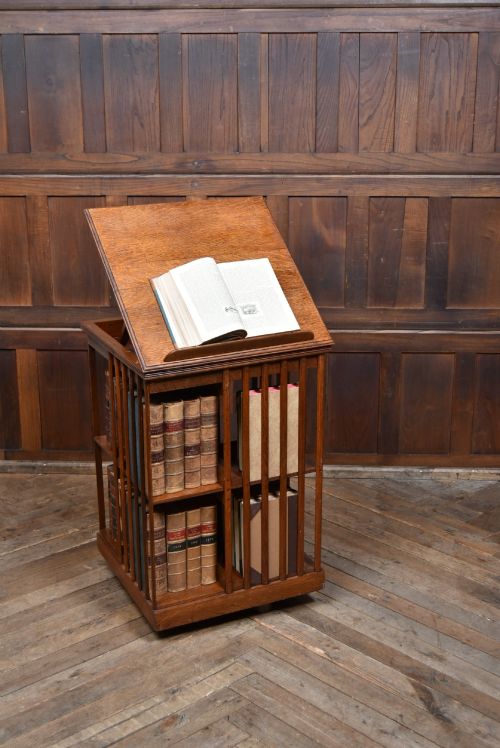
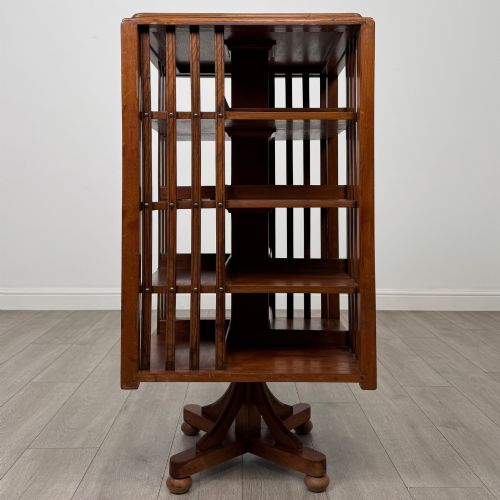
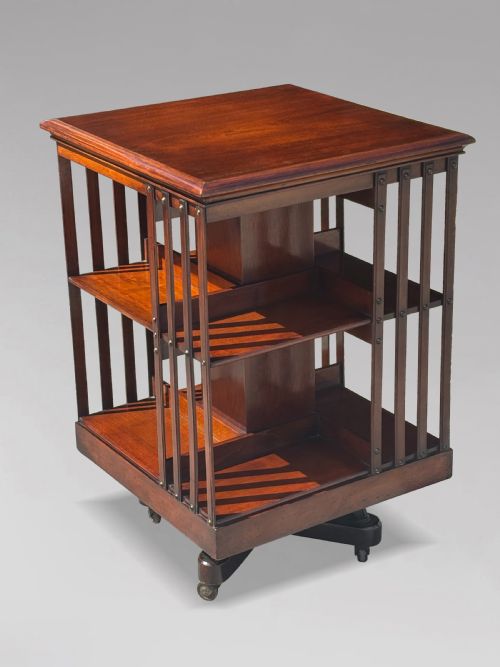
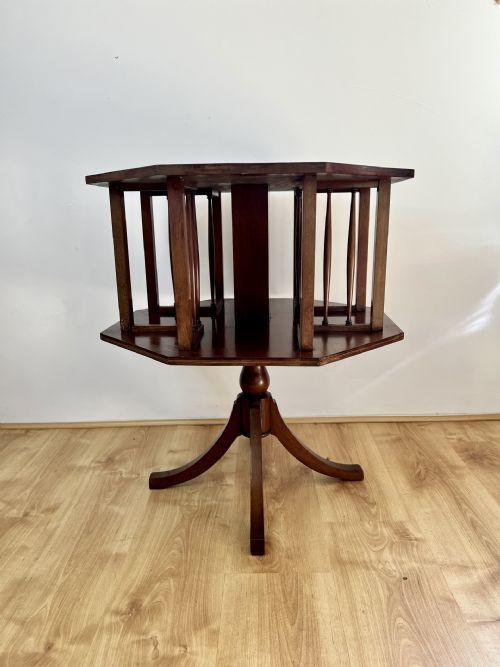
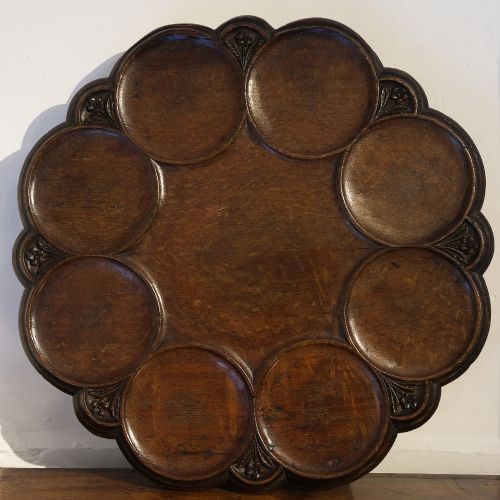
When you search for a wooden rotating stand, you encounter a surprisingly varied group of furnishings designed to bring books, dishes, or footwear within easy reach. The most common forms on this page are revolving bookcases spanning the Edwardian and Victorian periods, alongside table-top lazy Susans in mahogany and oak.
The selection ranges from compact four-tier desk models to substantial floor-standing bookcases and French 4-shelf designs. You also find specialised items like fireside rotating stands and boot stands, demonstrating how flexibly makers applied pivoting mechanisms to everyday domestic objects.
How they were made
Makers relied heavily on solid hardwoods like mahogany and oak, often selecting them for their durability and grain. Inlaid decoration in satinwood appears on finer Edwardian examples, adding subtle visual contrast to the polished surfaces.
Internal mechanisms frequently incorporate cast iron, iron, and brass components to ensure smooth rotation under weight. Ceramic elements occasionally feature in associated serveware or tazzas, combining metal pivots with traditional pottery.
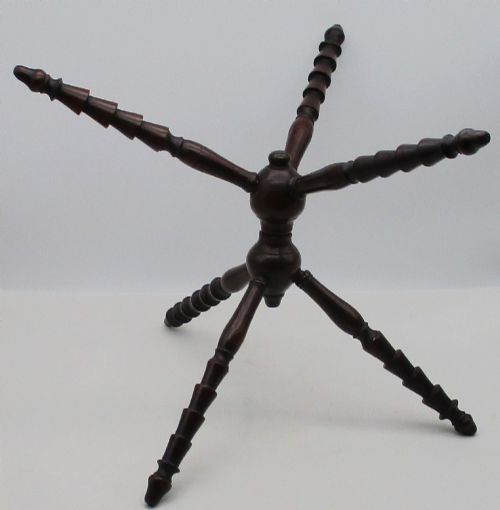
A fire cat stand lets you rotate your toast toward the flames without leaving your armchair.
What varies in quality
The distinction between ordinary and superior examples rests largely on the engineering of the pivot and the selection of timber. A well-balanced revolving bookcase turns silently and evenly without listing to one side, reflecting careful alignment of the internal spindle.
Surface finish and timber figure also set pieces apart. Richly grained mahogany with crisp inlay or finely turned uprights indicates a higher grade of manufacture than plain, utilitarian construction.
The Wooden Rotating Stand Glossary
- Lazy Susan
- A revolving tray placed on a table to assist in serving food. These circular wooden items allow diners to share dishes easily.
- Revolving Bookcase
- A freestanding shelf unit designed to turn on a central base. They permit access to multiple rows of books from a single seated position.
- Inlaid
- A technique where contrasting woods like satinwood are set into the primary timber surface to create decorative patterns. It signals finer cabinetwork.
- Tazza
- A small pedestal tray or dish raised on a base. In rotating formats, it functions as an elevated lazy Susan for tabletop presentation.
Wooden Rotating Stand: Frequently Asked Questions
How do I care for the rotating mechanism?
Most internal pivots require minimal attention beyond keeping the underside free of dust and debris. Avoid applying heavy oils or lubricants to the central spindle unless movement becomes stiff.
Period bearings often rely on simple metal or wooden contact points that function best when kept clean and dry.
Can these bookcases hold heavy books?
Edwardian and Victorian revolving bookcases were engineered to carry standard octavo volumes comfortably across their tiers. Distributing heavier encyclopaedias toward the lower shelves helps maintain balance during rotation.
Overloading the top tiers can strain the central spindle and affect the smoothness of the turn.
Where were lazy Susans used?
These rotating trays served dining tables and sideboards for passing condiments, sauces, and dishes without interrupting conversation. Georgian and Edwardian households valued them for practical hospitality.
Later versions transitioned into art deco serveware for casual dining and afternoon tea.
How do I date a revolving bookcase?
Stylistic clues such as Edwardian satinwood inlay, Victorian mahogany proportions, or Georgian turnings provide the primary dating evidence. Inspecting the construction methods underneath also reveals the period of manufacture.
Earlier pieces often exhibit hand-cut joinery, while later Edwardian examples incorporate standardised machine components.