
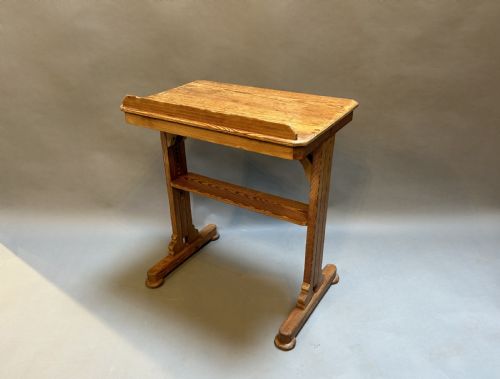

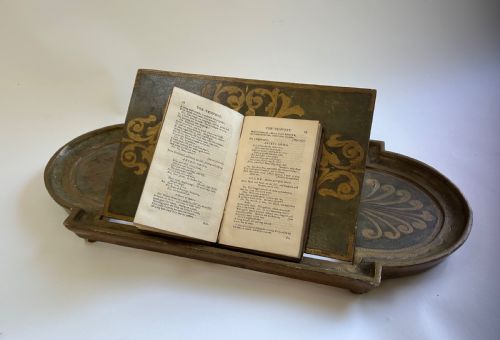


Wooden Reading Table
These wooden reading table pieces offer functional book storage and adjustable surfaces, designed to hold texts securely for study or leisure.

Wooden Reading Table
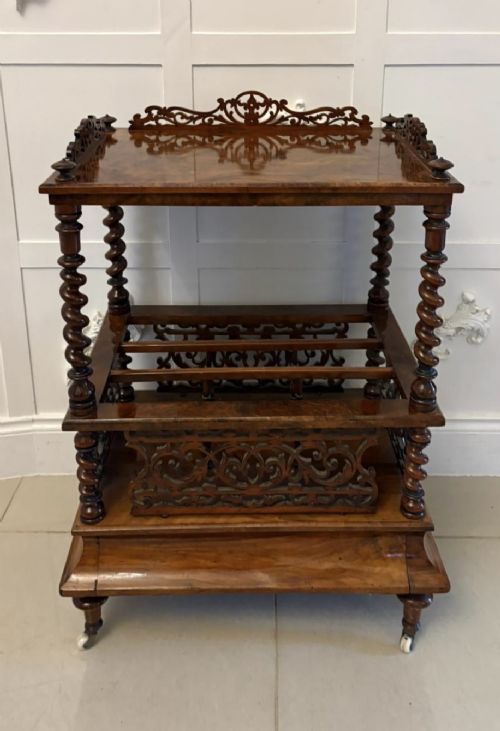
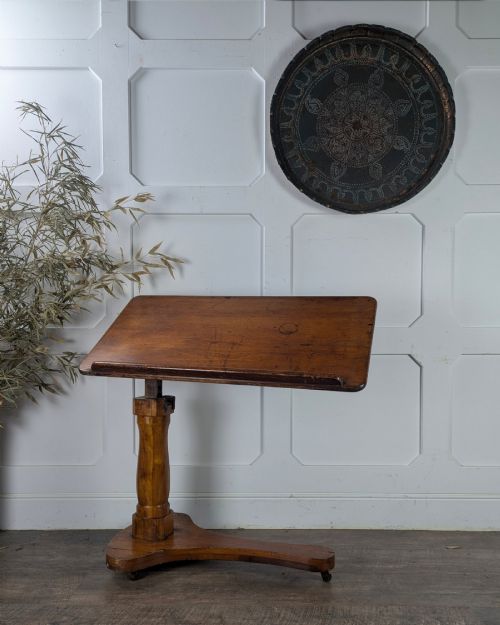
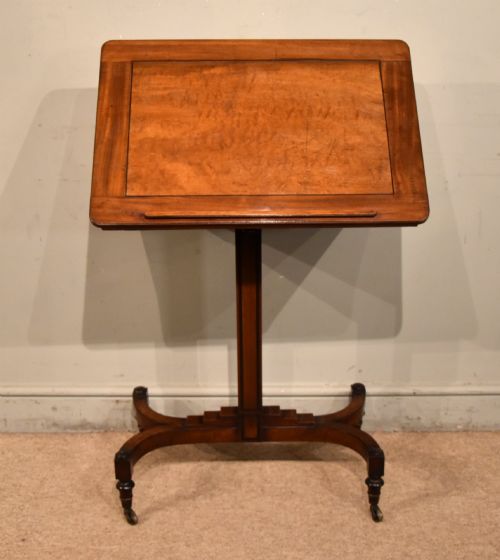
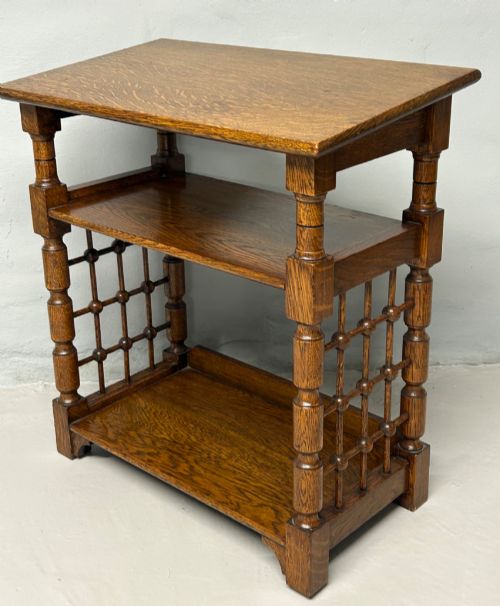
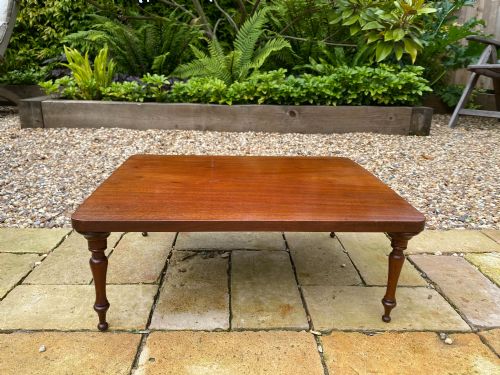
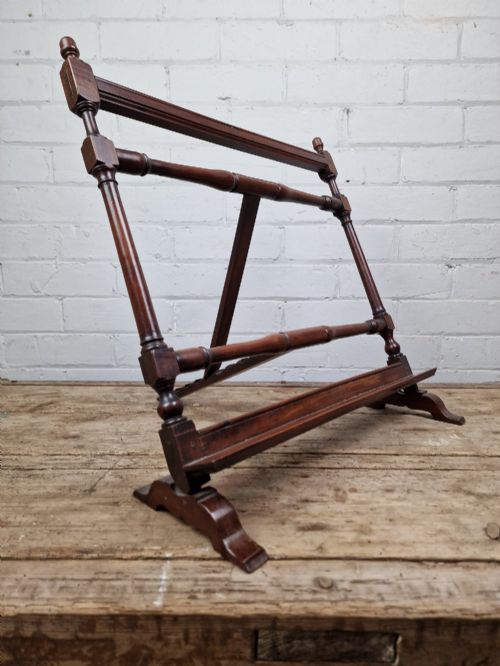
A wooden reading table serves as a dedicated piece of furniture for holding books, manuscripts, and papers at a comfortable angle. Buyers searching for a wooden reading table will find varied forms, ranging from adjustable music stands and lecterns to side tables and canterburys.
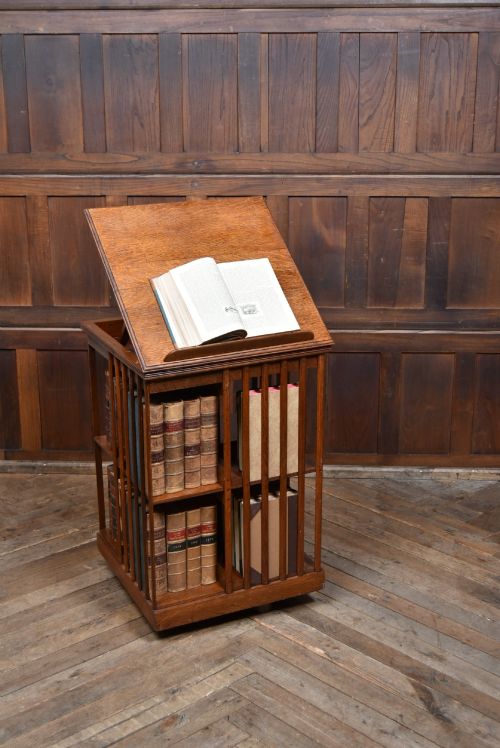
The selection spans several periods, including Regency, Victorian, Edwardian, and Art Deco designs. Many pieces combine reading surfaces with auxiliary functions, such as occasional tables, revolving bookcases, and bed trays.
How they were made
Cabinet makers utilised dense hardwoods like mahogany, walnut, and oak to construct these sturdy tables and stands. Burr walnut and figured mahogany veneers provided decorative surfaces on key examples.
Movable mechanisms frequently incorporated brass and cast iron fittings to allow height and angle adjustments. Pine served for simpler utility pieces and internal structures, while specialised items included cast iron mobility frames.
The listings show materials spanning mahogany, walnut, oak, pine, brass, and cast iron across the nineteenth and early twentieth centuries.
What varies in quality
The sophistication of the mechanical adjustment mechanism distinguishes standard production from finer examples. Smooth movement in ratchets, screws, and brass fittings indicates superior workmanship.
Timber selection and grain figuring also determine quality, with well-matched mahogany or burr walnut marking out high-status pieces. The integrity of joinery and the retention of original hardware contribute significantly to a piece's standing.
The Wooden Reading Table Glossary
- Lectern
- A desk or stand with a sloping surface designed to hold a book or speech at a height suitable for standing or sitting readers. These often feature adjustable heights.
- Canterbury
- A low, freestanding rack used for holding sheet music, books, or periodicals, typically featuring partitioned sections above a drawer. They frequently appear in mahogany or walnut.
- Toleware
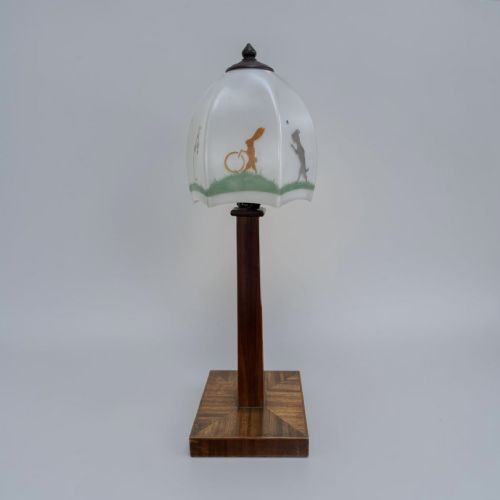
- Painted or enamelled metalware, often appearing on lamp bases and desk accessories associated with reading furniture. It provides a durable, coloured finish.
- Mauchline Ware
- Small wooden souvenirs and household items decorated with photographic transfers or tartan designs, commonly produced in Scotland during the nineteenth century.
Wooden Reading Table: Frequently Asked Questions
How do I adjust a reading table?
Many antique tables use brass ratchets, wooden pegs, or screw mechanisms to alter the angle of the top and the overall height of the stand.
Carefully support the reading surface while releasing the locking mechanism to prevent sudden movement or strain on the timber joints.
Can I use these for modern books?
These tables were built to support heavy folios, ledgers, and bound volumes, making them suitable for contemporary hardbacks, tablets, and cookbooks.
The adjustable ledges and sturdy mahogany or oak shelves securely hold modern reading materials without difficulty.
How do I identify a Regency reading table?
Regency pieces often display clean classical lines, dark mahogany timbers, and sophisticated brass adjustment hardware typical of the early nineteenth century.
They frequently combine architectural proportions with utilitarian mechanics designed for drafting, reading, or music.