

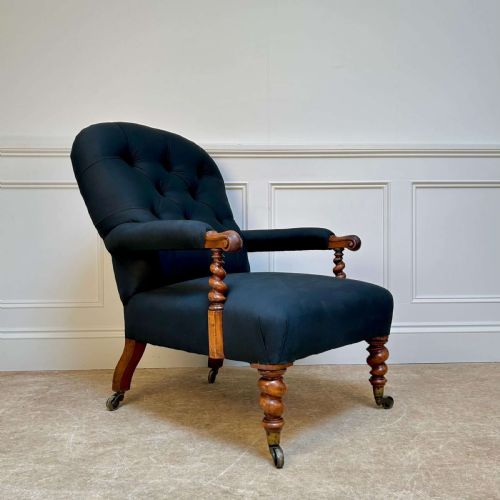
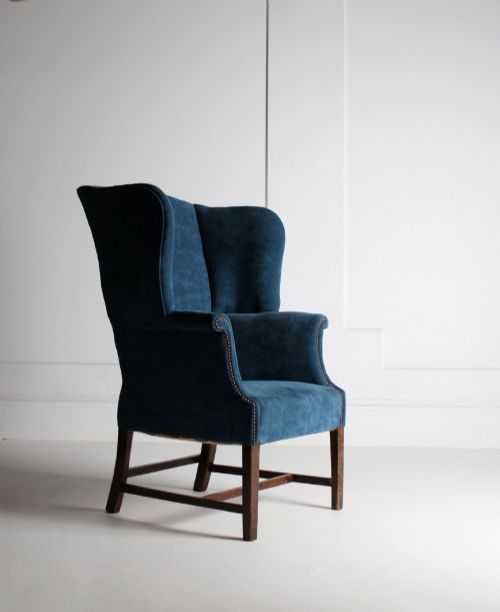
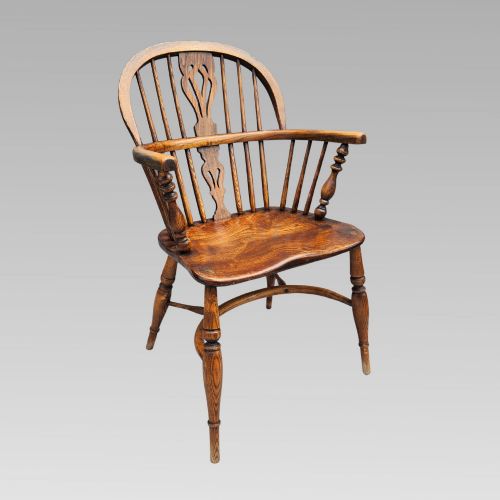

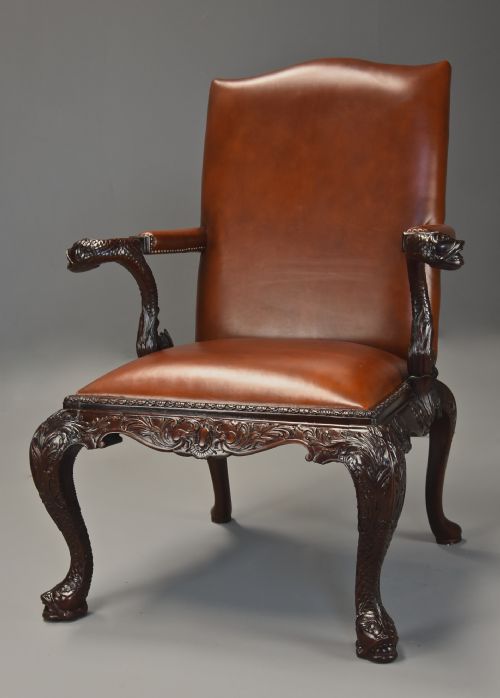
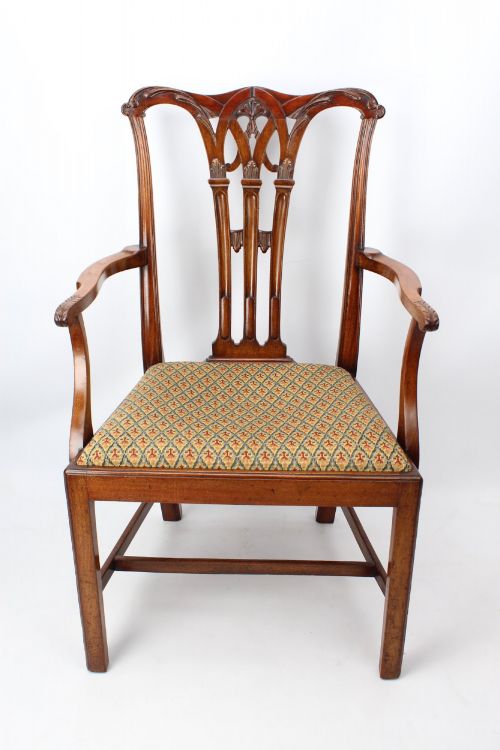


Wooden Reading Armchair
A wooden reading armchair brings solid construction and comfortable proportions to a study or corner, built to support hours of sitting.
Wooden Reading Armchair
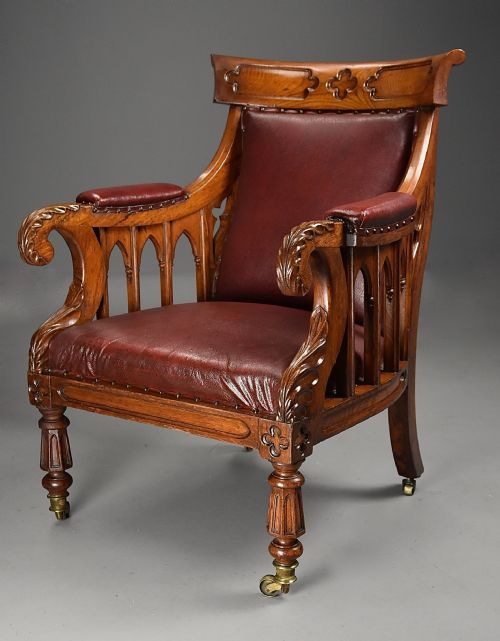
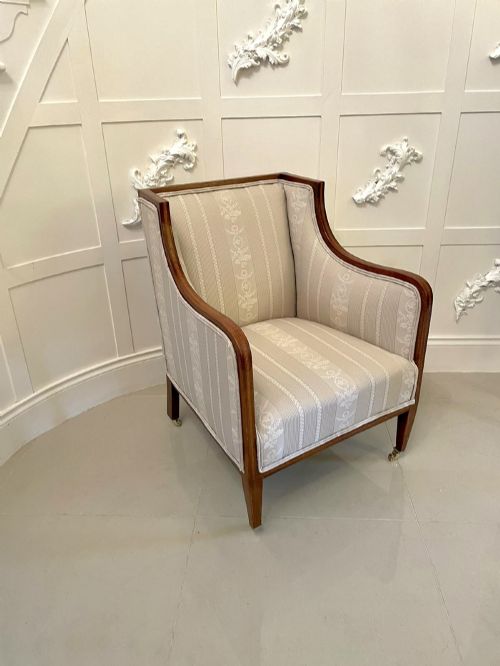
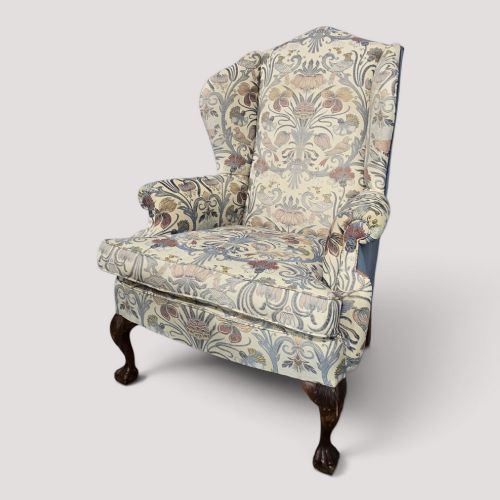
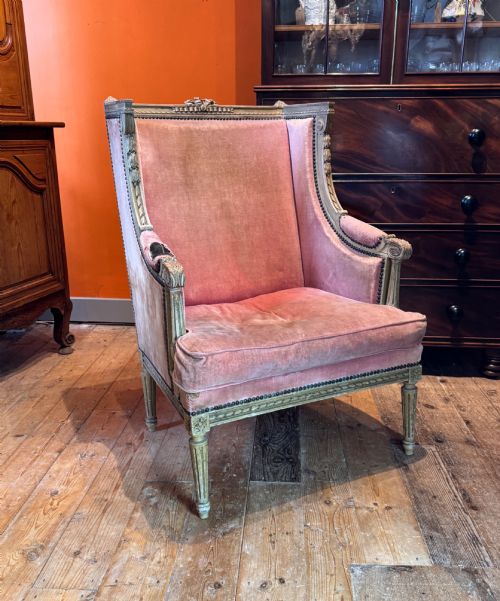
The wooden reading armchair covers a range of seating built primarily from timber, often featuring upholstered pads or cushions designed for extended sitting in libraries, studies, and drawing rooms. Examples span from Georgian and Regency forms through Victorian designs to Edwardian interpretations, reflecting changing domestic habits across centuries.
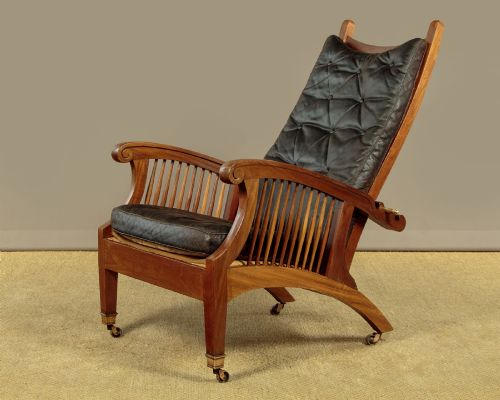
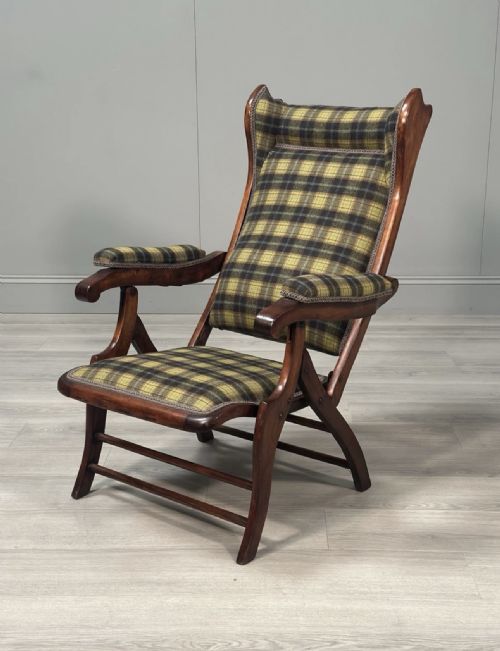
Buyers meet diverse configurations on this page, including library chairs, desk chairs, and low fireside models alongside folding campaign and reclining versions. Timbers such as mahogany, walnut, oak, elm, and teak dominate the selection, frequently paired with fabric, leather, or velvet upholstery.
Traditional stylistic influences include Chippendale, George II, and Queen Anne revivals alongside English Country House aesthetics and French imports. These seating pieces serve both functional workspaces and quiet reading corners, combining structural timber frames with comfortable seating surfaces.
Materials and construction
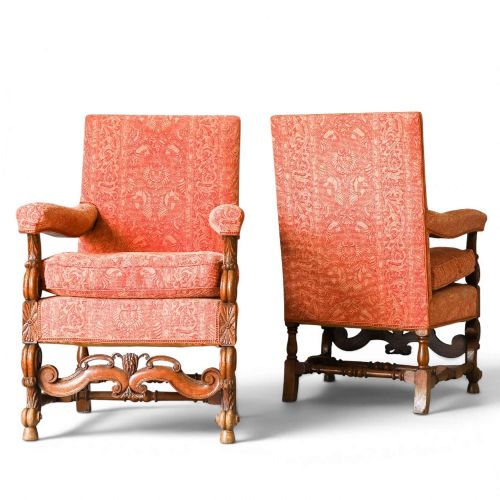
Makers constructed these frames from hardwoods like mahogany, walnut, oak, and elm, relying on traditional joinery to ensure stability under daily use. Cabinetmakers shaped solid timber into curved armrests, spindle backs, and sabre legs, sometimes incorporating brass fittings for adjustable or folding mechanisms.
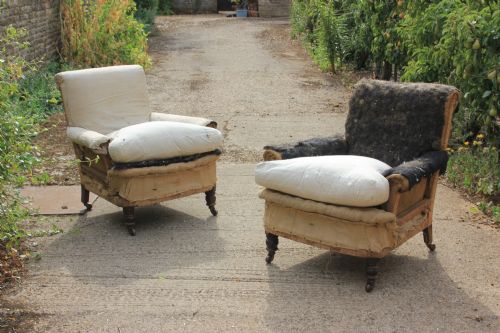
Upholstered sections utilise fabric, velvet, leather, or original coverings padded over webbing or stuffing to provide firm support. Inlaid details, carved scroll arms, and spindle turnings display the secondary decorative techniques applied to the primary wooden structures.
Wooden Reading Armchair Retail Price Guide 2026
Typical asking prices for wooden reading armchair among the pieces listed under this phrase on Sellingantiques today, from the lower quarter to the upper quarter. They describe what is for sale here now, not the wider market.
Listings feature mahogany, walnut, oak, elm, teak, and yew wood across Victorian, Edwardian, Georgian, and Regency periods.
Markers of quality
Quality rests in the selection of timber and the precision of the joinery, where dense grains and tight joints indicate superior cabinetmaking. Superior examples maintain original surface patination and structural integrity without excessive timber replacement or loose joints.
Proportion and carving detail distinguish standard utilitarian seating from finer library and desk chairs, with crisp mouldings and balanced frames showing greater maker skill. The retention of original upholstery methods or period fabric adds historical value to pieces preserved over generations.
Hindley And Sons·Howard And Sons·Morgan And Sanders
The Wooden Reading Armchair Glossary
- Gainsborough chair
- A wide, upholstered armchair with open wooden arms, designed in the mid-eighteenth century for writing desks and libraries.
- Windsor chair
- A traditional seating form featuring a solid wooden seat into which the legs and spindled back are wedged and secured.
- Metamorphic furniture
- Ingenious pieces designed to transform into alternative items, such as a library armchair that unfolds into a set of steps.
- Bergere
- A closed-arm upholstered armchair with a wooden frame, frequently featuring cane panels on the back and sides.
- Corner chair
- An armchair constructed with a diagonal orientation, designed to fit snugly into room corners with a curved backrest supported by turned pillars.
Wooden Reading Armchair: Frequently Asked Questions
What is a library chair?
A library chair is a sturdy seat built for reading rooms, often featuring upholstered armrests and supportive backs designed for long periods of study.
These pieces typically utilise durable hardwoods like mahogany or oak to withstand frequent use in domestic and institutional settings.
How do I identify a Victorian armchair?
Victorian armchairs often display heavier proportions, walnut or mahogany frames, and button-backed or scroll-armed upholstery styles popular during the nineteenth century.
Design influences from this era range from revived Rococo curves to button-tufted gentleman's chairs designed for comfort.
Where were these chairs used?
These chairs were placed in studies, libraries, bedrooms, and drawing rooms as functional seating for reading, writing, and fireside relaxation.
Different forms suited specific rooms, such as low fireside chairs or wide desk chairs tailored for writing tables.
Are wooden reading armchairs comfortable?
Most examples combine a solid wooden structural frame with padded, upholstered seats and backrests lined in fabric, leather, or velvet.
Deep seats and upholstered arms ensure they provide practical comfort alongside their traditional architectural presence.