

Wooden Parquetry Table
A wooden parquetry table brings geometric precision and rich timber tones into a room through meticulously laid veneers.
Wooden Parquetry Table
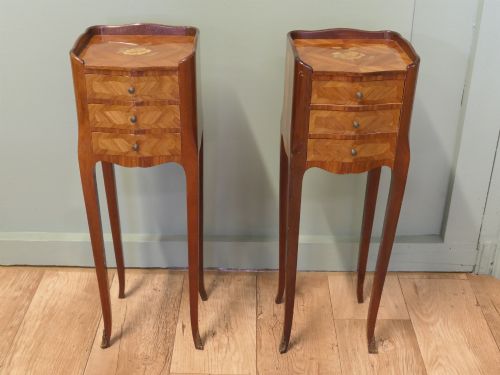
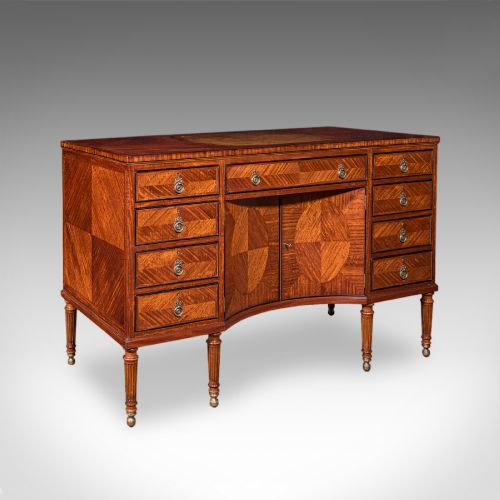
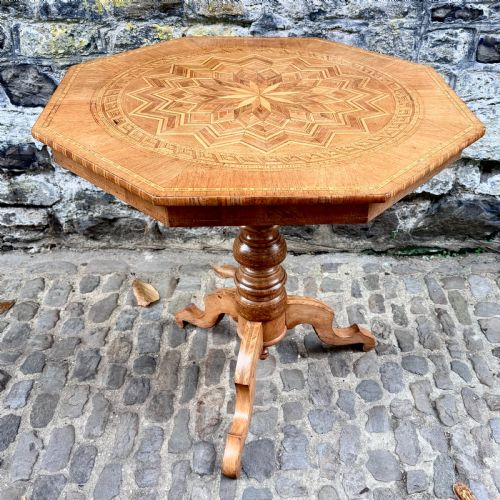
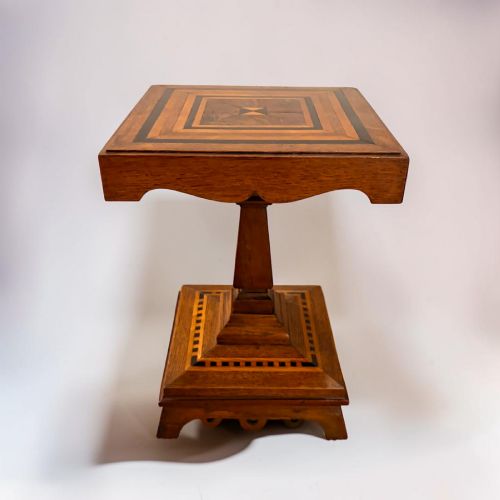
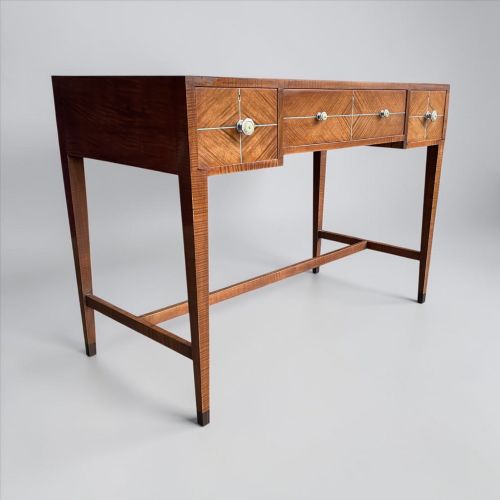
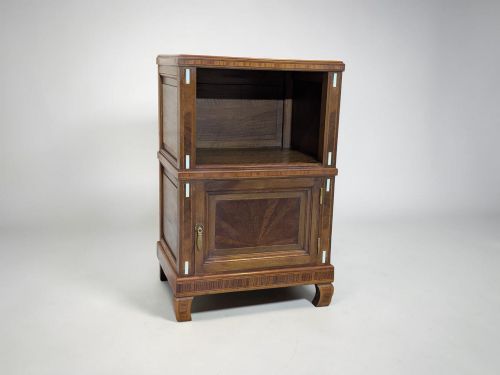
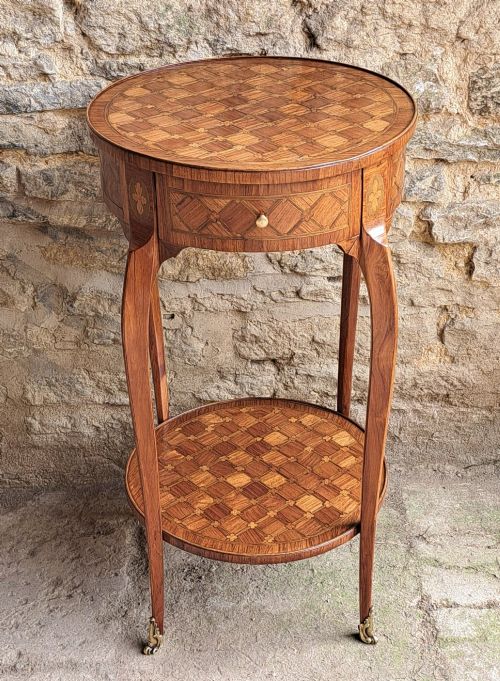
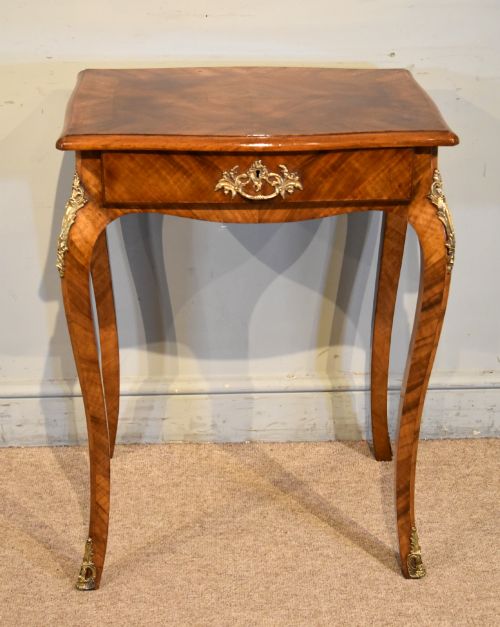
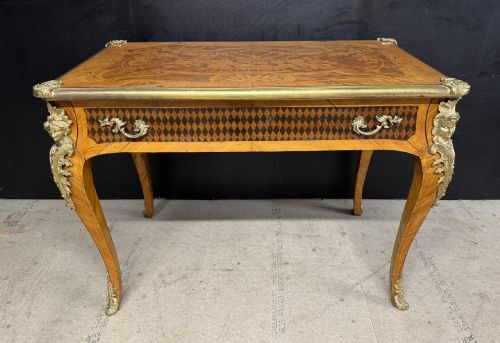
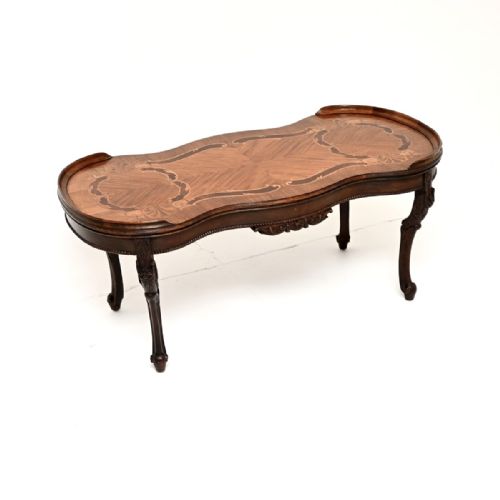
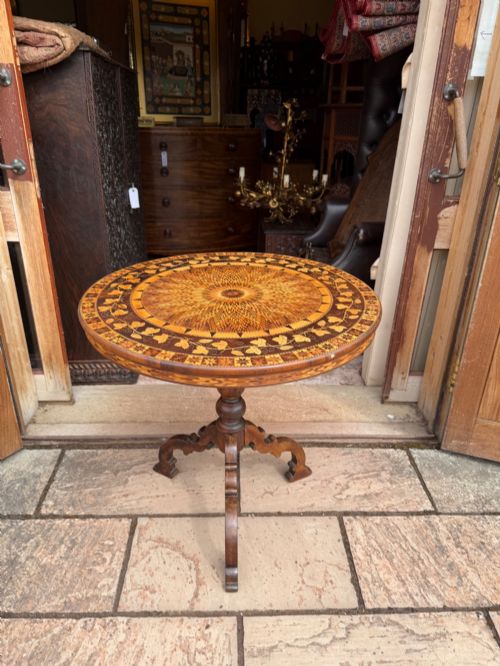
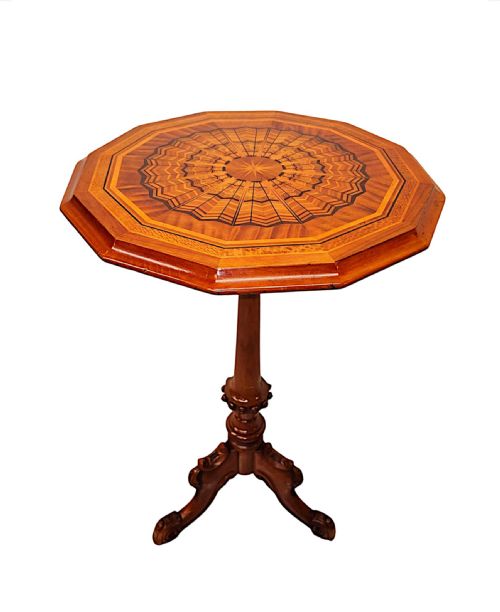
A wooden parquetry table is a functional surface defined by geometric patterns formed from small pieces of contrasting veneer. When exploring this selection, buyers encounter formats ranging from compact coffee tables and side tables to occasional pieces and desks.
The pieces span several periods, with nineteenth-century examples and twentieth-century interpretations appearing frequently. Makers utilised forms influenced by French revival styles as well as simpler Edwardian and Art Deco designs.
Originating largely from European workshops, these items often integrate multiple timbers to create visual depth across the surface top.
Materials and construction methods
Craftsmen built these tables using a stable secondary timber base overlaid with carefully sliced hardwood veneers. Walnut, kingwood, rosewood, satinwood, and mahogany provide the contrasting tones necessary for geometric parquetry patterns.
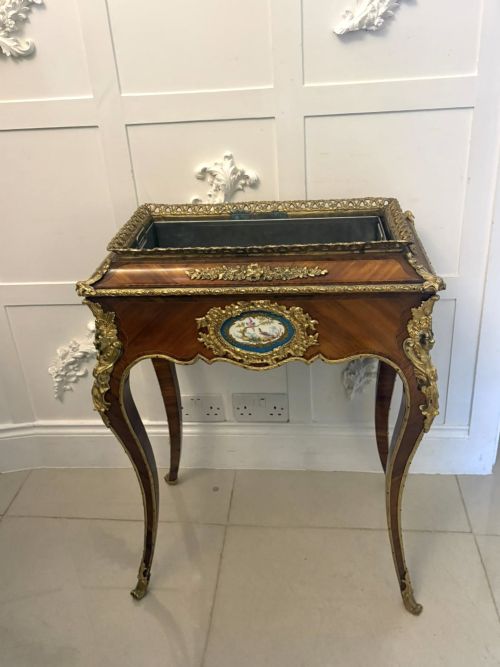
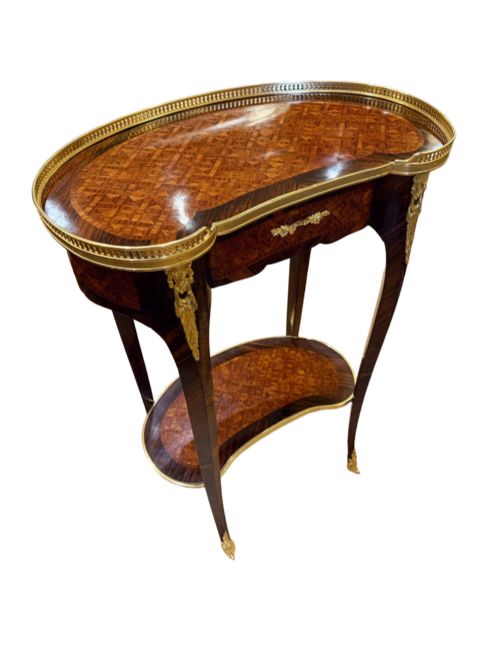
Many examples incorporate cast or gilt bronze ormolu mounts, brass details, and occasional porcelain plaques to accent the timberwork. The small veneer blocks are hand-cut and fitted together on a canvas or paper backing before being glued to the solid core.
Wooden Parquetry Table Retail Price Guide 2026
Typical asking prices for wooden parquetry table among the pieces listed under this phrase on Sellingantiques today, from the lower quarter to the upper quarter. They describe what is for sale here now, not the wider market.
Some nineteenth-century tables cleverly doubled as hidden work boxes for sewing needles and thread, proving that historical tidiness was an art form.
Assessing quality in parquetry
Quality rests primarily in the precision of the veneer work and the tightness of the joints between individual wooden tiles. Finer pieces demonstrate seamless alignment where lines meet, while lesser examples show visible filler or uneven gaps between timber segments.
Bath Cabinet Makers·Gillows
The Wooden Parquetry Table Glossary
- Parquetry
- A geometric mosaic of wood pieces used for surface decoration. This technique differs from marquetry by forming strictly geometric patterns rather than pictorial scenes.
- Veneer
- A thin slice of fine timber applied to a coarser base wood. This method allowed makers to display expensive grain patterns economically.
- Ormolu
- Gilded bronze mounts applied to furniture for decoration and edge protection. These metallic additions indicate higher-status furnishings from French and English workshops.
- Kingwood
- A dense, richly figured timber featuring dark violet-brown stripes. Cabinet makers valued this wood for contrasting geometric details.
- Bonheur du jour
- A light ladies writing desk featuring a small cabinet or set of drawers on top. These dainty writing surfaces often incorporate elaborate surface veneers.
Wooden Parquetry Table: Frequently Asked Questions
How do I clean a parquetry table?
Dust the surface regularly with a soft, dry cloth to prevent accumulation in the veneer joints. Avoid using harsh chemical polishes that can seep between the small wooden tiles.
Apply a traditional beeswax occasionally to nourish the timber and maintain a soft lustre. Keep the wood away from direct sunlight and heat sources to prevent the veneer from lifting.
Can I use an occasional table for daily dining?
Most pieces listed as occasional tables or side tables are built for light duties like holding books or lamps. Their delicate structures and veneered tops suit decorative placement rather than heavy family meals.
Using coasters and placemats protects the antique surface from moisture rings and scratches. Placing the table in a low-traffic corner preserves the intricate geometric arrangement.
What is the difference between parquetry and marquetry?
Parquetry creates geometric designs like cubes, squares, and chevrons using contrasting wood blocks. This style focuses on mathematical precision and repetitive patterns.
Marquetry arranges veneers to form pictorial images such as flowers, landscapes, or figures. Both techniques appear frequently on the top surfaces of nineteenth-century tables.
How do I date a wooden parquetry table?
Examine the construction methods visible underneath and inside the drawers, such as hand-cut dovetails or modern fixings. Timber choices and prevailing furniture styles also offer strong clues to the decade of manufacture.
Nineteenth-century examples often lean toward French revival aesthetics, while later pieces adopt simpler geometric lines associated with the early twentieth century. Consulting the primary wood types helps narrow down the period.