



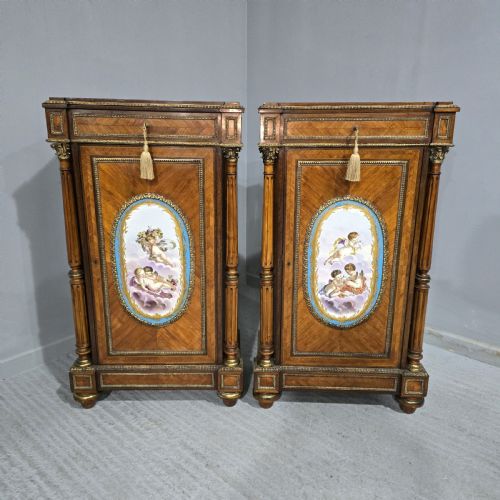

Wooden Parquetry Cabinet
A wooden parquetry cabinet brings together geometric wood veneers and historic joinery to offer practical storage with a distinct decorative surface.
Wooden Parquetry Cabinet
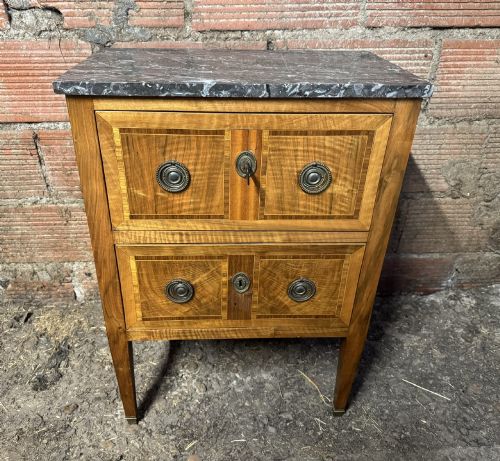
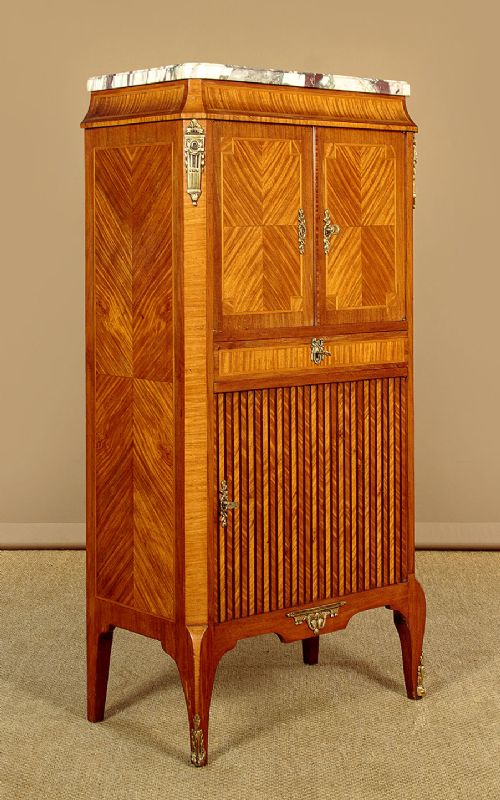
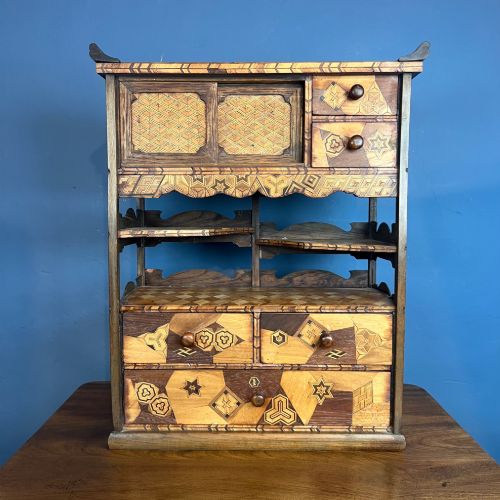
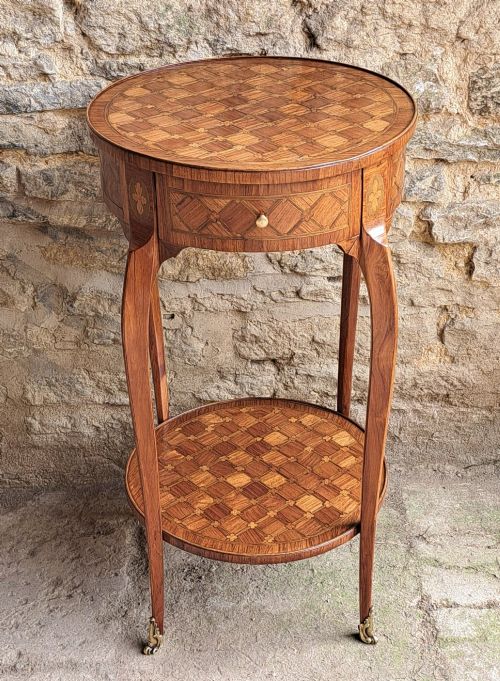
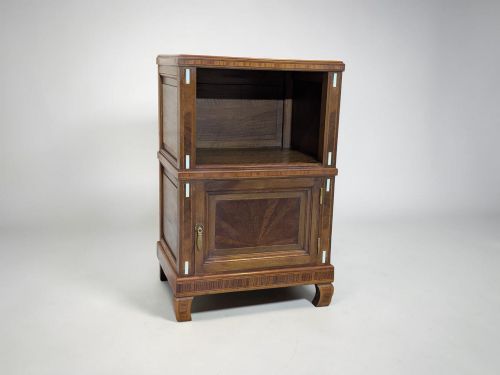
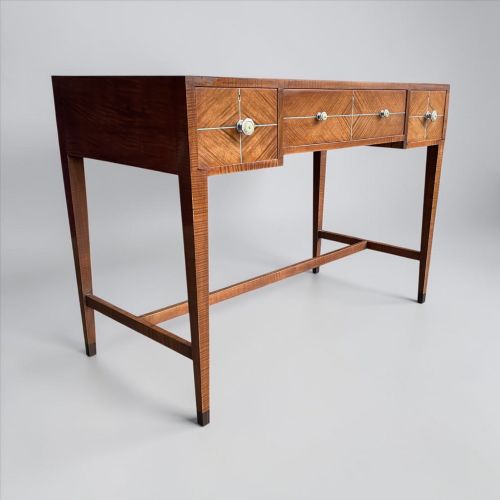
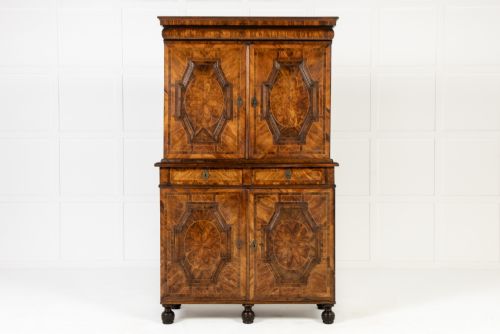
When you search for a wooden parquetry cabinet, you encounter pieces defined by geometric arrangements of contrasting wood veneers set into frames. The selection on this page spans from seventeenth-century kingwood examples to twentieth-century Revival side cabinets and bedside tables.
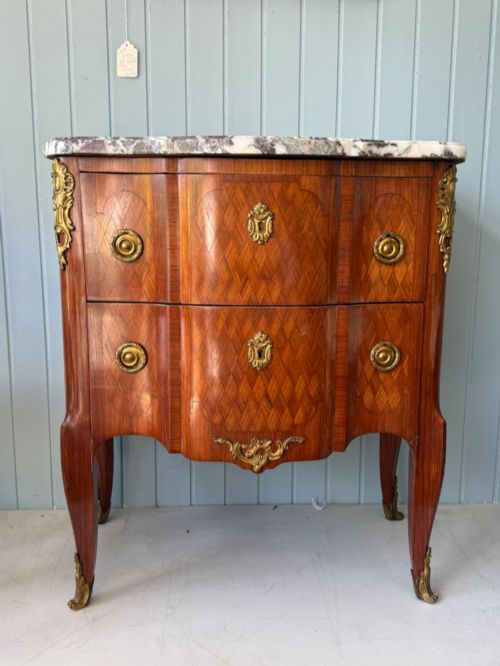
Beyond dedicated side cabinets, the forms extend to chests of drawers, corner cupboards, and cabinets on stands. Walnut, kingwood, and satinwood appear frequently across these varied historical periods.
How they were made
Cabinet makers constructed these pieces using solid timber carcases overlaid with fine wood veneers arranged in geometric patterns. Materials such as walnut, satinwood, and kingwood supplied the contrasting tones needed for the precise mosaic effect.
Mounts in brass and ormolu frequently reinforced corners and feet, while marble tops added weight and durability to specific commodes and washstands.
Wooden Parquetry Cabinet Retail Price Guide 2026
Typical asking prices for wooden parquetry cabinet among the pieces listed under this phrase on Sellingantiques today, from the lower quarter to the upper quarter. They describe what is for sale here now, not the wider market.
A combination table and smokers' cabinet from the late Victorian era offers discreet storage for tobacco alongside a standard occasional surface.
What varies in quality
Quality rests primarily in the precision of the veneer work and the selection of the timbers. Tighter joints between individual wood pieces and more complex geometric layouts distinguish finer cabinet making.
The choice of secondary woods and the refinement of cast bronze or ormolu mounts further separate standard production from exceptional work.
Bath Cabinet Makers
The Wooden Parquetry Cabinet Glossary
- Parquetry
- Geometric mosaic woodwork formed by small veneer pieces fitted together. This technique creates patterned surfaces across cabinet doors and tabletops.
- Kingwood
- A dense, richly figured tropical timber prized in seventeenth and eighteenth-century furniture. Its dark contrasting grain suits detailed veneer work.
- Ormolu
- Gilded bronze used for decorative mounts and furniture trim. This material accents corners and handles on French and Revival pieces.
- Satinwood
- A pale, lustrous timber with a fine grain used for light-coloured veneer panels. It provides high contrast when paired with darker woods like kingwood.
Wooden Parquetry Cabinet: Frequently Asked Questions
How do I care for parquetry veneer?
Keep wooden parquetry cabinets away from direct sunlight and steady heat sources to prevent the underlying veneers from drying and lifting.
Apply a traditional wax polish occasionally and buff gently with a soft cloth to maintain the surface sheen without building up heavy residues.
Where should I place a bedside cabinet?
A bedside cabinet fits well beside a bed to hold a lamp and small nightly items within easy reach.
Ensure the height matches your mattress level so the top surface remains convenient to use.
How do I distinguish eighteenth-century pieces?
Eighteenth-century pieces typically display hand-cut dovetails, timber shrinkage appropriate to age, and specific regional construction methods.
Examine the secondary woods inside drawers and the underside of the carcase for signs of period hand tools.
What is a cabinet on stand?
A cabinet on stand consists of an enclosed storage section raised on a separate support frame with legs.
This form lifts the decorated surface higher into the room and offers a lighter visual profile than a floor-standing chest.