

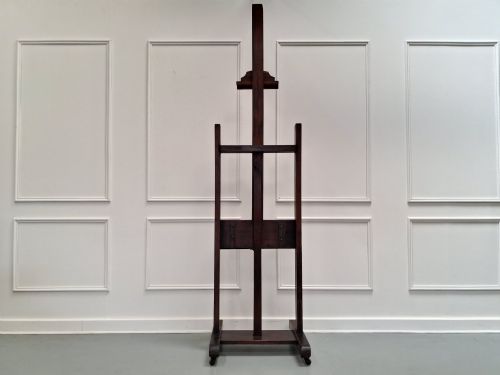
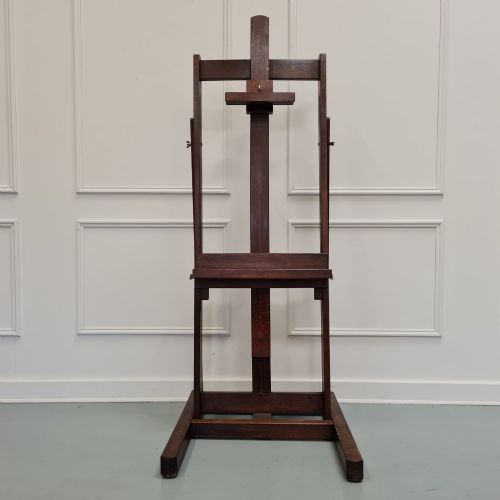
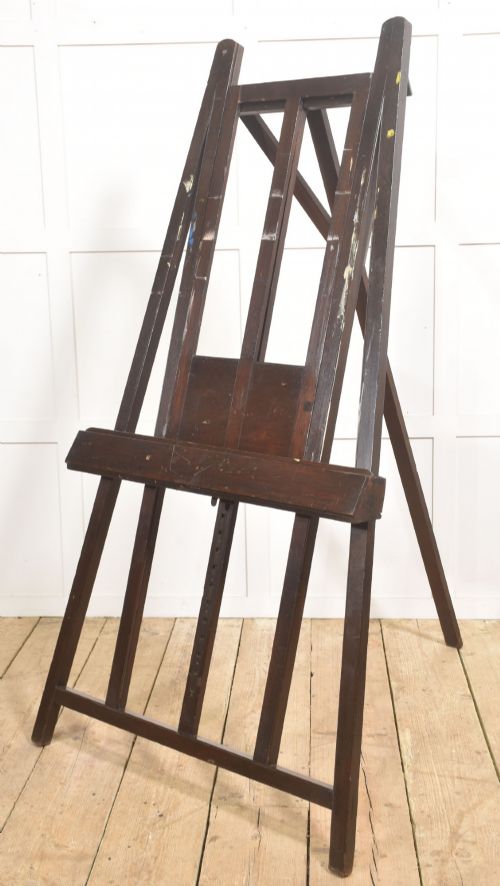
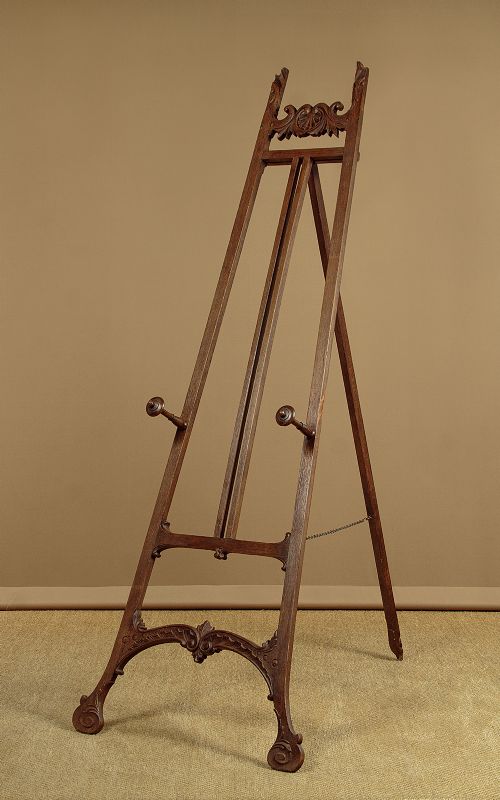


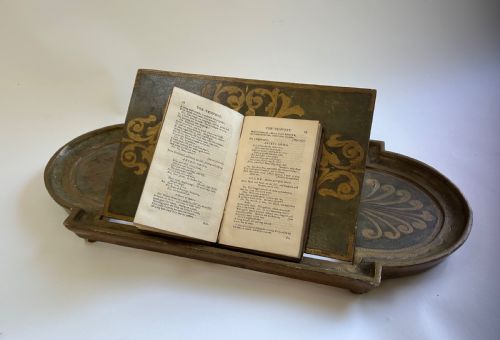


Wooden Painting Easel
These wooden painting easel pieces are practical studio furniture and display stands designed to hold canvases or books securely.
Wooden Painting Easel
A wooden painting easel serves artists and collectors by supporting canvases, panels, or display books at a working angle. When you examine wooden painting easel examples on this page, you encounter floor-standing studio models alongside smaller tabletop formats.
The selection ranges from large nineteenth-century studio timber frames to compact variants from later decades. Forms span studio instruments, display stands, folio racks, and book holders.
Origins include English and French workshops, alongside pieces influenced by Aesthetic Movement and Regency designs. Buyers frequently find oak and mahogany variations suited for both active studios and domestic display.
How they were made
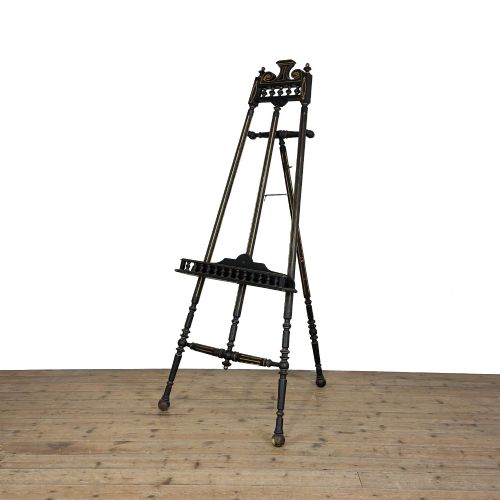
Construction relies primarily on hardwoods such as oak, mahogany, and pitch pine, chosen for their structural strength under heavy studio use. Ebonised wood finishes and gold leaf detailing appear on more decorative display examples.
One nineteenth-century studio model arrives equipped with an unexpected swan design carved into its wooden frame.
What varies in quality
Quality rests on the robustness of the timber frame and the durability of any adjustment mechanisms. A studio piece with smooth, working brass or iron controls sits higher in the range than a stiff or compromised frame.
The refinement of the woodwork, from plain structural joints to carved decorative elements or ebonised surfaces, distinguishes basic utility equipment from sophisticated salon or gallery stands.
The Wooden Painting Easel Glossary
- Studio easel
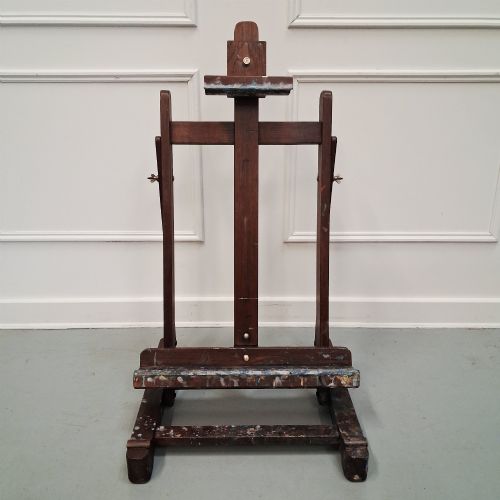
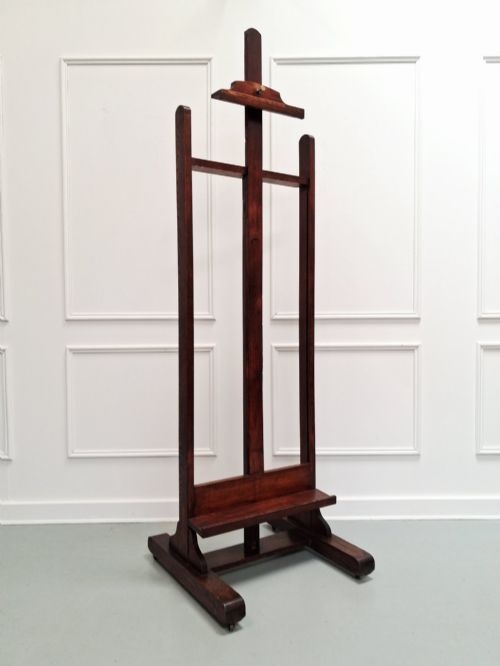
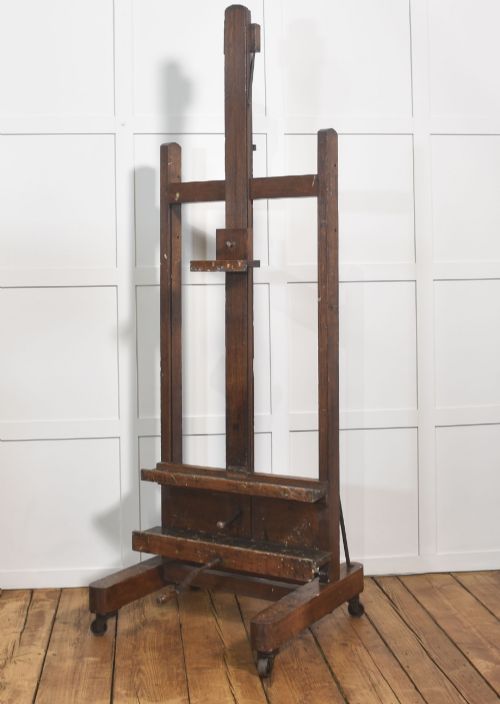
- A large floor-standing timber frame built to support substantial canvases during the painting process. These pieces often incorporate winding mechanisms and heavy bases.
- Tabletop easel
- A compact support designed to sit upon a desk or table for smaller works. They offer similar adjustable angles in a reduced scale.
- Display easel
- A lighter decorative stand intended for showing finished pictures or books rather than active painting. These frequently feature carved wooden details or gilded surfaces.
- Folio stand
- A low rack designed for storing and browsing large paper portfolios, prints, or architectural drawings. They share materials and workshop origins with standard easel forms.
- Aesthetic Movement
- A nineteenth-century style focusing on visual beauty rather than narrative storytelling. Pieces from this tradition often feature ebonised wood surfaces.
Wooden Painting Easel: Frequently Asked Questions
What is the difference between a studio easel and a display easel?
Studio frames are built large and heavy to hold active canvases under working pressure. They prioritise sturdy adjustable mechanisms over delicate appearance.
Display stands are lighter and often carved or gilded, designed to exhibit finished artwork or books in a room.
Can I use an antique easel for modern painting?
Many nineteenth-century studio models remain entirely functional for daily painting work. Their robust oak or mahogany frames and adjustable brackets accommodate standard canvas sizes.
Buyers should verify that the mechanical tightening screws and wooden tracks still move smoothly before mounting heavy works.
How do I identify a nineteenth-century easel?
Nineteenth-century pieces typically show heavy timber construction in oak or mahogany with patinated brass or iron hardware. Look for hand-cut joinery and signs of genuine studio wear.
Later twentieth-century examples often display simpler workshop methods and lighter pitch pine or oak timbers.
What woods were used for these easels?
Oak and mahogany dominate the older studio selections, prized for their density and weight. Pitch pine also appears on pieces from around nineteen hundred.
Decorative variants introduce ebonised wood and gold leaf, while functional hardware incorporates brass and cast iron.