




Wooden Office Stationery
Wooden office stationery pieces are sturdy desk accessories and filing cabinets in mahogany, oak and rosewood that bring period order to your workspace.
Wooden Office Stationery
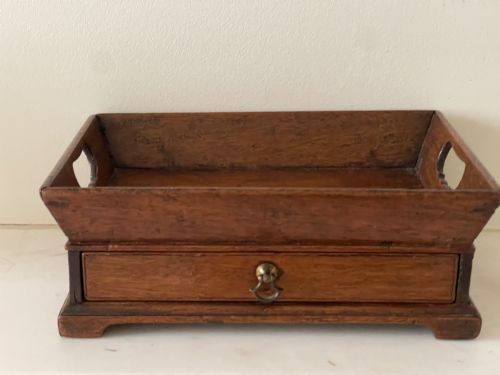
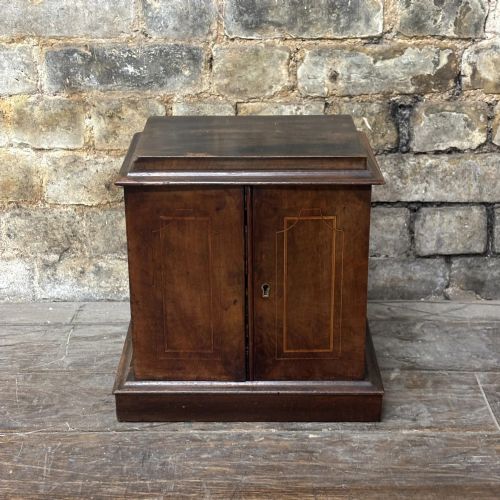
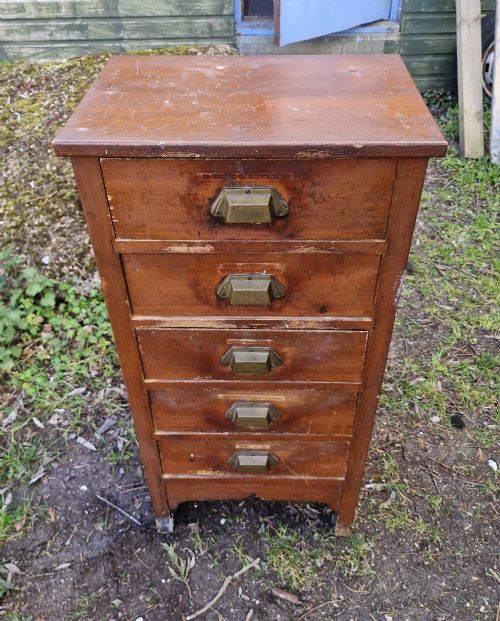
When you search for wooden office stationery, you look for functional desktop storage and organisational furniture designed to keep correspondence and documents in order. These utilitarian pieces range from tabletop desk organisers and letter tidies to multi-drawer filing cabinets and tambour front cupboards.
You are most likely to meet Edwardian and Victorian examples on this page, alongside occasional Regency and George V pieces. The selection includes compact desk accessories and larger chests of drawers or cabinets intended for professional and domestic studies.
How they were made
Cabinet makers utilised dense hardwoods such as mahogany, oak, walnut and rosewood, often pairing them with brass handles and fittings for durability. Pine and canvas also appear in the construction of utilitarian storage.
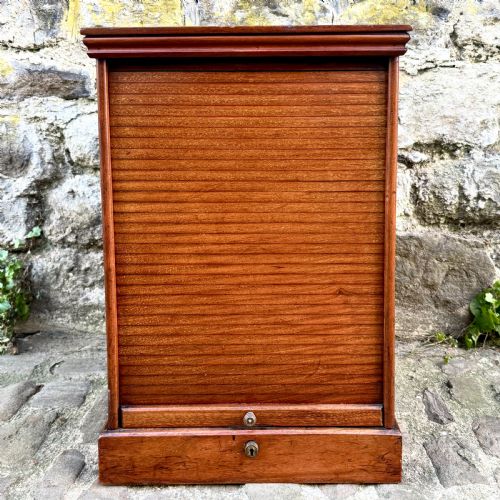
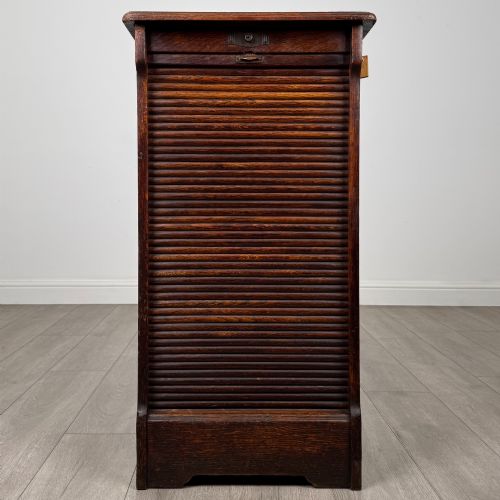
Construction techniques include tambour fronts for sliding slatted doors, fitted internal compartments for letters, and adjustable shelves designed to accommodate varying paper sizes in an office environment.
Wooden Office Stationery Retail Price Guide 2026
Typical asking prices for wooden office stationery among the pieces listed under this phrase on Sellingantiques today, from the lower quarter to the upper quarter. They describe what is for sale here now, not the wider market.
Listings feature periods from Regency and Victorian to Edwardian and George V, spanning the nineteenth and early twentieth centuries.
What varies in quality
The distinction between standard utility items and finer pieces lies in the choice of timber and the sophistication of the mechanism, such as smoothly operating tambour slats rather than basic shelving. Selection of well-figured mahogany or rosewood elevates a piece beyond simple office furniture.
Original hardware, including period brass handles and fitted internal stationery compartments, adds to the integrity of the object. Simpler pine or canvas pieces represent the more functional end of the range.
The Wooden Office Stationery Glossary
- Tambour
- A sliding door made of narrow wooden slats glued to a canvas backing, allowing it to curve around a track on a cabinet.
- Secretaire
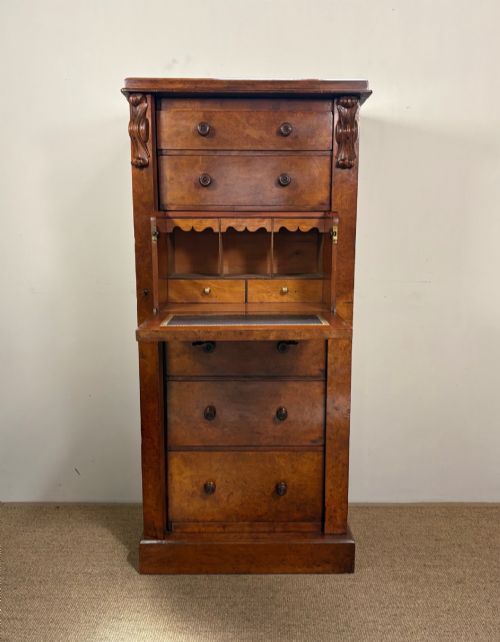
- A piece of furniture incorporating a writing surface, often with small drawers and pigeonholes concealed behind a drop-front panel.
- Filing Cabinet
- A piece of furniture containing multiple drawers designed specifically for the systematic storage of documents and correspondence.
- Desk Tidy
- A small tabletop accessory or letter organiser used to hold stationery, pens and mail neatly within reach.
Wooden Office Stationery: Frequently Asked Questions
What is wooden office stationery?
Wooden office stationery comprises desk organisers, filing cabinets, chests of drawers and cabinets designed for storing paperwork.
These pieces originate from periods including the Victorian, Edwardian and Regency eras, constructed in woods such as oak and mahogany.
How were tambour cabinets used?
Tambour cabinets feature slatted sliding doors that pull across the front to conceal shelves and pigeonholes.
They provided secure storage for correspondence in busy offices while saving space by eliminating swinging doors.
What woods are typical for these pieces?
Cabinet makers predominantly used mahogany, oak and rosewood for their durability and attractive grain patterns.
Softer woods like pine and utilitarian materials like canvas also appear in functional office storage.