

Wooden Mirror with Inlay
A wooden mirror with inlay brings warmth and pattern to a wall, combining timber frames with delicate contrasting wood or metal work.
Wooden Mirror with Inlay
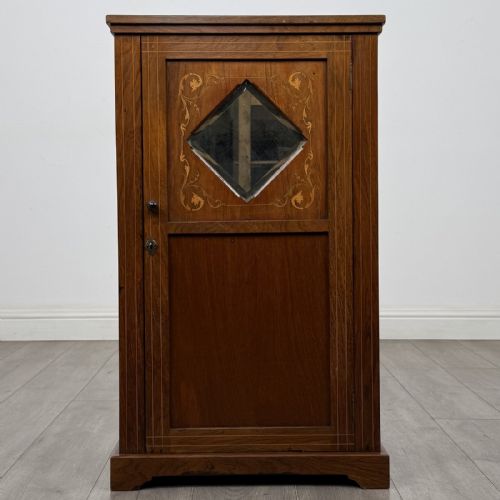
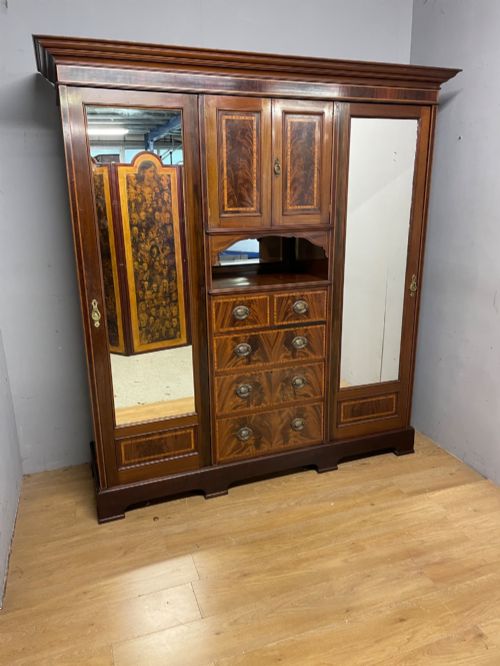
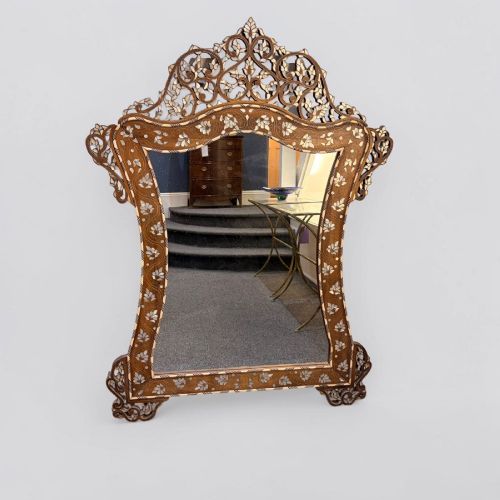
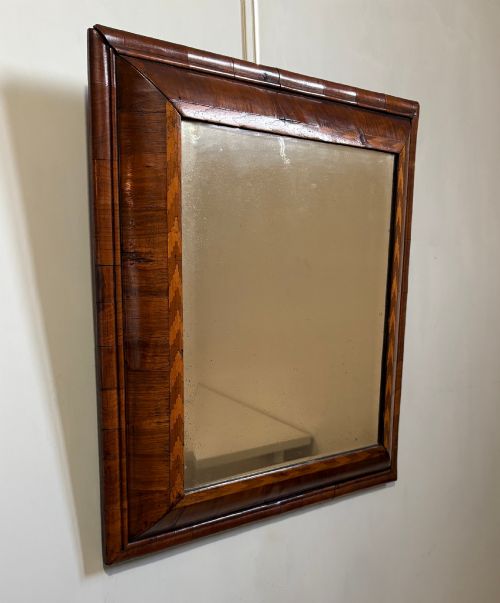
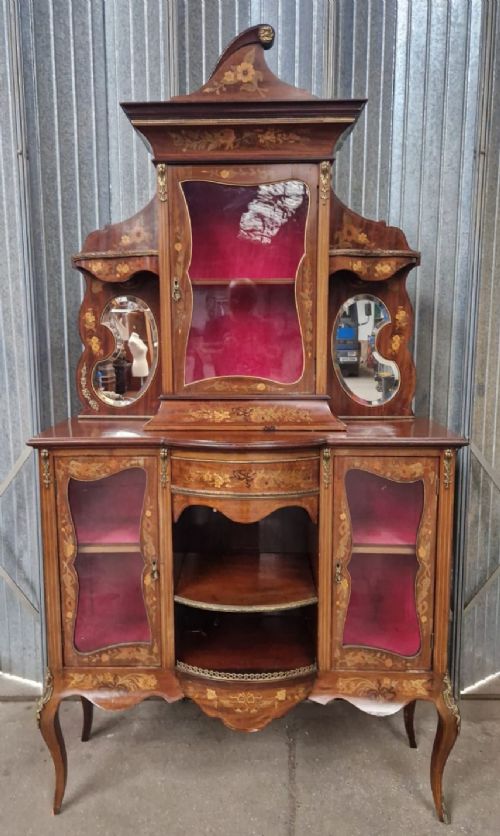
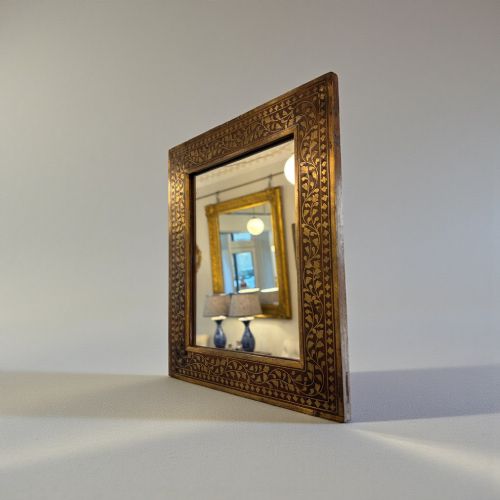
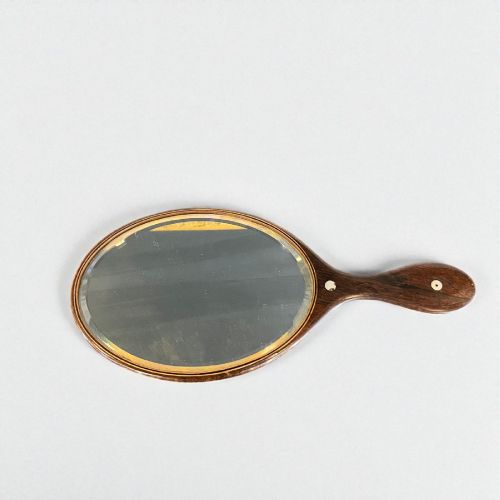
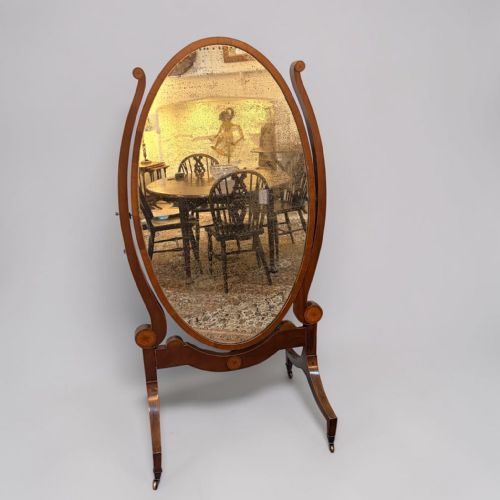
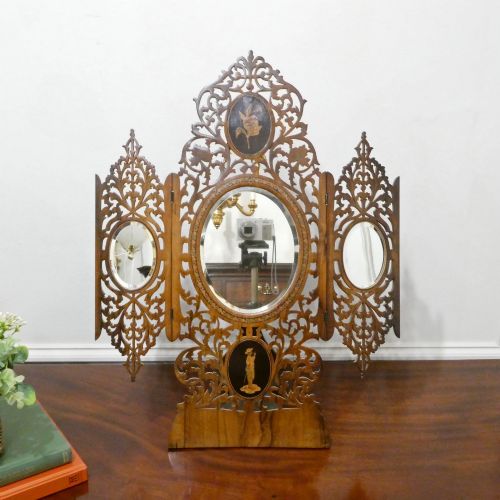
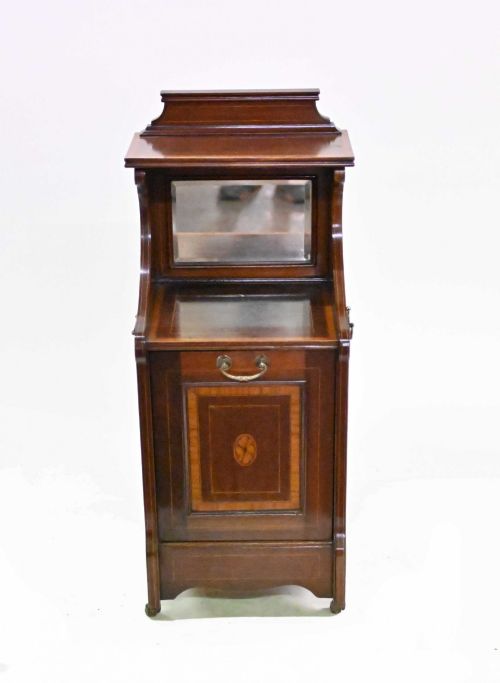
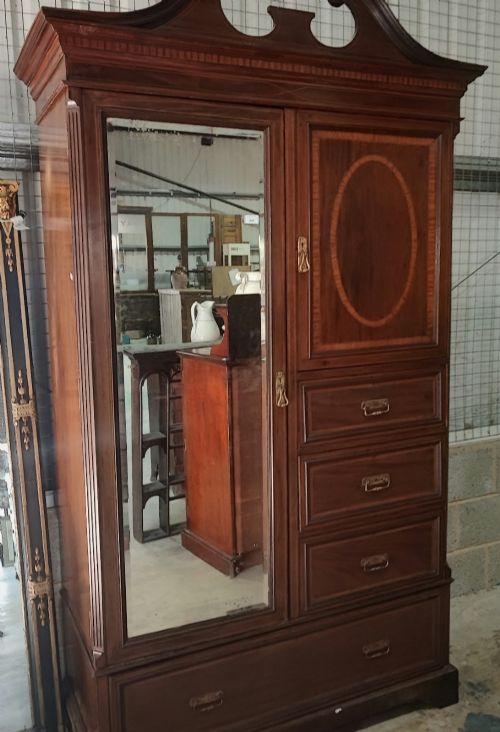
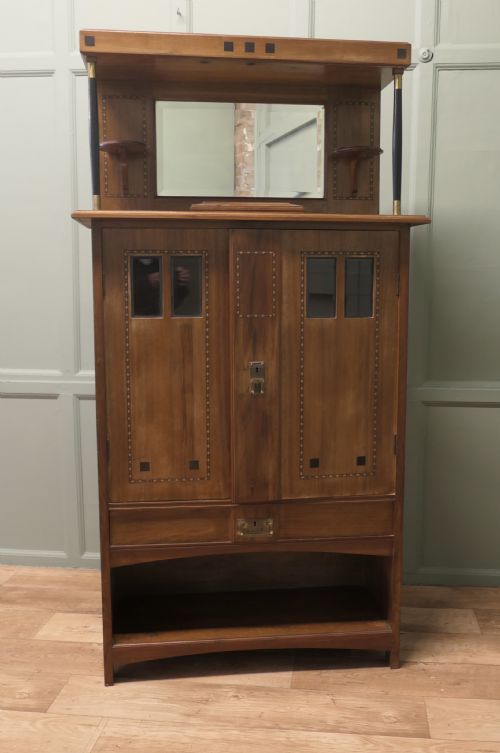
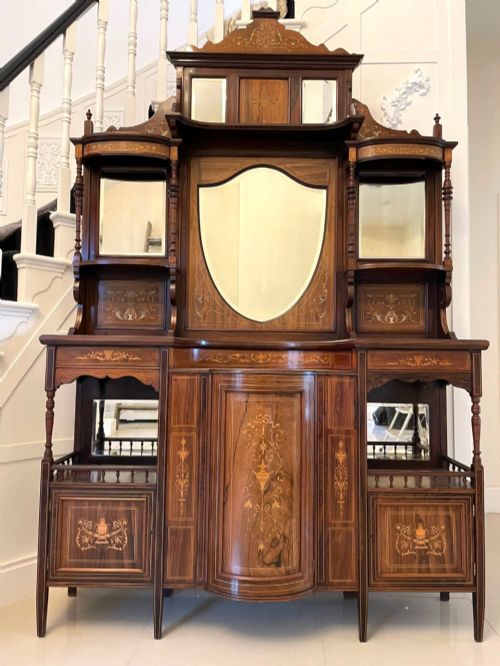
A wooden mirror with inlay takes several distinct domestic forms, ranging from compact wall-hanging pieces with integrated shelves to larger overmantel designs intended for placement above a fireplace. Tabletop dressing mirrors with pivoting plates also appear regularly, alongside larger furniture pieces that incorporate mirrored panels and decorated woodwork.
The pieces span multiple periods, with examples originating from the Georgian era through the Victorian and Edwardian decades up to nineteen hundred. Materials shift across these eras, moving from rich mahogany and burr walnut to lighter satinwood, oak, and beech.
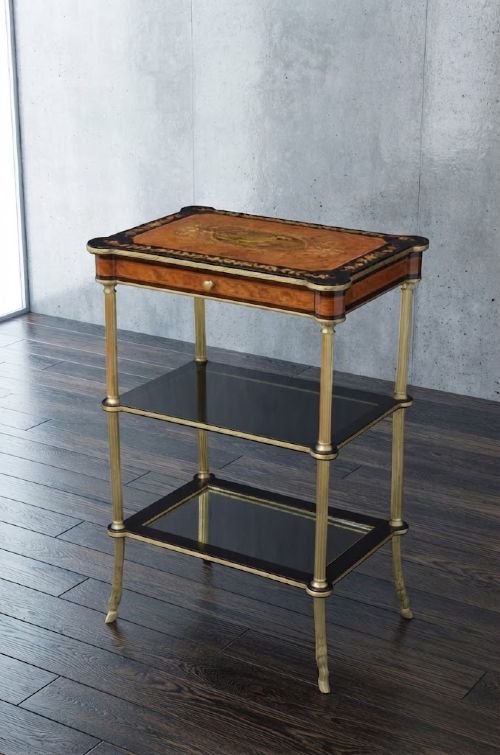
Stylistic influences vary widely across the selection, encompassing Georgian restraint, high Victorian display, Aesthetic movement design, and later Secessionist work. This variety means buyers encounter both austere rectangular frames and elaborate architectural constructions with brass detailing or ormolu mounts.
Evaluating craftsmanship
Quality rests upon the precision of the inlay work and the harmonious selection of timber grains, where sharp contrasts and tight joints elevate the piece. Finer examples display meticulous attention to detail in the marquetry patterns and the integration of secondary materials such as brass or ormolu.
The architectural proportions and structural integrity of the frame dictate the overall success of the object, separating robust construction from heavier or less balanced designs. Original glass plates and well-preserved surface patination further distinguish superior pieces from those with heavily altered components.
Wooden Mirror with Inlay Retail Price Guide 2026
Typical asking prices for wooden mirror with inlay among the pieces listed under this phrase on Sellingantiques today, from the lower quarter to the upper quarter. They describe what is for sale here now, not the wider market.
Several mirrors arrive accompanied by hidden jewellery compartments and tiny secret drawers designed to keep small treasures out of sight.
Heals
The Wooden Mirror with Inlay Glossary
- Marquetry
- Decorative veneer work assembled in geometric or pictorial patterns using various coloured woods. This technique allows craftsmen to create intricate pictures and borders across the surface of the timber.
- Overmantel mirror
- A large mirror designed specifically to be hung on the wall directly above a fireplace mantelpiece. These pieces often feature wide frames and architectural proportions suited to principal reception rooms.
- Ormolu
- Gilded bronze or brass used for decorative mounts and detailing on furniture and mirror frames. The material provides a bright metallic contrast against dark woods like mahogany or walnut.
- Aesthetic movement
- A late nineteenth-century design style emphasising visual beauty and artistic craftsmanship over strict historical revival. Pieces from this movement often incorporate stylized floral or geometric inlay.
- Dressing mirror
- A table-standing mirror, usually mounted on pivoting pivots between two upright supports above a small base or drawers. They were standard bedroom furnishings for grooming and reflection.
Wooden Mirror with Inlay: Frequently Asked Questions
Where should I hang a wooden mirror?
Wall-hanging variants suit hallways, bedrooms, and reception spaces where they reflect light and add decorative depth to a room. Smaller versions with shelves work well in compact spaces to hold small objects.
Larger overmantel mirrors are proportioned for placement above fireplace surrounds, anchoring the wall space above a hearth.
How do I date an inlaid mirror?
Dating relies on combining the timber species, the style of the inlay, and the construction methods used in the frame. Georgian pieces often display restrained ebony stringing, while Victorian and Edwardian examples utilise bolder marquetry or varied woods like burr walnut.
Stylistic cues such as Aesthetic movement motifs or Secessionist lines help narrow the period of manufacture further.
Are dressing mirrors stable on tables?
Tabletop dressing mirrors utilise pivoting side supports fitted to a sturdy base, allowing the glass angle to be adjusted. The base itself is weighted or constructed with small drawers to maintain balance during daily use.
Placing them on level surfaces ensures the pivoting mechanism functions correctly without straining the wooden uprights.
What is the difference between wall and overmantel mirrors?
Wall mirrors are generally lighter and designed to be hung securely from standard picture hooks or brackets in various rooms. Their frames focus on compact decorative inlay or integrated shelving.
Overmantel mirrors are substantially heavier architectural pieces built to sit safely above fireplace mantels, often featuring wider proportions and metal detailing such as ormolu.