




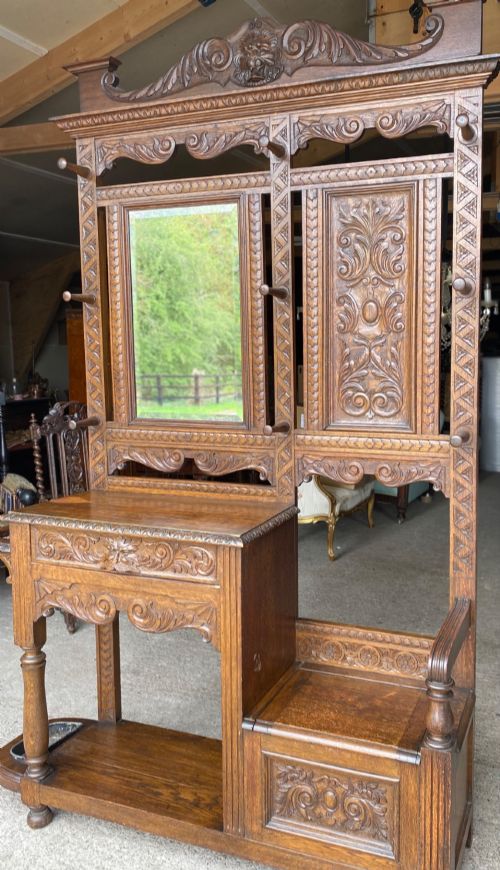
Wooden Mirror Stand
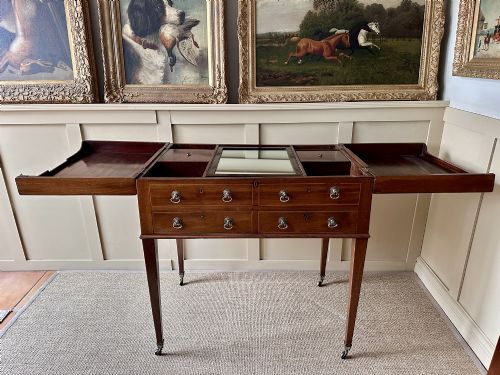
A wooden mirror stand brings upright reflection and heavy timbers into a room, joining practical dressing glass with structural furniture.
Wooden Mirror Stand
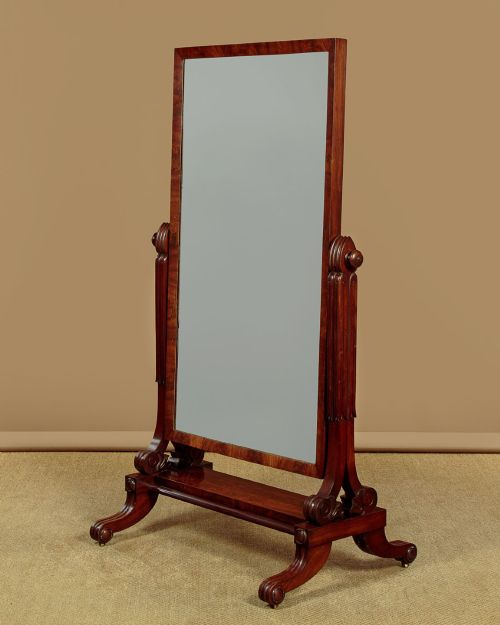
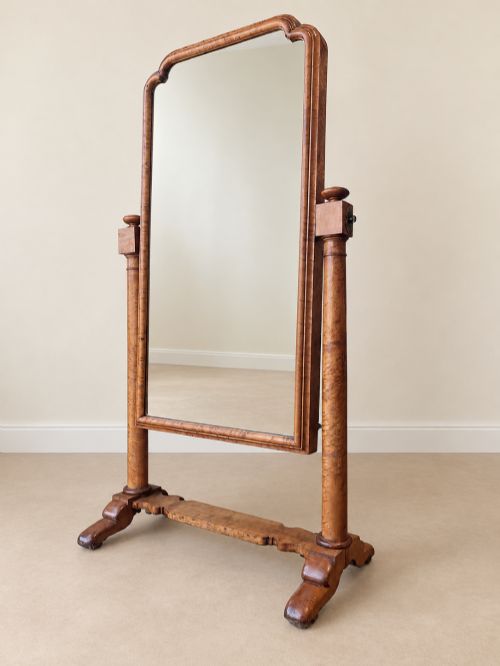
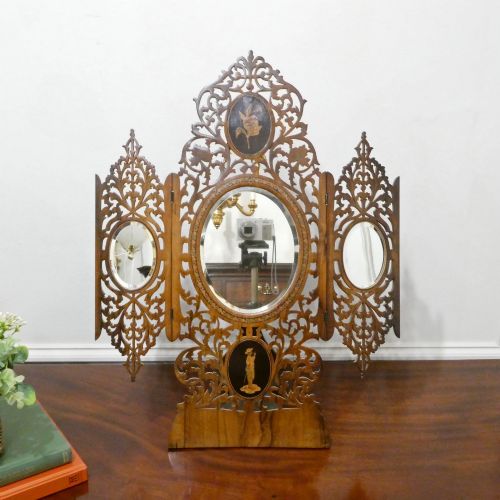
A wooden mirror stand encompasses tall floor-standing cheval glasses, adjustable toilet mirrors for tabletops, and multi-functional hallway pieces that combine glass with coat hooks or umbrella storage.
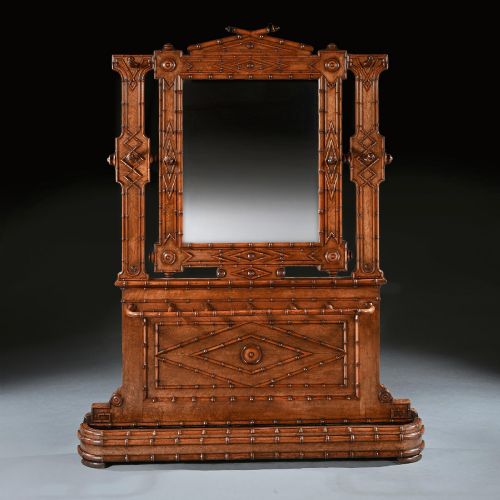
The pieces on this page span the Victorian and Edwardian eras through to the early twentieth century, drawing on Georgian proportions, Arts and Crafts utility, and Aesthetic Movement details.
Mahogany, walnut, and oak dominate the forms, frequently joined by brass fittings, mirror glass, and occasional gesso or giltwood highlights across cheval frames and dressing table variants.
Materials and construction
Cabinet makers utilised dense hardwoods such as mahogany, walnut, and oak to build sturdy frames capable of supporting heavy tilting or fixed mirror plates without tipping.
Joinery techniques ranged from turned barley twist supports and fretted fretwork to carved ornamentation, with brass hardware securing the pivoting mechanisms on adjustable dressing and cheval mirrors.
Wooden Mirror Stand Retail Price Guide 2026
Typical asking prices for wooden mirror stand among the pieces listed under this phrase on Sellingantiques today, from the lower quarter to the upper quarter. They describe what is for sale here now, not the wider market.
The listings span Victorian, Edwardian, and Georgian periods, constructed from mahogany, walnut, oak, and satin birch.
Assessing quality
The distinction between ordinary and superior examples lies in the selection of timber grain, such as burr walnut or birdseye maple, and the depth of hand-carved detail on the frame and supports.
Substantial weight, original brass pivoting hardware, and intact mirror glass with honest ageing elevate a piece, whereas replacements and crude repairs alter the integrity of the standing structure.
Heal & Sons·Thonet
The Wooden Mirror Stand Glossary
- Cheval mirror
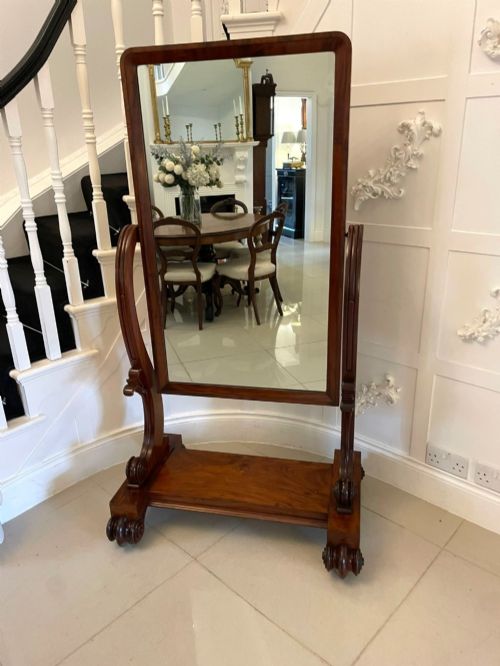
- A full-length glass mounted in a freestanding frame that tilts on vertical pivots. The name derives from the French word for horse, referencing the four-legged support trestles.
- Shaving stand
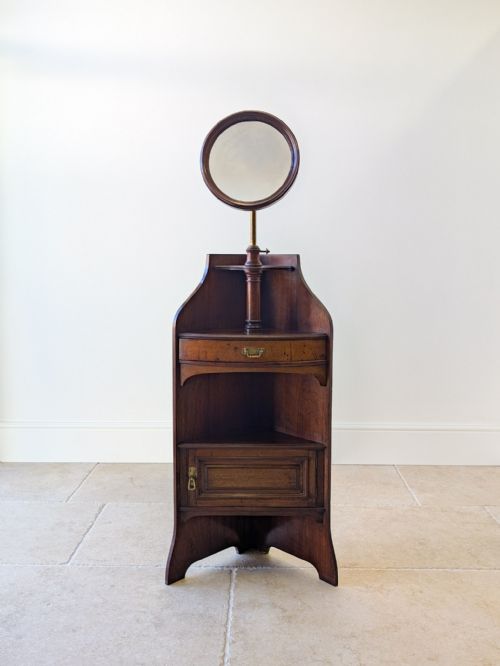
- A specialised table or cabinet fitted with an adjustable mirror and small surfaces for grooming equipment. These items date primarily to the Victorian period in mahogany or oak.
- Hall stand
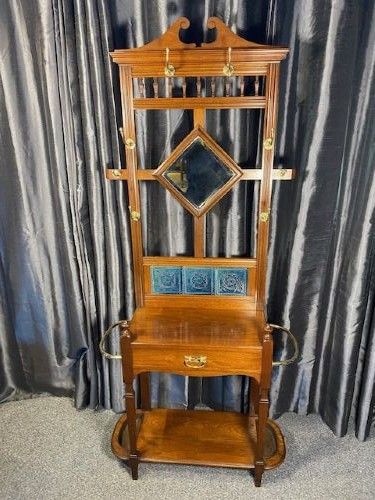
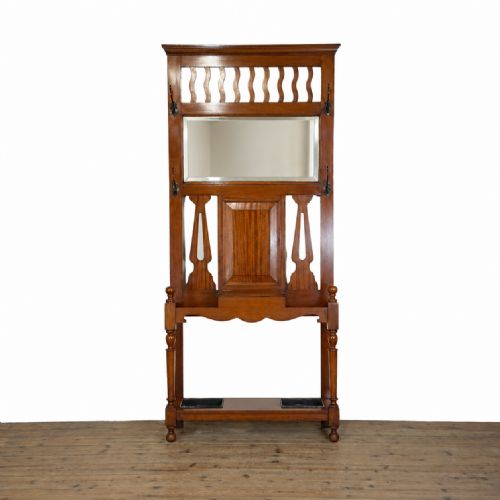
- A multi-functional piece combining a mirror, coat hooks, umbrella wells, and sometimes a seat or glove drawer. They greeted visitors in entrance halls from the nineteenth century onward.
- Toilet mirror
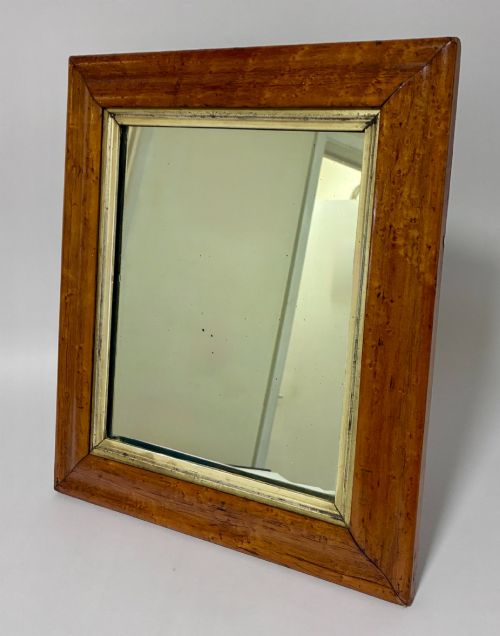
- A smaller glass designed to sit upon a dressing table or chest of drawers, often supported on small box bases with drawers. They allow close-up reflection for personal grooming.
- Giltwood
- Timber that has been coated with a thin layer of gold leaf or gesso powder mixture. This finish appears on decorative mirror frames and easel desk items.
Wooden Mirror Stand: Frequently Asked Questions
What is a cheval mirror?
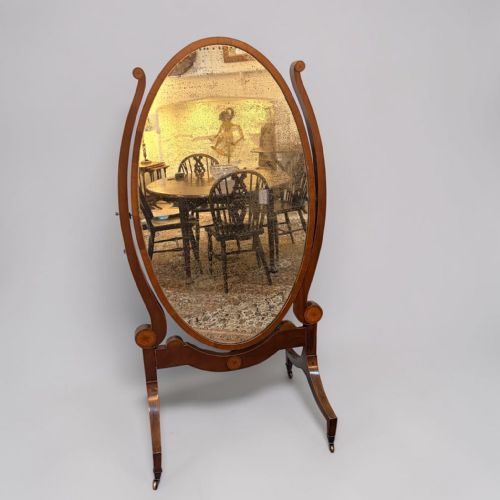
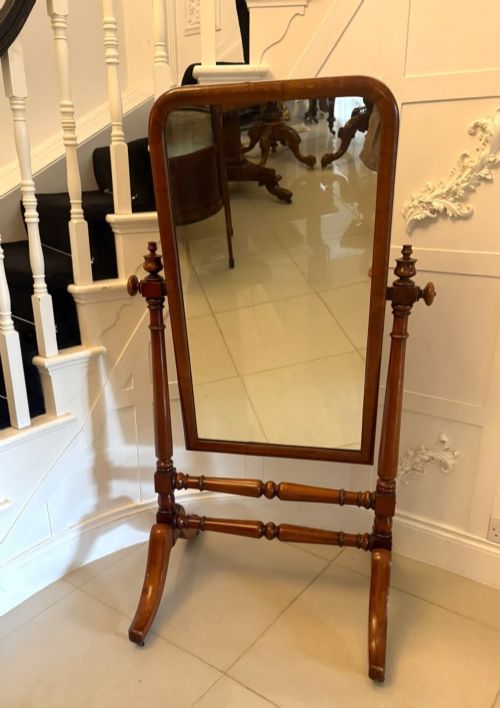
A cheval mirror is a tall, freestanding dressing glass suspended on vertical pivots within a wooden frame. This allows the user to tilt the plate forward or backward to check full-length attire.
Most examples in the current selection date from the nineteenth and early twentieth centuries, resting on sturdy floor supports or barley twist columns.
How do I use a hall stand?
A hall stand functions as a piece of entrance furniture designed to hold coats, hats, and umbrellas while offering a central mirror for last-minute checks before leaving the house.
Many incorporate umbrella wells with metal drip trays at the base and wooden pegs arranged around the upper frame.
Are shaving stands adjustable?
Many period shaving stands feature movable mirrors attached to sliding or pivoting rods to suit different heights. They frequently include small ledges or compartments for holding grooming accessories.
Oak and mahogany were the primary timbers utilised by makers for these functional pieces.
How do I date a wooden mirror stand?
Dating relies upon timber selection, hardware construction, and stylistic clues such as Victorian carving or Edwardian simplicity. Heavier mahogany frames often point to the nineteenth century, while lighter oak frequently suggests the Arts and Crafts period.
Examining the backboards and screw types also helps establish the age of the woodwork.