





Wooden Millinery Block
A wooden millinery block is a sculptural form shaped to make or display hats, prized by collectors for its honest workshop utility and strong carved presence.
Wooden Millinery Block
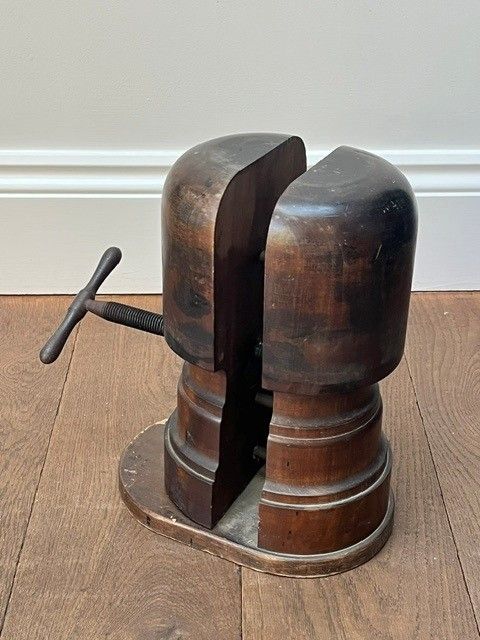
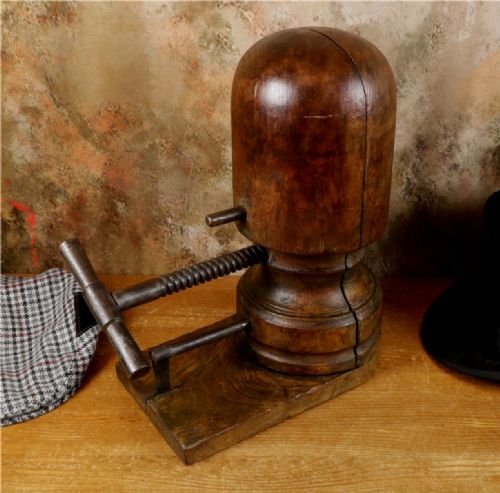
A wooden millinery block encompasses hat forms, stretchers, wig stands, and carved display heads used in traditional hat making and haberdashery. These objects emerge from periods ranging from the Georgian era through the Victorian period and into the early twentieth century.
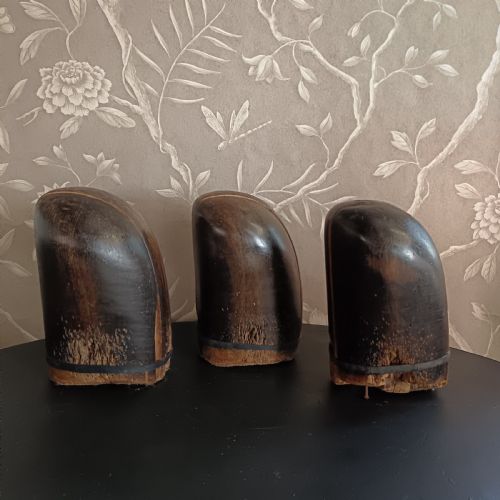
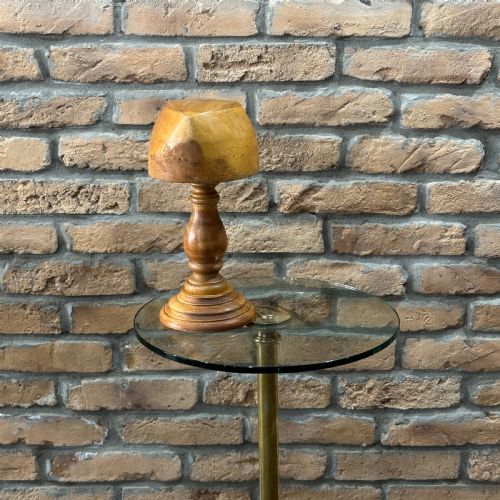
The most common variants met on this page include nineteenth-century French and English fruitwood or hardwood hat blocks alongside specialised hat stretchers and wig stands. Sculptural carved heads and folk art millinery forms also appear, offering distinct regional character from workshops and provincial makers.
Materials and construction methods
These pieces are shaped from dense timbers such as oak, walnut, beech, mahogany, and fruitwood, selected for stability under heavy workshop use. Craftsmen carved and turned the timber by hand, sometimes mounting the wooden forms on cast iron or iron bases for stability.
Tool marks, peg construction, and joinery reveal the working methods of nineteenth-century and early twentieth-century pattern makers and turners. The natural grain of the wood often shows patination acquired from decades of contact with steam, fabric, and dye in working mills.
The selection includes specialised items for military headwear alongside traditional French and English hat forms.
What separates the finest examples
Quality rests in the sculptural integrity of the carving, particularly on human head forms and lay figures where facial expression and proportion matter. Crisp execution by skilled hands distinguishes a bespoke workshop piece from standard utilitarian production.
Surface wear and original patination dictate desirability, with untouched dry timber surfaces preferred over over-cleaned or heavily restored examples. The presence of maker stamps, Regent Street addresses, or unusual mechanical functions like working stretchers elevates the piece.
Bretton·Regent Street London
The Wooden Millinery Block Glossary
- Millinery block
- A solid wooden form used by hat makers to shape, size, and dry hats during manufacture.
- Hat stretcher
- A mechanical wooden tool inserted into a hat to expand or adjust the circumference.
- Lay figure
- An articulated or carved wooden mannequin head utilised for displaying millinery or wigs.
- Fruitwood
- Dense, fine-grained timber derived from fruit-bearing trees, frequently utilised for French hat forms.
- Haberdashery
- The trade and equipment associated with sewing, hat making, and small clothing accessories.
Wooden Millinery Block: Frequently Asked Questions
What is a wooden millinery block?
A wooden millinery block is a carved form used historically by hat makers to shape and size headwear during production.
Today, these timber blocks serve as sculptural display objects in home interiors, appreciated for their functional design and aged wooden surfaces.
How do I use a hat block at home?
Collectors typically display hat blocks on shelves, mantels, or tables to highlight their sculptural qualities and rich wood patination.
They also function effectively as stands for contemporary hats, vintage headwear, scarves, or wigs in dressing rooms.
Are these blocks made from solid wood?
Most blocks are carved from solid hardwoods such as oak, walnut, beech, mahogany, or fruitwood to withstand heavy workshop use.
Some examples incorporate iron or cast iron components, particularly adjustable stretchers and mechanical display stands.
How do I date an antique hat block?
Dating relies on timber species, tool marks left by the carver, construction methods, and any stamped maker details or London addresses.
Victorian and Georgian pieces often display deeper patination and hand-turned joinery compared to later twentieth-century production forms.