


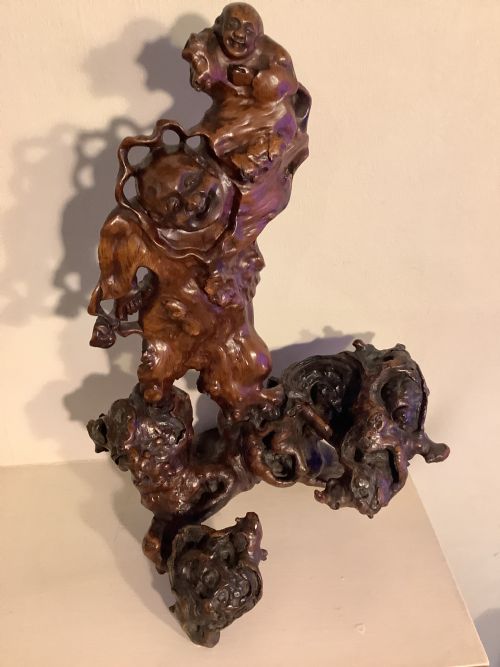


Wooden Man Sculpture
These wooden man sculpture pieces range from folk art carvings to intricate Japanese okimono, offering tactile human forms that anchor a room.
Wooden Man Sculpture
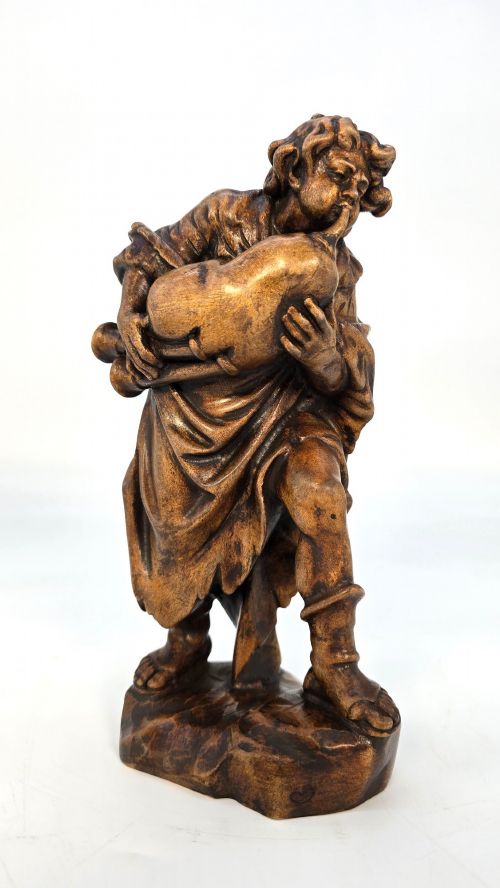
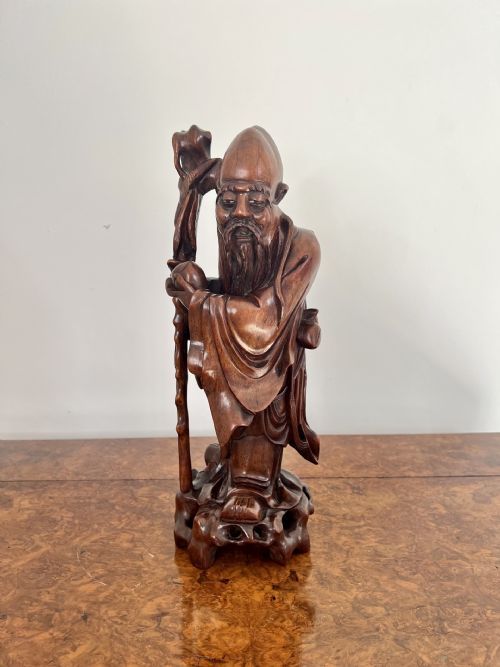
A wooden man sculpture embodies the human form through varied global traditions, spanning European ecclesiastical figures, Asian okimono, and vernacular folk art. Buyers seeking a wooden man sculpture will encounter diverse regional interpretations, from Black Forest limewood musicians to Chinese hardwood carvings and early American jigger dolls.
The selection on this page draws from multiple centuries, with 19th-century works appearing alongside earlier 16th and 17th-century architectural elements and religious carvings. Figures range from miniature boxwood netsuke to life-size Italian Santos figures mounted on plinths.
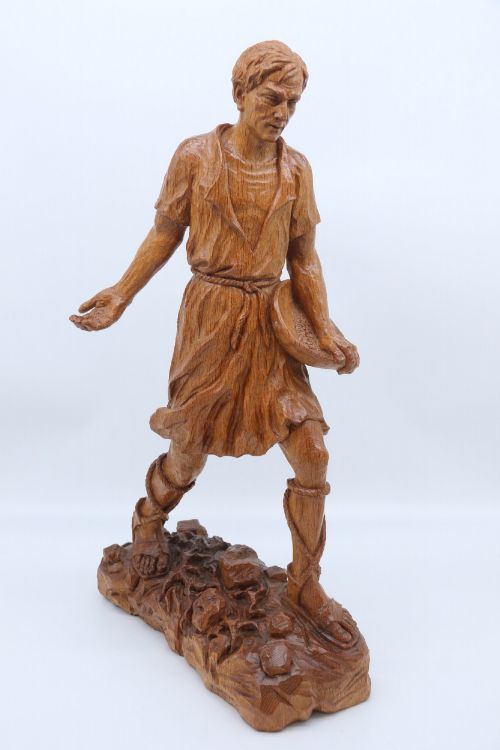
Makers utilised specific regional timber and cultural iconography to shape these figures, producing everything from courtly Japanese deities to Anglo-Saxon farm workers. Each piece reflects the sculptural conventions and wood-working techniques of its specific period and origin.
Materials and construction methods
Carvers shaped these figures from a variety of timbers, selecting dense hardwoods like boxwood and oak for detailed miniature or architectural work, and softer limewood or pine for European figurative carving. Root wood and bamboo also appear, where artisans incorporated the natural gnarled contours of the material into the final shape of the man.
Surface treatments vary between plain polished grain, applied polychrome paint, and the dark patination accumulated over centuries of handling. Hand tools leave distinct chisel marks across many of these surfaces, recording the physical process of paring and gouging the timber.
Materials represented across the sculptures comprise boxwood, limewood, oak, bamboo, root wood, and polychrome painted timber.
Factors determining quality
Condition and originality dictate value among older survivals, particularly where polychrome paint or delicate appendages like fingers and instruments remain intact. Finer pieces maintain their structural integrity despite the natural drying and splitting inherent in historic timber.
The Wooden Man Sculpture Glossary
- Okimono
- A Japanese freestanding decorative carving designed for display on a shelf or in a tokonoma alcove. These figures often depict traditional figures, historical personages, or daily scenes rendered in hardwood or boxwood.
- Netsuke
- A small carved toggle fastened to the end of a cord on a traditional Japanese pouch or container. They typically feature intricate figural carvings with pierced channels for the cord.
- Santos
- A carved religious figure representing a saint or sacred personage, often intended for Christian devotion or church display. Italian and continental examples frequently incorporate polychrome paint and mounted wooden plinths.
- Corbel
- A structural piece of stone or timber projecting from a wall to support a weight. Carved wooden examples often take the form of human figures or grotesque heads supporting cornices.
- Écorché
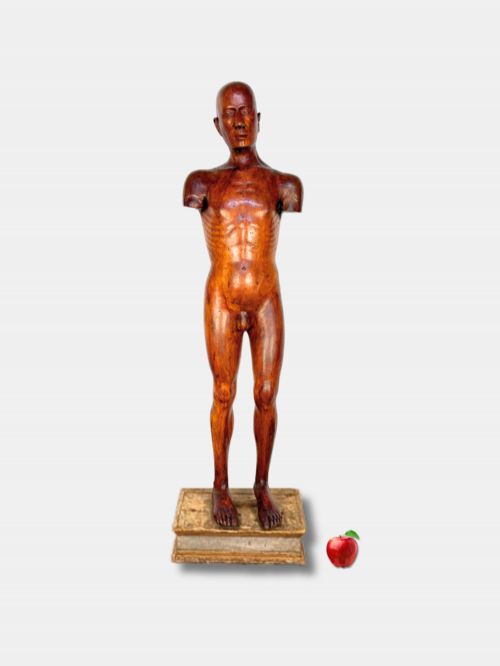
- A figure drawn, painted, or sculpted to show the muscles of the body without skin. These anatomical study pieces appear in medical and artistic contexts.
Wooden Man Sculpture: Frequently Asked Questions
How do I clean a wooden man sculpture?
Dust the surface gently with a soft, dry brush to prevent accumulation in carved crevices. Avoid using liquid cleaners, waxes, or oils unless the specific wood finish requires conditioning.
Keep historic timber away from direct sunlight and sudden humidity shifts to prevent the wood from cracking or warping over time.
Where should I display these sculptures?
Place smaller figures such as netsuke or okimono inside enclosed cabinets or on stable shelves away from high-traffic areas. Larger life-size or architectural pieces require sturdy plinths or wall mountings that safely bear their weight.
Ensure the placement location maintains a stable indoor climate to protect older adhesives, paint layers, and dry timber.
How can I tell the age of the wood?
Examine the tool marks left on the unpolished undersides or backs of the sculpture. Hand-carved edges and natural oxidation patterns offer clues regarding the period of production.
Look for shrinkage cracks, insect flight holes, and dry surface patination which develop naturally as hardwood and softwood age over centuries.
What is a jigger doll?
A jigger doll is an American folk art toy designed with loose joints that dance or jitter when the baseboard is tapped. These figures are typically carved from pine or soft wood and decorated with painted clothing.
Creators made them for domestic entertainment, utilising simple mechanical movement rather than static display posture.