

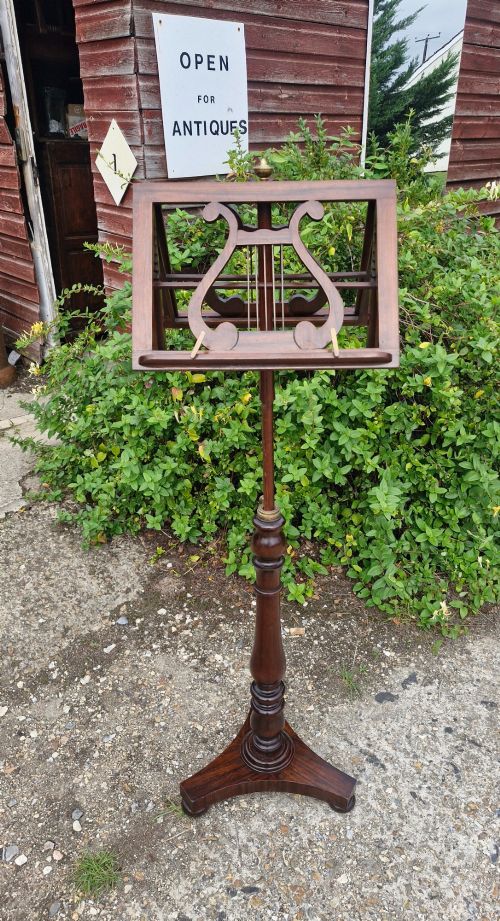
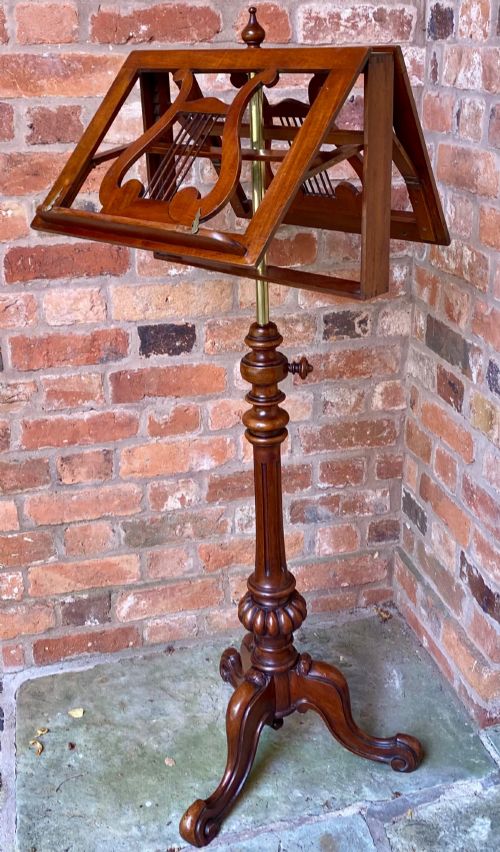

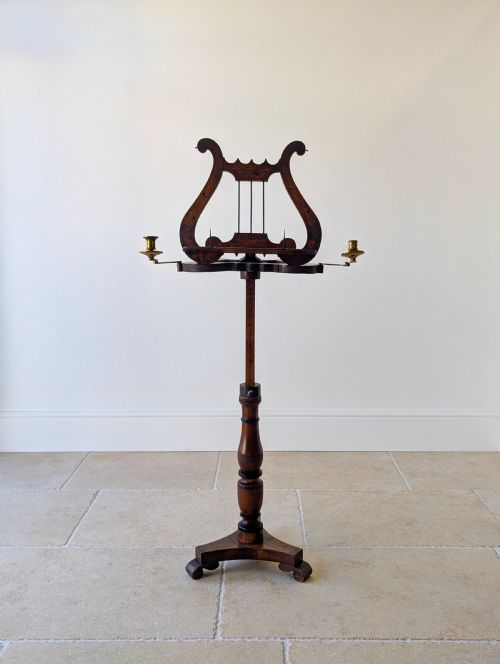

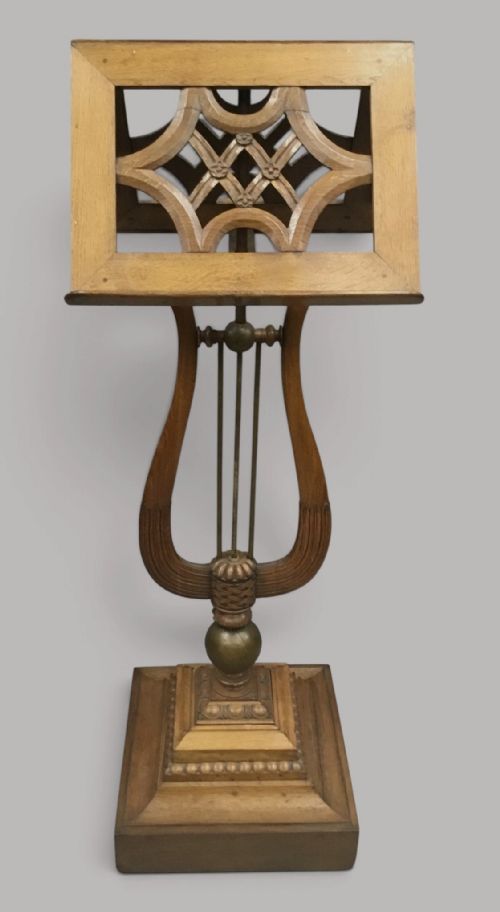


Wooden Lyre Stand
These wooden lyre stand pieces bring classic form and utility to a room, holding sheets or books with grace.
Wooden Lyre Stand
When you search for a wooden lyre stand, you encounter pieces designed primarily as music stands, duet stands, and lecterns. These forms often feature the characteristic lyre shape incorporated into their frames.
The versions most commonly met on this page date from the nineteenth century, the Regency era, and the Edwardian period. They serve both functional purposes for musicians and decorative roles in traditional interiors.
Makers adapted the lyre motif across various related furniture types, including occasional tables and canterburys. This variety ensures that buyers find both dedicated music holders and multi-functional stands.
Materials and construction
Cabinet makers utilised dense hardwoods such as mahogany and rosewood to build the structural frames of these stands. These timbers provided the strength needed for adjustable music rests and central pillars.
Details often include brass fittings, boxwood stringing, and satinwood or brass inlay. These contrasting materials highlight the lyre motif and add refinement to the timber surfaces.
Wooden Lyre Stand Retail Price Guide 2026
Typical asking prices for wooden lyre stand among the pieces listed under this phrase on Sellingantiques today, from the lower quarter to the upper quarter. They describe what is for sale here now, not the wider market.
The listings here span the Regency, Victorian, and Edwardian periods, utilising mahogany, rosewood, oak, and brass.
Judging quality
Quality rests in the crispness of the timber carving and the precision of any inlay work. Finer examples show careful attention to the curves of the lyre frame and the stability of the central column.
The sophistication of the timber grain, particularly in figured mahogany or rosewood, separates standard items from exceptional ones. Mechanics on adjustable stands also reflect the original maker's skill.
The Wooden Lyre Stand Glossary
- Lyre-form
- A decorative shape modelled on the ancient musical instrument, frequently used in the central supports of tables and music stands.
- Duet stand
- A larger music stand designed to hold a shared score for two performers, often featuring an adjustable reading ledge.
- Canterbury
- A compartmentalised stand built for holding sheet music or folios, sometimes incorporating drawer storage and turned legs.
- Inlay
- A technique where contrasting woods or metals are fitted into recesses within a primary timber surface to create patterns.
Wooden Lyre Stand: Frequently Asked Questions
What is a wooden lyre stand used for?
These stands were originally constructed to hold sheet music or books at a readable angle for musicians practicing or performing in a parlour.
Today, they function well as decorative display pieces or as book stands in a study or living room.
How do I date a wooden lyre stand?
Dating relies on observing the timber choices, construction methods, and stylistic details associated with periods like the Regency or Edwardian eras.
Earlier pieces often display heavy mahogany frames and brass inlay, while later Edwardian examples may feature lighter satinwood stringing.
How should I care for the timber?
Maintain the wood by keeping the stand away from direct heat sources and sudden changes in humidity that could dry out the polish.
Regular dusting with a soft, dry cloth preserves the natural lustre of the mahogany or rosewood surfaces.