



Wooden Living Room Table
A wooden living room table is the steady centre of a room, bringing together timber, proportion and daily use.
Wooden Living Room Table
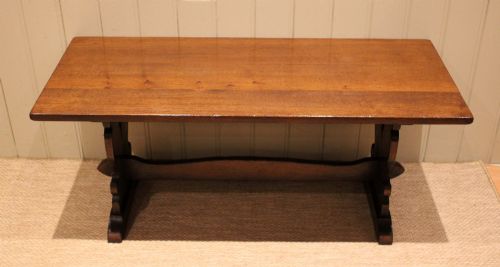
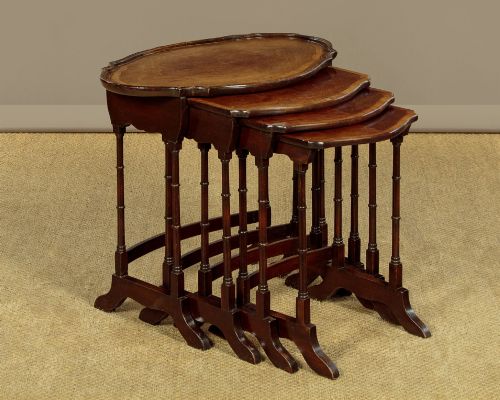
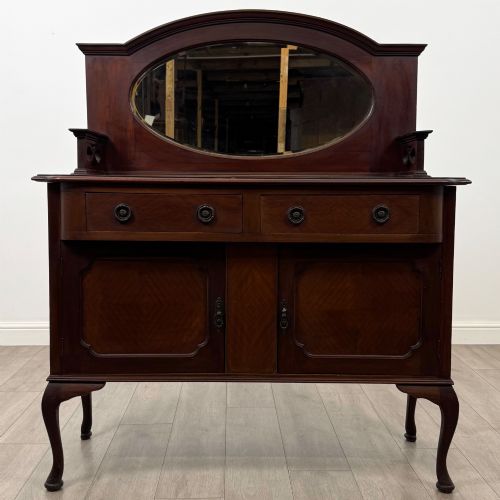
A wooden living room table spans several practical forms designed for domestic life, most notably nests of tables, coffee tables, sideboards and occasional tables. These pieces serve sitting rooms through surfaces that hold objects or tuck away neatly when space is tight.
The pieces appearing here lean heavily into Edwardian pieces and 1920 examples, alongside items drawn from the nineteenth century. Makers of these eras focused on functional timber furniture intended for everyday family use.
Mahogany, oak and walnut dominate the selection, appearing in both simple domestic pieces and refined designs featuring veneer tops or inlaid details. Buyers meet formats ranging from single coffee tables to nests of four tables designed to slide together.
Materials and construction
Carpenters utilised solid timbers like oak and mahogany alongside burr walnut and yew veneer to construct these tables, pairing structural strength with decorative grain patterns. Selected pieces incorporate glass and brass details to accent the woodwork.
Joinery techniques matched the period and function, from sturdy plank construction on rustic farmhouse items to delicate shaped tops on nests of tables and Sutherland tables.
Wooden Living Room Table Retail Price Guide 2026
Typical asking prices for wooden living room table among the pieces listed under this phrase on Sellingantiques today, from the lower quarter to the upper quarter. They describe what is for sale here now, not the wider market.
Some nests hide four tables in the footprint of one, solving tea-time mathematics with clever nineteenth-century carpentry.
Judging quality in timber furniture
Quality rests in the selection of the timber and the precision of the cabinetwork, visible in how cleanly veneers are laid and how smoothly nested tables slide into position. Better examples show careful attention to grain matching on surfaces such as burr walnut tops.
The Wooden Living Room Table Glossary
- Nest of tables
- A set of graduated tables designed to fit neatly beneath one another when not in use. This clever space-saving format became particularly popular during the Edwardian period.
- Veneer
- A thin slice of figured wood applied over a secondary timber base to create a decorative surface. Burr walnut and yew veneers are typical examples found on these tops.
- Sutherland table
- A narrow drop-leaf table with hinged flaps that fold down almost vertically. They were designed to occupy minimal space by a wall until needed.
- Edwardian style
- Furniture manufactured during the reign of Edward VII or recalling that period's lighter, often revived aesthetic. It frequently draws on earlier Georgian and Sheraton influences.
Wooden Living Room Table: Frequently Asked Questions
What is a nest of tables used for?
A nest of tables provides multiple surfaces for drinks, books or lamps that occupy the floor space of a single small table when stacked away. They suit rooms where flexibility is useful.
Owners can pull out individual tables as guests arrive and return them to the stack once the room needs to be cleared.
How do I identify an Edwardian table?
Edwardian tables often feature lighter timbers, subtle inlay work and slender legs compared to heavier Victorian predecessors. They frequently include nests of tables and Sutherland tables.
Examining the underside and drawer construction helps confirm the period manufacturing methods used by makers of the early twentieth century.
Are these tables suitable for daily use?
These wooden tables were built for domestic life and handle everyday use well when treated with normal care. Using coasters protects the polished timber surfaces from moisture.
Placing them away from direct heat sources prevents the solid wood and veneers from drying out or splitting over time.
What is the difference between oak and mahogany tables?
Oak tables generally present a prominent grain and a heavier, more rustic appearance suited to traditional and farmhouse interiors. They offer robust durability for active rooms.
Mahogany tables tend to display a finer grain and richer red-brown tones, lending themselves to more formal settings and polished Edwardian or nineteenth-century designs.