






Wooden Liquor Box
A wooden liquor box keeps spirits secure and ready, combining sturdy cabinetry with fitted interiors designed for bottles and glassware.
Wooden Liquor Box
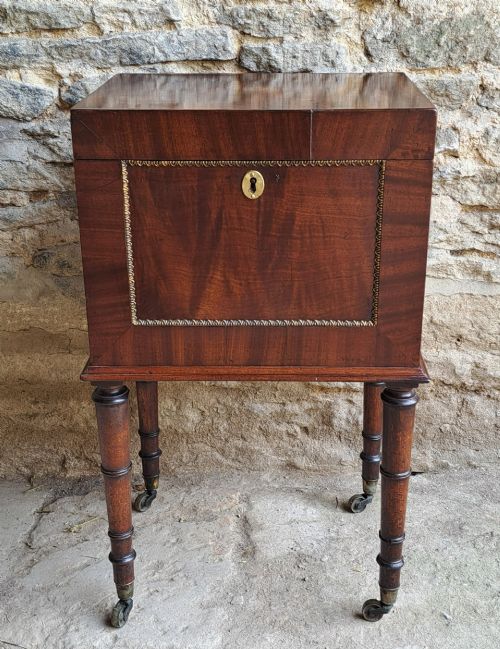
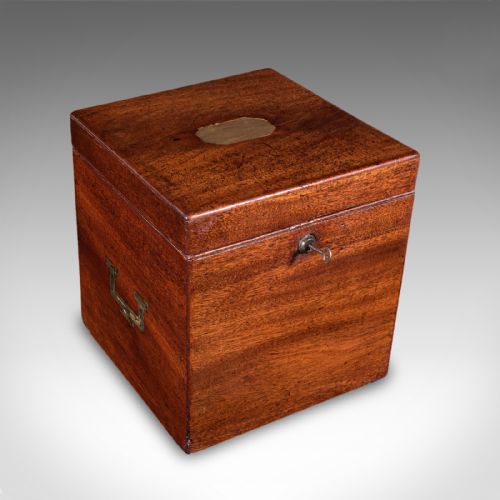
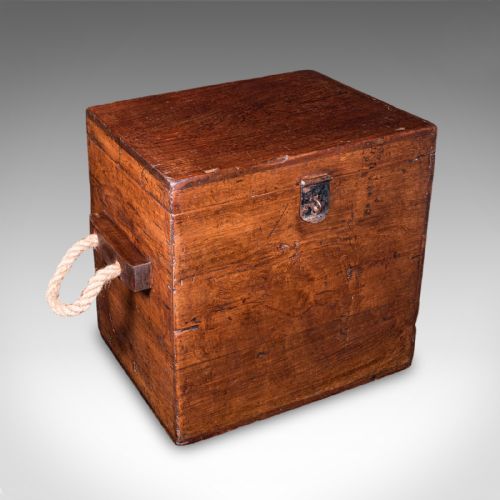
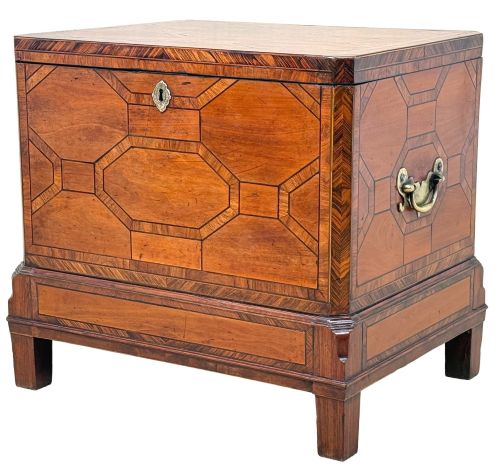
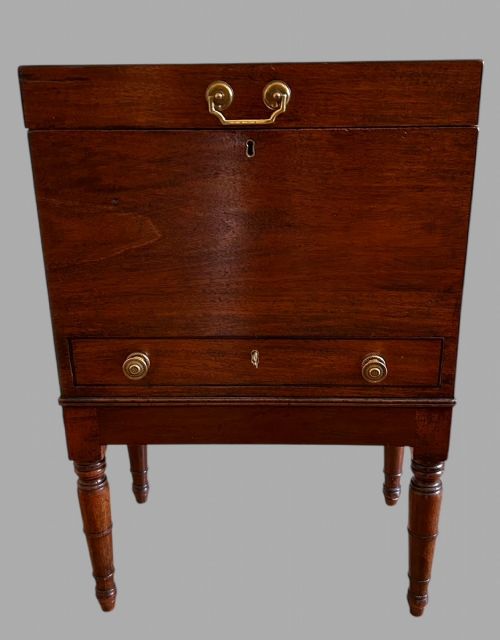
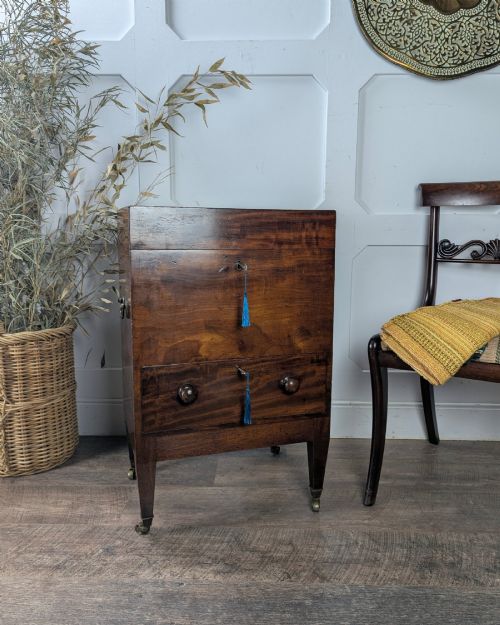
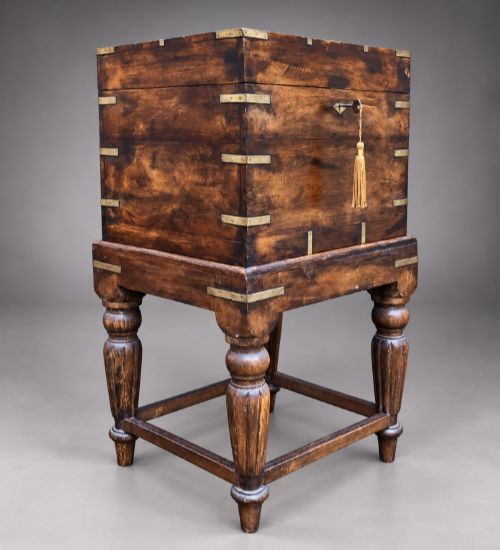
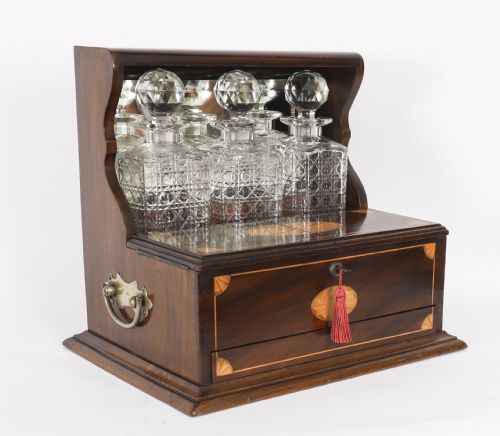
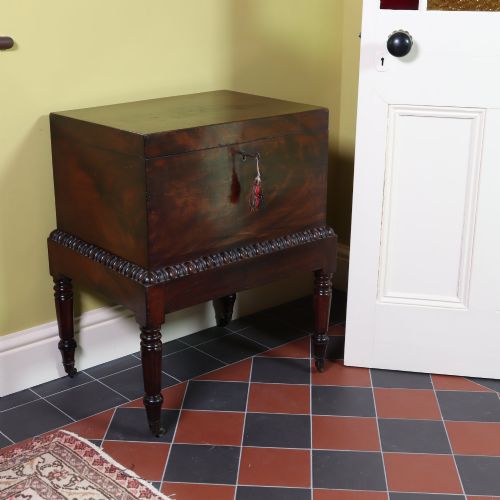
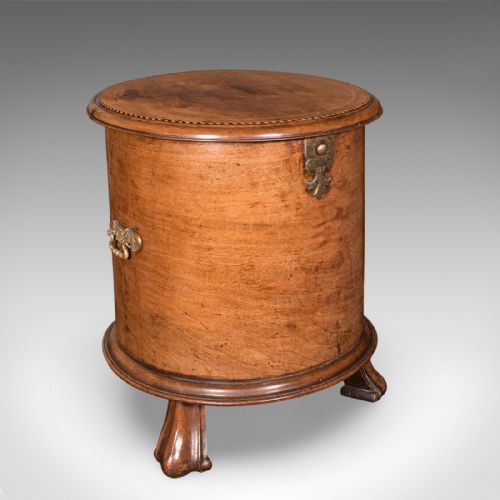
A wooden liquor box encompasses everything from portable decanter cases and tabletop tantalus sets to large floor-standing cellarettes and wine coolers. Buyers seeking a wooden liquor box will encounter pieces spanning the Georgian, Regency, Victorian and Edwardian eras, executed primarily in mahogany, walnut, oak and exotic woods.
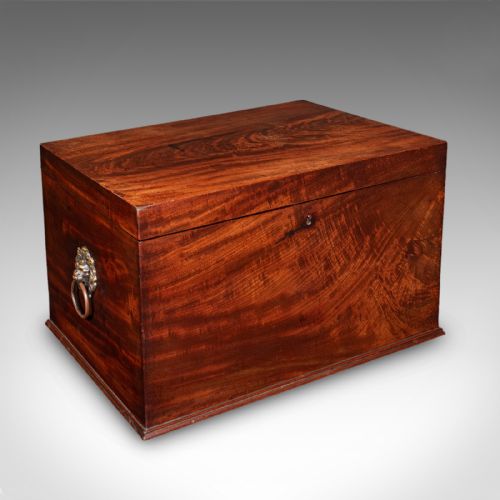
Forms vary from compact rectangular bottle carriers to elaborate sarcophagus-shaped coolers and games compendiums fitted with locks. Most examples serve to house spirits safely, often incorporating brass mounts, internal dividers, and cut crystal decanters.
How they were made
Cabinetmakers constructed these vessels using dense hardwoods like mahogany, walnut, pollard oak and satinwood, frequently enhanced with marquetry stringing, ormolu mounts, or contrasting wood veneers. Structural integrity relied on dovetail joints and sturdy timber housings capable of supporting the heavy weight of glass decanters and liquid contents.
Internal layouts required precision joinery to create secure partitions for bottles, glasses and storage compartments. Hardware such as brass carrying handles, escutcheons and specialised locking mechanisms like Bramah locks were integrated directly into the timber framework.
Wooden Liquor Box Retail Price Guide 2026
Typical asking prices for wooden liquor box among the pieces listed under this phrase on Sellingantiques today, from the lower quarter to the upper quarter. They describe what is for sale here now, not the wider market.
Several boxes double as game boards, proving that ancestors liked a gamble with their gin.
What varies in quality
Quality rests upon the selection of timber grain, such as flame mahogany or figured pollard oak, and the precision of the cabinetwork in the joints and internal fittings. Superior examples display refined proportions, harmonious brass or ormolu mounts, and original locking mechanisms that operate smoothly within the fitted interior.
The degree of preservation in the polished finish and the completeness of the original cut crystal decanters and glassware influence the standing of a piece. Finer items often bear attribution to notable cabinetmakers or workshops through construction markers and superior material pairing.
Gillingtons·Freemans of Norwich·Gillows of Lancaster and London
The Wooden Liquor Box Glossary
- Cellarette
- A lockable cabinet, box or stand designed to hold bottles of wine and spirits near the dining table. They range from small tabletop decanter boxes to large sarcophagus-shaped floor coolers.
- Tantalus
- A locking drink cabinet that holds decanters securely in a metal frame, preventing access to the contents without a key while displaying the glass bottles.
- Sarcophagus
- A monumental cabinet style shaped like an ancient stone coffin with a gabled lid, popular during the Regency period for large wine coolers and cellarettes.
- Bramah lock
- A high-security patented cylindrical lock invented in the late eighteenth century, commonly fitted to superior portable boxes and decanter cases.
- Cut crystal
- Heavy lead glass decorated with deep geometric facets, utilised for the decanters housed inside nineteenth-century spirit boxes.
Wooden Liquor Box: Frequently Asked Questions
What is a wooden liquor box used for?
These boxes provided secure storage for wine and spirits in the dining room or drawing room, keeping expensive bottles and crystal decanters protected from household staff.
Many incorporated locks, such as Bramah mechanisms, to safeguard the contents, while others doubled as games compendiums or dry bars with integrated compartments.
How do I tell a Regency cellarette from a Georgian one?
Georgian pieces frequently favour classical rectangular proportions with straight lines and subtle bracket feet or brass bindings, reflecting eighteenth-century design restraint.
Regency examples often adopt bolder architectural shapes, such as the sarcophagus form with heavy paw feet, gadrooned edges, and prominent ormolu or brass lion-mask ring handles.
Were these boxes meant to travel?
Certain forms, such as maritime decanter boxes and bottle cases, were built with sturdy side handles and fitted interior partitions specifically designed for transport.
Larger cellarettes and tantalus sets were intended as static furniture pieces placed permanently in dining rooms rather than portable luggage.
How do I care for antique wood and crystal?
Keep wooden surfaces away from direct sunlight and rapid humidity changes to prevent timber splitting or veneer lifting.
Clean the timber with appropriate wax polish and wash cut crystal decanters by hand with warm water, avoiding harsh abrasives that might harm old glass.