



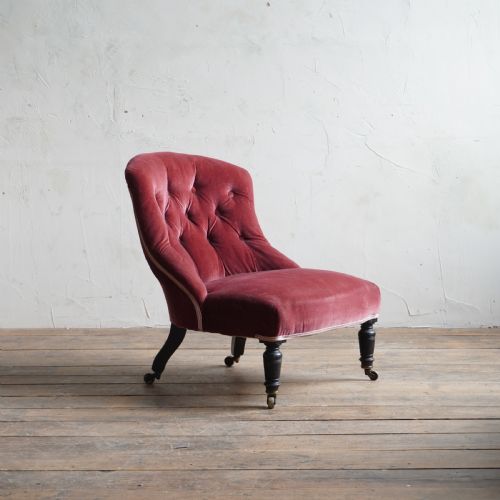


Wooden Leg Castor Armchair
These wooden leg castor armchairs are sturdy seating set on wheels, built for practical movement and deep comfort across multiple periods.
Wooden Leg Castor Armchair
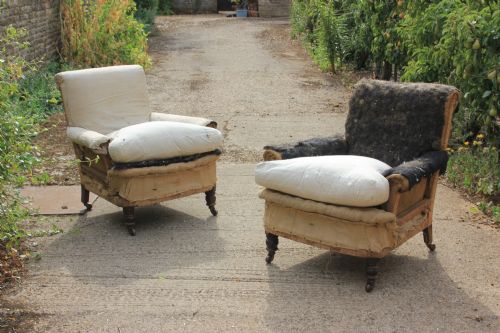
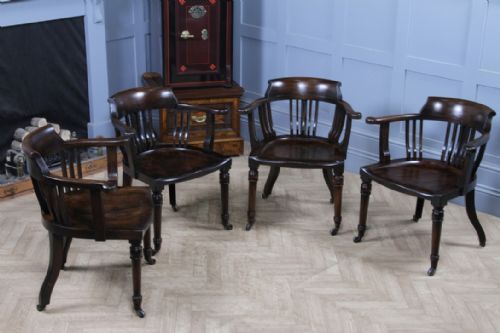
A wooden leg castor armchair brings together sturdy timber frames and small metal wheels designed to move heavy seating across carpets and floorboards without fuss. You will encounter various forms on this page, ranging from deep-seated lounge designs to captain and desk variants.
The periods represented stretch from the Regency era through Victorian workshops to Edwardian country houses and early twentieth-century rooms. These chairs served in libraries, bedrooms, and drawing rooms where mobility and reliable construction mattered.
Makers utilised different timber frames, pairing mahogany, oak, walnut, satinwood, and simulated rosewood with practical upholstery methods. Each piece reflects the domestic habits of its decade, balancing supportive cushioning with solid wooden undercarriages.
Materials and construction methods
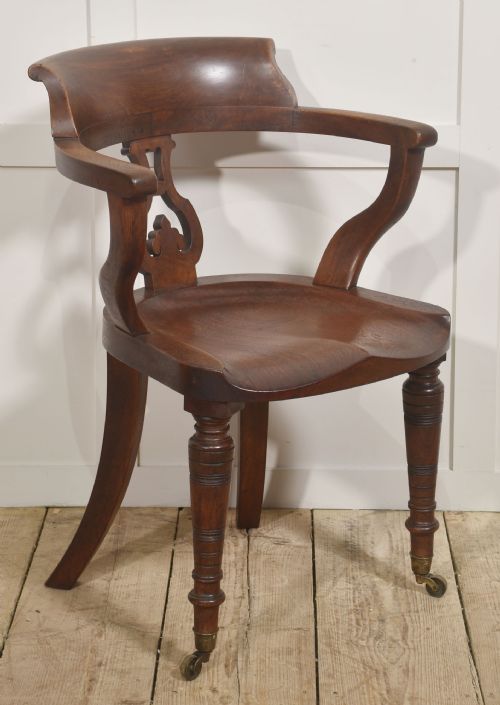
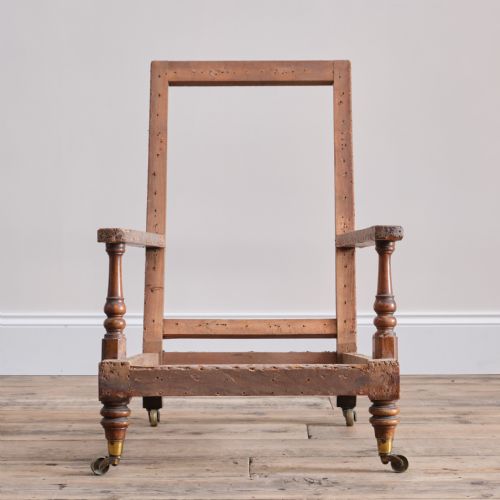
Makers built the foundational frames of these chairs using solid timbers such as mahogany, oak, and walnut, ensuring a rigid structure that could support frequent use. Turned or carved wooden legs provided the direct anchor for brass castors, allowing the heavy seating to roll smoothly.
Upholstery layers beneath the surface fabric typically relied on traditional materials like hessian and calico to hold stuffing secure within deep-seated designs. Selected frames featured ebonised finishes or simulated rosewood graining to mimic more expensive exotic hardwoods.
Current listings feature pieces spanning the Regency period through Victorian styles to Edwardian and twentieth-century designs.
Assessing quality and craftsmanship
The distinction between standard utility seating and finer examples lies in the precision of the timber turning and the proportion of the frame. Superior pieces display crisp detailing in the wood and balanced proportions that support upright desk work or relaxed lounging equally well.
Integration of the castors into the wooden legs reveals the care taken during assembly, as well-fitted brass fittings move freely without straining the surrounding timber. The choice of primary wood, from plain oak to figured mahogany or satinwood, naturally elevates the presence of the chair.
Howard And Sons·Gillows
The Wooden Leg Castor Armchair Glossary
- Castor
- A small wheel mounted on a swivel assembly attached to the base of a furniture leg to permit easy rolling. These fittings are commonly cast in brass.
- Captain's Chair
- A sturdy wooden armchair with a curved backrest supported by spindles, designed originally for office or shipboard use. They frequently incorporate writing desks or swivel mechanisms.
- Ebonised
- Timber treated with a dark finish to imitate expensive ebony wood. This technique was popular during the Victorian period for accent furniture.
- Simulated Rosewood
- Painted or stained wood grain created to replicate the rich coloration of true rosewood. Makers used this method on simpler timbers to achieve a decorative appearance.
- Calico
- A plain-woven cotton fabric utilised as an inner lining or base cover beneath top upholstery. It provides a stable foundation for stuffing materials.
Wooden Leg Castor Armchair: Frequently Asked Questions
What periods do these armchairs cover?
The pieces span multiple eras, including Regency designs from around eighteen thirty, Victorian ebonised works, and Edwardian deep-seated models.
Later examples extend into the twentieth century, bringing twentieth-century lounge styles into the selection.
How were these chairs moved around?
Small metal wheels, known as castors, fitted directly to the bottom of the wooden legs allowed occupants to shift the heavy furniture across floors with minimal effort.
This mobility suited large rooms where seating arrangements changed frequently for social gatherings.
What timbers were used for the frames?
Craftsmen relied on durable hardwoods including mahogany, oak, walnut, and satinwood to construct stable support structures that endured decades of daily sitting.
Alternative treatments such as ebonised finishes and simulated rosewood graining also appear on the frames.
Where were desk armchairs placed?
Captain chairs and desk armchairs served primarily in studies, libraries, and home offices where stable seating was required for paperwork.
Their robust wooden construction and supportive arms suited prolonged periods of reading or writing.