

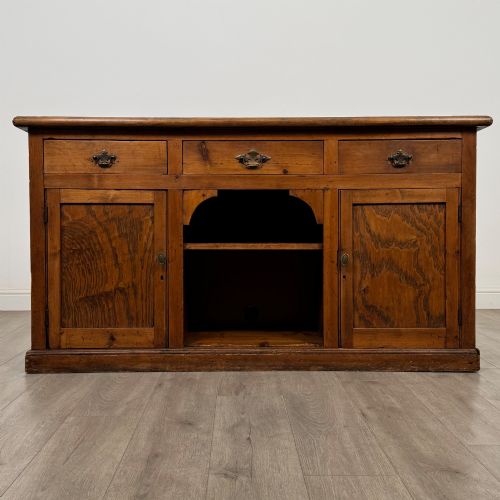

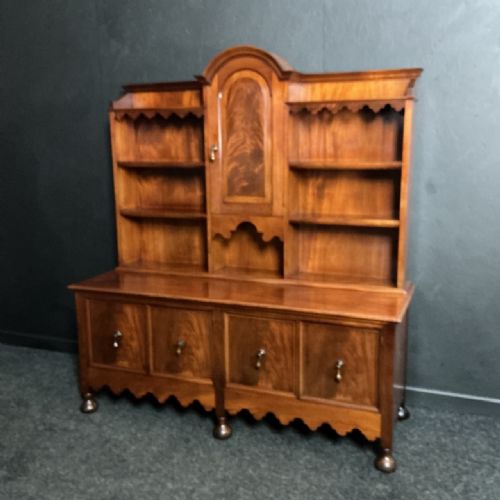
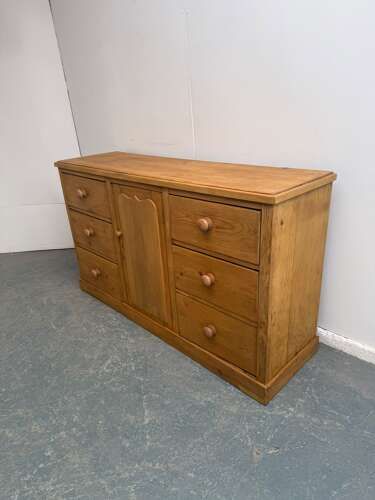
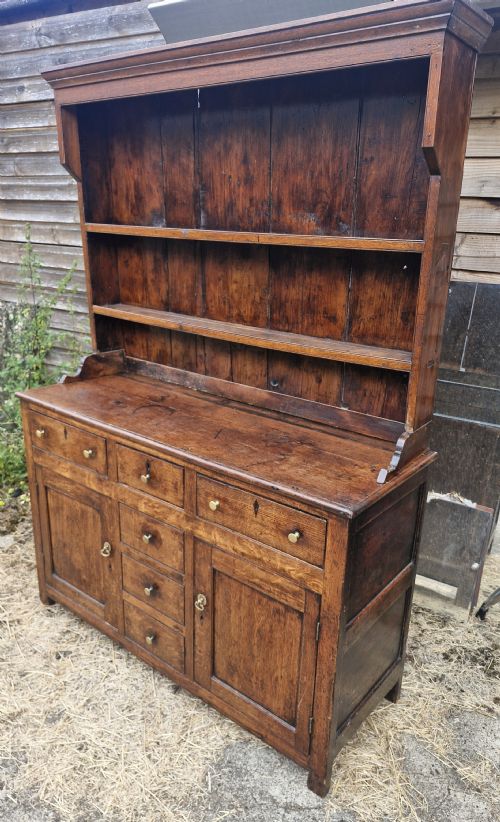
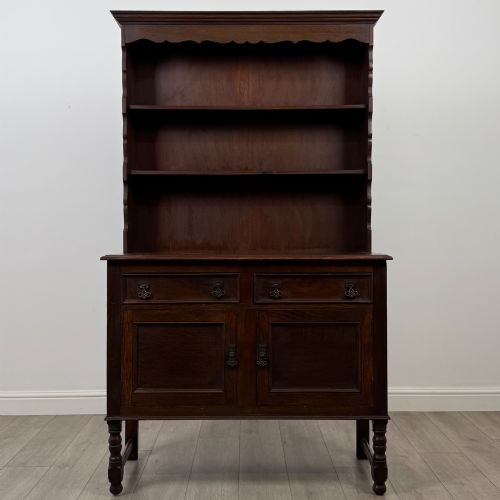
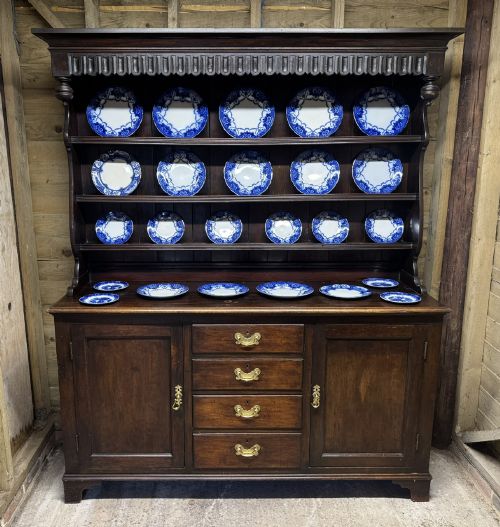
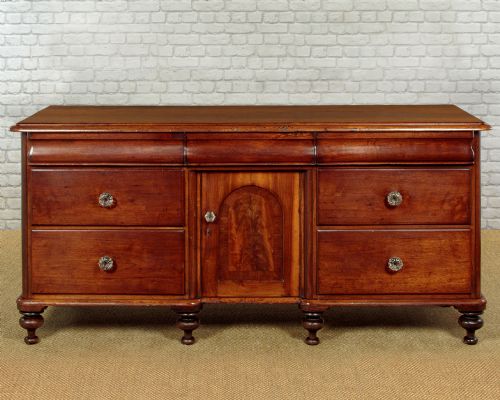
Wooden Kitchen Sideboard
A wooden kitchen sideboard grounds a room with honest utility, offering deep storage and sturdy preparation space built from durable regional timbers.
Wooden Kitchen Sideboard
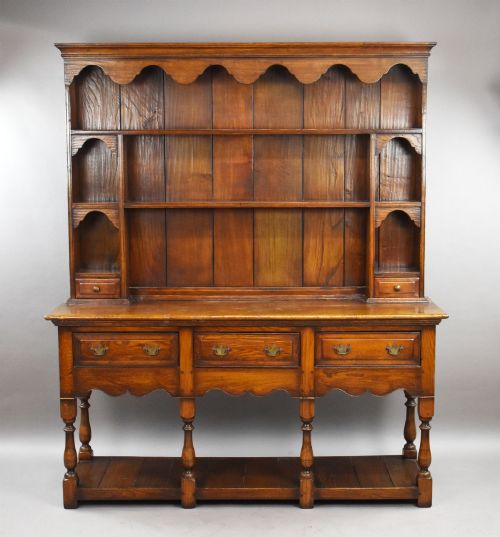
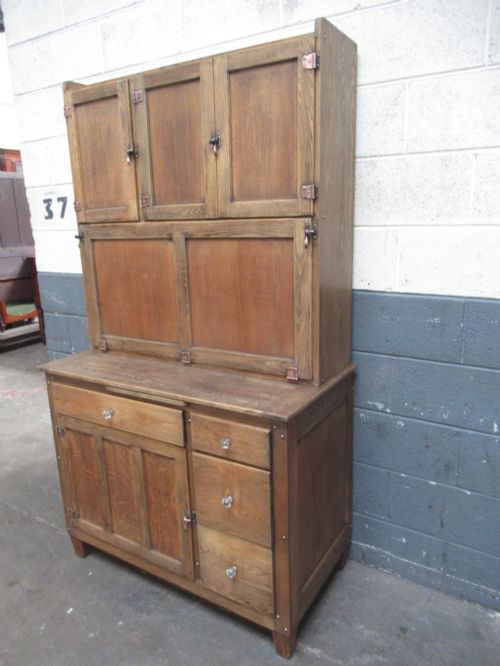
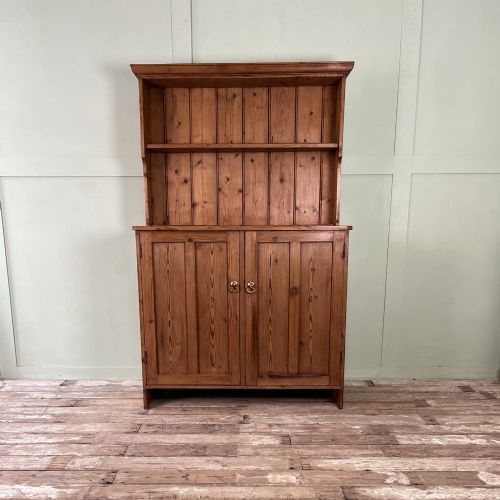
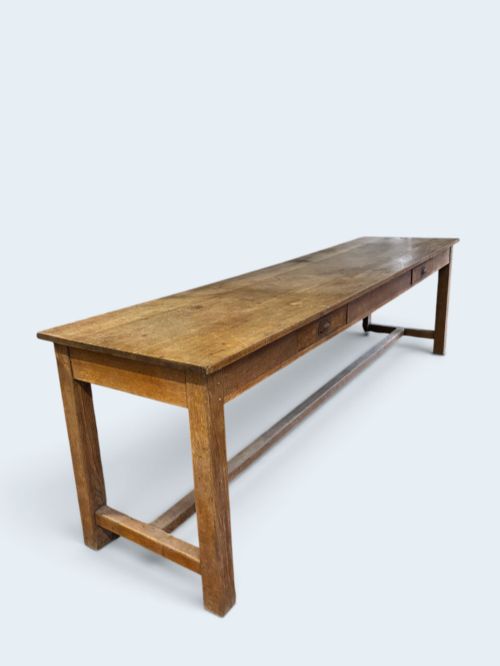
When you search for a wooden kitchen sideboard, you encounter substantial working furniture designed for food preparation and storage across centuries of domestic life. The listings on this page span robust 18th-century country pieces, Victorian pine bases, and Edwardian cabinets built for utility.
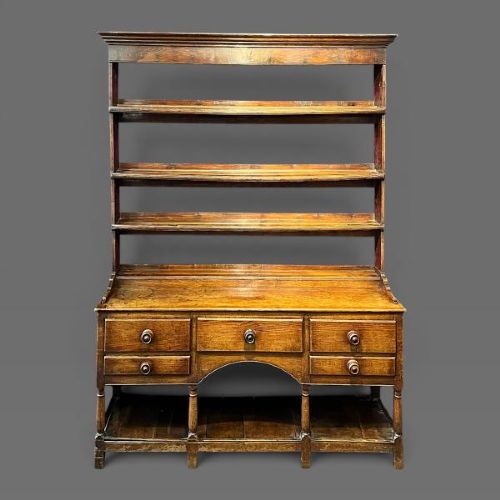
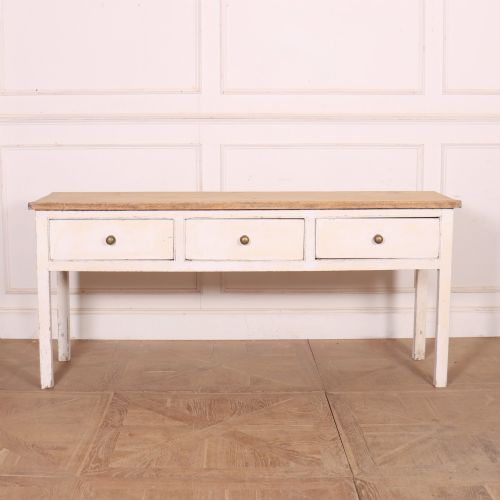
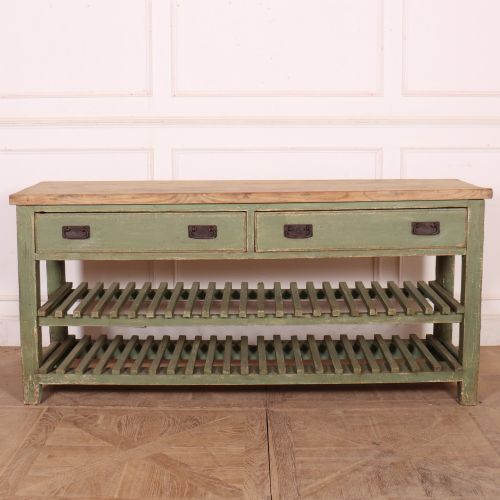
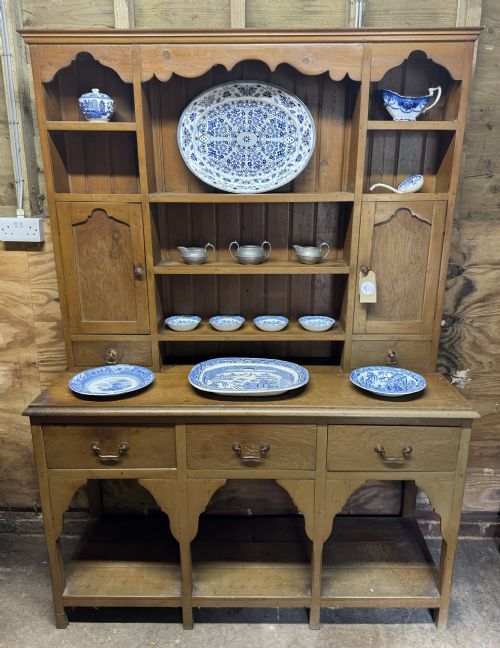
The most common formats you will meet include low dresser bases, potboard servers, and tall kitchen dressers featuring original plate racks or upper cupboards. These pieces originate from regional traditions across Britain, France, Denmark, and Japan, reflecting local material availability.
Makers utilised native hardwoods and softwoods to construct these functional items, ranging from dense oak and mahogany to accessible pine, sycamore, and walnut. Many retain original painted finishes, waxed patinas, or traces of daily kitchen use that define their vernacular appeal.
Materials and Construction Methods
Carpenters constructed these items primarily using solid oak, pine, and mahogany, often combining sturdy structural framing with panelled doors and boarded backs. Iron and brass hardware - such as hinges, drop handles, and hooks - secure the framework and provide operational function.
Surfaces frequently show the marks of hand-planing and traditional joinery techniques like dovetailing in drawer construction. Finish treatments range from clear wax applications to layers of original paint that have weathered through decades of domestic service.
Wooden Kitchen Sideboard Retail Price Guide 2026
Typical asking prices for wooden kitchen sideboard among the pieces listed under this phrase on Sellingantiques today, from the lower quarter to the upper quarter. They describe what is for sale here now, not the wider market.
The listings here combine 18th-century country oak pieces with Victorian pine bases, Edwardian mahogany cabinets, and regional French and Japanese forms.
Judging Quality and Integrity
Quality rests in the retention of original surfaces, such as undisturbed painted finishes or deep waxed patinas built up over generations. Pieces retaining their original plate racks, brass fittings, and structural timber without extensive timber replacement stand at the upper end of the scale.
Construction integrity separates vernacular pieces; tight joinery, substantial board thickness in top surfaces, and minimal alterations to the base framework indicate superior cabinetmaking within regional traditions.
The Wooden Kitchen Sideboard Glossary
- Potboard
- An open lower shelf on a dresser base traditionally used for storing pots and heavy kitchen utensils. This timber platform sits just above the floor on sturdy legs.
- Dresser base
- The lower section of a kitchen dresser, functioning as a standalone sideboard or serving table with drawers and cupboards. It provides a flat top surface for food preparation.
- Plate rack
- The upper open-shelved wooden superstructure attached to a dresser, designed to display ceramic plates upright against a wall. Pegs or grooves hold the plates safely in place.
- Patina
- The surface sheen and colour depth developed on wood and paint through age, handling, and regular waxing. This indicator marks genuine antique status and long use.
- Confiturier
- A French storage cupboard, often translated as a jam cupboard, built with a single door and compact proportions for kitchen provisions.
Wooden Kitchen Sideboard: Frequently Asked Questions
How do I care for waxed pine?
Waxed pine requires simple maintenance using a natural beeswax polish applied sparingly and buffed with a soft cloth. Avoid placing these pieces near direct heat sources that can dry out the timber.
Moisture should be wiped away promptly to preserve the soft sheen of the aged surface. Regular light polishing maintains the protective barrier against daily kitchen use.
Are these pieces suitable for modern kitchens?
These sideboards and dressers integrate naturally into modern spaces by offering generous surface area and deep drawer storage. Their historic utility translates directly into practical kitchen islands, coffee stations, or general storage.
Their varied woods and painted finishes complement both contemporary minimalist rooms and traditional country interiors.
How do I date an oak dresser?
Dating an oak dresser involves examining construction methods, tool marks, hardware types, and timber movement. Hand-sawn boards, pegged joints, and forged iron fittings point towards earlier 18th-century origins.
Later Victorian and Edwardian examples often feature machine-sawn elements, standardised brass screws, and simpler dovetailing. Original hardware and undisturbed finish layers provide the clearest chronological clues.