


Wooden Kitchen Dresser Display
A wooden kitchen dresser display brings centuries of practical storage and plate shelves directly into your home.
Wooden Kitchen Dresser Display
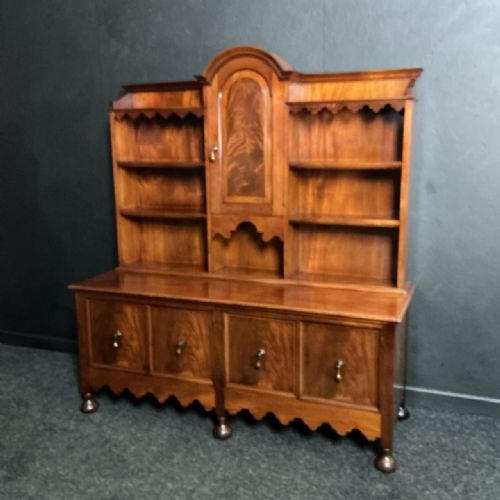
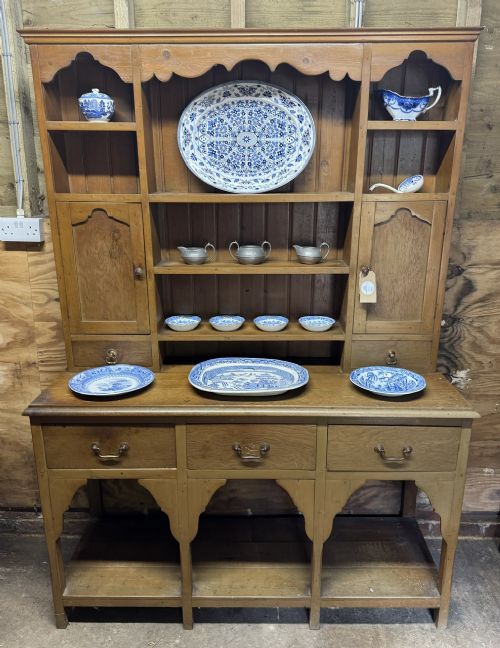
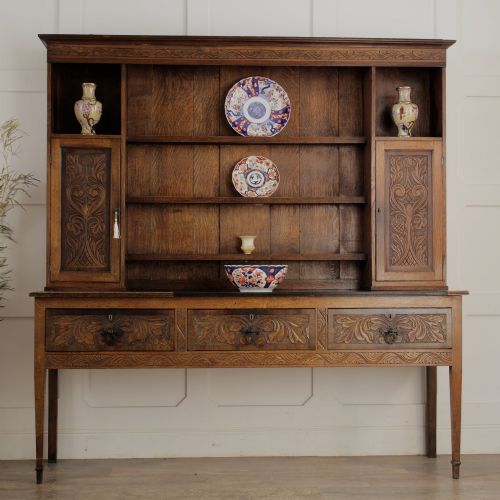
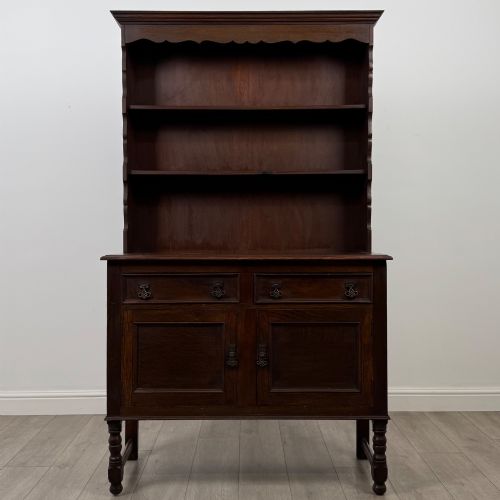
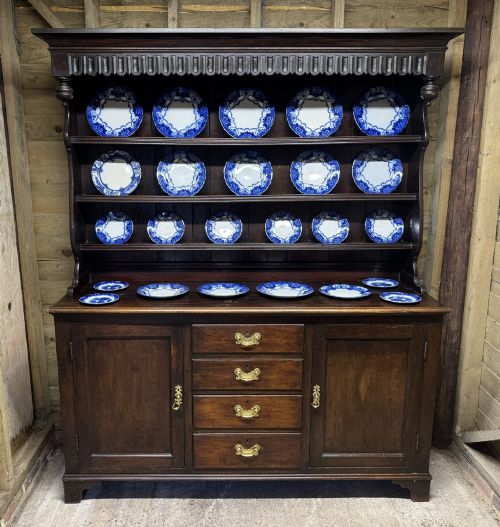
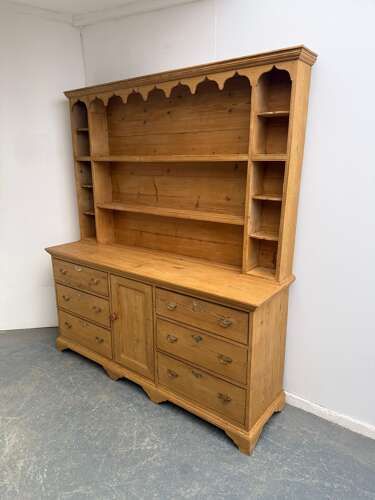
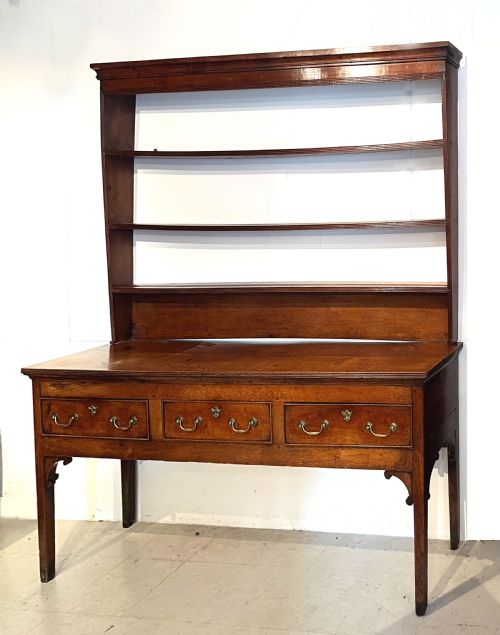
A wooden kitchen dresser display combines lower cupboards or drawer bases with upper plate racks, forming the traditional heart of domestic storage. These pieces range from substantial 18th-century oak Welsh dressers to smaller Edwardian and 1930s pine variants designed for provincial and country interiors.
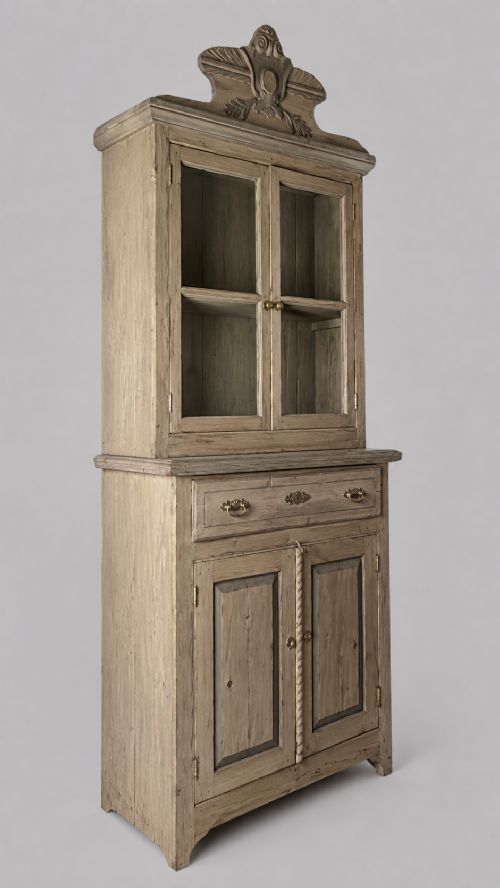
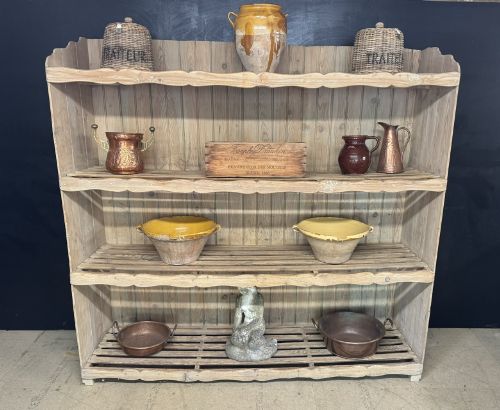
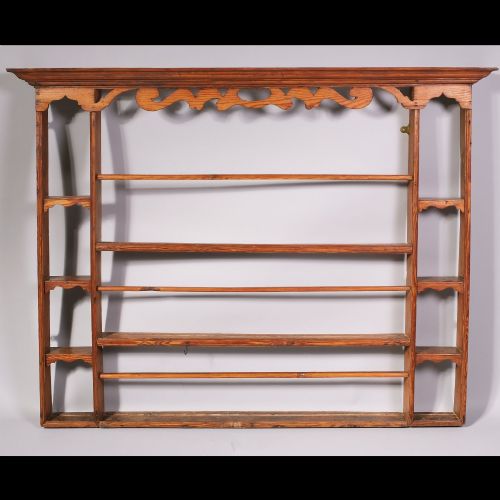
The selections available lean heavily toward regional British and French vernacular forms, including glazed cupboards, bakers racks, and open delft racks. Buyers will encounter both two-part constructions and standalone wall racks built to display ceramic plates and everyday kitchenware.
How they were made
Cabinetmakers built these pieces primarily using native hardwoods and softwoods such as oak, pine, mahogany, and cherrywood, supplemented by fruitwoods like walnut. Construction relied on traditional joinery methods tailored to heavy domestic use, accommodating both solid timber panels and structural framing.
Surface finishes vary from waxed or polished natural grain to painted, scrumbled, and original patinated coatings. Hardware typically incorporates brass handles and escutcheons alongside iron hinges, while glass panels appear on upper glazed cupboards.
Some country pine dressers wear layers of scrumbled paint applied to imitate costly hardwoods for modest rural homes.
What varies in quality
Quality rests heavily on the integrity of the timber and the preservation of original surfaces, such as early patinated finishes and untouched backboards. Pieces retaining their original plate racks show greater architectural harmony than married combinations assembled from different eras.
Fine craftsmanship reveals itself in proportion, refined mouldings, and the clever deployment of secondary woods like maple or deal in less visible areas. Provincial pieces with local regional characteristics command attention for their honest, robust construction.
The Wooden Kitchen Dresser Display Glossary
- Delft rack
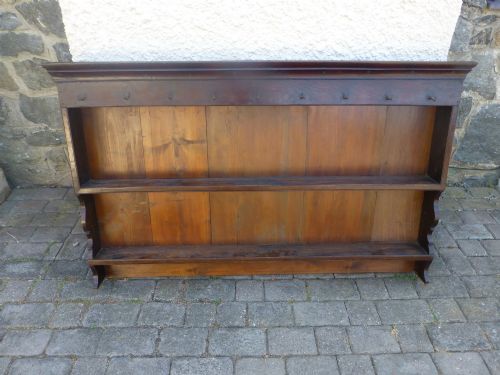
- An open wall-mounted or dresser-top shelf designed specifically for displaying ceramic plates and platters. These shelves often feature simple grooved plate rails.
- Patina
- The surface sheen and colour acquired by wood through decades of handling, waxing, and exposure to light. Original patination is prized by collectors.
- Scrumbled paint
- A decorative paint technique mimicking the grain of more expensive woods or creating a mottled texture. It appears frequently on country pine furniture.
- Two-part dresser
- A piece constructed in two separate sections, featuring a heavy lower base cabinet and a lighter upper plate rack resting upon it.
Wooden Kitchen Dresser Display: Frequently Asked Questions
What is a Welsh dresser?
A traditional Welsh dresser combines a deep lower storage base with open shelving above for plates. These regional forms often feature distinctive proportions and local timber choices.
They served as the central storage hub in country kitchens for centuries, holding both cooking utensils and display ceramics.
How do I date an old wooden dresser?
Dating relies on examining the construction methods, timber species, and tool marks visible on the interior and backboards. Earlier 18th-century pieces often display hand-sawn boards and pegged joinery.
Later Victorian and Edwardian examples incorporate machine-sawn elements and standardised hardware fittings.
Can I separate the top rack from the base?
Many traditional dressers are built as two-part units where the top rack simply rests on or is bolted to the lower base. This construction aided original transport into rural cottages.
However, wall-mounted plate racks are entirely separate hanging fixtures independent of any lower sideboard.
How do I care for a waxed pine or oak finish?
Maintenance requires occasional applications of traditional beeswax to nourish the timber and maintain the surface sheen. Avoid placing wooden dressers near direct heat sources or strong sunlight.
Dust regularly with a soft, dry cloth rather than using wet cleaning products that damage historic wax layers.