




Wooden Jewellery Cabinet
A wooden jewellery cabinet provides compact, secure storage for precious trinkets while bringing period craftsmanship onto a dressing table or desk.
Wooden Jewellery Cabinet
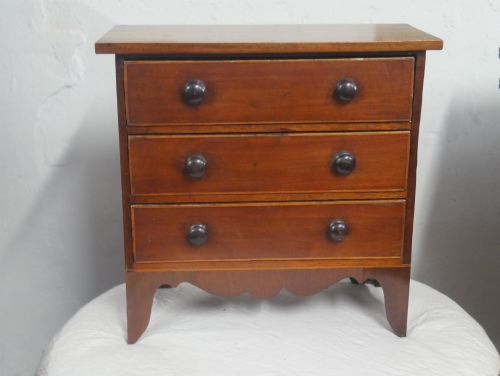
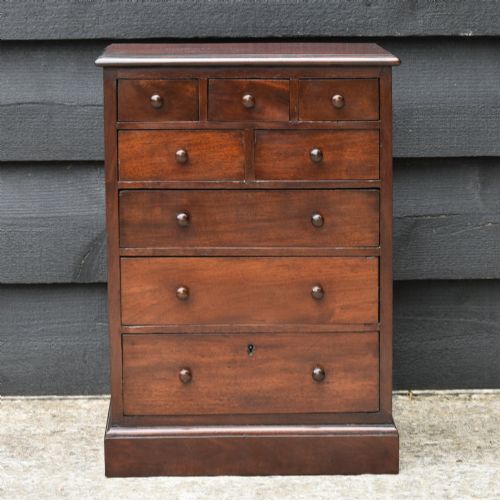
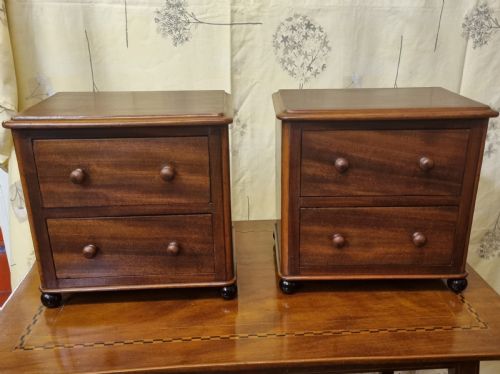
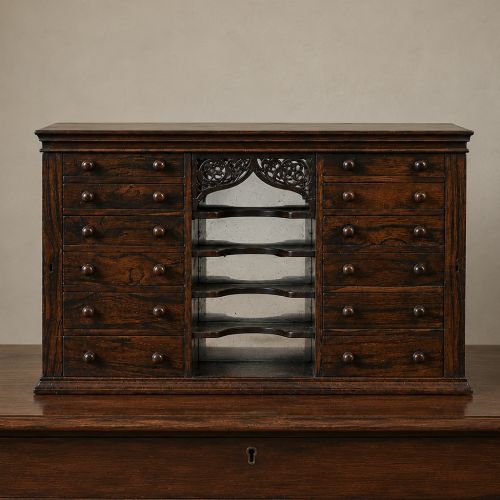
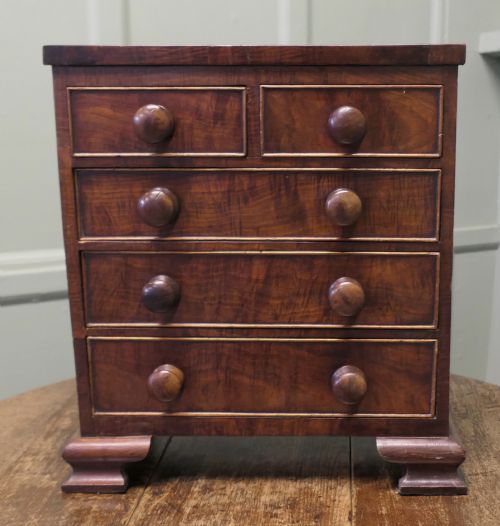
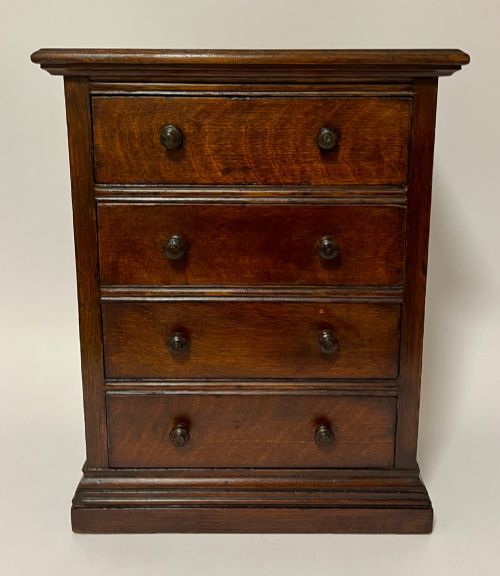
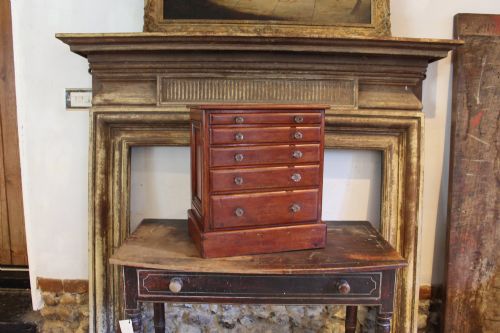
A wooden jewellery cabinet encompasses various tabletop forms designed to hold small valuables, from miniature chests of drawers to specialised collectors' boxes. The pieces on this page span several centuries, with nineteenth-century Victorian examples appearing most frequently alongside Regency, Georgian, and eighteenth-century items.
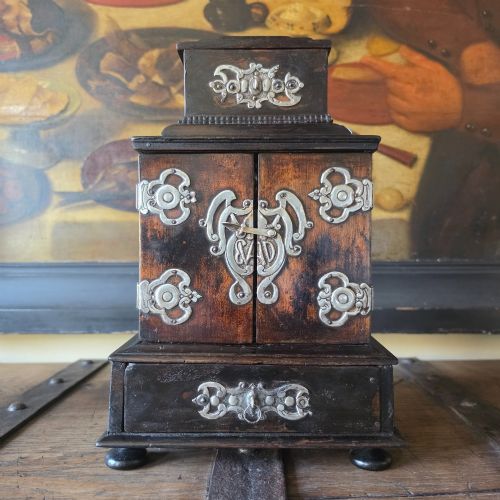
Makers produced these tabletop cabinets in diverse regional styles, including Anglo-Indian inlaid hardwoods, Flemish ebony caskets, and Scottish miniature chests. Miniature furniture and apprentice pieces serve the same function as dedicated jewellery boxes, offering compartmentalized storage scaled down for domestic use.
Materials and Technique
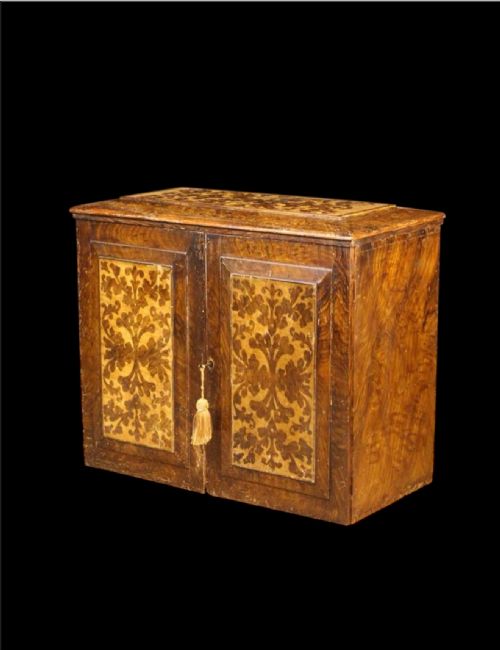
Cabinetmakers utilised dense timbers such as mahogany, walnut, rosewood, and oak as the structural foundation for these pieces. Surfaces often feature decorative veneers, parquetry, or burr birch, giving rich texture to small-scale furniture.
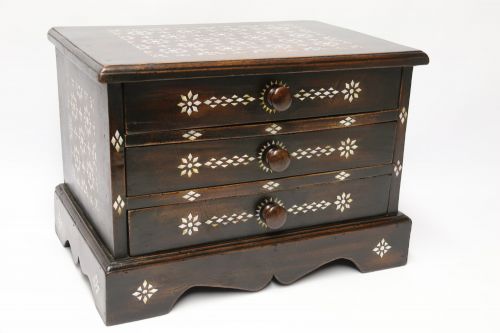
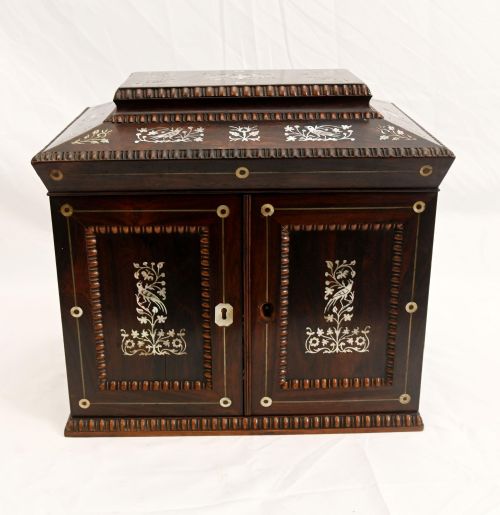
Workshops integrated brass hardware, glass panels, and mother-of-pearl inlay to accent the exterior drawers and doors. Secret compartments and clever locking mechanisms reveal the intricate joinery expected in miniature case furniture.
The listings on this site feature eighteenth and nineteenth-century pieces constructed from mahogany, walnut, rosewood, and mother of pearl.
Judging Quality
The sophistication of the timber figure and the precision of the marquetry or inlay distinguish superior examples from plain utility boxes. Well-executed dovetail joints on miniature drawers and original working locks with matching keys elevate a piece.
Proportion and restraint in ornament separate exceptional cabinetwork from heavier, less balanced items. Patina built up over generations indicates how sympathetically a cabinet has been preserved.
The Wooden Jewellery Cabinet Glossary
- Apprentice piece
- A small-scale item demonstrating a craftsman's skill to gain guild membership. These miniature chests replicate full-size furniture with exact proportions.
- Wellington chest
- A tall, slender chest featuring a locking stile that secures all drawers simultaneously. This form appears frequently in nineteenth-century tabletop formats.
- Marquetry
- Decorative veneer patterns formed by fitting together thin pieces of wood, shell, or ivory. Craftsmen apply these designs to the exterior surfaces of high-status cabinets.
- Parquetry
- Geometric mosaic woodwork used to create repeating patterns across cabinet panels. It relies on precise angular fitting of contrasting timber blocks.
- Collector's cabinet
- A small chest fitted with multiple shallow drawers designed for storing specimens, coins, or medals. These units adapt easily to holding rings and small accessories.
Wooden Jewellery Cabinet: Frequently Asked Questions
What is an apprentice piece?
An apprentice piece is a finely detailed miniature furniture item created by a trainee woodworker to prove their mastery of a trade. In the context of wooden jewellery cabinets, these take the form of fully functioning small-scale chests of drawers.
Craftsmen built these items with the same joinery techniques and timber selections used for full-sized furniture. Collectors prize them for their meticulous proportions and demonstration of advanced woodworking skill.
How were table cabinets used?
Table cabinets served as secure repositories for valuable personal items, documents, and currency in domestic settings. Wealthy households kept them on desks, tables, or dressing chests for daily access.
Interior compartments, secret drawers, and locking doors protected delicate possessions from dust and theft. They functioned as portable strongboxes that combined security with decorative presence.
How do I care for wooden jewellery cabinets?
Maintain these cabinets by keeping them away from direct sunlight and rapid temperature fluctuations that cause wood to split or warp. Dust surfaces gently with a soft cloth and avoid chemical polishes that damage old finishes.
Applying occasional microcrystalline wax protects historical polish and preserves the timber's natural patina. Ensure brass hinges and locks remain clean and dry to prevent corrosion.
What woods were used?
Cabinetmakers selected dense and decorative hardwoods including mahogany, walnut, rosewood, and oak for structural stability and visual appeal. Exotic materials like ebony, amboyna, and palmwood appear on high-status export or specialised pieces.
Secondary woods such as pine or cedar often line the interior drawer boxes. Veneers and contrasting stringing lines highlight the natural grain variations across the exterior.