


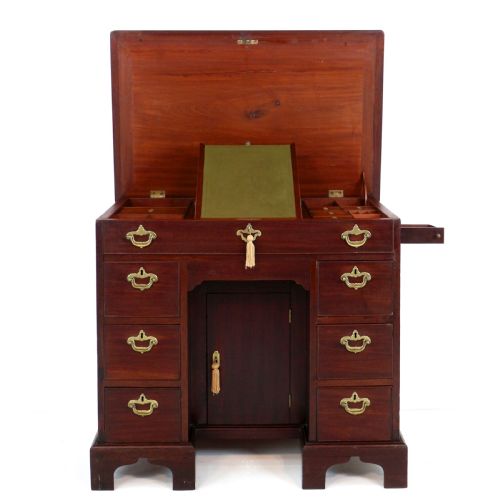


Brass Fitted Walnut Chest
These brass fitted walnut chest pieces are robust containers combining rich timber with metal mounts, built to organise valuables on the move.
Brass Fitted Walnut Chest
When you search for a brass fitted walnut chest, you encounter compact repositories and storage containers originating primarily from the Georgian and Victorian eras. These items serve multiple functions, functioning variously as desks, jewellery boxes, scent caskets, and campaign chests of drawers.
The versions most commonly met on this page span the eighteenth and nineteenth centuries, constructed in standard and burr walnut timbers. They range from diminutive table cabinets to fitted kneehole desks and military officers' chests, often enhanced with contrasting metal mounts.
How they were made
Cabinet makers utilised dense walnut and burr walnut veneers over secondary timbers such as oak, securing the construction with flush brass corners, escutcheons, and strapping. These metal fittings protect the vulnerable edges of the wooden carcasses during transit and daily handling.
Interior compartments frequently integrate secondary materials like glass, silk, velvet, mother of pearl, and bone to house specific objects such as decanters, insignia, or writing implements securely.
Current listings feature items from the Georgian and Victorian periods, constructed primarily from walnut, burr walnut, and oak with brass and glass elements.
What varies in quality
The standard of execution separates straightforward utility boxes from masterwork pieces like diminutive collectors' cabinets and campaign chests. Superior examples display precise jointing, richly figured burr walnut surfaces, and robust, integrated brass mounts that sit flush with the timber.
Internal complexity also dictates worth, where fitted compartments, secret drawers, and intact original linings like velvet and silk elevate the piece above simpler, plain-lined interiors.
The Brass Fitted Walnut Chest Glossary
- Brass bound
- Edged or cornered with brass strips and brackets to protect the timber from impact. This technique was standard for military and travel pieces.
- Burr walnut
- A prized timber cut from walnut tree growths, displaying swirling, highly decorative grain patterns. It is typically applied as a veneer over solid foundations.
- Kneehole desk
- A writing table featuring a central recess for the user's legs, flanked by pedestals of drawers. Georgian iterations often include fitted dressing compartments.
- Ormolu
- Gilded bronze mounted onto furniture or boxes for decorative effect. It provides a bright, metallic contrast against dark walnut surfaces.
Brass Fitted Walnut Chest: Frequently Asked Questions
What is a brass fitted walnut chest?
It is a wooden box or small cabinet made from walnut and strengthened with brass corners, bands, or handles. These pieces include campaign chests, jewellery boxes, and decanter cases.
They were built to be durable enough for travel while retaining the refined appearance expected in a domestic interior or gentleman's library.
How were these chests used originally?
Owners used them to transport and secure valuable possessions, writing materials, spirits, or personal insignia during journeys. Campaign chests accompanied officers on military service, requiring sturdy construction.
Table cabinets and jewellery boxes stayed in fixed locations within the home, housing delicate items and personal documents away from dust and casual view.
How do I date a walnut chest?
Dating relies on observing construction methods, hardware styles, and the specific characteristics of the walnut timber used. Georgian pieces often feature red walnut tones and simpler, elegant proportions.
Victorian and later nineteenth-century examples frequently incorporate heavier brass mounts, flush campaign handles, and more complex internal configurations with velvet or silk.
Can I use these chests for modern storage?
These pieces accommodate modern jewellery, watches, stationery, or bottles just as they did centuries ago. Their internal partitions make organisation straightforward.
Placing them on desks, sideboards, or dressing tables allows them to function as practical containers while adding period character to a room.