

Wooden Hat Tree
A wooden hat tree is a practical domestic fixture for organising outerwear, appearing here in forms ranging from bentwood to oak.
Wooden Hat Tree
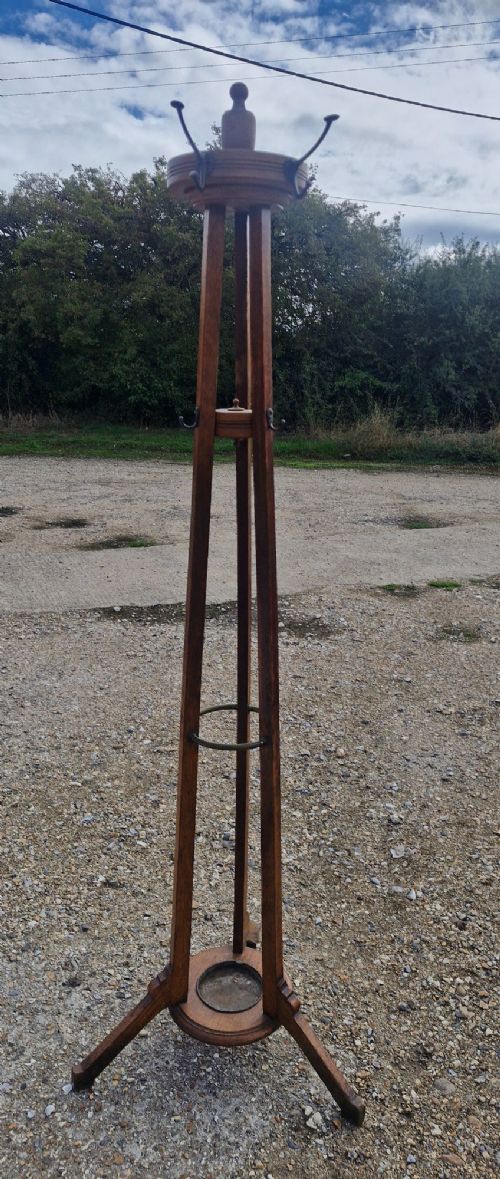
A wooden hat tree serves as a vertical holder for coats, hats and umbrellas within hallways and entrance spaces. These pieces span the Victorian and Edwardian eras through to the early twentieth century.
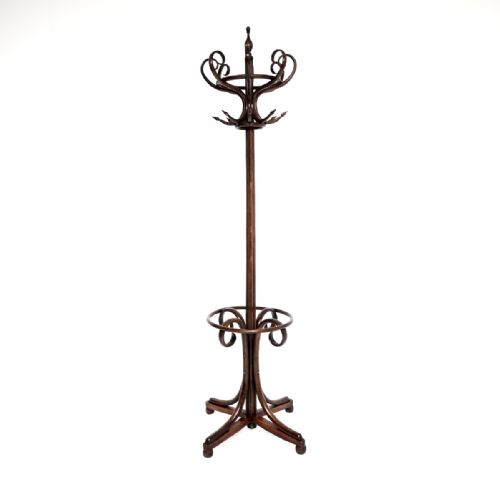
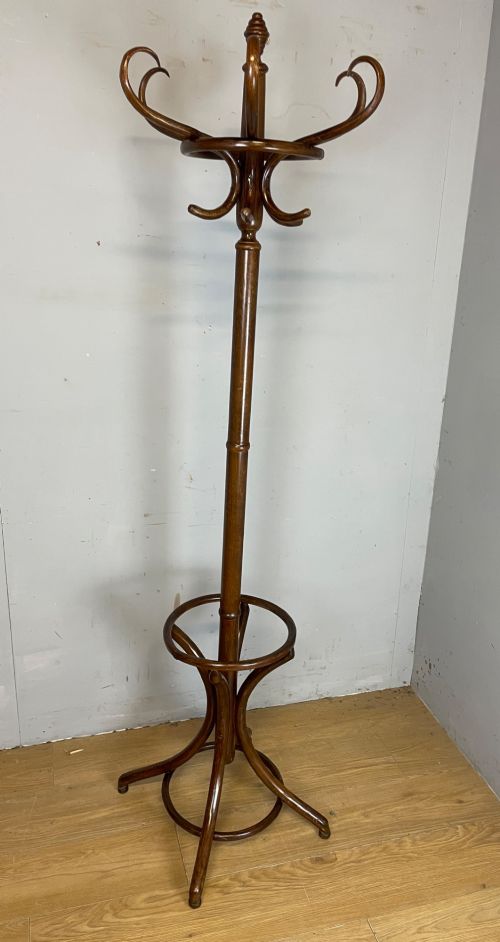
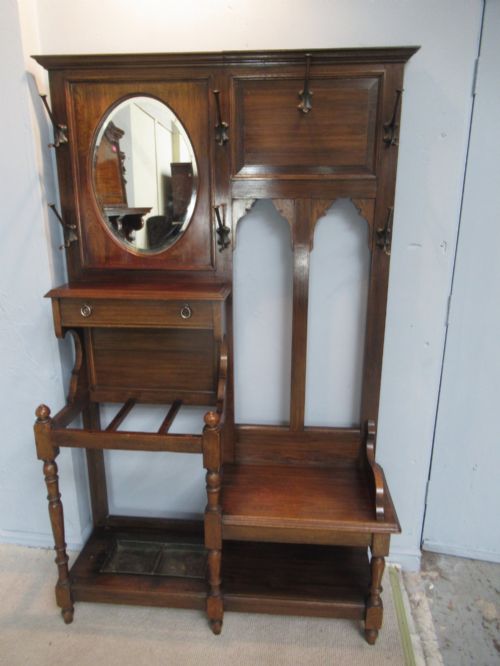
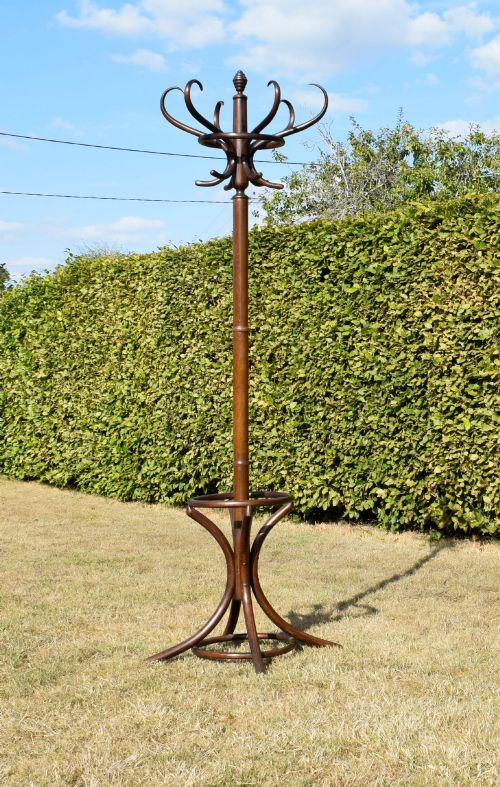
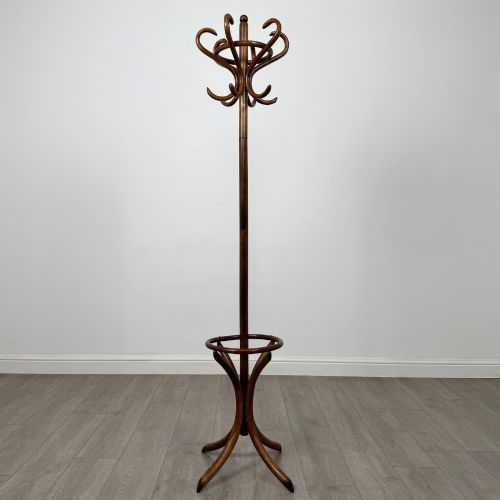
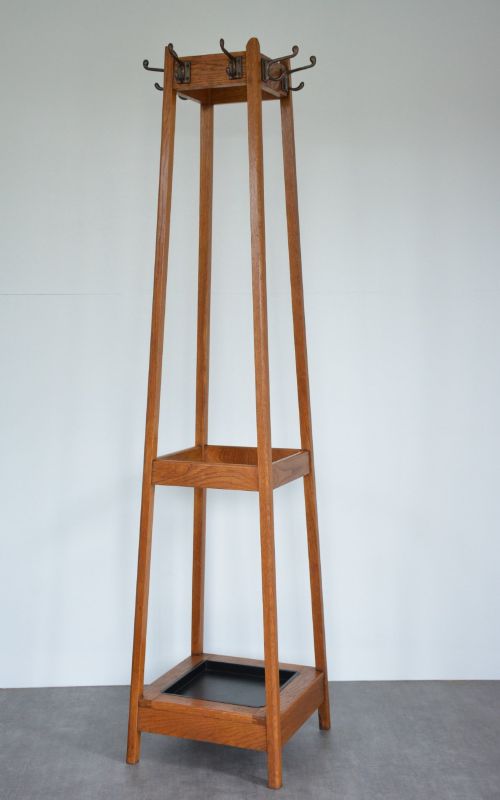
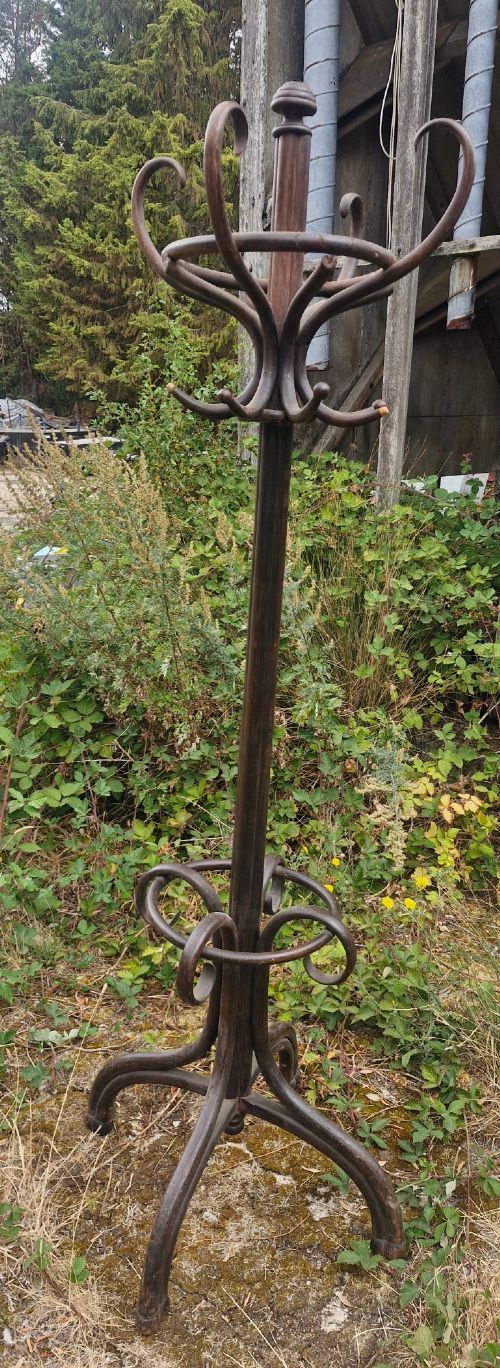
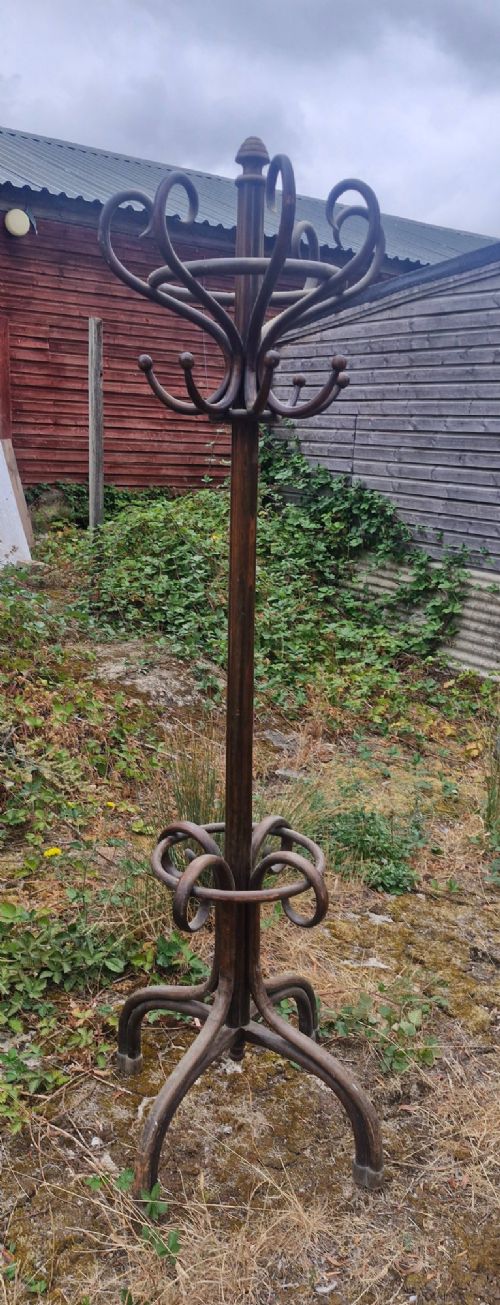
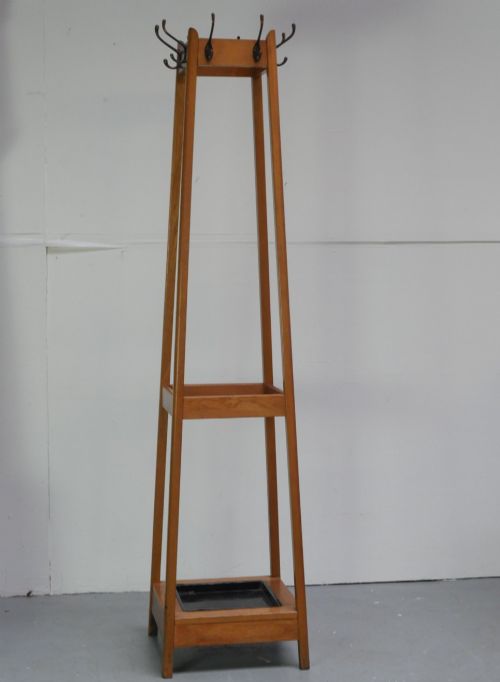
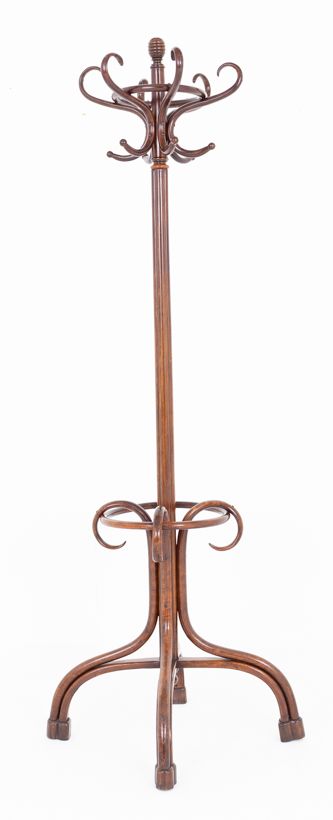
The most common examples on this page take the form of bentwood stands or heavy oak hallstands. Makers utilised various woods such as beech, mahogany, walnut and maple to construct these functional pieces.
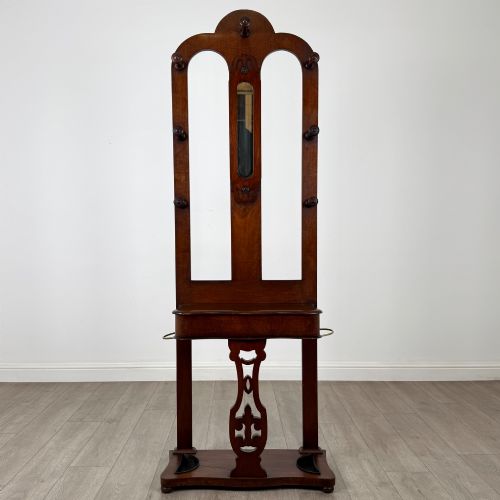
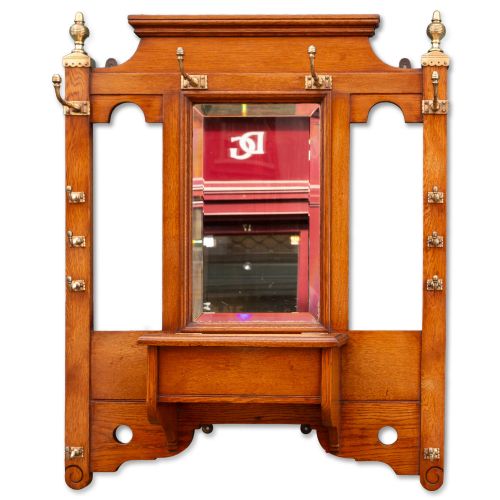
Designs include revolving configurations, wall-mounted racks and half-round demi-lune shapes designed to sit flush against a wall. Many integrate specific brass or metal hardware, umbrella holders and drip trays.
How they were made
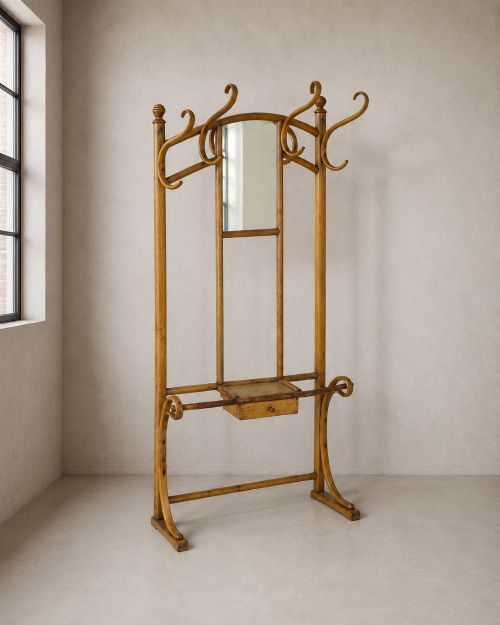
Construction relies heavily on the steaming and bending of beech wood to create the characteristic curved components seen in bentwood items. Cabinetmakers also employed solid oak, mahogany and walnut for architectural hallstands, joining structural panels with traditional woodworking joints.
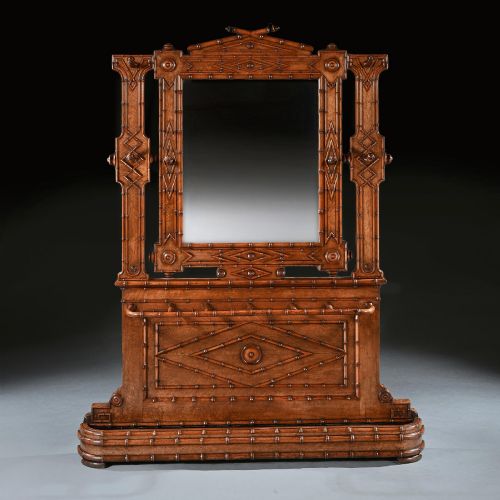
Metal and brass elements feature prominently as functional hooks, hanging attachments and lower drip trays for umbrellas. Additional materials like glass and faux bamboo appear on specific stylistic variants from the nineteenth and twentieth centuries.
Listings feature items from the Victorian, Edwardian and Arts and Crafts periods, constructed in beech, oak, mahogany and walnut.
What varies in quality
The standard of a wooden hat tree depends on the integrity of its timber and the rigidity of its vertical construction. Heavier frames maintain better balance under the weight of multiple heavy garments.
The refinement of the curved bentwood loops or the carved detail on oak and mahogany panels dictates the distinction between standard production items and superior examples. Original brass hardware and intact drip trays also alter the overall substance of a piece.
Thonet·Jas. Shoolbred·Astrola
The Wooden Hat Tree Glossary
- Bentwood
- A technique where wooden rods are softened using steam and bent into curved shapes. This method defines many twentieth-century coat stands.
- Hallstand
- A piece of hallway furniture combining coat hooks, hat pegs and umbrella storage, often incorporating a mirror or panelled back.
- Demi-Lune
- A half-moon shape allowing a hall stand to sit flat against a wall. This profile conserves floor space in narrow entryways.
- Japonisme
- An aesthetic style influenced by Japanese art, seen on specific maple furniture pieces from the nineteenth century.
Wooden Hat Tree: Frequently Asked Questions
Where should I place a hat tree?
These items suit entrance halls, porches and corridors where outerwear accumulation occurs daily.
Freestanding models require sufficient floor clearance to remain stable when loaded with garments.
How do I identify bentwood?
Bentwood pieces feature smooth, continuous curves formed from steamed timber rather than joined straight sections.
Beech is the predominant material used for these flexible structures.
Are these stands stable for heavy coats?
Heavier variants maintain balance effectively due to weighted bases or broad footprints.
Distributing garments evenly across the hooks prevents tipping.
What is the difference between a hat tree and a hallstand?
A hat tree typically refers to a vertical pole structure dedicated primarily to hanging hats and coats.
A hallstand often incorporates wider wooden panels, umbrella trays and occasionally mirrors or small surfaces.