




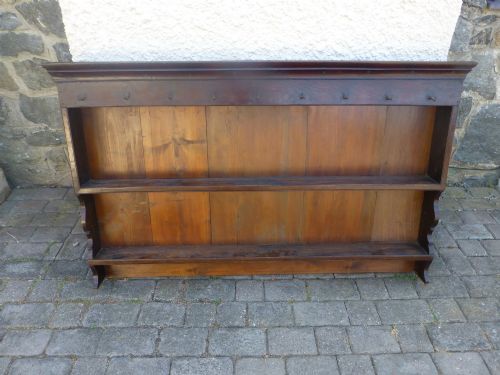
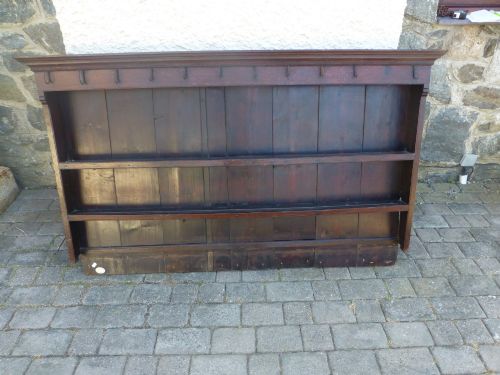
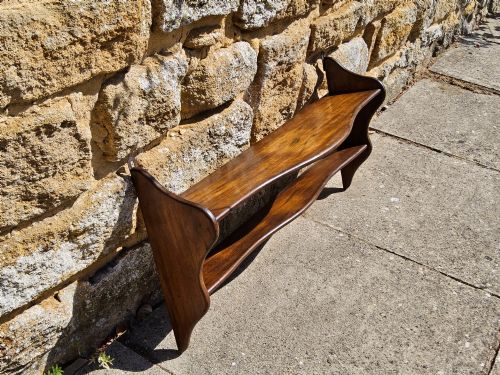
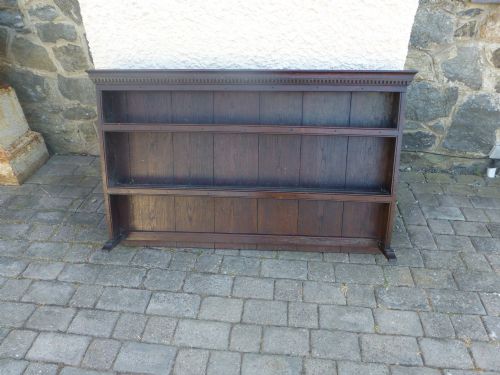
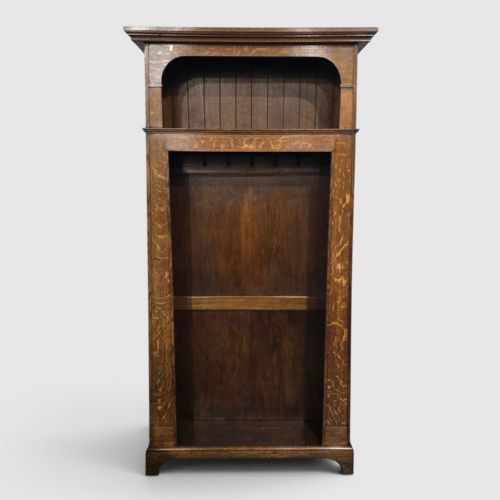
Wooden Hanging Rack
A wooden hanging rack saves floor space while putting everyday belongings and decorative plates on display.
Wooden Hanging Rack
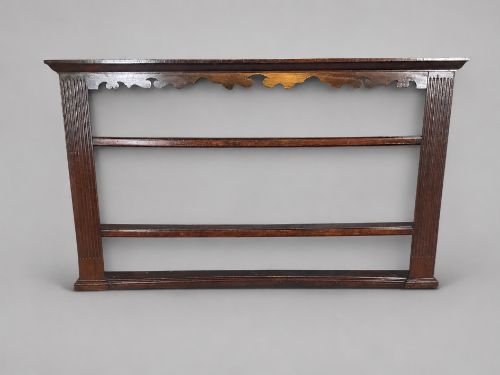
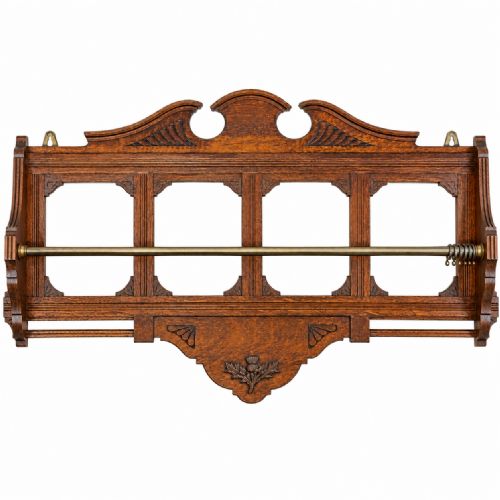
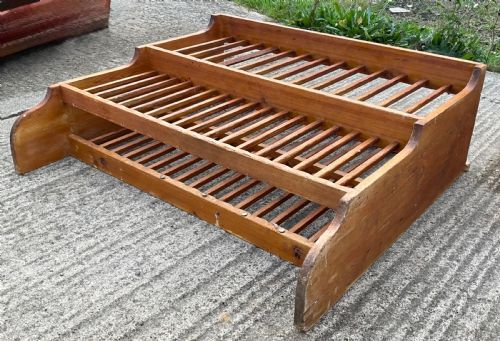
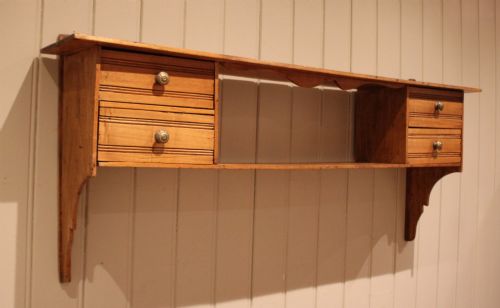
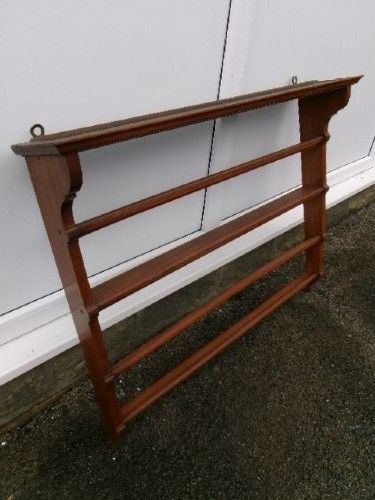
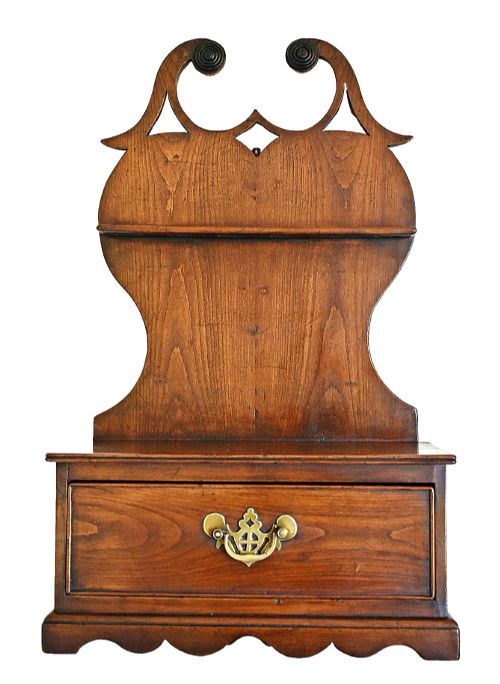
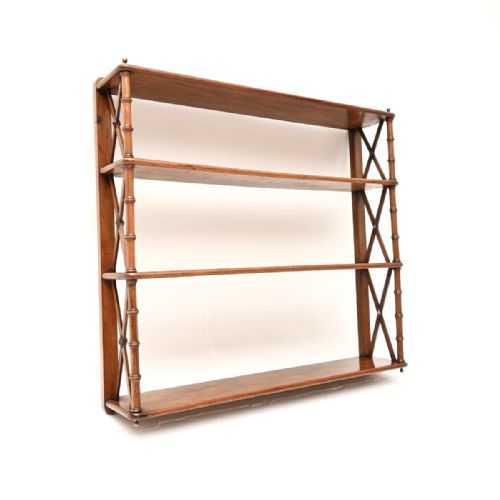
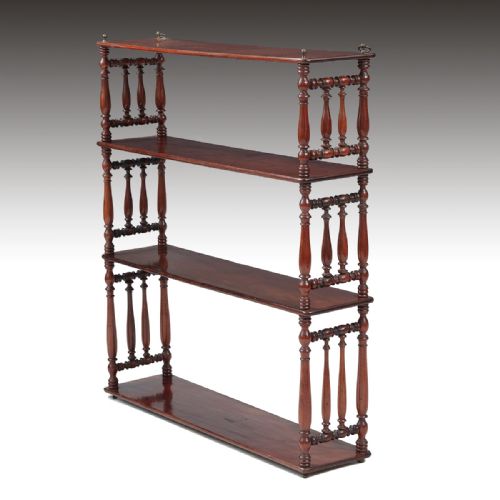
A wooden hanging rack combines utility and display, taking forms such as plate racks, coat rails, wall shelves and spoon racks designed to mount directly onto domestic walls. When buyers search for a wooden hanging rack, they encounter pieces originating from the seventeenth century through to the Edwardian period and the early decades of the twentieth century.
The selections available span multiple regional styles, including English Country, Arts and Crafts, Folk Art, and Victorian Gothic Revival. These fixtures served practical roles in kitchens, hallways and living spaces, holding ceramics, books, garments or cutlery.
Domestic timber fixtures range from simple utilitarian oak designs intended for rural kitchens to finely inlaid mahogany or walnut wall shelves made for formal parlours. The variety reflects the specific room and social station for which each rack was originally built.
Materials and construction methods
Cabinetmakers and rural joiners utilised native and imported hardwoods, most notably oak, mahogany, walnut, and cherry. Timber selection dictated the structural strength needed to bear the weight of stacked plates, heavy books or hanging coats.
Joining techniques combined traditional mortise and tenon joints with dovetailing on drawer boxes and plate shelves. Metal elements such as brass hooks, iron brackets and pewter fittings were integrated to secure the timber frames to walls and support hanging items.
Wooden Hanging Rack Retail Price Guide 2026
Typical asking prices for wooden hanging rack among the pieces listed under this phrase on Sellingantiques today, from the lower quarter to the upper quarter. They describe what is for sale here now, not the wider market.
Recorded periods span from the seventeenth century through Georgian, Regency, and Victorian eras up to Edwardian arts and crafts workshops.
Evaluating craftsmanship and condition
Quality in a wall fixture rests on the integrity of the timber joints and the retention of original mounting points. Pieces retaining their early brass hardware or untouched surface patination command greater interest than those altered or stripped down over time.
The refinement of surface decoration, such as hand carving, marquetry inlay, or early painted finishes like those seen in folk art examples, distinguishes standard utility pieces from exceptional workshop output.
The Wooden Hanging Rack Glossary
- Delft rack
- A specialised wall-mounted shelving unit designed specifically to display tin-glazed earthenware plates upright against a timber backboard.
- Spoon rack
- A compact wall fixture featuring small notches or slots to securely hold pewter or wooden spoons by their handles.
- Marquetry
- The art of forming decorative patterns on wooden surfaces by inserting small pieces of different coloured veneers.
- Trefid spoon
- An early style of dining spoon featuring a cleft, three-lobed terminal handle, frequently associated with seventeenth and eighteenth-century collections.
Wooden Hanging Rack: Frequently Asked Questions
How do I hang an antique wooden rack safely?
Secure the fixture directly into wall studs or utilise appropriate masonry fixings corresponding to the weight of the timber and its intended load.
Overloading shelves with heavy ceramics without proper structural support risks damaging both the wall and the antique frame.
How do I clean an old oak plate rack?
Dust the timber gently with a dry, soft cloth to remove surface particles without disturbing the underlying wax or polish.
Avoid liquid cleaners and excessive moisture, which can raise the grain of old oak and harm historic finishes.
Can I use a kitchen rack in a hallway?
Many antique racks transition easily between rooms depending on their configuration, such as adapting a plate rack for letters or a spoon rack for small accessories.
Consider the depth of the shelves to ensure they do not obstruct narrow passage spaces.
How do I date a walnut wall shelf?
Examine the timber grain, construction joints, and backboards for tool marks characteristic of eighteenth or nineteenth-century workshop practices.
Stylistic cues such as Georgian bracket feet or Victorian Gothic mouldings help narrow down the period of manufacture.