



Wooden Hanging Corner Unit
A wooden hanging corner unit turns wasted wall junctions into useful display and storage space using time-honoured cabinet-making timbers.
Wooden Hanging Corner Unit
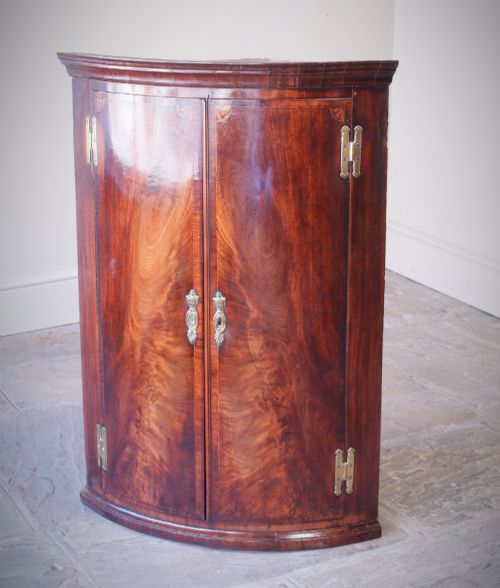
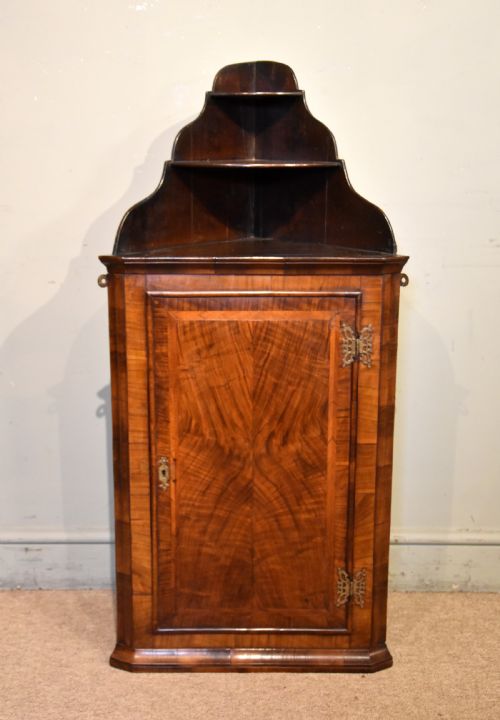
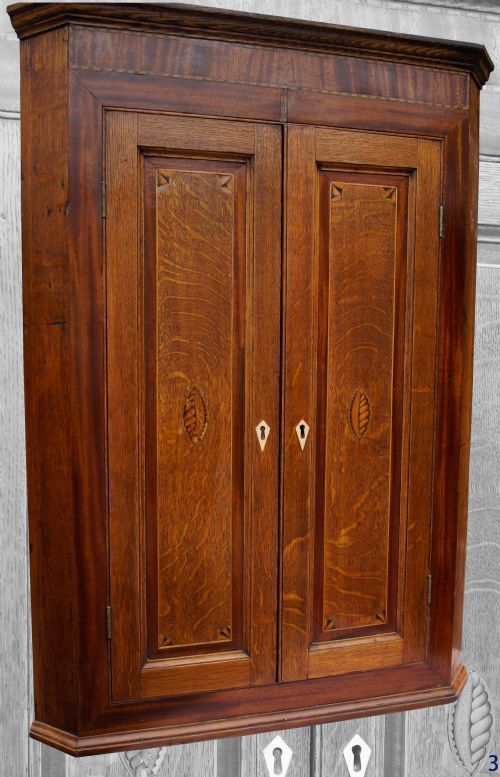
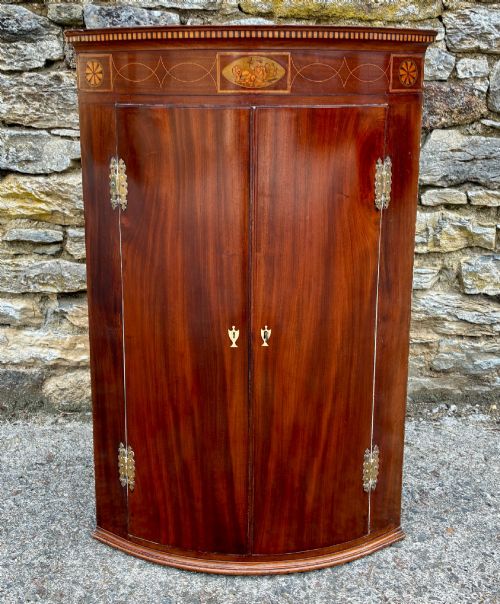
A wooden hanging corner unit solves the problem of difficult room junctions by utilising ninety-degree angles to save floor space while providing enclosed storage or open display. The selection here centres primarily on traditional corner cupboards, cabinets and corner shelves designed to mount directly to walls.
The versions you are most likely to encounter span several distinct historical periods, dominated heavily by Georgian oak and mahogany examples alongside later Victorian and Arts and Crafts interpretations. These pieces take various forms, including bow front designs, single door configurations and architectural treatments featuring broken arch pediments.
Regional variations also appear across the inventory, ranging from vernacular Welsh country pieces to refined London workshop items and Cotswold School work. Whether built with straightforward utility in mind or decorated with sophisticated veneers and stringing, each piece serves the fundamental purpose of framing an unused room corner.
Construction and materials
Makers built these wall-mounted units using sturdy primary timbers like oak, mahogany and walnut, chosen for their structural strength and capacity to hold heavy wall fixings. Secondary woods often reinforced the internal carcases, whilst decorative surfaces relied on book-matched veneers and contrasting boxwood inlay.
Joinery methods focused on stability and weight distribution, utilising solid corner posts, dovetailed joints and secured backboards to prevent the unit from sagging under its own load over decades of use. Surface finishing involved traditional polishing, painting or waxing to protect the timber and highlight natural grain patterns.
Wooden Hanging Corner Unit Retail Price Guide 2026
Typical asking prices for wooden hanging corner unit among the pieces listed under this phrase on Sellingantiques today, from the lower quarter to the upper quarter. They describe what is for sale here now, not the wider market.
Judging quality in corner units
The standard of a wooden hanging corner unit rests on the choice of timber figure, the crispness of any carved detailing, and the integrity of the original door hinges and brass escutcheons. Superior examples display thoughtful grain matching across curved bow fronts and precise inlay work rather than rushed assembly.
The Wooden Hanging Corner Unit Glossary
- Bow front
- A convex curved cabinet door or front elevation that projects outward into the room. This shape required skilled joinery to bend or shape solid timber and veneers accurately.
- Broken arch pediment
- An architectural decorative feature above the cornice where the upper triangular or curved pediment is left open in the centre. It frequently accommodates a decorative finial or urn.
- Stringing
- Thin inlaid lines of contrasting wood used to decorate furniture surfaces. Boxwood inlay often formed these delicate geometric borders on mahogany and walnut carcases.
- Escutcheon
- A protective metal plate surrounding a keyhole. On these pieces, brass hardware often provides both functional security and a decorative accent against dark woods.
Wooden Hanging Corner Unit: Frequently Asked Questions
How do I hang a heavy wooden corner cabinet safely?
Wall-mounted corner units require secure fixing directly into solid masonry or substantial wall studs using appropriate heavy-duty screws and brackets. Because these cupboards carry considerable weight from solid timber and stored items, relying solely on plasterboard fixings will cause failure.
Professional installation ensures the cabinet weight distributes evenly across the internal corner battens and backboards, protecting both the antique structure and your wall.
What room works best for a hanging corner unit?
Dining rooms, kitchens, and hallways suit these cabinets exceptionally well because they utilise dead corner space without encroaching on walking areas. Placing a cupboard at eye level allows easy access to glassware, crockery, or daily essentials.
Smaller bedrooms and studies also benefit from open corner shelves or single-door cupboards, adding character and storage where floor space is limited.
How do I tell an 18th-century piece from a Victorian revival?
Examining the secondary woods, internal construction marks, and tool techniques reveals the true age of a cabinet. Eighteenth-century pieces typically show hand-sawn timber boards, wrought iron or early brass hardware, and pegged joinery.
Victorian revival pieces, such as Chippendale Revival items, often display machine-cut elements, standardised screws, and heavier internal framing that reflects later industrial manufacturing methods.
Do bow front corner cupboards hold more than flat ones?
Bow front cabinets project outward into the room, creating extra depth in the centre of the shelves while tapering tightly back into the wall corners. This curved design slightly increases usable internal volume compared to flat-fronted alternatives of the same footprint.
The trade-off is that the curved interior shape may limit where you can place square or bulky objects inside.