

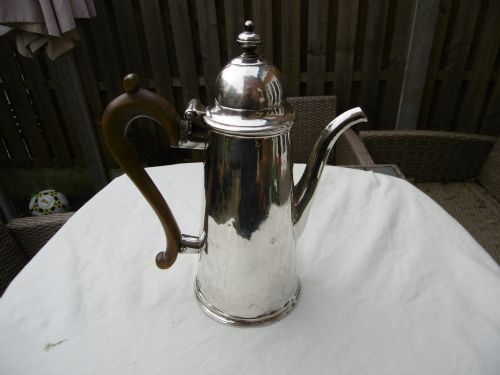
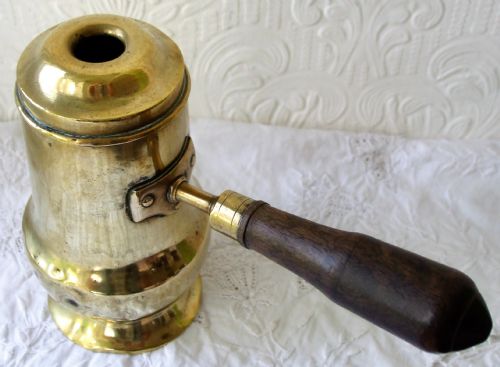
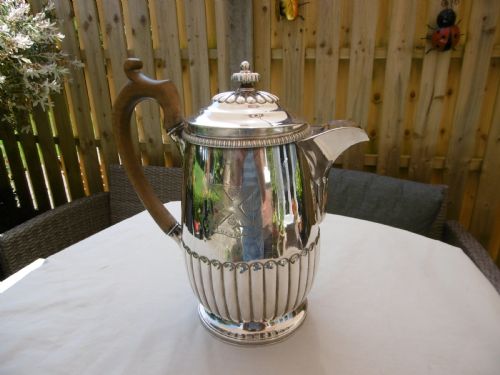


Wooden Handle Coffee Jug
A wooden handle coffee jug brings warmth to metal tableware, combining silver, copper, or brass with turned timber grips.
Wooden Handle Coffee Jug
A wooden handle coffee jug combines metal bodies with insulating timber grips for pouring hot brews safely. These vessels span Georgian, Regency, and Victorian periods, often taking the form of tall coffee pots or hot water jugs.
The pieces listed on this page include sterling silver, Old Sheffield plate, brass, and silver plated examples. Neoclassical and Victorian Rococo Revival styles appear alongside simpler Georgian shapes.
Materials and construction methods
Makers shaped silver, copper, brass, and fused Old Sheffield plate into stately vessel bodies by hand or with early rolling techniques. Hardwood forms the insulated handles, often pinned or socketed into metal sockets to protect hands from heat.
Silver plating on copper and solid sterling silver define the metalwork across these periods. Turned wood provides a contrasting tactile grip that balances the polished metal finish.
Wooden Handle Coffee Jug Retail Price Guide 2026
Typical asking prices for wooden handle coffee jug among the pieces listed under this phrase on Sellingantiques today, from the lower quarter to the upper quarter. They describe what is for sale here now, not the wider market.
Listings span multiple centuries from the 1750s through the Victorian era, utilising silver, brass, copper, and hardwood.
Factors influencing execution and finish
The refinement of the metal chasing and the turning of the hardwood handle determine the distinction between standard and exceptional pieces. Crisp crest engraving and early maker marks elevate the standing of a vessel.
Proportion and weight indicate the original ambition of the piece, with heavier gauge metals and balanced wooden insulators representing superior workshop standards.
Matthew Boulton·John Hoyland
The Wooden Handle Coffee Jug Glossary
- Old Sheffield plate
- A fused composite material made by melting a sheet of silver onto a thicker copper base before rolling. This technique was widely utilised before electroplating.
- Sterling silver
- An alloy containing a high proportion of pure silver combined with other metals for durability. British pieces bear hallmarks indicating the assay office and date.
- Neoclassical
- A decorative style inspired by classical antiquity, marked by urn-like vessel shapes and restrained ornamentation. It dominates many eighteenth-century designs.
- Crest
- An engraved family heraldic device added to tableware by the original owner. These armorial bearings help trace the provenance of individual pots.
Wooden Handle Coffee Jug: Frequently Asked Questions
What metal is a wooden handle coffee jug made from?
These vessels appear in sterling silver, silver plate, Old Sheffield plate, brass, and copper. The combination depends on the period and the workshop that produced the item.
Silver and fused plate dominate the formal dining examples, while brass and copper serve in domestic or chocolate-making contexts.
Why do these coffee pots have wooden handles?
Timber acts as a natural thermal insulator, preventing the heat of boiling liquids from transferring to the hand during pouring. Ebony, hardwood, and other dense timbers were turned specifically for this practical purpose.
This functional detail also introduces a pleasing textural contrast against polished silver or brass bodies.
How do I date a Georgian coffee jug?
Dating relies on stylistic markers such as Neoclassical urn forms, maker stamps, and engraved armorial crests. Georgian and George III pieces often display crisp hand-chased details.
Assay office marks on silver examples provide precise confirmation of the year of manufacture and the city of testing.
Are these pots still suitable for serving coffee?
While structurally sound, antique silver and plated vessels are typically treated as display or collection pieces today. Historic soldered joints and fragile wooden insulators require gentle care rather than daily kitchen use.
Hand washing without harsh detergents preserves the original surface finish and any historic crest engravings.