






Wooden Glass Door Bookcase
A wooden glass door bookcase brings together practical shelving and clear display, protecting volumes while keeping titles visible.
Wooden Glass Door Bookcase
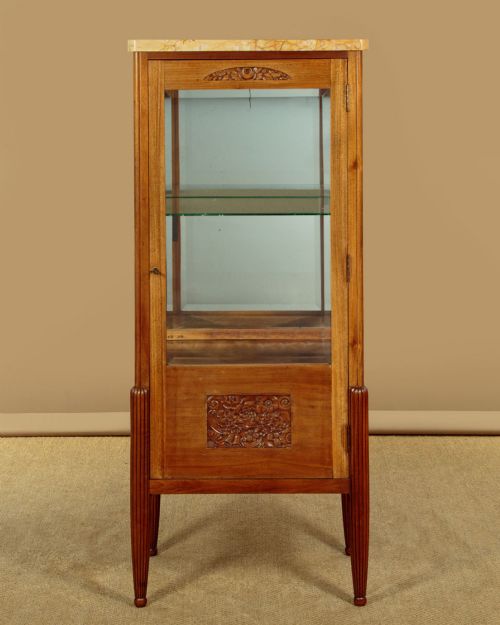
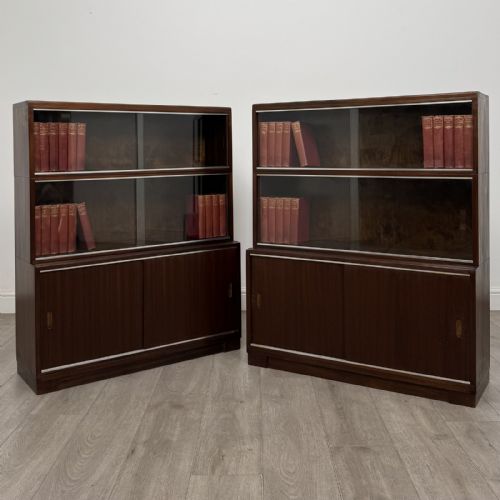
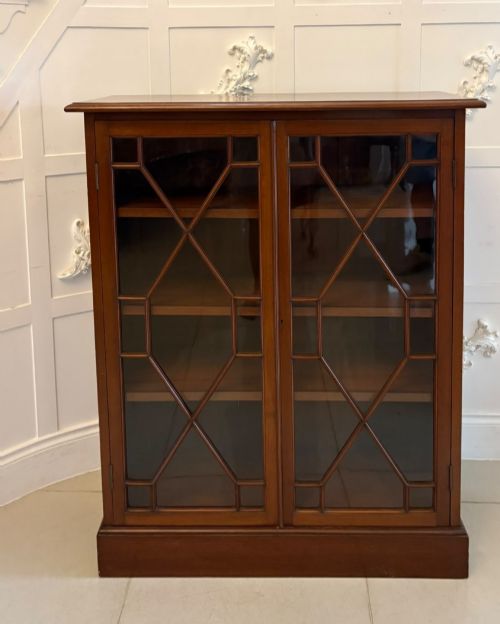
A wooden glass door bookcase serves to organise volumes and display collections behind protective panels of glass, uniting the function of a cabinet with traditional shelving. The pieces gathered under this search phrase span the Victorian era, the Edwardian period, and the nineteen-thirties, drawing on styles ranging from Sheraton Revival to Art Deco.
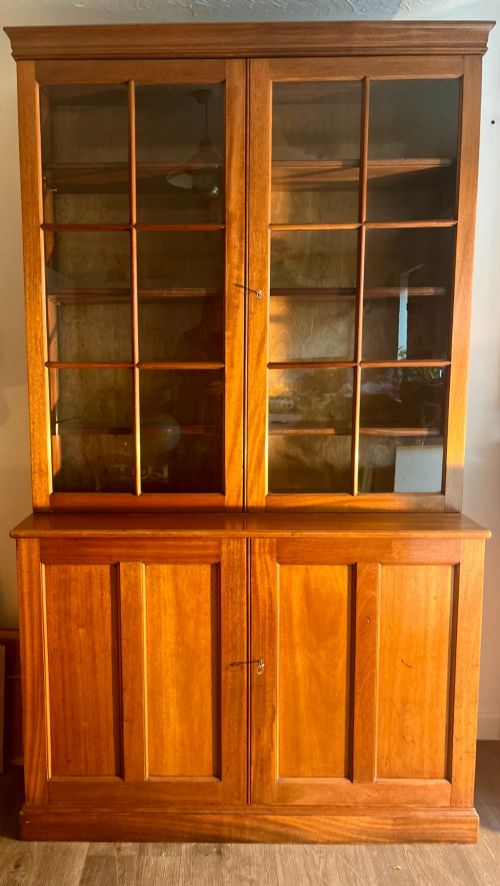
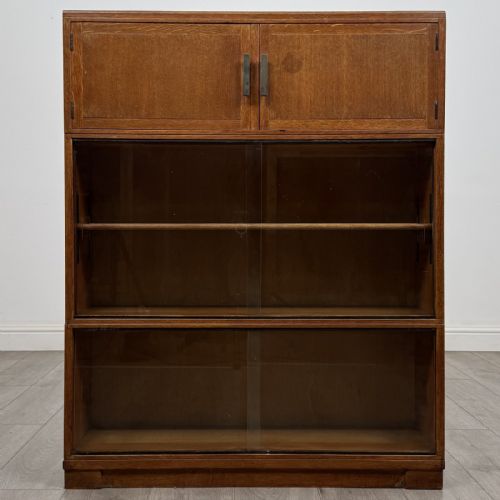
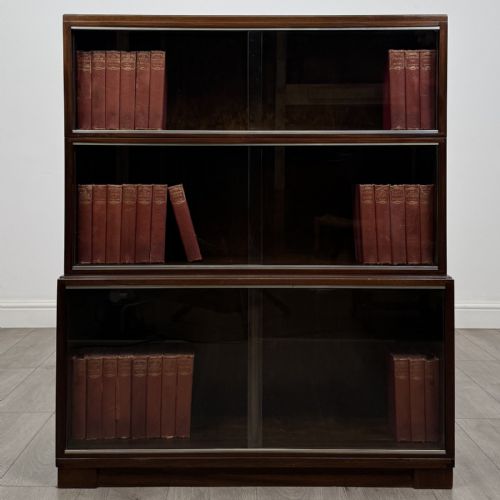
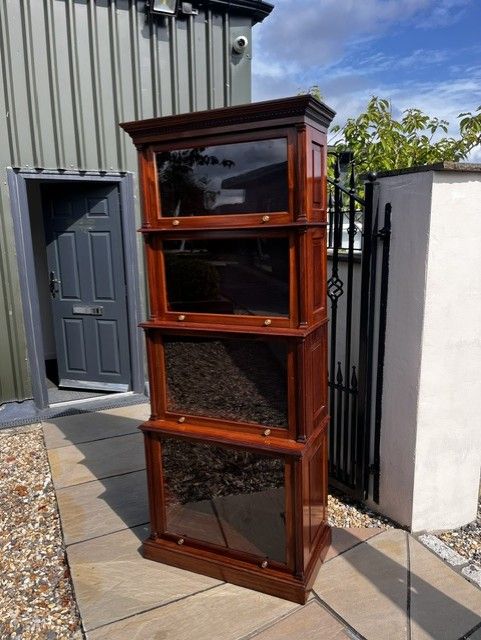
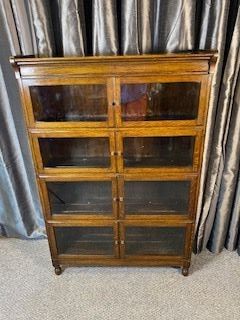
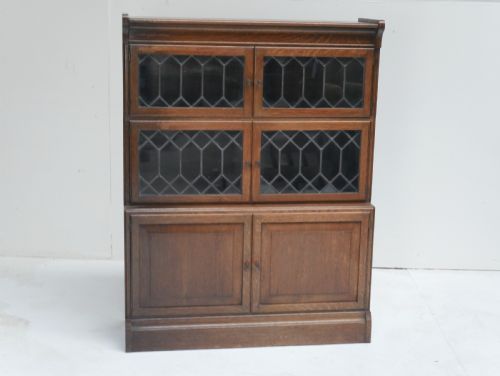
Buyers most frequently encounter mahogany and oak constructions from the late nineteenth and early twentieth centuries, alongside walnut and satinwood examples. Forms vary from towering library bookcases with multiple doors to compact freestanding cabinets and modular stacking sections.
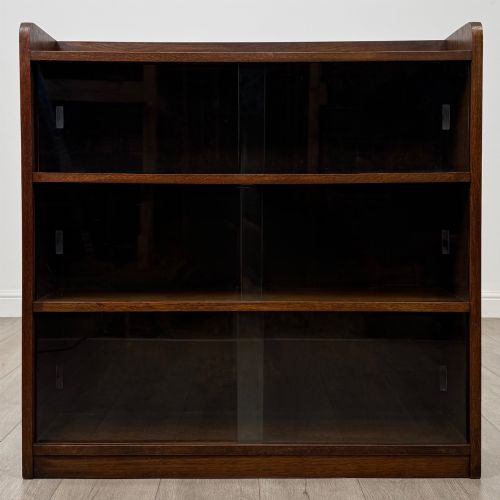
Origins include English workshops and Scottish cabinetmakers, reflecting both formal country house commissions and smaller domestic interiors. The glass doors range from simple sliding panes to glazed panels framed in timber, often accompanied by brass fittings.
Materials and construction methods
Cabinetmakers utilised solid timbers and selected veneers, primarily mahogany, oak, and walnut, bonded to stable secondary woods to construct the main carcasses. Surfaces frequently received French polish or wax finishes to reveal the natural grain and colour of the timber.
Glazing techniques involved securing glass panels within timber frames using wooden beads or putty, while brass hinges, locks, and sliding tracks facilitated opening mechanisms. Marquetry inlay, satinwood banding, and carved mouldings added decorative detail to specific pieces without compromising structural integrity.
Wooden Glass Door Bookcase Retail Price Guide 2026
Typical asking prices for wooden glass door bookcase among the pieces listed under this phrase on Sellingantiques today, from the lower quarter to the upper quarter. They describe what is for sale here now, not the wider market.
The documented periods span the Victorian and Edwardian eras, through the nineteen-twenties, nineteen-thirties, and mid-century.
Distinctions in construction and finish
The standard of a piece rests upon the selection of timber, the precision of the joinery, and the integrity of the original hardware. Heavier carcases constructed from solid mahogany or quarter-sawn oak with dovetailed joints demonstrate superior cabinetmaking compared to lighter or later substitutes.
Attention to detail in the glazingbars, the subtlety of any marquetry or satinwood inlay, and the retention of original brass fittings separate standard domestic items from finer commissions by known makers or regional workshops.
Minty·Warings·John Alexander
The Wooden Glass Door Bookcase Glossary
- Glazed
- Fitted with glass panels to enclose the shelving space and protect contents from dust.
- Stacking bookcase
- A modular piece comprising separate interchangeable sectional units placed one above another.
- Vitrine
- A glass-fronted display cabinet intended primarily for ornaments rather than books.
- Marquetry
- Decorative patterns formed by small pieces of coloured wood veneer fitted into the carcase.
- Satinwood
- A pale, hard timber utilised for contrasting inlays and banding on darker woods.
Wooden Glass Door Bookcase: Frequently Asked Questions
How do I date a wooden glass door bookcase?
Dating relies on observing the timber species, construction joints, and stylistic details such as glazing bar thickness or architectural cornices. Pieces from the Victorian and Edwardian periods often employ hand-cut dovetails and distinct hardware.
Later examples from the nineteen-thirties introduce lighter tones, simpler lines, and occasional sliding glass doors. Comparing these physical characteristics with known period styles clarifies the likely decade of manufacture.
Are stacking bookcases stable when fully loaded?
Stacking bookcases utilise interlocking modular sections that rest securely on a base plinth and beneath a top cornice. The weight of the timber and the books helps maintain vertical stability.
Individual sections lift off independently, making them practical for moving, but proper alignment on level flooring remains essential.
How should I care for polished mahogany and walnut?
Polished timber surfaces benefit from regular dusting with a soft, dry cloth to prevent abrasive particle build-up. Periodic application of pure beeswax helps nourish the wood and maintain the polish without creating a greasy film.
Avoiding direct sunlight and placing pieces away from heat sources prevents the timber from drying, cracking, or warping over time.