

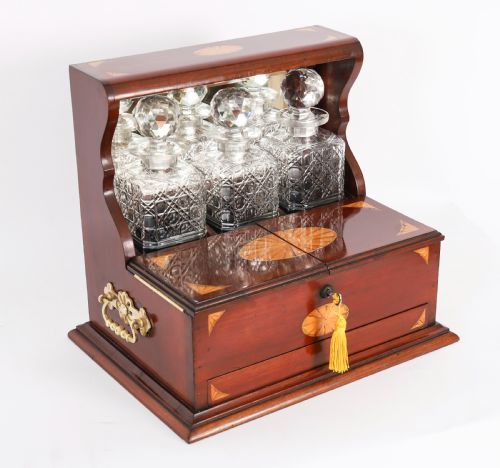


Wooden Gaming Chest
A wooden gaming chest brings together social pastimes and drinking gear, offering a fitted case for cards, dice, or compendiums alongside decanters.
Wooden Gaming Chest
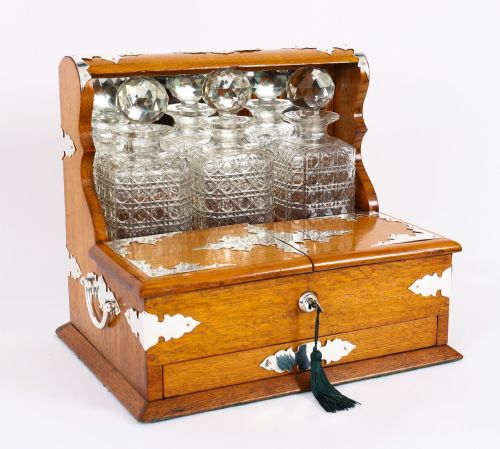
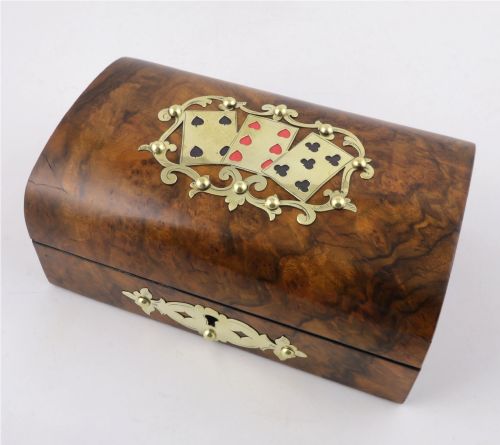
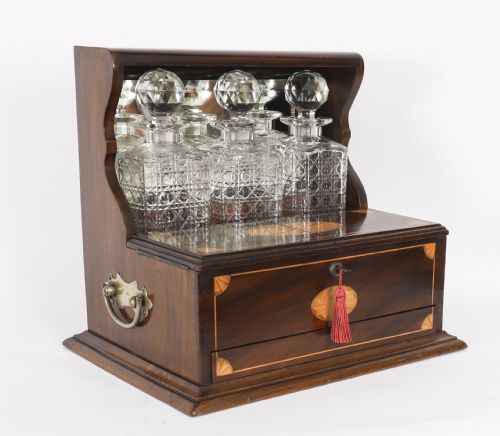
A wooden gaming chest serves as a combined container for parlour pastimes and hospitality, frequently uniting a tantalus or dry bar with compartments for cards, dice, or a mahjong set. These combination boxes range from Victorian oak and walnut caskets to Edwardian compendiums and Chinese export sets.
The versions most commonly met on this page date from the late nineteenth century through to the Edwardian period, constructed from woods such as oak, mahogany, and satinwood. Many integrate brass hardware, cut crystal decanters, or inlaid details to house both spirits and games.
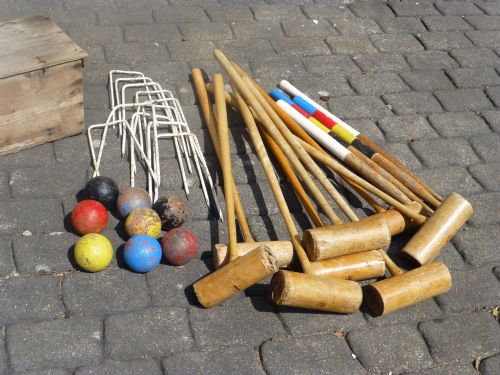
Beyond standard tabletop boxes, the category extends to large sporting containers like nineteenth-century croquet sets housed in original pine crates. Each form reflects the domestic leisure habits of its era, combining utility with display.
How they were made
Makers utilised solid timbers and veneers including oak, mahogany, walnut, and satinwood to build these heavy-duty carcases, frequently reinforcing the corners with brass mounts and carrying handles. Inlays of contrasting wood or satinwood banding appear on polished surfaces to frame the lids and drawer fronts.
Interiors were engineered with precision joinery to create specific slots, lifts, and removable trays for cut glass decanters, playing cards, poker dice, and counters. Fitted brass locks, hinges, and escutcheons secure the lids and drop-fronts of these multifaceted boxes.
Wooden Gaming Chest Retail Price Guide 2026
Typical asking prices for wooden gaming chest among the pieces listed under this phrase on Sellingantiques today, from the lower quarter to the upper quarter. They describe what is for sale here now, not the wider market.
Listings span the Victorian and Edwardian periods, utilising materials such as oak, mahogany, walnut, satinwood, brass, cut crystal, and iron.
What varies in quality
The grade of a wooden gaming chest depends upon the complexity of its internal architecture and the quality of its timber selection, such as figured walnut or blonde oak. Superior examples combine a fully intact drinking service with a complete set of original game pieces.
Finishing details separate standard production boxes from exceptional commissions, including hand-cut crystal decanters, substantial cast brass mounts, and precise inlay work. The condition of the original locking mechanisms and fitted partitions also dictates the standing of a piece.
The Wooden Gaming Chest Glossary
- Tantalus
- A locking beverage stand that secures decanters within a wooden frame to prevent unauthorized access while displaying the contents. The metal bar locks over the stoppers until a key is turned.
- Games Compendium
- A single box containing the equipment for multiple tabletop pastimes, such as chess, draughts, backgammon, and cards. These sets use fitted trays and folding boards to economise space.
- Cut Crystal
- Heavy glass decorated with deep geometric incisions that catch the light, commonly used for the decanters housed in these dry bars. It provides weight and stability inside a moving transport box.
- Escutcheon
- A decorative metal plate surrounding a keyhole that protects the surrounding wood from wear. On these chests, they are usually made of brass to match the corner braces.
Wooden Gaming Chest: Frequently Asked Questions
How do you date a wooden game box?
Dating relies upon timber choices, hardware styles, and construction techniques, with Victorian pieces often featuring heavy oak, walnut, or inlaid mahogany alongside robust brass work. Edwardian and later examples introduce lighter woods or different regional origins such as Chinese export mahjong sets from the 1920s.
Examining the locking mechanisms, interior linings, and the cut of the glass decanters helps place the box within its correct decade or period of manufacture.
Were these boxes used for travel?
Many of these pieces were built for country houses, parlours, or social gatherings rather than frequent transit, though their sturdy hardwood construction and carrying handles allowed for movement between rooms or estates. Fitted interiors kept glass bottles and counters stable during use.
Larger sporting sets, such as croquet boxes, were explicitly designed to transport equipment outdoors while protecting the wooden mallets and balls in storage.
What is a tantalus dry bar?
A tantalus dry bar combines a locking spirit decanter stand with storage for playing cards, dice, or gaming counters within the same cabinet structure. The locking mechanism secures the decanter stoppers so guests cannot pour drinks without the key.
These combination pieces became popular in the Victorian and Edwardian eras as versatile furniture for entertaining guests in the parlour or drawing room.