



Wooden Game Pieces
Wooden game pieces bring the weight of Victorian parlours and Edwardian drawing rooms straight to your tabletop, offering tactile history through turned boxwood, ebony, and bone.
Wooden Game Pieces
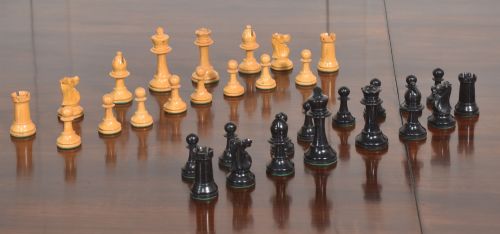
When you search for wooden game pieces, you encounter a tactile collection of nineteenth-century and early twentieth-century table gaming equipment, spanning full chess sets, draughts, dominoes, and individual counters. These items capture the domestic leisure of the Victorian and Edwardian eras, ranging from miniature travel sets to substantial library chess pieces.
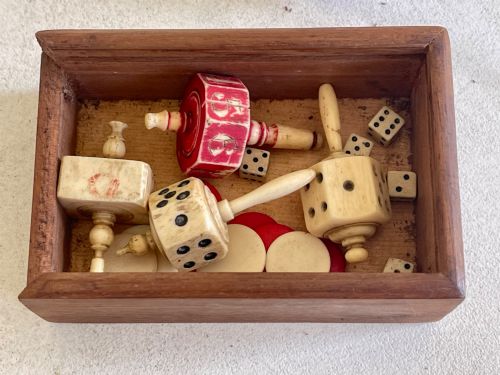
The most common formats on this page include Staunton pattern chess sets alongside St George and Calvert pattern variations, often accompanied by boxed draughts and games compendiums. You will also find bone prisoner of war teetotums and oversized backgammon counters dating across the nineteenth century.
Pieces originating from this period reflect the shift from hand-carved local pastimes to standardised workshop production. Makers such as Jaques, F.H. Ayres, Whitty, and the British Chess Company established definitive forms that collectors still seek today.
Materials and manufacture
The makers of these items relied heavily on contrasting timbers, pairing pale boxwood with dense ebony or ebonised wood to achieve the clear visual distinction required for strategy games. Bone also appears frequently, particularly in smaller items such as dominoes and prisoner of war pieces.
Turning on a lathe formed the foundation of production for chess sets, draughts, and counters, creating uniform shapes and balanced proportions. Finer sets incorporated weighted bases filled with lead or metal to improve stability during play, alongside felted undersides to protect the board.
Wooden Game Pieces Retail Price Guide 2026
Typical asking prices for wooden game pieces among the pieces listed under this phrase on Sellingantiques today, from the lower quarter to the upper quarter. They describe what is for sale here now, not the wider market.
Object types range from miniature travel chess sets to oversized backgammon counters and complete parlour games compendiums.
Distinctions in quality
Quality across these pieces rests on the precision of the turning and the crispness of carved details, such as the expression on a chess knight or the balance of a rook's crenellations. Superior sets exhibit meticulous hand-finishing and uniform matching within the timber, rather than hasty mass production.
The presence of original boxes, compendium cases, and maker stamps elevates an ensemble, as does the survival of a complete, matching set without replacement pieces. Heavier weighting and durable materials like genuine ebony further separate high-tier library sets from lighter, utilitarian alternatives.
Jaques·F. H. Ayres·Whitty·British Chess Company
The Wooden Game Pieces Glossary
- Staunton
- The standard design for chess pieces, established in the mid-nineteenth century and characterised by clear, architectural forms that remain the tournament norm today.
- Boxwood
- A dense, pale wood prized by turners for its ability to hold fine detail without splintering. It forms the lighter side of almost every nineteenth-century chess and draughts set.
- Ebonised
- Wood treated with a black finish to imitate true ebony, a common practice in nineteenth-century workshops to reduce production costs while maintaining high contrast.
- Teetotum
- A small spinning top used for gambling or children's games, often carved from bone by prisoners of war during the Napoleonic conflicts.
- Compendium
- A multi-game box containing equipment for several different pastimes, such as chess, backgammon, and draughts, housed in a fitted wooden case.
Wooden Game Pieces: Frequently Asked Questions
How do I spot a Jaques set?
Authentic Jaques sets often feature stamped signatures on the rook pieces or original fitted mahogany boxes bearing the firm's paper label. The carving of the knight, with its distinctively deep-set glass or carved eyes and flowing mane, offers a further key indicator.
Comparing the proportions against known catalogue examples helps confirm attribution, as Jaques maintained strict standards for their weighted boxwood and ebony Staunton pieces.
What is a Calvert pattern?
The Calvert pattern refers to a distinct style of nineteenth-century chess pieces originating from the workshop of John Calvert in Fleet Street. These pieces feature characteristic tall, slender proportions and ornate, pierced knights with an unmistakable folk art charm.
They stand apart from the later standardised Staunton design through their handcrafted individuality and distinctive barrel-shaped rooks.
How should I care for antique wood?
Keep antique wooden pieces away from direct sunlight and dramatic fluctuations in humidity to prevent the timber from splitting or warping. Gentle dusting with a dry, soft cloth is sufficient for routine maintenance.
Avoid applying modern polishes or oils, as these can build up on the surface and damage the historic finish or soften the carved details.
Why are some pieces weighted?
Weighting was introduced to improve the stability of chess pieces during rapid or competitive play, preventing them from tipping over easily. Manufacturers achieved this by loading lead weights into the hollowed bases.
The presence of lead weighting generally indicates a higher quality set intended for serious library or club use rather than casual travel.