
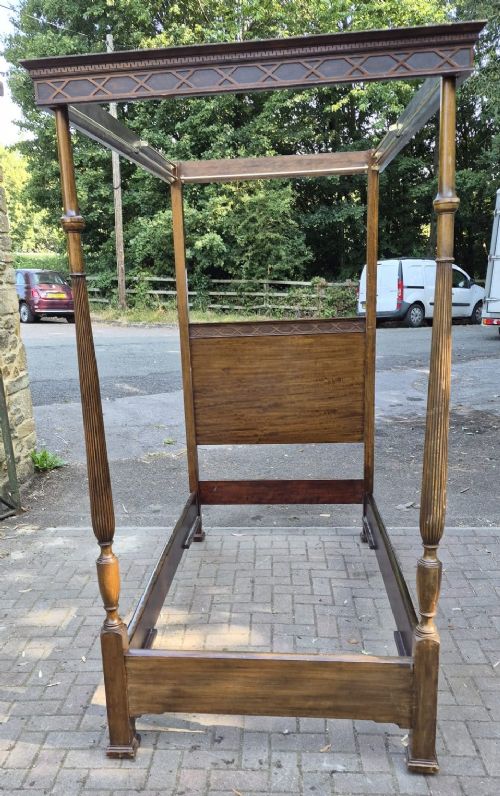
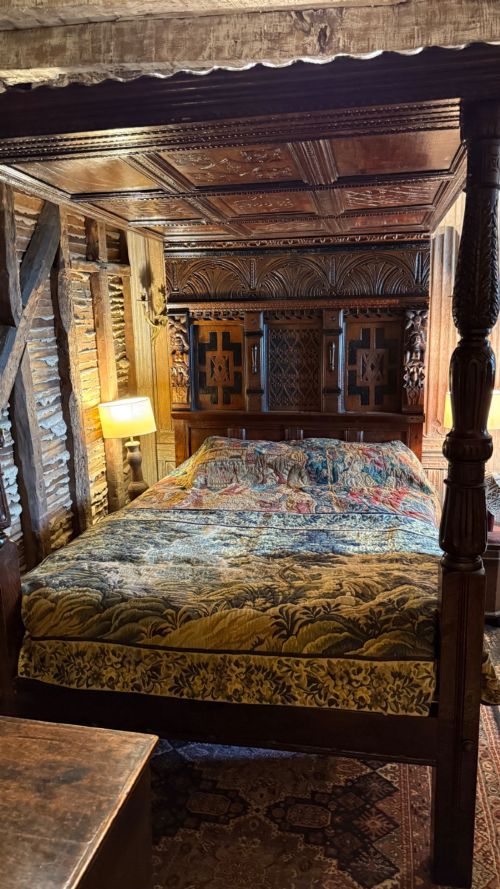


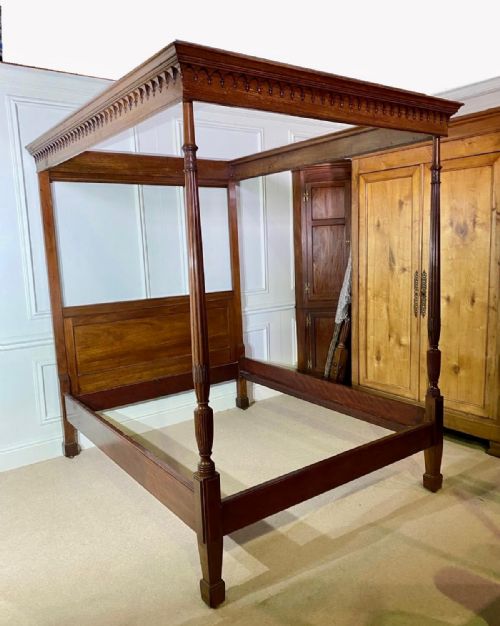


Wooden Full Tester Bed
A wooden full tester bed brings architectural presence and centuries of craftsmanship directly into the bedroom, offering an impressive canopy frame to sleep beneath.
Wooden Full Tester Bed
A wooden full tester bed stands as a substantial sleeping platform topped by an overhead wooden canopy, known as the tester, supported by prominent vertical posts. The examples collected here span several distinct eras, stretching from the seventeenth century through the Victorian period and into the Edwardian and Regency styles.
Most pieces encountered on this page are constructed from oak or mahogany, often reflecting historical movements such as Jacobean, Elizabethan, Victorian Gothic, or Arts and Crafts. These beds function as grand focal points in a room, combining structural timber framing with textile elements and occasionally fruitwood inlay.
How they were made
Cabinetmakers and joiners built these structures using solid timbers, predominantly employing oak for earlier seventeenth-century pieces and mahogany for later Regency and Victorian examples. Woodworking joints relied on traditional mortise and tenon construction, secured with wooden pegs to handle the heavy weight of the tester frame.
Surface ornamentation involved hand carving, turning on a lathe for the main posts, and occasionally incorporating fruitwood inlay or painted finishes. Textile elements formed the roof and hangings of the canopy, though surviving frames may present these fabrics in varying states.
Listings feature four primary wood materials: oak, mahogany, fruitwood, and pine.
What varies in quality
The distinction between ordinary and exceptional examples rests in the depth and execution of the hand-carved woodwork on the posts and headboards. Finer pieces demonstrate proportional harmony across the tester canopy and support columns, retaining their original timber rather than assembled replacement components.
The integrity of the joinery and the selection of high-grade timber, such as figured mahogany or well-grained seventeenth-century oak, elevate a piece. Subtle details like crisp turning and careful inlay work separate standard workshop production from superior cabinetmaking.
Howard & Sons
The Wooden Full Tester Bed Glossary
- Tester
- The flat wooden canopy or ceiling suspended above a four-poster bed. It rests atop the vertical posts to frame the sleeping space.
- Four Poster Bed
- A bed with four vertical columns, one in each corner, that support an upper tester structure. These frames often incorporate decorative headboards and footboards.
- Mortise and Tenon
- A traditional woodworking joint where a projecting tongue fits snugly into a corresponding cavity to lock timbers together securely.
- Inlay
- A decorative technique where contrasting materials, such as fruitwood, are embedded into the surface of the primary wood. This creates patterns and visual interest on panels and posts.
Wooden Full Tester Bed: Frequently Asked Questions
How do I assemble a wooden full tester bed?
Assembly requires multiple people to carefully slot the headboard, footboard, and side rails together before lifting the heavy wooden tester frame onto the top of the vertical posts.
Traditional joints often rely on metal bed bolts or wooden pegs, so keeping track of each specific component during setup ensures the canopy remains square and stable.
Can I fit modern mattresses on antique tester beds?
Many older beds were built to historic dimensions that differ from standard modern mattress sizes, meaning custom mattresses are frequently necessary for a proper fit.
Wooden laths or modern slat bases can be integrated within the side rails to support contemporary mattresses without altering the antique frame.
How do I clean antique timber frames?
Dusting the carved posts and tester canopy regularly with a dry, soft cloth prevents the accumulation of dirt in intricate crevices and hand-carved details.
Applying occasional microcrystalline wax helps nourish older oak and mahogany surfaces, preserving the natural finish without introducing harsh modern cleaning chemicals.
How do I tell seventeenth-century oak from later revivals?
Early seventeenth-century pieces display authentic hand-tool marks, pegged joinery, and the dense grain characteristic of slow-grown English timber from that era.
Revival pieces from the Victorian or Edwardian periods often feature machine-cut elements, standardised fixings, and cleaner timber surfaces that lack centuries of natural wear.