






Wooden Framed Textile
These wooden framed textile pieces bring historic needlework and tapestry into modern interiors with character.
Wooden Framed Textile
A wooden framed textile brings together historic fabrics and timber surrounds, ranging from domestic samplers to detailed needlework pictures. When searching for a wooden framed textile, buyers encounter wall art that captures centuries of needlecraft and textile art traditions.
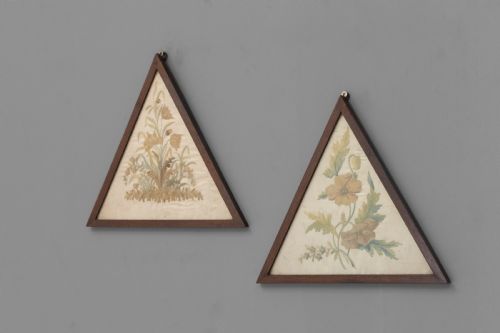
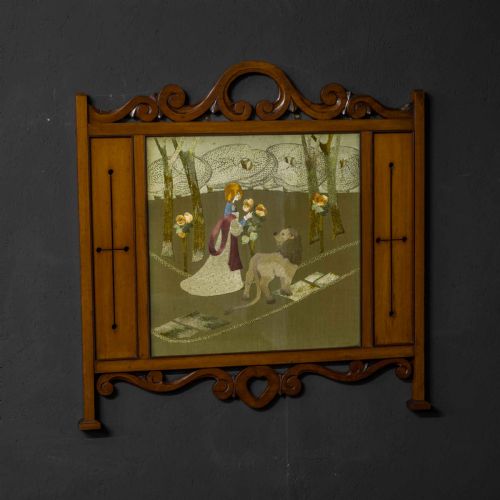
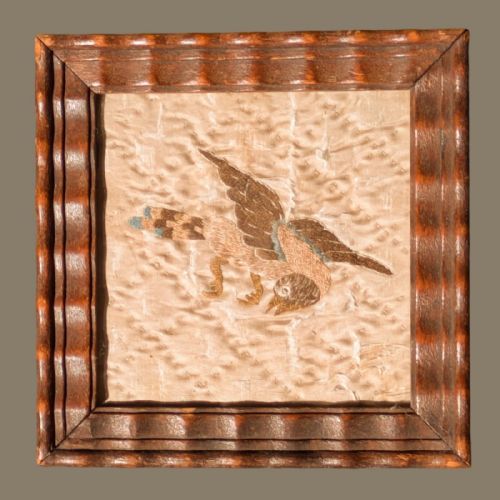
The pieces on this page span several eras, with Victorian and nineteenth-century examples appearing most frequently alongside Georgian and Edwardian works. Formats include framed embroidery, lace making accessories, wall art, and woolie embroideries preserved behind glass in wood frames.
Origins and styles vary widely across the selection, encompassing English country house aesthetics, French folk art, Gothic Revival, and Anglo-Indian designs. Buyers find both simple domestic pieces like samplers and complex decorative panels suited for wall display.
How they were made
Maker construction combines timber framing with textiles such as wool, silk, cotton, linen, and canvas. Artisans mounted these fabrics within wood surrounds, frequently incorporating glass to protect delicate surfaces.
Needlework techniques visible across the pieces include gros point, embroidery, and tapestry weaving. Makers employed diverse materials, from standard wool and silk to metallic silver and gold threads on specific panels.
Wooden Framed Textile Retail Price Guide 2026
Typical asking prices for wooden framed textile among the pieces listed under this phrase on Sellingantiques today, from the lower quarter to the upper quarter. They describe what is for sale here now, not the wider market.
Materials across the listings include wool, silk, cotton, linen, canvas, and mahogany.
What varies in quality
Quality rests upon the skill of the needlework and the preservation of the textile within its wooden frame. Finely executed stitches and well-maintained fabrics command greater attention from collectors.
The harmony between the textile art and the timber frame influences the overall character of the piece. Original mountings and stable materials maintain the historical integrity of the work.
The Wooden Framed Textile Glossary
- Sampler
- A piece of needlework produced as a demonstration or test of skill in various stitches. These frequently include alphabets, numbers, and motifs created by younger makers.
- Woolie
- A type of embroidery created by nineteenth-century sailors using 3ut-wool yarn. These works often depict naval ships and maritime scenes.
- Gros Point
- A type of needlepoint stitch worked on canvas, creating a durable and textured surface. It is commonly found in nineteenth-century pictorial panels.
- Overmantel
- A large decorative framework designed to be hung above a fireplace mantel. These wooden frames often enclose mirrors or artwork.
- Tapestry
- A form of textile art woven on a loom or worked by hand with threads. Historic examples depict pictorial scenes or decorative patterns.
Wooden Framed Textile: Frequently Asked Questions
How do I hang a textile securely?
Most wooden framed pieces are fitted with standard hanging cord or rings on the reverse. Ensure the wall fixings match the weight of the timber frame and glass.
Keep framed textiles away from direct sunlight to prevent the silk, wool, and cotton threads from fading over time.
How do I clean the glass?
Use a standard glass cleaner applied to a cloth rather than directly onto the frame. This prevents moisture from seeping into the wooden joints or the textile behind the glass.
Take care not to press too firmly on the glass surface, as historic textiles mounted underneath can be sensitive to pressure.
Are these pieces dated accurately?
Dates rely on stylistic evidence, inscribed years on samplers, and the construction methods of the timber frames. Nineteenth-century and Georgian pieces often carry specific markers from their makers.
Where an exact year is absent, dealers attribute pieces to broad periods such as the Victorian or Edwardian eras based on materials and techniques.
Can I place them in any room?
Framed textiles suit living rooms, hallways, and studies, adding warmth through traditional fabrics and wood tones. Avoid rooms with high humidity like bathrooms, as moisture damages historic fibres.
Stable indoor temperatures help preserve both the wooden frame and the delicate textiles housed within.