




Wooden Framed Tapestry
These wooden framed tapestry pieces bring warmth and texture into a room, combining tactile needlework with solid timber frames from the nineteenth century and beyond.
Wooden Framed Tapestry
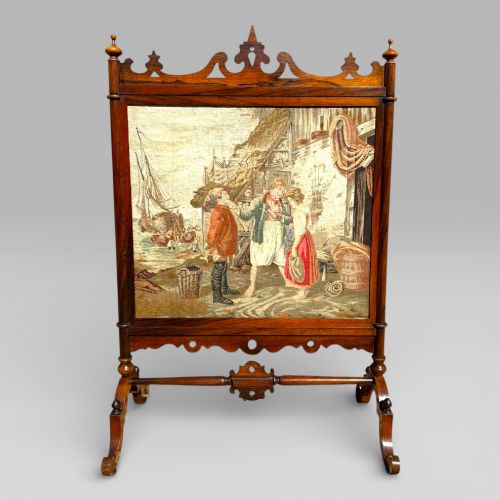
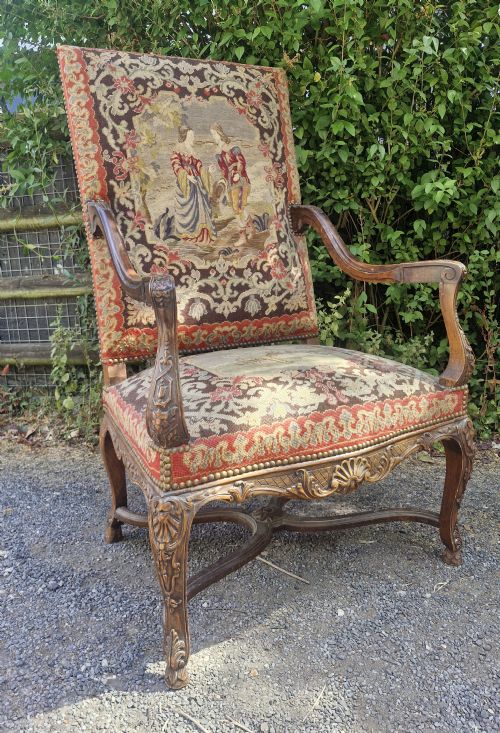
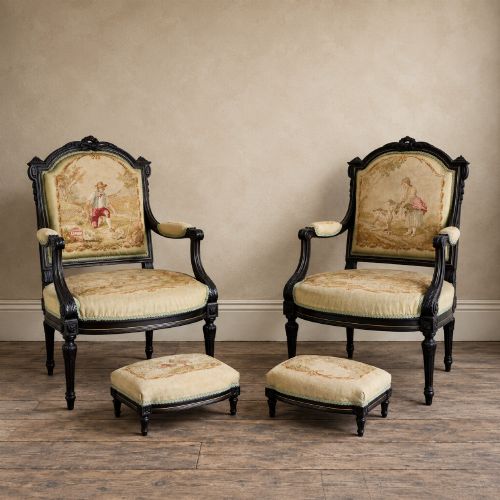
A wooden framed tapestry combines textile art with structural timber support, appearing across various forms such as fire screens, wall art, footstools, and armchairs. Buyers seeking wooden framed tapestry items often encounter Victorian needlework pieces, walnut footstools, and rosewood fire screens.
The selection ranges from functional seating upholstered in needlepoint to dedicated wall hangings and adjustable stretcher frames. Nineteenth-century examples dominate the offerings, spanning periods from Regency and Victorian through to Edwardian and early twentieth-century revivals.
Makers and artisans utilised diverse timber species alongside wool, silk, and gros point to construct these decorative and practical household furnishings. Each piece reflects the dominant stylistic revivals of its era, including Louis XVI, Renaissance, and Art Nouveau influences.
Materials and construction
Wood serves as the primary structural material, with makers selecting timber such as mahogany, walnut, rosewood, beech, and birds-eye maple for frames, stretchers, and furniture supports. These timbers undergo carving, ebonising, or gilding depending on the prevailing style of the period.
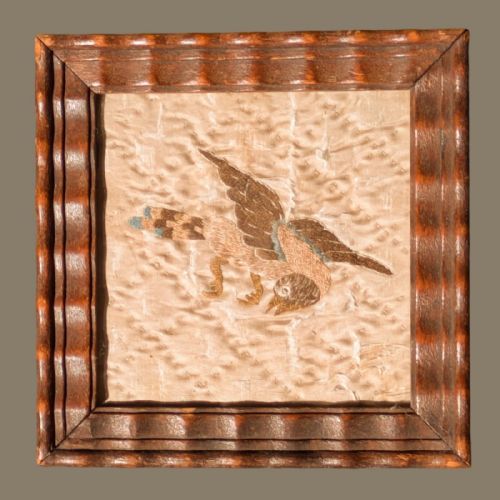
Textiles form the visual centrepiece, incorporating wool, silk, and tapestry fabric worked in needlepoint, gros point, or petit point techniques. Artisans mount these detailed embroideries and samplers securely within rigid wooden surrounds or incorporate them directly into upholstered seating.
Wooden Framed Tapestry Retail Price Guide 2026
Typical asking prices for wooden framed tapestry among the pieces listed under this phrase on Sellingantiques today, from the lower quarter to the upper quarter. They describe what is for sale here now, not the wider market.
A Victorian window stool with carved hunting dog heads brings an unexpected canine charm to nineteenth-century seating.
Evaluating quality
The grade of timber selection and the complexity of frame carving distinguish finer examples from standard production pieces. Dense hardwoods like rosewood and walnut, paired with deeply carved ornamentation, signal superior craftsmanship.
Needlework density and thread preservation dictate the visual standard of the textile component. Finer gros point and petit point stitching with intact silk or wool threads demonstrates greater execution skill than coarser work.
White Allom and Co
The Wooden Framed Tapestry Glossary
- Gros point
- A coarse needlepoint stitch traditionally worked on canvas. It creates a durable, textured surface frequently seen on nineteenth-century chair upholstery.
- Petit point
- A fine needlepoint stitch worked over a single mesh thread. This technique allows for greater pictorial detail and subtle shading in textile art.
- Cheval fire screen
- A freestanding screen mounted on a pivoting frame between two upright supports. These pieces shield occupants from fireplace heat while displaying decorative needlework.
- Needlework sampler
- A piece of fabric embroidered to demonstrate various stitches and patterns. They frequently include alphabets, dates, and maker names.
- Kilim
- A flatwoven textile originating from the Middle East and Eastern Europe. These sturdy fabrics occasionally appear as upholstery on nineteenth-century footstools.
Wooden Framed Tapestry: Frequently Asked Questions
What is a wooden framed tapestry?
A wooden framed tapestry refers to textile art, needlework, or upholstery mounted within a timber structure. These items include fire screens, wall hangings, framed pictures, and upholstered seating.
Most surviving examples date from the nineteenth century, utilising woods like walnut and mahogany alongside wool and silk embroidery.
How were fire screens used?
Fire screens served a practical purpose in period homes by shielding occupants' faces from the intense heat of open coal or wood fires. They were positioned strategically between the hearth and the seating area.
As heating methods evolved, these screens transitioned into purely decorative items that showcased intricate needlework and fine timber frames.
How do I identify the period?
Dating relies on examining the timber species, frame profile, and textile technique used in the piece. Victorian examples often feature carved walnut or rosewood with dense floral needlepoint.
Earlier pieces from the Regency or Georgian eras display different proportions and stylistic revivals, while later Edwardian items introduce distinct manufacturing marks.
How do I care for antique textiles?
Antique textiles and needlework require protection from direct sunlight to prevent wool and silk threads from fading and becoming brittle. Keeping them in stable humidity conditions safeguards the fabric fibres.
Gentle dusting with a soft brush helps maintain the surface without disturbing the delicate stitching or the surrounding wooden frame.