

Wooden Framed Armchair
A wooden framed armchair brings tactile warmth and structural honesty to a room, ranging from robust country oak seats to carved walnut salon chairs.
Wooden Framed Armchair
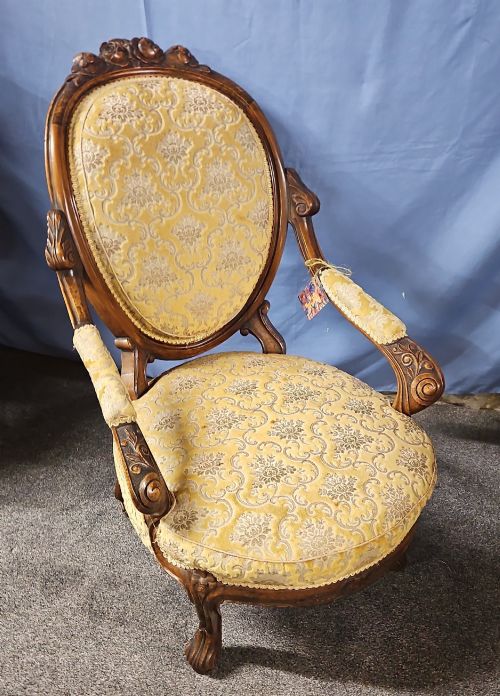
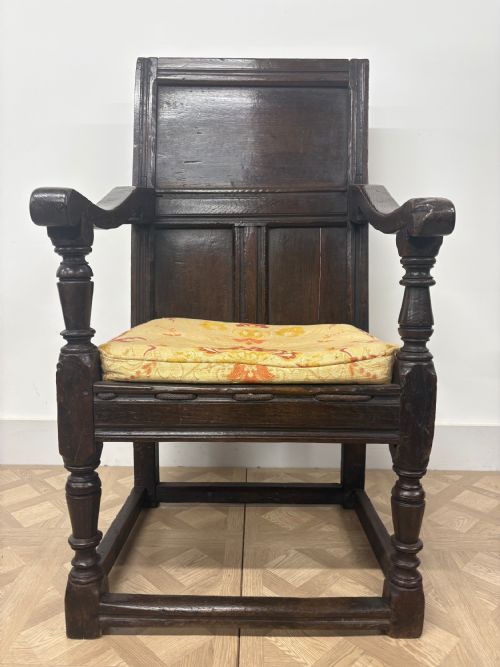
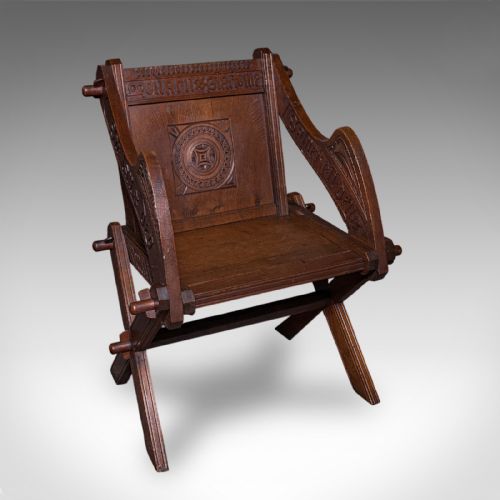
A wooden framed armchair encompasses seating built across the seventeenth, eighteenth, nineteenth, and early twentieth centuries, drawing on styles from simple country ladderbacks to ornate French revival models. The pieces appearing most frequently range from Victorian walnut open armchairs and Edwardian examples to various iterations of oak Glastonbury chairs.
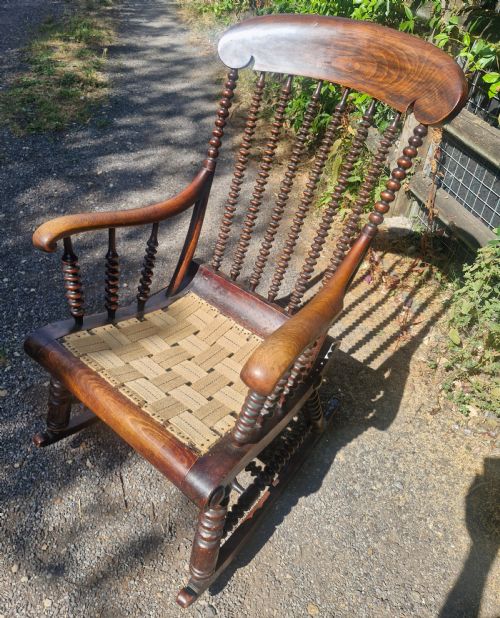
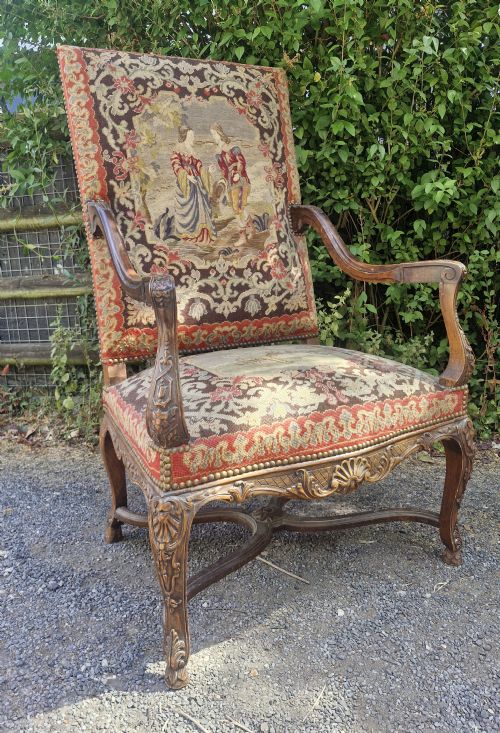
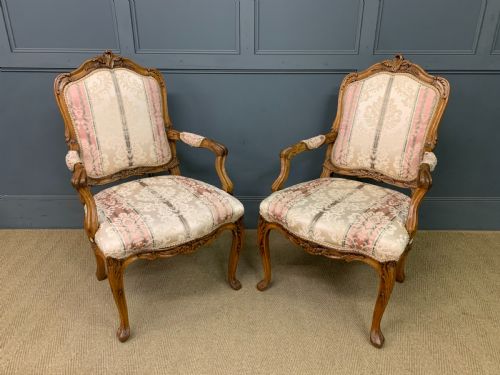
Makers utilised diverse timbers for these frames, including mahogany, oak, walnut, ash, elm, teak, and pitch pine, often pairing exposed woodwork with velvet, fabric, rush, or needlework upholstery. Forms vary widely from low nursing chairs and rocking chairs to high-backed desk chairs and deep-seated loungers.
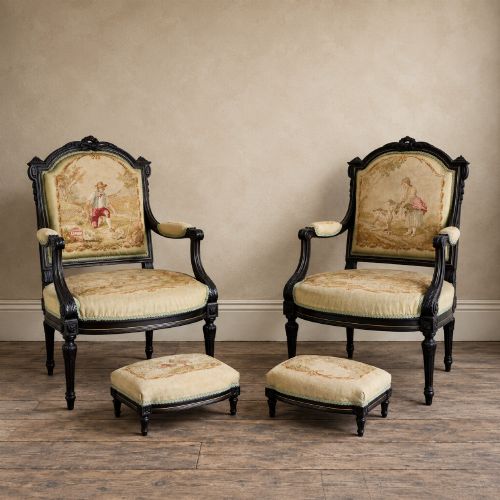
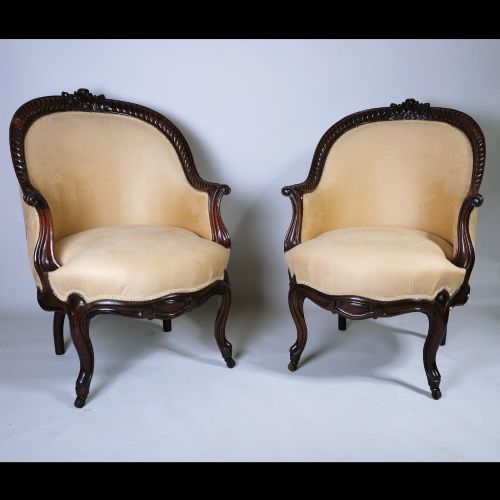
Geographic influences stretch across English country workshops, French chateaux, and Anglo-Indian production centres, supplying formats such as X-frame chairs, wingbacks, and carver chairs. Buyers encounter everything from utilitarian ash and elm seating to exhibition quality carved walnut suites.
How they were made
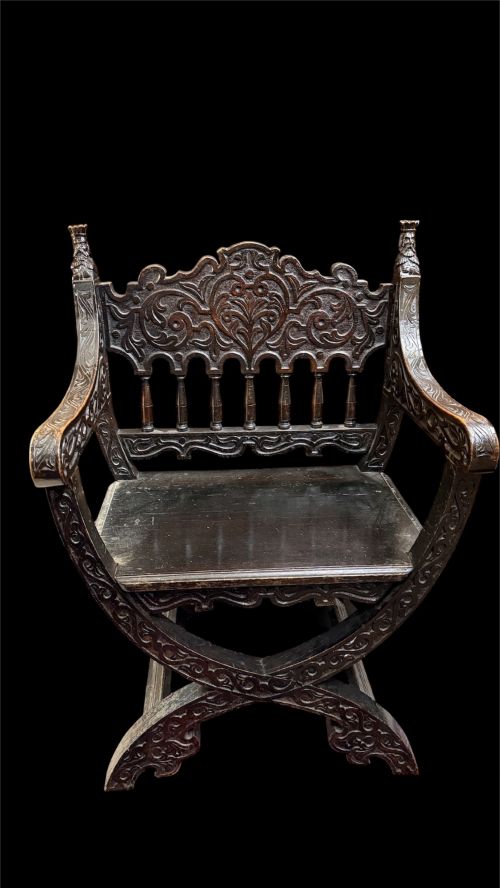
Makers constructed these frames from solid timbers like oak, mahogany, walnut, and exotic woods such as goncalo alves, shaping structural supports through traditional joinery and turning. Frame decoration frequently involved hand carving, mother of pearl inlay, or ebonising to achieve distinct Gothic, Renaissance, or Louis-style aesthetics.
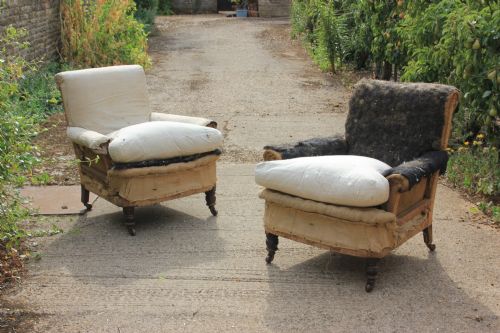
Upholstered versions relied on textile coverings including velvet, rush seating, and needlework panels stretched over padded foundations. Timber surfaces were typically finished to highlight the natural grain and colour of woods like pitch pine, elm, and teak.
Wooden Framed Armchair Retail Price Guide 2026
Typical asking prices for wooden framed armchair among the pieces listed under this phrase on Sellingantiques today, from the lower quarter to the upper quarter. They describe what is for sale here now, not the wider market.
Several armchairs incorporate folding X-frames, proving that nineteenth-century sitters appreciated collapsible seating just as much as modern picnic attendees.
What varies in quality
Quality in a wooden framed armchair rests upon the crispness of hand carving, the selection of dense timbers like walnut or mahogany, and the integrity of the underlying joinery. Superior examples demonstrate thoughtful proportion and refined detailing, such as intricate mother of pearl inlay or precise turning.
Regional and country pieces show variation through the honesty of vernacular construction, where local woods like ash and elm are handled with straightforward utility. Finer salon and revival pieces exhibit meticulous finishing, superior upholstery execution, and cohesive stylistic adherence.
White, Allom and Co
The Wooden Framed Armchair Glossary
- Glastonbury chair
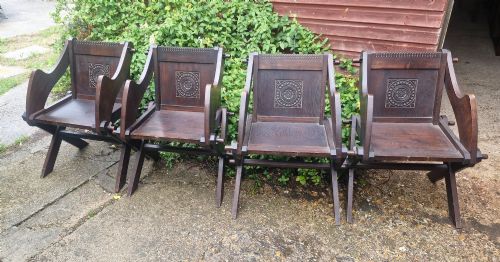
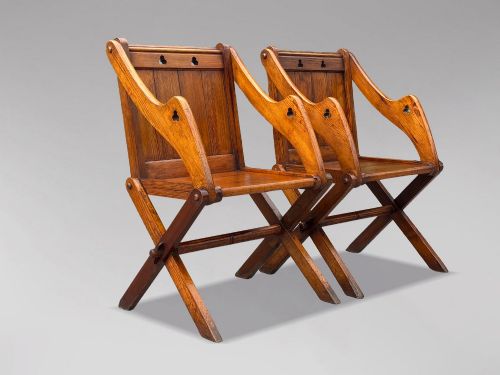
- A folding X-form wooden armchair with a sloping back and panel seat, often associated with Gothic revival designs in oak or pitch pine.
- Savonarola chair
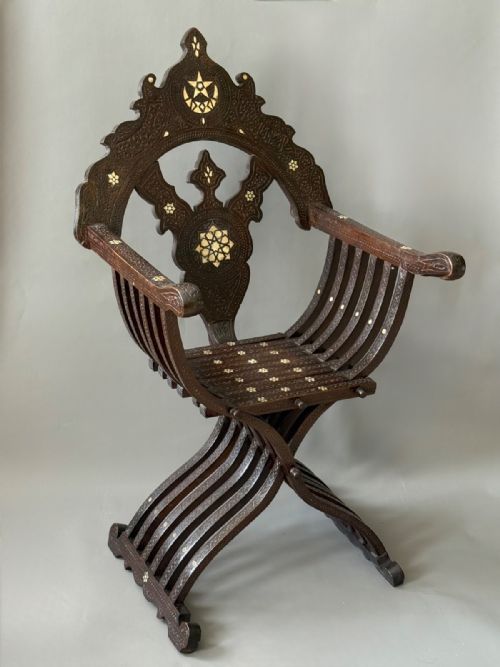
- An X-frame armchair constructed from multiple curved wooden slats intersecting to form a barrel-shaped seat, frequently featuring elaborate carving or inlay.
- Gothic Revival
- A nineteenth-century style drawing inspiration from medieval architecture and furniture, characterised by pointed arches, tracery, and solid oak construction.
- Fauteuil
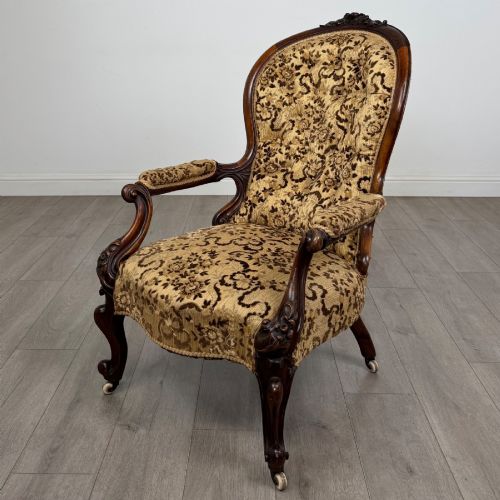
- An open-framed upholstered armchair originating in France, typically featuring exposed carved wood armrests and legs.
- Carver chair
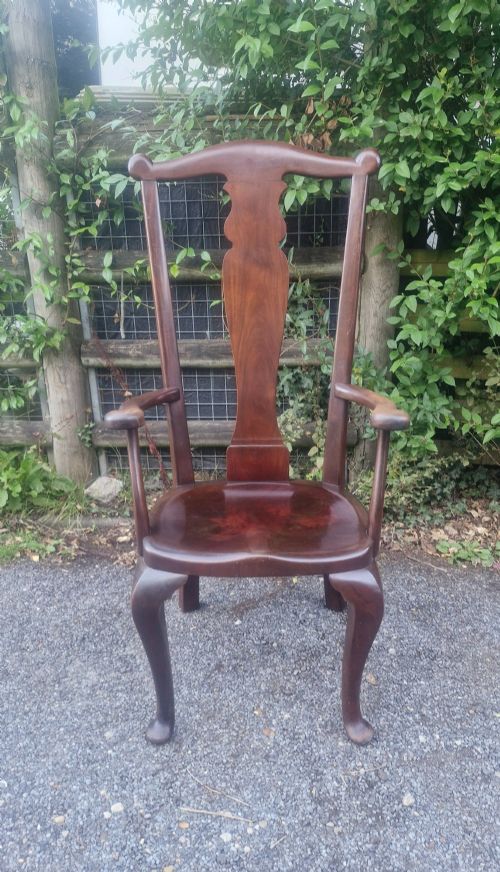
- A sturdy wooden armchair, often placed at the head of a dining table or used as an occasional seat, sharing design traits with standard dining chairs of the period.
Wooden Framed Armchair: Frequently Asked Questions
How do I identify a Victorian oak armchair?
Victorian oak armchairs often display Gothic Revival or ecclesiastical motifs, with heavy frames, panelled seats, and characteristic turning. Many examples draw on medieval precedents like the Glastonbury design.
Examining the grain, joinery, and surface wear helps distinguish genuine nineteenth-century production from later reproductions.
What is an X frame chair?
An X-frame chair utilises intersecting wooden supports that form an X shape when viewed from the side, creating a folding or curule-style seat structure. This form appears in both early Ottoman pieces and nineteenth-century revival models.
These chairs often feature decorative elements like mother of pearl inlay or elaborate surface carving.
Where were low nursing chairs used?
Nursing chairs were designed with low seats to facilitate holding and feeding infants in nineteenth-century domestic settings. Their compact proportions made them suitable for bedrooms and private chambers.
They frequently feature upholstered backs and padded seats framed in walnut or mahogany.
How should I care for antique wooden frames?
Maintain wooden frames by keeping them away from direct heat sources and fluctuating humidity to prevent timber splitting. Regular dusting with a soft cloth preserves the dry finish or polished surface.
Avoid harsh chemical cleaners and consult a specialist for advice regarding fragile upholstery or delicate inlay work.