
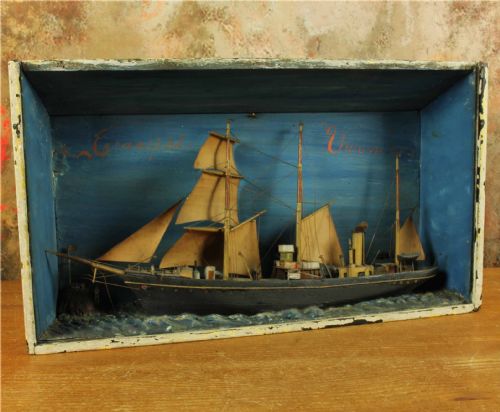


Wooden Folk Art Diorama
These wooden folk art diorama pieces offer miniature, handmade scenes built from everyday materials to capture domestic and maritime life.
Wooden Folk Art Diorama
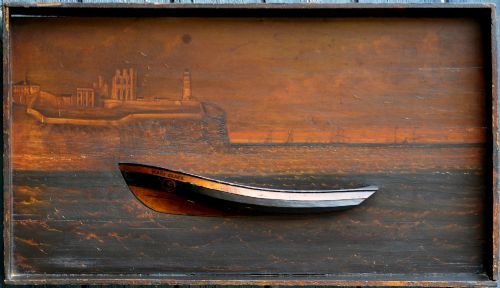
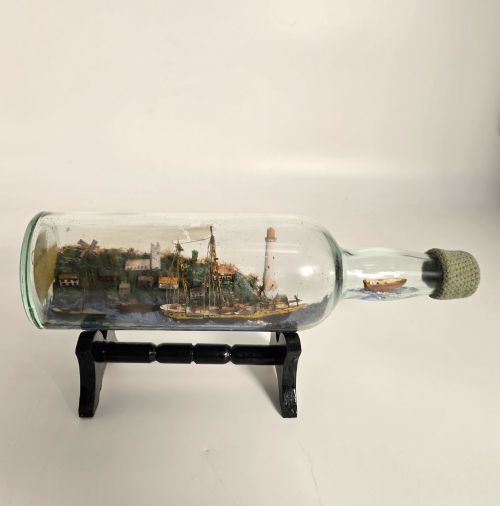
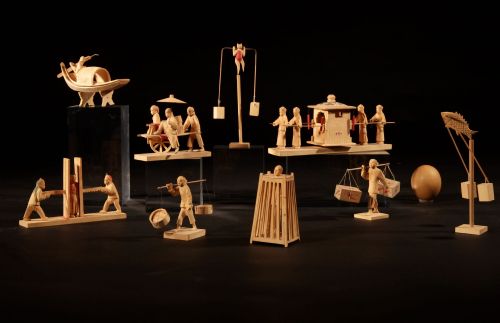
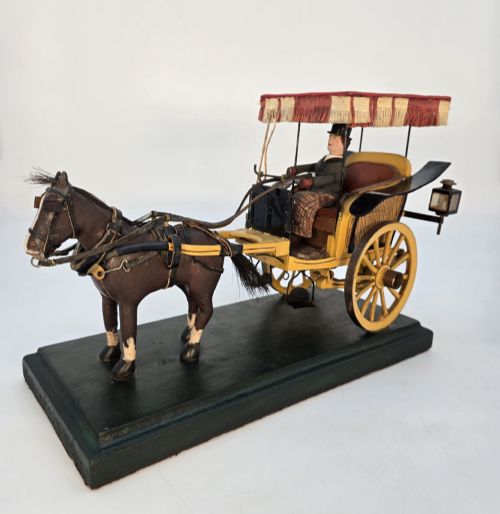
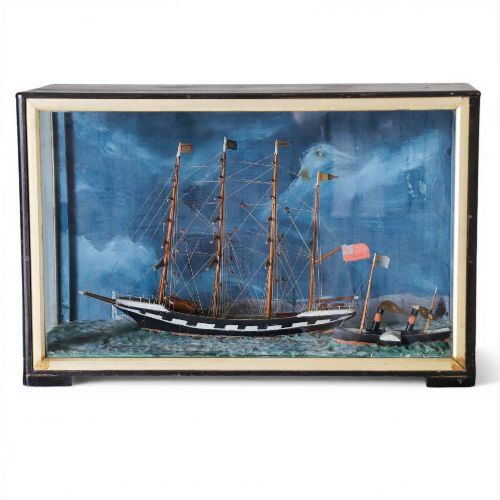
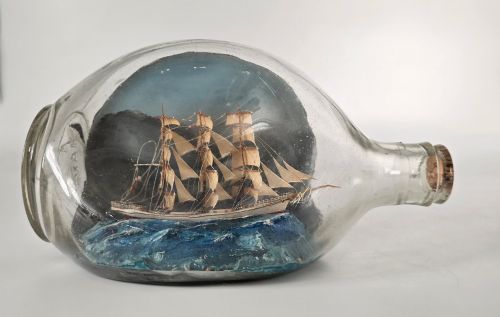
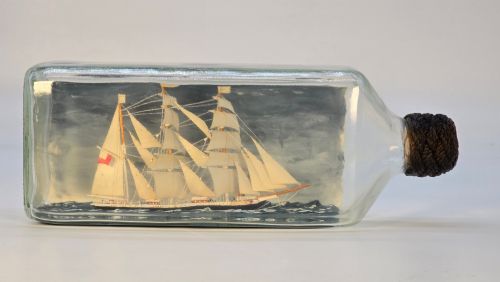
A wooden folk art diorama presents a three-dimensional scene housed inside a wooden box, shadow box, or glass bottle. The examples on this page span from the mid-nineteenth century through the early twentieth century, originating from British, French, American, Chinese, and European makers.
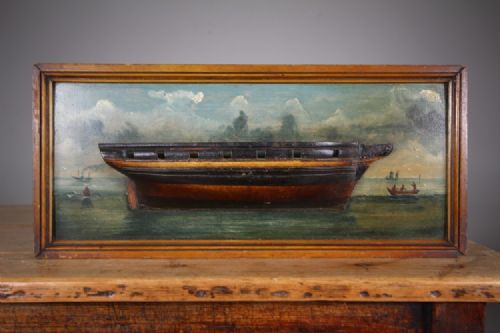
Most pieces lean towards maritime subjects such as sailing ships, clippers, and barques, often set against painted seascapes. Other common forms include townscapes, architectural models like a copper smelting furnace, and narrative figures such as a jury scene or a monkey saloon bar.
Makers utilised humble materials to construct these enclosed worlds, resulting in naive yet expressive depictions of daily life and seafaring voyages. The scale ranges from compact bottles placed on plinths to large cased shadow boxes meant for wall display.
Materials and construction methods
Wood forms the primary structural foundation for both the enclosures and the carved elements inside, supplemented by paper, fabric, cork, plaster, and metal details. Painted backdrops provide depth and perspective behind carved wooden hulls, figures, and architectural models.
Many maritime pieces incorporate intricate rigging and tiny sails assembled by hand within tight spaces like glass bottles or shallow shadow boxes. Straw work, shells, and layered paper cuttings are frequently employed to add texture and colour to the miniature landscapes.
The listings show dioramas primarily from the nineteenth century and the early twentieth century, spanning 1850 to 1930.
Judging quality in naive construction
Quality rests in the precision of the miniature carving and the complexity of the enclosed scene, distinguishing simple box assemblies from elaborate multi-vessel racing displays. The execution of the painted backdrop also dictates visual depth, separating flat compositions from those with convincing atmosphere.
The cleverness of the engineering within confined spaces, such as clockwork mechanisms or detailed prisoner art figures, elevates the desirability of a piece. Preservation of fragile components like paper, fabric, and bottle rigging further marks the distinction between intact survivals and heavily restored examples.
H.S Andy Anderson
The Wooden Folk Art Diorama Glossary
- Diorama
- A three-dimensional scene enclosed in a box, frame, or bottle with a painted backdrop. It creates the illusion of depth in a miniature setting.
- Shadow Box
- A deep, glass-fronted picture frame designed to house and protect three-dimensional objects. These boxes hang on walls or sit flat on surfaces.
- Maritime Folk Art
- Decorative and practical objects created by self-taught sailors or coastal communities. Subjects usually revolve around ships, sea life, and naval battles.
- Straw Work
- A decorative technique using split and flattened straw applied to surfaces in geometric or pictorial patterns. It creates a reflective, mosaic-like finish on box interiors.
- Naive
- A term describing art made by self-taught individuals without formal academic training. It is characterised by a charming disregard for strict perspective.
Wooden Folk Art Diorama: Frequently Asked Questions
How were ships built inside bottles?
Makers constructed the wooden ship hulls and masts with hinged or folding parts that slipped through the narrow neck of a glass bottle. Once inside, strings attached to the rigging pulled the masts upright.
Additional elements like sea spray made from painted plaster or putty were arranged using long tools, and the bottle was sealed to preserve the miniature ocean scene.
How do I date these dioramas?
Dating relies on stylistic clues, clothing on carved figures, vessel types, and occasionally direct inscriptions or dates left by the maker. Nineteenth-century examples often feature elaborate clipper ships and straw work.
Early twentieth-century pieces incorporate different container styles, materials, and subjects such as prisoner art or clockwork elements reflecting later periods.
Where were these pieces made?
The evidence shows items originating from Britain, France, America, China, Austria, and Germany. Maritime examples often stem from coastal communities or sailors at sea.
Other domestic and townscape scenes reflect the regional folk art traditions of the makers, utilising local woods, shells, and building styles specific to their geographic origins.
How should I display them at home?
Most shadow box dioramas are built to hang safely on a wall or rest securely on a flat surface away from direct sunlight. Bottle dioramas often include dedicated wooden plinths for stable placement.
Keep them in stable room conditions to protect delicate internal components like paper, fabric, and painted surfaces from humidity and temperature fluctuations.