
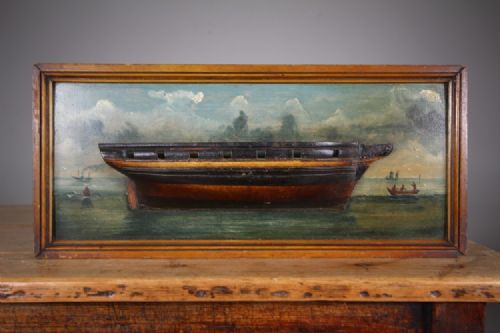


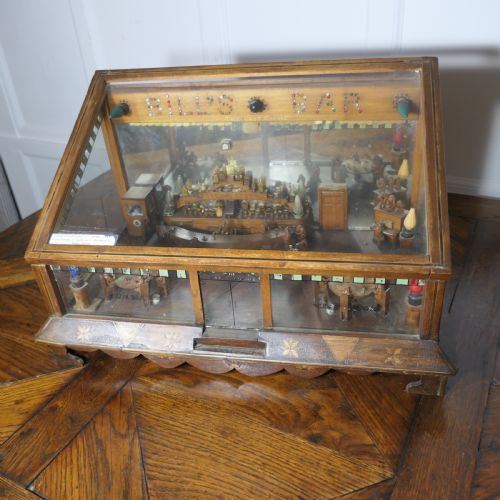


Carved Wooden Diorama
A carved wooden diorama brings three-dimensional folk art scenes of maritime life and historic vessels straight into a room.
Carved Wooden Diorama
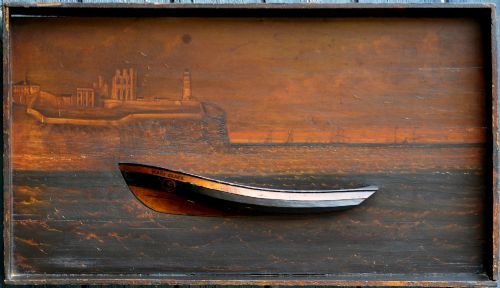
A carved wooden diorama is a framed or cased three-dimensional scene depicting maritime subjects, folk art subjects, and daily life. The pieces on this page span the Victorian era, the nineteenth century, and the early twentieth century.
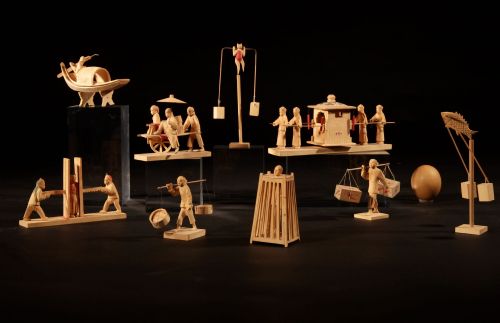
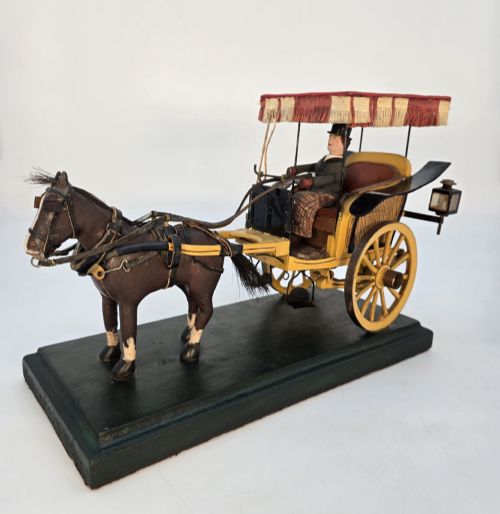
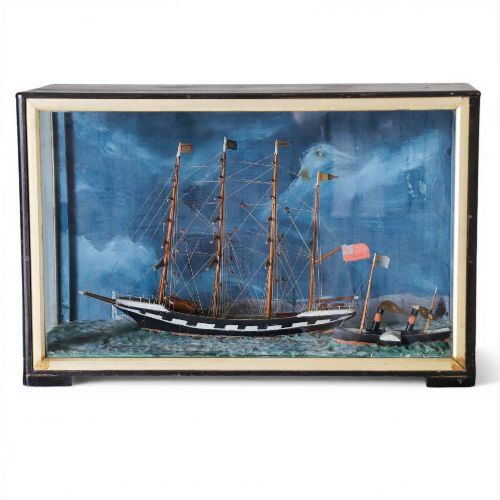
Most examples focus on sailing ships, marine races, and naval vessels housed inside glass-fronted boxes. Other forms include prisoner art, Chinese wood carvings, folk art carriages, and industrial foundry works from English, American, and European makers.
Makers built these pieces using naive carving techniques, layered wooden sails, painted backdrops, and mixed media components. They function as wall art, shadow boxes, and freestanding folk art models.
How they were made
Makers shaped the primary elements from wood, utilising paint to render sea and sky backdrops while adding carved wooden sails to the ship models. Many examples incorporate glass fronts to protect the delicate internal components.
The construction frequently integrates diverse secondary materials such as metal, plaster, cork, paper, and fabric to build up the depth of the scene. Scratch-built models and prisoner art pieces rely on simple hand tools and scavenged substances.
The enclosing cases often feature ebonised or painted wooden frames designed to mount securely on walls or sit upon surfaces.
Listings feature periods spanning from eighteen-fifty through nineteen-thirty, with nineteenth-century Victorian maritime subjects forming the core group.
What varies in quality
Quality rests in the complexity of the internal modelling and the survival of the original painted finishes. Superior examples maintain intact carved sails, detailed rigging, and well-preserved paint layers on both the vessel and the backing.
The execution of the enclosing case contributes to the overall standard, with original ebonised and silver gilt frames commanding greater visual presence. Naive charm remains consistent across the range, but precision in the miniature carving elevates certain works above standard folk art production.
The Carved Wooden Diorama Glossary
- Diorama
- A three-dimensional scene enclosed in a box or case with a glazed front. These pieces combine painted backgrounds with carved and modelled foregrounds to create depth.
- Folk art
- Art produced by self-taught or untrained makers working within traditional community styles. These objects reflect local trades, maritime culture, and popular domestic subjects.
- Shadow box
- A deep, glass-fronted frame designed to display objects in relief. Maritime examples protect delicate ship models from dust and atmospheric damage.
- Prisoner art
- Objects carved by detained individuals using available materials such as wood, bone, and paper. These pieces frequently depict nautical vessels or domestic interiors.
- Scratch built
- A model constructed entirely from raw materials rather than from a commercial kit. Makers shape every component by hand.
Carved Wooden Diorama: Frequently Asked Questions
What is a carved wooden diorama?
A carved wooden diorama is a cased three-dimensional display featuring hand-carved wooden figures, ships, or buildings set against a painted backdrop.
These works range from nineteenth-century maritime shadow boxes to early twentieth-century folk art models and Chinese wood carvings.
How were maritime dioramas displayed?
Maritime dioramas were typically mounted on walls or placed on tabletops inside protective wooden cases with glass fronts.
The glazing kept sea air and dust away from fragile paper components, painted backdrops, and intricate ship rigging.
Where do these dioramas originate?
The pieces originate from British, American, and European workshops, reflecting both professional marine artistry and regional folk traditions.
Specific regional styles include Victorian maritime folk art, Central European religious carvings, and Chinese daily life scenes.
How do you date a wooden diorama?
Dating relies on the materials used, the style of the vessel or subject matter, and any inscribed dates or signatures found on the case.
Nineteenth-century examples often feature layered wooden sails and ebonised frames, while early twentieth-century pieces incorporate different industrial elements.